Food & Drink
What is couverture chocolate? Definition, uses and how it differs
What is couverture chocolate? Learn the legal definition, why its extra cocoa butter matters, how it compares with regular and compound chocolate, and when to use it.
 Bitezine Editorial TeamRankings, reviews & guides 5 min read
 AI generated
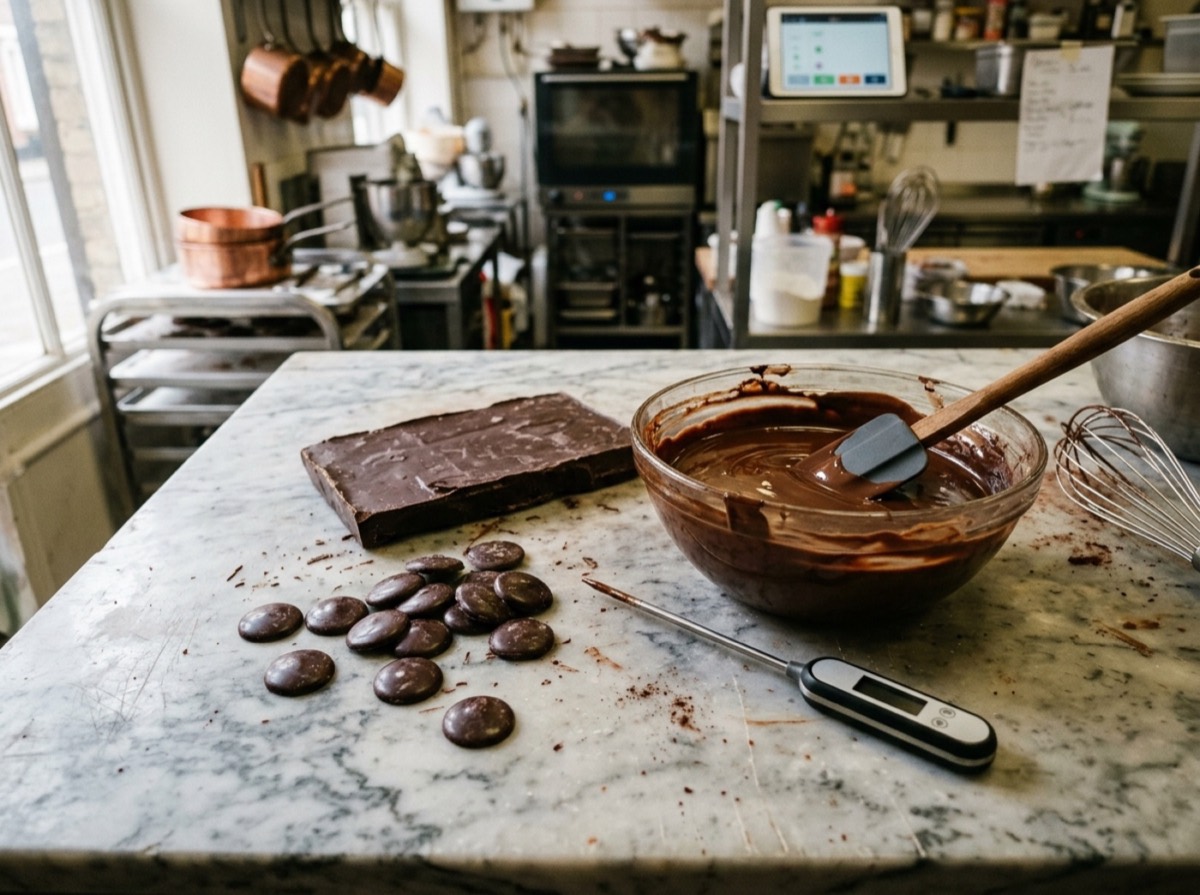
What is couverture chocolate? In short, it is high-quality chocolate with extra cocoa butter, made to melt smoothly and set with a thin, glossy, snappy shell. The name comes from the French word for 'covering', which hints at its main job: coating bonbons, dipping fruit and lining moulds.
This guide explains the legal meaning of couverture, what the extra cocoa butter changes, how it compares with ordinary eating chocolate and compound coatings, and when it is worth buying for home baking and confectionery.
Couverture chocolate meaning and legal definition
In the European Union, couverture is a protected term set by the rules on cocoa and chocolate products. Couverture chocolate must contain at least 35 percent total dry cocoa solids, including at least 31 percent cocoa butter and at least 2.5 percent fat-free cocoa solids. Milk couverture has its own requirements, including a higher total fat content than ordinary milk chocolate.
Standard EU chocolate, by comparison, needs at least 18 percent cocoa butter. So the defining feature of couverture is not a higher cocoa percentage on the front of the pack but a higher share of cocoa butter within the recipe. Many couvertures sit somewhere in the low-to-high 30s for cocoa butter.
In the United States, couverture is not a regulated term. Products sold under the name there are usually similar in style, but the label alone does not guarantee a specific fat level, so it is worth reading the ingredient list and specification.
Why the extra cocoa butter matters
Cocoa butter controls how chocolate flows when melted and how it sets. More cocoa butter makes melted chocolate thinner, so it runs off a dipped truffle in a fine, even layer instead of a thick, lumpy coat. It also fills moulds more cleanly and shows fine detail.
Once tempered, couverture sets with a strong shine and a crisp snap, and it melts cleanly in the mouth. Professionals often describe different couvertures by their fluidity, sometimes marked on packs with a scale of drops or dots: higher fluidity for thin shells and enrobing, lower fluidity for ganache, mousses and baking.
The defining feature of couverture is not a higher cocoa percentage but a larger share of cocoa butter.
Couverture vs regular chocolate
Regular eating chocolate is designed to taste good as a bar. It may have less cocoa butter, and some bars include other ingredients that make them thicker when melted. That is fine for baking, but it tends to give heavier, less even coatings.
Chocolate chips and baking drops are often designed to hold their shape in the oven, so they can melt thick and are not ideal for dipping. Couverture, usually sold as blocks, discs, callets or pistoles, is made to melt and be worked.
- Couverture: more cocoa butter, thinner when melted, glossy thin shells, needs tempering for coating
- Eating chocolate: made for tasting as a bar, variable fluidity, works well in many recipes
- Baking chips: hold their shape in cookies, often thick when melted
- Compound coating: cocoa butter partly or fully replaced by other fats, no tempering needed
Couverture vs compound chocolate
Compound chocolate, sold as coating, candy melts or cake covering, replaces some or all of the cocoa butter with other vegetable fats. In many countries, including the EU, it cannot be called chocolate on its own if it does not meet the chocolate rules.
Compound coatings are easy: melt them and they set firm without tempering. The trade-off is taste and texture. They tend to feel waxier and melt less cleanly in the mouth, and flavour is usually simpler. Couverture takes more work but gives a noticeably better eating quality.
What is couverture chocolate used for?
Couverture is the standard material in patisseries and chocolate shops, but it is equally useful at home when appearance and texture matter.
- Hand-dipped truffles, fruit, nuts and biscuits
- Moulded bars, bonbons, eggs and hollow figures
- Thin chocolate decorations, curls and shards
- Enrobing cakes and pastries with a thin, shiny shell
- Ganache, mousse and hot chocolate, where its clean flavour shines
Does couverture chocolate need tempering?
Couverture arrives already tempered, but melting it destroys that structure. If you want a glossy coating or a moulded piece that snaps and releases from the mould, you need to temper it again after melting. The seeding method, where you stir unmelted couverture into melted couverture, is the simplest way at home.
If you are using couverture inside a recipe, such as ganache, brownies, sauces or mousse, you do not need to temper it. Just melt it gently, below about 50°C for dark and lower for milk and white, and avoid water getting in.
How to choose and store couverture
Check the cocoa percentage for flavour intensity, the ingredient list for cocoa butter as the only fat, and any fluidity or use guidance from the maker. Small callets or discs are easiest for home use because they melt evenly and need no chopping.
Store couverture in a sealed bag or container in a cool, dry, dark place away from strong smells, ideally around 15–17°C. Avoid the fridge for long-term storage, since moisture can cause sugar bloom. White or grey bloom is harmless and disappears once the chocolate is melted and tempered.
Frequently asked questions
What is the difference between couverture and normal chocolate?
+
Couverture contains more cocoa butter, at least 31 percent under EU rules compared with 18 percent for standard chocolate. That makes it thinner when melted and better for thin, glossy coatings and moulded pieces.
Can I use regular chocolate instead of couverture?
+
For baking, ganache and sauces, good eating chocolate works well. For dipping and moulding it can be used, but coatings may be thicker and less glossy, and it still needs tempering.
Is couverture chocolate better for baking?
+
It is not required for baking, but its clean flavour can improve ganache, mousse and fillings. Its main advantage is in coating and moulding, where flow and shine matter most.
Does white chocolate come as couverture?
+
Yes. White and milk couvertures are widely sold and are used the same way as dark, with lower melting and working temperatures.
Is compound chocolate the same as couverture?
+
No. Compound chocolate replaces cocoa butter with other fats and needs no tempering, while couverture is rich in cocoa butter and must be tempered for coating. Couverture generally tastes and melts better.
Why is couverture chocolate more expensive?
+
Cocoa butter is one of the most valuable parts of the cocoa bean, and couverture contains more of it. It is also usually made for professional use with tighter quality control.
Couverture chocolate is simply chocolate built for working: extra cocoa butter for fluid melting, thin shells and a bright snap once tempered. If you mostly bake cookies and brownies, ordinary chocolate will do. If you want glossy dipped fruit, neat bonbons or elegant decorations, learning what couverture chocolate is and how to temper it is one of the most useful upgrades a home cook can make.
How we research: Guides are written from established sources and checked for accuracy. They are general information, not professional advice.
Written by
Bitezine Editorial Team
Rankings, reviews & guides
Our editors research every piece from makers’ documentation, independent tests and owner reports, and update it when products change.