Food & Drink
How chocolate is made: from cocoa bean to bar
Follow chocolate from the cocoa pod to the finished bar: harvesting, fermenting, drying, roasting, grinding, conching and tempering, explained step by step.
 Bitezine Editorial TeamRankings, reviews & guides 7 min read
 AI generated
How chocolate is made is a longer story than most people expect: a bar starts as bitter, pale seeds inside a fruit that grows on a tropical tree, and it takes weeks of careful work before anything tastes like chocolate. Farmers, traders and chocolate makers each shape the final flavour, and a mistake at any stage can flatten it.
This guide walks through the whole journey from cocoa bean to bar, explains the terms you see on packaging, and answers the questions people most often ask about the chocolate making process.
Where does chocolate come from?
Chocolate comes from the seeds of the cacao tree, Theobroma cacao, which grows in a narrow band roughly 20 degrees north and south of the equator. The tree needs heat, humidity, rain and shade, so most cocoa is grown on small family farms in West Africa, Latin America and Southeast Asia. Côte d'Ivoire and Ghana together produce well over half of the world's supply.
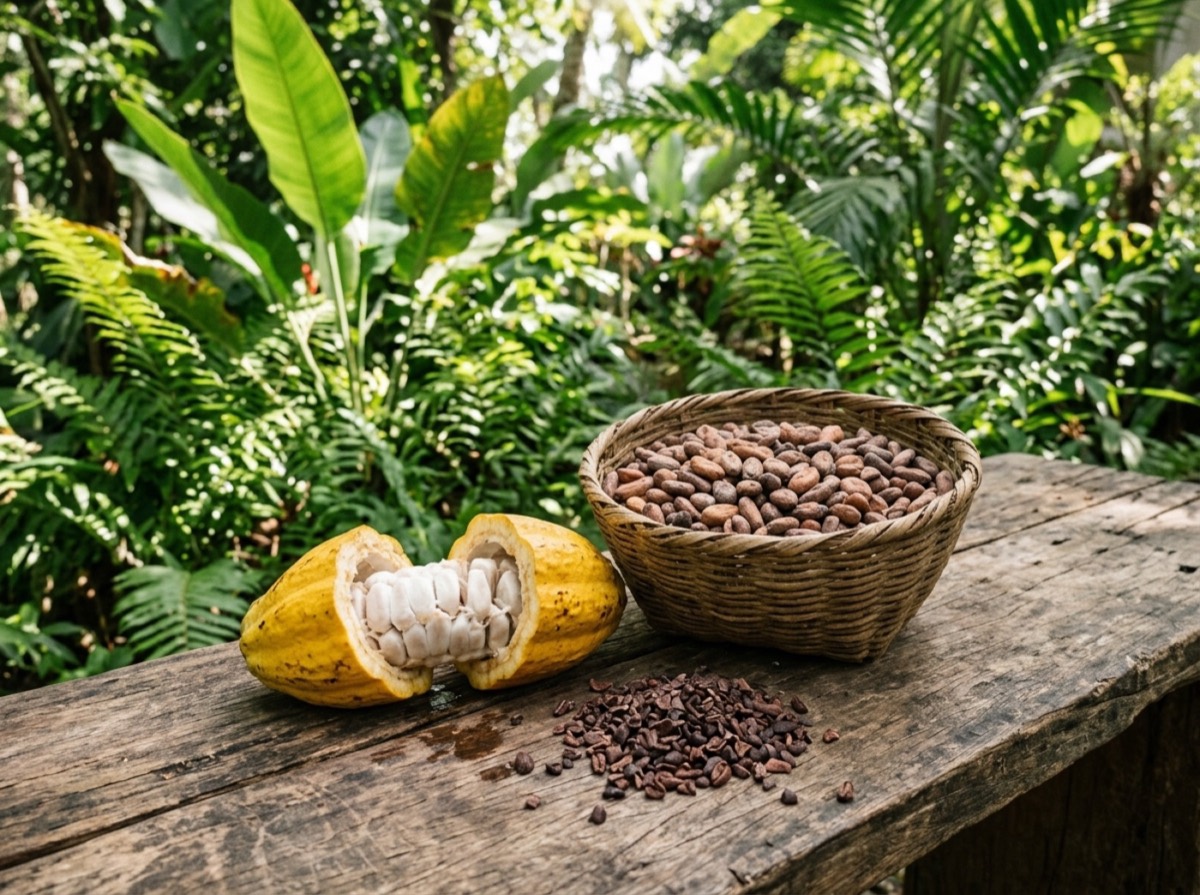
The fruit is an oval pod that grows directly from the trunk and larger branches. Each pod holds around 30 to 40 seeds, the cocoa beans, packed in a sweet white pulp. Fresh beans taste nothing like chocolate. They are bitter and astringent, and the familiar flavour only develops through the steps that follow.
Harvesting and fermenting the cocoa beans
Pods ripen throughout the year, so harvesting is done by hand with machetes or long-handled knives, picking only ripe fruit. Workers split the pods, scoop out the beans with their pulp and move quickly to fermentation, usually within a day or two.
Fermentation is the step that creates chocolate flavour. Beans and pulp are piled in heaps under banana leaves or packed into wooden boxes for roughly five to seven days. Yeasts and bacteria feed on the sugary pulp, the temperature rises, and the pulp drains away. Heat and acids penetrate the beans, kill the germ and trigger chemical changes that form the precursors of chocolate aroma. The beans are turned regularly so the process stays even.
Under-fermented beans give flat, bitter, purple-tinged chocolate, while over-fermented beans can taste hammy or musty. This is why careful farmers and cooperatives are so important to quality.
Fresh cocoa beans taste nothing like chocolate; the flavour is made, step by step, long after the harvest.
Drying, sorting and shipping
After fermentation the beans hold far too much water to store safely. They are spread out on mats, raised tables or concrete floors and dried in the sun for about a week, raked often so they dry evenly. Some regions use mechanical dryers when the weather is too wet, but slow sun drying is generally preferred because rushed drying traps acids and can add smoky notes.
Once the moisture is down to around seven percent, the beans are sorted to remove flat, broken or mouldy ones, packed in jute or bulk bags, and shipped to processing plants and chocolate factories, many of them in Europe and North America.
Roasting, cracking and winnowing: making cacao nibs
At the factory, beans are cleaned of stones, fibres and dust, then roasted. Roasting develops the deeper chocolate flavours, drives off some sharp acids and reduces moisture further. Time and temperature vary with the bean and the style: a gentle roast keeps fruity and floral notes, while a darker roast brings out nutty, bready flavours.
The roasted beans are then cracked, and a winnowing machine blows away the light, papery shells. What remains are small, crunchy pieces of bean called cacao nibs. Nibs are the real raw material of chocolate, and they are also sold on their own as a crunchy, bitter ingredient for baking and breakfast bowls.
Grinding: cocoa liquor, cocoa butter and cocoa powder
Nibs are more than half fat. When they are ground, friction melts that fat and the nibs turn into a thick, dark paste called cocoa liquor or cocoa mass. Despite the name it contains no alcohol. Cocoa liquor is the base of all dark and milk chocolate.
Part of the liquor goes into powerful presses that squeeze out the fat. The pale yellow fat is cocoa butter, and the dry cake left behind is ground into cocoa powder. Some powder is treated with an alkali, a method known as Dutch processing, which darkens the colour and softens the acidity.
Chocolate makers then combine these building blocks in different ways:
- Dark chocolate: cocoa liquor, sugar and often extra cocoa butter.
- Milk chocolate: cocoa liquor, cocoa butter, sugar and milk powder.
- White chocolate: cocoa butter, sugar and milk solids, with no cocoa solids at all.
- Many recipes add a little lecithin as an emulsifier and vanilla for flavour.
Refining and conching: how chocolate gets smooth
Mixing the ingredients gives a coarse, gritty paste. Refining machines, often a series of steel rollers, crush the sugar and cocoa particles until they are too small for the tongue to detect, generally around 20 micrometres or less. Chocolate that is ground too coarse feels sandy, while very fine chocolate can feel slightly sticky.
Conching follows. The chocolate is kept warm and mixed, scraped and aerated for anywhere from several hours to a few days. Conching drives off remaining moisture and harsh volatile acids, coats every particle with cocoa butter and rounds out the flavour. The process was developed in Switzerland in the late nineteenth century and is one reason modern chocolate melts so smoothly.
Tempering and moulding: the final steps
Cocoa butter can set in six different crystal forms, and only one of them, known as form V, gives chocolate a glossy surface, a clean snap and a melt that happens right at body temperature. Tempering is the controlled heating, cooling and gentle reheating that encourages the right crystals to form. Dark chocolate is typically melted completely, cooled while stirring and then warmed slightly to its working temperature before use.
The tempered chocolate is poured into moulds, vibrated to remove air bubbles and cooled in tunnels. Once set, the bars shrink slightly, release from the moulds and are wrapped. Untempered or badly stored chocolate develops dull grey streaks called bloom. It is safe to eat but looks tired and has a softer, crumbly texture.
How long does it take to make chocolate?
From a ripe pod to a finished bar, the journey usually takes several weeks and often a few months. Fermentation and drying alone take around two weeks on the farm, and shipping and storage add more time before the beans reach a factory. In the factory itself, roasting, grinding, refining, conching and tempering can take from a day to about a week depending on the maker.
Small bean to bar makers handle every step themselves, from roasting whole beans to wrapping bars, while many chocolatiers buy ready-made chocolate, called couverture, and focus on shaping and filling it.
Frequently asked questions
What is chocolate made of?
+
Chocolate is made from cocoa beans, the seeds of the cacao tree, combined with sugar and often extra cocoa butter. Milk chocolate adds milk powder, and white chocolate uses cocoa butter, sugar and milk without any cocoa solids. Small amounts of lecithin and vanilla are common.
Why do cocoa beans need to be fermented?
+
Fresh cocoa beans are bitter and have no chocolate aroma. Fermentation breaks down the pulp and sets off chemical changes inside the bean that create the compounds which later become chocolate flavour during roasting. Without it, the result tastes flat and astringent.
What is the difference between cocoa and cacao?
+
Both words describe the same plant and its beans. In everyday use, cacao often refers to the tree, raw beans or minimally roasted products, while cocoa refers to roasted and processed products such as cocoa powder. There is no legal distinction in most markets.
What is conching in chocolate making?
+
Conching is a long, warm mixing process that smooths the chocolate and develops its flavour. It removes moisture and sharp acids and coats every particle in cocoa butter. It can last from a few hours to several days.
Why does chocolate turn white or grey?
+
The white or grey film is called bloom. Fat bloom happens when cocoa butter crystals change after warm storage, and sugar bloom happens when moisture dissolves sugar on the surface that then recrystallises. Bloomed chocolate is safe to eat but less pleasant in texture.
Is white chocolate real chocolate?
+
White chocolate contains cocoa butter, which comes from the cocoa bean, but no cocoa solids, which carry most of the chocolate flavour and colour. Many food standards still recognise it as a type of chocolate when it meets minimum cocoa butter and milk content.
Knowing how chocolate is made changes the way you taste it. The fruity notes in one bar and the roasted depth in another trace back to choices about fermentation, drying, roasting and conching, long before the bar is wrapped. Next time you break a piece, look for the gloss and the snap that careful tempering gives, and let it melt slowly to notice how much work sits behind a simple square.
How we research: Guides are written from established sources and checked for accuracy. They are general information, not professional advice.
Written by
Bitezine Editorial Team
Rankings, reviews & guides
Our editors research every piece from makers’ documentation, independent tests and owner reports, and update it when products change.