Food & Drink
How to brew better coffee at home: the rules that matter
Better coffee at home comes down to a few rules: fresh beans, the right grind, a measured ratio, hot clean water and good timing. Here is how to get each right.
 Bitezine Editorial TeamRankings, reviews & guides 6 min read
 AI generated
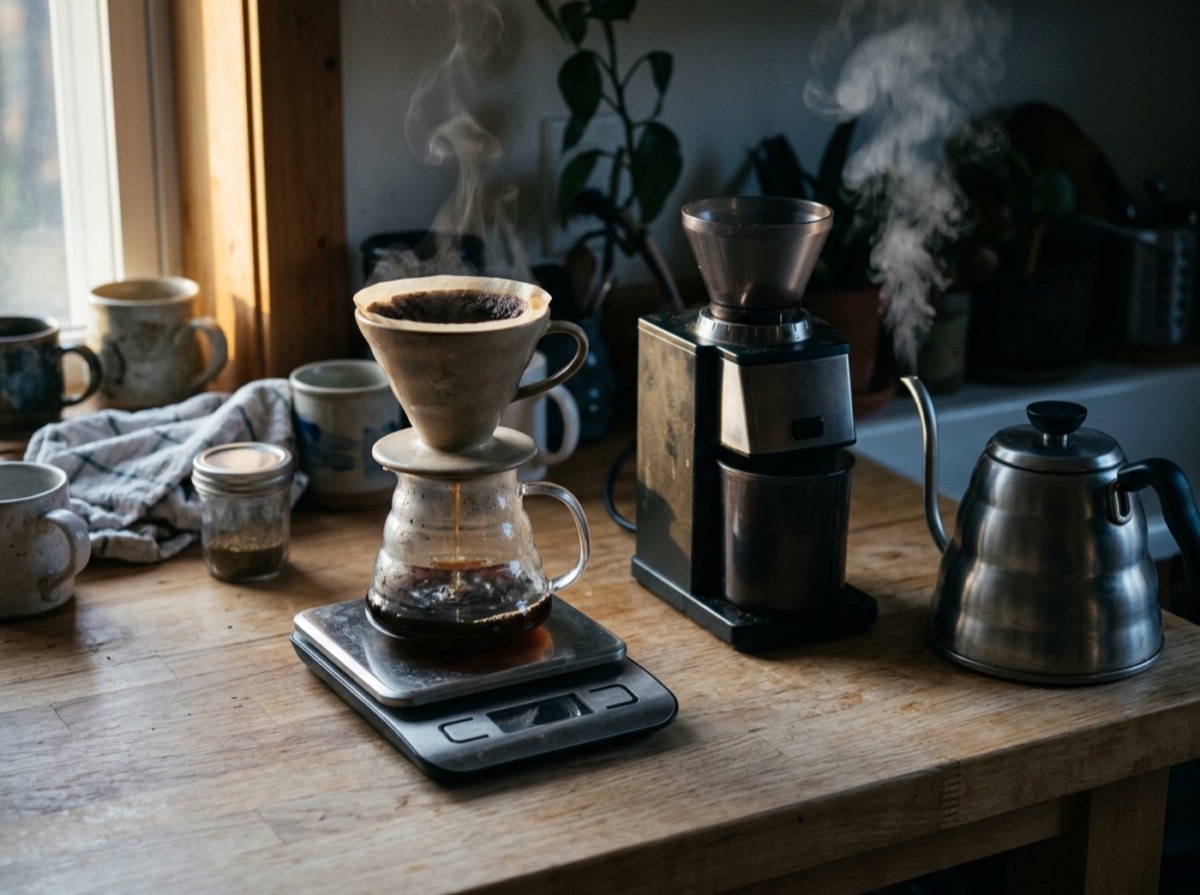
If you want to brew better coffee at home, you do not need an expensive machine. You need to control a handful of variables: how fresh the beans are, how finely they are ground, how much coffee you use for the water, how hot that water is and how long the two stay in contact. Get those right and a simple pour-over cone or press will beat most office machines.
The rules below apply to almost every brewing method. Change one thing at a time, taste the result and you will quickly learn what your cup needs.
Start with fresh, whole coffee beans
Roasted coffee is at its best for a limited window. In the first days after roasting, beans release a lot of carbon dioxide, and many brewers find the flavour settles after a few days of rest. After that, aroma fades steadily as the beans are exposed to oxygen. As a rule of thumb, whole beans taste best within about a month of the roast date, and ground coffee loses much of its aroma within hours.
Buy smaller bags more often, look for a roast date rather than only a best before date, and grind just before brewing. That single habit makes a bigger difference than most equipment upgrades.
Get the coffee to water ratio right
Most weak or harsh coffee is simply the wrong dose. A reliable starting point for filter coffee is about 1 gram of coffee to 15 to 17 grams of water, which works out to roughly 60 grams of coffee per litre. For a single large mug of around 350 millilitres, that means about 21 to 23 grams of coffee.
A kitchen scale is the most useful tool you can add, because scoops vary widely depending on the bean and the grind. Once you have a ratio you like, write it down and adjust in small steps: more coffee for a stronger, fuller cup, less for a lighter one.
- Pour-over and drip: about 1:15 to 1:17.
- French press: about 1:12 to 1:15.
- Espresso: about 1:2 by weight of liquid out to ground coffee in.
- Cold brew concentrate: about 1:5 to 1:8, diluted before drinking.
Sour means extract more, bitter means extract less; let the cup tell you what to change.
Match the grind size to your brewing method
Grind size controls how fast water extracts flavour. Finer grounds expose more surface and extract quickly, so they suit short brews. Coarser grounds extract slowly and suit long immersion. Using the wrong grind is the most common reason a good bean tastes bad.
A burr grinder crushes beans to a consistent size, while a blade grinder chops them into a mix of dust and chunks that extract unevenly. If you invest in one piece of equipment, make it a decent burr grinder.
- Coarse, like sea salt: French press and cold brew.
- Medium-coarse: large-batch drip and flat-bottom filters.
- Medium to medium-fine, like table salt: cone pour-over.
- Fine: stovetop moka pot.
- Very fine, like powdered sugar but still gritty: espresso.
What is the best water temperature for coffee?
Aim for water between about 90 and 96 °C, which is just off the boil. Water that is too cool under-extracts and tastes thin and sour, while boiling water poured directly onto dark roasts can pull out harsh, bitter notes. If you have no thermometer, let a kettle rest for 30 seconds or so after it boils.
Lighter roasts are denser and usually benefit from the hotter end of the range. Darker roasts extract more easily and often taste better a few degrees cooler.
Use good water
A cup of filter coffee is more than 98 percent water, so the water itself matters. Heavily chlorinated or very hard water dulls flavour and leaves scale in kettles and machines. Filtered tap water is a good choice in most homes. Avoid distilled or fully demineralised water, because some minerals, especially magnesium and calcium, help extract flavour.
If your coffee tastes flat no matter what you change, try brewing the same beans with a different water. The difference can be surprising.
Control brew time and the bloom
Every method has a sweet spot for contact time. A cone pour-over typically finishes in about two and a half to four minutes, a French press steeps for around four minutes, espresso runs for roughly 25 to 30 seconds and cold brew steeps for 12 to 24 hours in the fridge.
For pour-over, start with a bloom: pour about twice the weight of the coffee in water, just enough to wet all the grounds, and wait 30 to 45 seconds. Fresh coffee will bubble as it releases gas, and the rest of the water then extracts more evenly. Pour slowly in circles and keep the bed level.
Why does my coffee taste bitter or sour?
Taste tells you which way to adjust. Sour, sharp, thin or salty coffee is usually under-extracted, meaning the water did not pull out enough. Bitter, drying, hollow or ashy coffee is usually over-extracted, or the beans were roasted very dark or are stale.
Adjust one variable at a time and brew again with the same beans so you can tell what changed.
- Too sour: grind finer, use hotter water or brew a little longer.
- Too bitter: grind coarser, use slightly cooler water or shorten the brew.
- Too weak: use more coffee rather than brewing longer.
- Too strong but balanced: keep the grind and add a little more water.
How to store coffee beans and keep equipment clean
Store beans in an airtight, opaque container at room temperature, away from heat, light and moisture. Avoid the fridge, where beans pick up odours and condensation. The freezer can work for longer storage if you portion beans into sealed bags and take out only what you need, without letting them thaw and refreeze.
Coffee oils build up quickly and turn rancid. Rinse brewers after every use, wash them properly with warm water and mild detergent regularly, brush out your grinder and descale kettles and machines according to your water hardness. Stale residue can ruin fresh coffee.
Frequently asked questions
How much coffee should I use per cup?
+
A good starting point is about 1 gram of coffee for every 15 to 17 grams of water. For a 250 millilitre cup, that is roughly 15 to 17 grams of coffee, or about two to three level tablespoons depending on the grind. Adjust to taste from there.
Should I use boiling water for coffee?
+
Not straight off a rolling boil. The ideal range is roughly 90 to 96 °C, so let the kettle rest for about 30 seconds after boiling. Very hot water can make dark roasts taste harsh.
Is it better to grind coffee beans fresh?
+
Yes. Ground coffee loses aroma quickly because far more surface is exposed to oxygen. Grinding right before brewing gives noticeably brighter, sweeter and more aromatic coffee.
Should coffee beans be stored in the fridge?
+
No. The fridge exposes beans to moisture and food odours. Keep them in an airtight, opaque container at room temperature, or freeze well-sealed portions for longer storage.
Why does my French press coffee taste muddy?
+
Muddy coffee usually means the grind is too fine or uneven, which lets small particles pass through the mesh. Use a coarse, consistent grind, press gently and pour off the coffee soon after pressing so it does not keep extracting.
What is the best way to make coffee less bitter?
+
Grind a little coarser, use water a few degrees cooler and shorten the brew time. Check that your beans are fresh and your equipment is clean, since stale beans and old coffee oils also taste bitter.
Brewing better coffee at home is mostly about paying attention. Buy fresh beans, grind them just before brewing, weigh your coffee and water, keep the temperature just below boiling and time your brew. When a cup disappoints, let the taste guide you: sour means extract more, bitter means extract less. Change one thing at a time, and within a few mornings you will have a recipe you can repeat every day.
How we research: Guides are written from established sources and checked for accuracy. They are general information, not professional advice.
Written by
Bitezine Editorial Team
Rankings, reviews & guides
Our editors research every piece from makers’ documentation, independent tests and owner reports, and update it when products change.