Food & Drink
How to store coffee beans so they stay fresh
How to store coffee beans: the best containers, why air, light, heat and moisture matter, whether to freeze beans, and how long coffee stays fresh.
 Bitezine Editorial TeamRankings, reviews & guides 6 min read
 AI generated
Learning how to store coffee beans properly is the cheapest way to make better coffee at home. Freshly roasted beans are full of aromatic compounds and carbon dioxide, and both start to fade from the day of roasting. Good storage cannot stop that process, but it can slow it down a lot.
This guide explains what makes coffee go stale, which containers work, where to keep them, whether the fridge or freezer is a good idea and how long whole beans and ground coffee stay at their best.
What makes coffee beans go stale?
Roasted coffee has four enemies: air, moisture, heat and light. Oxygen reacts with the oils and aroma compounds in the beans, which dulls flavour and eventually gives a flat, cardboard-like taste. Heat speeds up those reactions. Light, especially sunlight, degrades flavour further. Moisture is a problem because coffee is hygroscopic: it absorbs water and odours from the air around it.
Stale coffee is not unsafe to drink in the way spoiled milk is. It simply tastes weaker, more bitter and less complex. The exception is beans that got damp and show mould, which should be thrown away.
The best way to store coffee beans
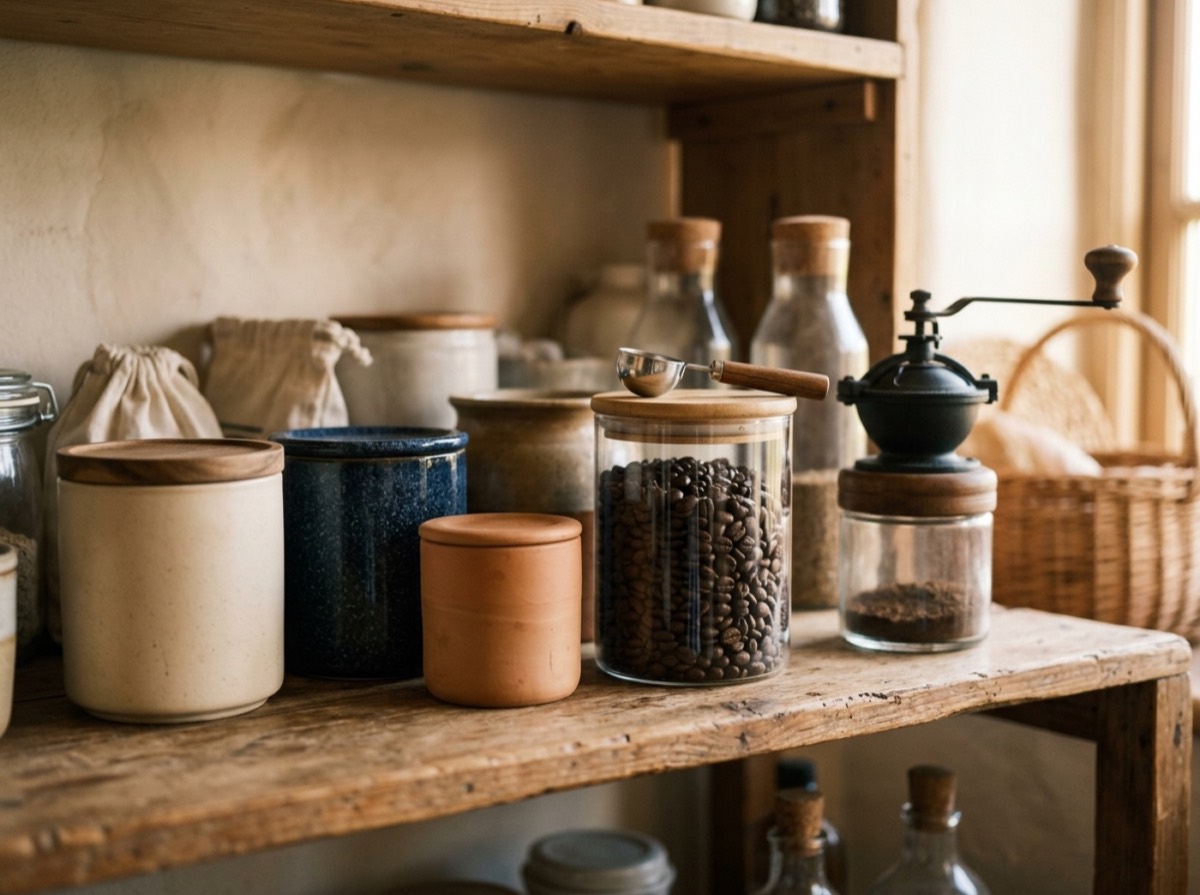
The simple rule is to keep beans whole, sealed, dark, cool and dry. A few habits cover almost everything.
- Use an airtight, opaque container: ceramic, stainless steel or tinted glass with a good seal.
- Keep it in a cool, dark cupboard, away from the oven, the dishwasher, the kettle and sunny windowsills.
- Do not store beans on top of the coffee machine, which gets warm.
- Buy smaller amounts, roughly what you will use in one to two weeks.
- Keep beans whole and grind just before brewing.
- Close the container straight away after scooping out a dose.
Good storage cannot stop coffee from ageing, but it can slow it down a lot.
Is the original coffee bag good enough?
Often, yes. Many specialty coffee bags are made from layered, light-blocking material with a one-way valve. The valve lets carbon dioxide from freshly roasted beans escape without letting air in, and a zip or tin-tie closure keeps the bag sealed. If your bag has these features, press out the air, reseal it tightly and keep it in a cupboard.
Thin paper bags, clear jars and bags with no reseal option are a different matter. Move the beans into a proper airtight container. Clear glass jars look nice on the counter, but they let light in, so keep them inside a cupboard if you use them.
Should you store coffee beans in the fridge?
For everyday use, the fridge is usually not a good place. It is humid, it is full of food smells that coffee happily absorbs, and every time you take the cold container out, moisture can condense on the beans. Room-temperature storage in a sealed container works better for coffee you will finish within a couple of weeks.
If you live somewhere very hot and humid with no cool cupboard, a truly airtight container in the fridge can be a reasonable compromise. Take out only what you need and close the container quickly.
Can you freeze coffee beans?
Freezing is the best way to keep coffee for longer, as long as you do it carefully. Cold slows staling dramatically, and whole beans can keep good flavour for several months in the freezer. The risk is condensation, which happens when cold beans meet warm air.
The way to avoid it is to freeze in small portions so you never have to open a big bag repeatedly.
- Split beans into airtight, portion-sized bags or jars, each holding a few days to a week of coffee.
- Squeeze out as much air as possible, or use vacuum-sealed bags.
- Freeze beans soon after they have rested following roasting, not when they are already stale.
- Take out one portion at a time and let it come to room temperature before opening the bag.
- Do not put thawed beans back into the freezer.
- Many home grinders can grind beans straight from frozen; if yours struggles, let them warm first.
How long do coffee beans stay fresh?
There is no exact expiry, but useful guidelines exist. Whole beans at room temperature in a good container taste best within about one to three weeks of opening, and many people find they hit their peak a few days to a couple of weeks after the roast date. Ground coffee fades faster, usually within one to two weeks, because grinding exposes far more surface to air. Well-packed frozen beans can keep their quality for around three to four months.
Look for a roast date rather than only a best-before date. The best-before date on supermarket coffee is often many months after roasting and tells you when the product is still acceptable, not when it tastes its best.
Why freshly roasted beans need a short rest
Coffee releases a lot of carbon dioxide in the days after roasting, a process called degassing. Very fresh beans can brew unevenly, especially for espresso, where trapped gas causes channelling and sour or erratic shots. Many roasters suggest waiting a few days for filter coffee and a little longer for espresso.
This is also why sealed bags have valves: without them, the gas would inflate or even burst the packaging.
How to store ground coffee
If you buy pre-ground coffee, the same rules apply, only stricter. Keep it airtight, dark and cool, buy small packs and use them quickly. A container that fits the amount of coffee, with little empty space above it, reduces the air in contact with the grounds.
If you grind at home, grind only what you need for each brew. Even a burr grinder left full of beans for weeks exposes them to air and warmth, so keep the hopper topped up with no more than a few days' worth.
Frequently asked questions
What is the best way to store coffee beans?
+
Keep whole beans in an airtight, opaque container in a cool, dark cupboard, away from heat and moisture. Buy amounts you will use within one to two weeks and grind just before brewing.
Should I keep coffee beans in the fridge?
+
Usually not. Fridges are humid and full of odours, and condensation forms when you take cold beans out. A sealed container in a cool cupboard is better for coffee you will use soon.
Is it OK to freeze coffee beans?
+
Yes, freezing is a good way to keep beans for longer. Freeze them in small, airtight portions, let each portion reach room temperature before opening, and do not refreeze thawed beans.
How long do coffee beans last once opened?
+
Whole beans kept airtight at room temperature taste best within about one to three weeks of opening. Ground coffee fades faster, within one to two weeks. The beans will not become unsafe, but the flavour weakens.
Do coffee beans go bad?
+
Roasted coffee goes stale rather than spoiling, so old beans taste flat but are generally safe. If beans have been exposed to moisture and show mould or smell musty, throw them away.
Why do coffee bags have a valve?
+
Freshly roasted coffee releases carbon dioxide for days. A one-way valve lets that gas out while keeping outside air from getting in, so the bag does not puff up and the beans stay fresher.
Is a vacuum container worth it for coffee?
+
A container that removes or limits air can slow staling, particularly if you buy larger amounts. For small batches used within two weeks, any good airtight, opaque container does most of the job.
The rules for how to store coffee beans are short: keep them whole, airtight, dark, cool and dry, buy little and often, and freeze extra in small sealed portions. Follow them and every cup will taste closer to the day the beans were roasted.
How we research: Guides are written from established sources and checked for accuracy. They are general information, not professional advice.
Written by
Bitezine Editorial Team
Rankings, reviews & guides
Our editors research every piece from makers’ documentation, independent tests and owner reports, and update it when products change.