Culture
How to start drawing: a beginner's guide to materials, exercises and habits
How to start drawing as a complete beginner: the few materials you need, the exercises that build skill fastest and a simple daily habit to keep improving.
 Bitezine Editorial TeamRankings, reviews & guides 5 min read
 AI generated
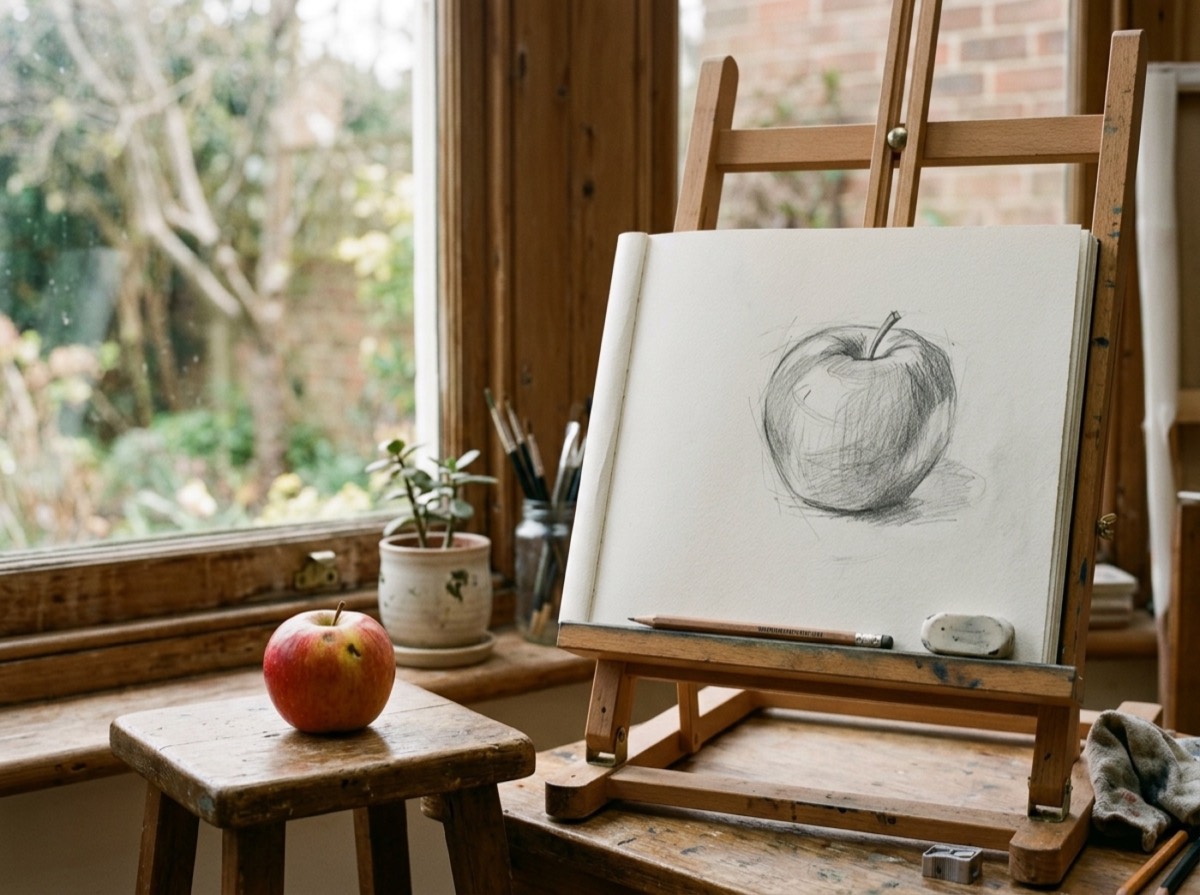
If you want to know how to start drawing, the honest answer is: with a pencil, cheap paper and ten minutes a day. Drawing is a learnable skill, much closer to learning a language than to having a gift. What holds most beginners back is not talent but not knowing what to practise.
This guide covers the simple supplies worth buying, the core exercises that train your eye and hand, how to handle shading and proportion, and a practice routine that keeps you going when early drawings look nothing like you hoped.
Can anyone learn to draw?
Yes. Drawing from observation is mostly about seeing accurately: judging angles, lengths and shapes as they really are, instead of as your brain assumes they are. That kind of seeing improves with practice for almost everyone.
Many adults stopped drawing in childhood when they could not make things look realistic. Starting again means accepting a stretch of awkward drawings. Those are not proof you cannot draw; they are the normal first steps.
What do you need to start drawing?
Keep it simple and inexpensive. Expensive supplies do not make early practice better, and a large kit can feel intimidating.
- Pencils: an HB for light lines plus a softer 2B or 4B for darker values. H pencils are harder and lighter; B pencils are softer and darker.
- Paper: a plain sketchbook of moderate weight, around A5 or A4, that you are happy to fill with mistakes.
- Eraser: a kneaded eraser lifts graphite gently and can be shaped to a point for highlights.
- Sharpener: a basic handheld one is enough.
- Optional: a fine black pen for ink practice, which stops you erasing and makes you commit to lines.
Drawing is a learnable skill, much closer to learning a language than to having a gift.
Start with lines and basic shapes
Warm up by filling a page with straight lines, circles and ellipses. Draw from the shoulder or elbow rather than only the wrist for longer strokes. It feels mechanical, but control of line is the foundation for everything else.
Next, learn to see objects as simple forms: a mug is a cylinder, a book is a box, an apple is roughly a sphere. Sketch the underlying shape lightly first, then add detail on top. Artists call this construction, and it makes complicated subjects far less daunting.
Beginner drawing exercises that build skill fast
A few classic exercises train your observation more than copying finished art ever will.
- Contour drawing: follow the edges of an object slowly with your pencil, as if tracing it with your eyes.
- Blind contour drawing: do the same without looking at the paper. The results look strange, but the exercise forces you to study the subject rather than your drawing.
- Gesture drawing: make quick sketches of people or animals in 30 seconds to two minutes, capturing movement and pose rather than detail.
- Negative space: draw the shapes between and around objects, such as the gaps between chair legs. It tricks your brain into drawing what is really there.
- Still life: arrange two or three household objects under a single lamp and draw them as they are.
How to get proportions right
Measuring is the beginner's best friend. Hold your pencil at arm's length, keep your elbow straight, and use your thumb to mark the length of one part of the subject. Compare it with other parts to check relative sizes. You can also hold the pencil vertically or horizontally to judge angles and alignments.
Work from big to small. Block in the overall size and main shapes before any detail. If the big proportions are wrong, no amount of careful detail will fix the drawing.
How to shade with pencil
Shading gives a drawing volume. Begin by identifying the light source and noticing the main zones on an object: the highlight, the mid-tones, the core shadow on the side facing away from the light, and the cast shadow it throws onto the surface below.
Practise a value scale: a row of boxes shaded from white to the darkest dark you can make. Then try hatching (parallel lines), cross-hatching (layered lines at angles) and smooth tonal shading built up in light layers. Press lightly and build darkness gradually rather than pushing hard, which dents paper and is hard to erase. Squinting at your subject helps you see value shapes instead of details.
A simple daily drawing routine
Consistency beats long sessions. Ten to twenty minutes a day will take you further than a three-hour marathon once a month. A balanced session could look like this: two minutes of line warm-ups, five minutes of gesture drawings, then ten minutes on a single object or a study from a photo or life.
Date every page. Looking back after a few weeks shows real progress, which is the best motivation there is. Carry a small sketchbook so you can draw in cafés, on trains or while waiting. When you run out of ideas, draw your hand, your shoes, the view from a window or whatever is on the table in front of you.
Books and courses can help, and many beginners find classic drawing manuals useful for structured exercises. Drawing from life, though, remains the fastest teacher.
Frequently asked questions
How long does it take to learn to draw?
+
With regular practice, most beginners notice clear improvement within a few weeks and can draw simple objects convincingly within a few months. Drawing well is a long-term skill, so steady daily practice matters more than any timeline.
What should a beginner draw first?
+
Start with simple objects around you, such as a cup, a book or a piece of fruit. They hold still, have clear shapes and teach proportion and shading without the complexity of faces or figures.
Is it better to draw from life or from photos?
+
Both help, but drawing from life trains your eye to translate three dimensions onto flat paper, which photos have already done for you. Use photos for subjects you cannot access, and draw from life whenever possible.
What pencils do beginners need?
+
An HB pencil and one or two softer pencils, such as 2B and 4B, are enough. Add a kneaded eraser and a simple sketchbook, and you have everything needed for months of practice.
Is tracing bad when learning to draw?
+
Tracing can help you understand shapes, but it does not train observation or measuring. Use it rarely, and rely mainly on drawing freehand from real objects and references.
How do I stop getting frustrated with my drawings?
+
Treat your sketchbook as a practice space, not a gallery. Focus each session on one skill, date your pages and compare them after a month. Seeing progress over time is far more encouraging than judging a single drawing.
Learning how to start drawing comes down to a few basics: simple materials, exercises that train observation, patient work on proportion and shading, and a small daily habit. Fill your sketchbook without worrying about results, look back after a month, and you will see that drawing for beginners is really about showing up.
How we research: Guides are written from established sources and checked for accuracy. They are general information, not professional advice.
Written by
Bitezine Editorial Team
Rankings, reviews & guides
Our editors research every piece from makers’ documentation, independent tests and owner reports, and update it when products change.