Culture
Why board games are good for families (and how to start)
The benefits of board games for families go beyond fun: numbers, patience, turn-taking and real conversation. Here's why they work and how to begin.
 Bitezine Editorial TeamRankings, reviews & guides 7 min read
 AI generated
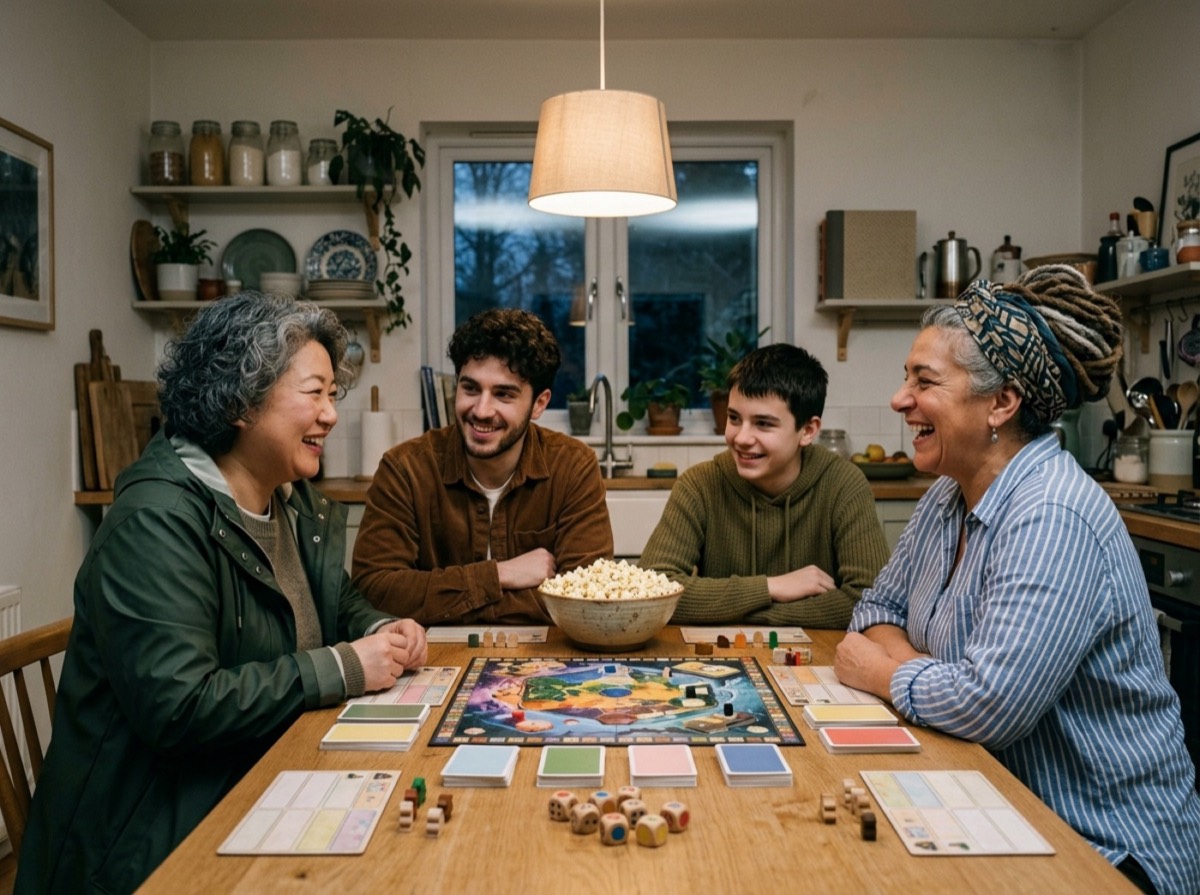
The benefits of board games for families are easy to underestimate. On the surface, it is just a box of cards, dice and tokens. Around the table, though, children practise counting, planning, reading, waiting their turn and handling disappointment, while parents get an hour of focused, face-to-face time that is hard to find elsewhere.
This guide explains what games actually do for kids and adults, what the research suggests, and how to start a family game night that everyone looks forward to instead of dreading.
Board games build early math and thinking skills
Simple race games, where you roll a die and move along a numbered track, give young children repeated practice with counting, number order and comparing quantities. Studies with preschoolers have found that playing linear number board games for just a few short sessions improved children's sense of how numbers relate to each other, a foundation for later math.
As kids grow, games stretch other thinking skills. Strategy games require planning several moves ahead. Memory games train recall. Word games build vocabulary and spelling. Games with money, scoring or resource trading turn arithmetic into something children want to do rather than something they are told to do.
Many of these gains relate to what psychologists call executive function: working memory, flexible thinking and self-control. Following rules, holding a plan in mind and adjusting when an opponent blocks you all exercise those skills.
Why board games are good for kids' social and emotional skills
A board game is a small, safe rehearsal for social life. Children learn to wait for their turn, follow shared rules, negotiate, and accept that other people have goals of their own.
Perhaps most valuable, games teach kids to lose. Losing a low-stakes game at the kitchen table, with a parent modelling a calm response, is far easier than learning the same lesson on a sports field or in a classroom. Over time, children learn that frustration passes and that the next round is a fresh start.
Winning well matters too. Games give parents natural moments to talk about being a good sport, congratulating others and not gloating.
Losing a low-stakes game at the kitchen table is far easier than learning the same lesson anywhere else.
Family game night strengthens connection
Board games put everyone at the same table, facing each other, with a shared focus. That setup invites conversation in a way that watching a screen side by side does not. Inside jokes form, rivalries become family lore and quieter children often open up while their hands are busy.
Games also level the field between generations. A seven-year-old can beat a parent in a game of chance or memory, which is a genuine thrill for a child. Grandparents, teenagers and toddlers can often play the same game with small adjustments.
For many families, a regular game night becomes a screen-free ritual that is easy to protect because everyone enjoys it.
What age can kids start playing board games?
Many children can enjoy simple games from around age three, as long as the game is short and relies on colour matching, counting a few spaces or basic memory. Look for games with few rules, large pieces and play time under 15 minutes. Always check the age rating on the box, since small parts can be a choking hazard for young children.
Between about five and seven, kids can handle light strategy, simple card games and games that need early reading. From eight or nine, many children are ready for longer games with more choices, trading or hidden information. Teenagers often enjoy party games, deduction games and deeper strategy titles.
Types of board games that work well for families
Variety keeps game night interesting and lets different family members shine. A small, mixed collection goes a long way.
- Cooperative games, where everyone plays together against the game, are ideal for young kids and competitive siblings.
- Roll-and-move race games for preschoolers learning numbers.
- Memory and matching games for younger children and mixed ages.
- Word and drawing games that reward creativity over strategy.
- Quick card games that fit into ten spare minutes.
- Strategy and tile-laying games for older kids and adults.
- Party and guessing games for larger gatherings and teenagers.
How to start a family game night
Pick a regular slot, such as Friday after dinner or Sunday afternoon, and keep it short at first. Forty-five minutes of fun is better than two hours that ends in tears.
Choose games matched to your youngest player's attention span, and have two or three options ready so nobody is stuck with a game they dislike. Let children take turns choosing. Put phones away for the duration, including the adults' phones.
Learn the rules before the session if the game is new, so you are not reading the manual while kids wait. Teach by playing an open-handed practice round. Adding snacks and a little ceremony, like a family trophy or a scoreboard on the fridge, helps turn the evening into something to look forward to.
Handling tantrums, cheating and competitive kids
Every family hits these bumps. Stay calm and treat them as part of the learning. If a child is upset about losing, acknowledge the feeling, take a short break if needed and move on without a lecture.
Cooperative games are a useful reset when rivalry runs hot. For big age gaps, give younger players a handicap or pair them with an older teammate. Occasional rule-bending by a small child is normal; gently restate the rule and keep playing. If one game regularly ends badly, put it away for a few months and try again later.
Frequently asked questions
What are the main benefits of board games for kids?
+
Board games help children practise counting, planning, memory and language, as well as patience, turn-taking and coping with losing. They also give families focused time together without screens.
Should parents let kids win at board games?
+
Not every time. Occasional easy wins can keep very young children motivated, but kids learn resilience by losing sometimes. Games with a lot of luck or cooperative play let children win fairly without adults holding back.
How often should a family have game night?
+
Once a week is a common and sustainable rhythm. Even a short game two or three times a month builds the habit, as long as it happens reliably and stays enjoyable.
Are cooperative board games better for young children?
+
They are often a great starting point. Because everyone wins or loses together, there is less frustration, and children learn teamwork and shared decision-making. Competitive games can be added as kids get used to losing gracefully.
Do board games help with math?
+
Yes, especially for young children. Games that involve moving along a numbered track, counting, adding scores or handling play money give repeated, low-pressure practice with number skills.
How do you get teenagers to play board games?
+
Let them choose the game, invite their friends, and try fast party games or strategy games that feel grown-up. Keeping it optional and fun works better than making it a family obligation.
Board games will not replace school, sport or bedtime stories, but they add something few other activities offer: a shared challenge where everyone learns a little and laughs a lot. Start small, pick games that suit your youngest player, and protect a regular slot. The skills and memories build up quietly, one turn at a time.
How we research: Guides are written from established sources and checked for accuracy. They are general information, not professional advice.
Written by
Bitezine Editorial Team
Rankings, reviews & guides
Our editors research every piece from makers’ documentation, independent tests and owner reports, and update it when products change.