Food & Drink
How to season food properly: salt, acid, fat, heat and herbs
How to season food like a good home cook: when and how much to salt, balancing acid, fat, sweetness and heat, using herbs and spices, and fixing over-seasoned dishes.
 Bitezine Editorial TeamRankings, reviews & guides 5 min read
 AI generated
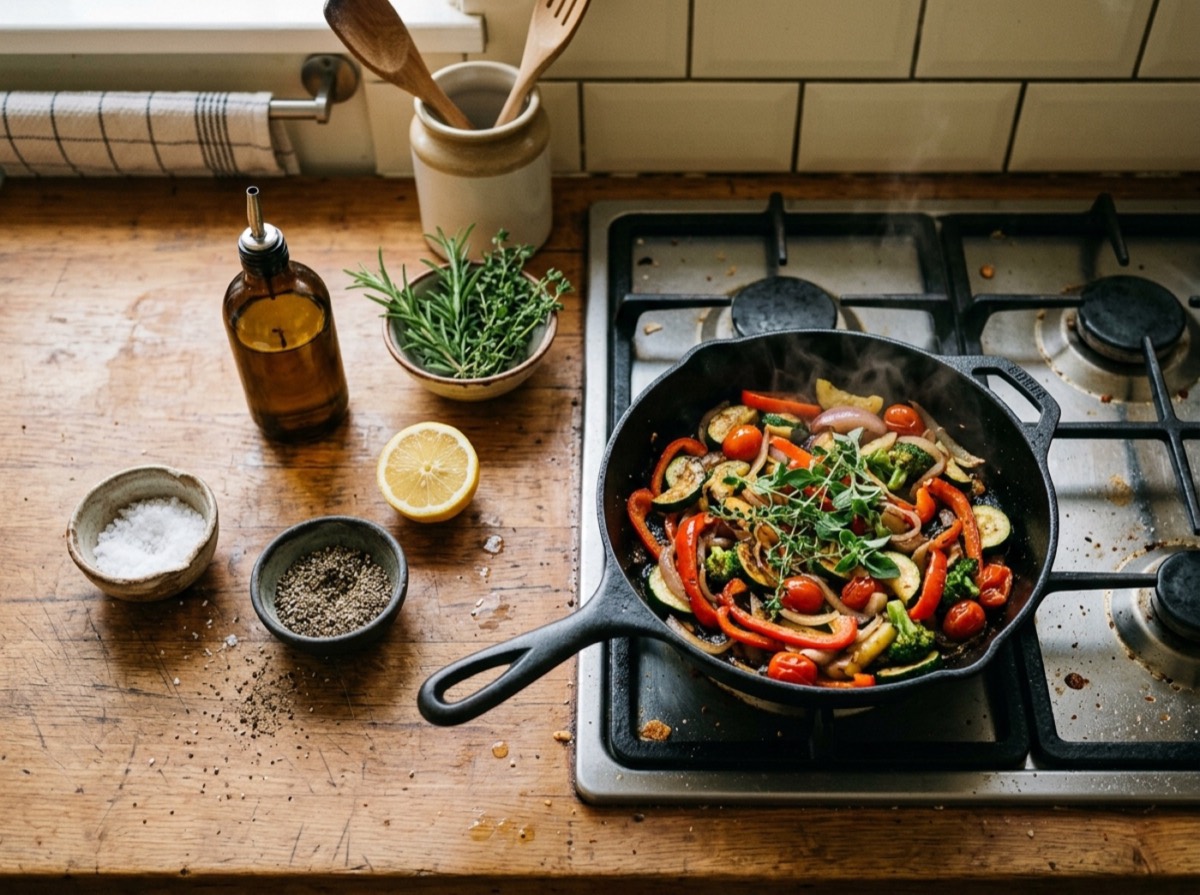
Learning how to season food is the fastest way to make home cooking taste better. Most dishes that seem flat are not missing an exotic ingredient; they need the right amount of salt, a little acidity, or herbs and spices added at the right moment.
This guide explains how salt works, when to add it, how to balance flavours with acid, fat, sweetness and heat, how to get the most from herbs and spices, and how to cook flavourful food with less salt.
Why salt matters and how it works
Salt does more than make food taste salty. In the right amount, it makes flavours taste fuller, softens bitterness and brings out sweetness. That is why a pinch of salt improves a fruit salad or a caramel sauce, and why unsalted soup tastes dull even when it is full of vegetables.
Different salts have different crystal sizes, which changes how salty a spoonful is. Fine table salt packs densely, so a teaspoon is saltier than a teaspoon of flaky or coarse salt. Pick one everyday salt, learn how it behaves and keep flaky salt for finishing, where its crunch is noticeable.
When should you add salt when cooking?
Seasoning in layers, a little at each stage, gives more even flavour than a big dose at the end. Salt that goes in early has time to spread through the food; salt added at the table sits on the surface.
- Meat: salt well ahead, from 40 minutes to overnight, or just before cooking.
- Onions and vegetables: salt as they go in the pan, which also helps them soften.
- Pasta and potatoes: salt the cooking water well, because they absorb seasoning as they cook.
- Soups, stews and sauces: season lightly early and adjust at the end, especially if the liquid will reduce.
- Dried beans: salting the soaking or cooking water seasons them evenly.
- Salads and delicate greens: season just before serving so the leaves do not wilt.
Most flat dishes need salt, a little acid or herbs at the right moment, not an exotic ingredient.
How to taste and adjust as you cook
The single most useful habit is tasting. Taste at each stage, using a clean spoon each time, and ask what is missing. If a dish tastes flat, add a small pinch of salt, stir and taste again. If it tastes heavy or dull even with enough salt, it probably needs acid. If it tastes sharp or harsh, it may need a little fat or sweetness.
Season carefully when using salty ingredients such as stock cubes, soy sauce, cheese, olives, capers, anchovies or cured meats, and add them before adjusting the salt. Never taste raw meat, poultry, eggs, fish or raw batter; season those by measuring, then taste after cooking or adjust the sauce instead.
How to balance flavours: acid, fat, sweetness and heat
Good seasoning is about balance between a few basic elements. Once you can spot which one is missing, fixing a dish becomes simple.
Acidity from lemon juice, lime, vinegar, wine, tomatoes or yoghurt brightens a dish and cuts through richness. A squeeze of lemon at the end often does more for a stew or a bowl of lentils than more salt. Fat, from olive oil, butter or cream, carries flavour and softens harsh edges. A little sweetness from honey, sugar or caramelised onions rounds out acidity and chilli heat. Heat from chilli, black pepper, ginger or mustard adds liveliness, but add it gradually, because it builds and is hard to take away.
How to use herbs and spices
Timing matters with herbs. Hardy herbs such as rosemary, thyme, bay and sage release their flavour slowly and belong in the pan early. Soft herbs such as basil, parsley, coriander, dill and chives lose their freshness with heat and are best stirred in at the end or scattered on top.
Whole spices such as cumin, coriander seed and fennel seed taste deeper when toasted in a dry pan for a minute or two until fragrant, then ground. Ground spices benefit from being fried briefly in oil at the start, known as blooming, which releases fat-soluble flavours. Keep spices sealed away from heat and light and replace them when they no longer smell strong.
- Chicken: thyme, rosemary, garlic, paprika, lemon
- Beef: black pepper, rosemary, garlic, cumin, smoked paprika
- Fish: dill, parsley, fennel, lemon, chilli
- Tomatoes: basil, oregano, garlic
- Root vegetables: cumin, thyme, rosemary, nutmeg
How to season food with less salt
The World Health Organization recommends that adults eat less than 5 g of salt a day, roughly a level teaspoon, and reports that average adult intake worldwide is more than double that. Much of it comes from processed foods, bread and ready meals rather than the salt shaker, so cooking from scratch already gives you more control.
To cut back without losing flavour, lean on the other tools: lemon zest and juice, vinegar, garlic, onions, fresh herbs, toasted spices, black pepper and browning. Roasting and searing create savoury flavours that make food taste satisfying with less salt. Reduce gradually, as taste buds adjust over a few weeks.
How to fix food that is too salty, bland or spicy
Most seasoning mistakes can be rescued, although the easiest fix is to add seasoning in small amounts.
- Too salty: add more of the unsalted base, such as extra vegetables, beans, water or unsalted stock, or serve with plain rice, bread or potatoes. A little acid or fat can also soften the impression of salt.
- Bland: add salt first, then acid, then a finishing herb or a drizzle of good oil.
- Too spicy: add dairy such as yoghurt or cream, a little sugar, or more of the unspiced base.
- Too sour: add a pinch of sugar or a little fat.
- Bitter: a pinch of salt or a touch of sweetness helps mask bitterness.
Frequently asked questions
What are the basic seasonings every kitchen needs?
+
Salt, black pepper, a good oil, an acid such as lemon or vinegar, garlic and a few dried herbs and spices, such as thyme, oregano, cumin, paprika and chilli flakes. Fresh herbs make a big difference when you can get them.
How much salt should you put in pasta water?
+
Enough that the water tastes clearly seasoned. Many cooks use roughly 1 to 2 teaspoons of salt per litre. Adjust the sauce seasoning to match.
Should you season meat before cooking?
+
Yes. Salting meat well ahead of time, from about 40 minutes to overnight, seasons it more deeply. Salting just before cooking also works well.
What can I add if my food tastes bland?
+
Try a pinch of salt first, then a squeeze of lemon or a splash of vinegar. Fresh herbs, black pepper or a little grated cheese can finish the dish.
How can I season food without salt?
+
Use acid, garlic, onions, herbs, toasted spices, pepper, citrus zest and browning from roasting or searing. These add depth so the dish needs less salt.
When should you add fresh herbs?
+
Add woody herbs like rosemary and thyme early in cooking. Add delicate herbs like basil, parsley and coriander at the end so they keep their colour and fresh flavour.
Knowing how to season food is a skill you build by tasting. Salt in layers, finish with acid, add soft herbs at the end and toast your spices, and ordinary dishes will start to taste like they came from a much more experienced cook, often with less salt than before.
How we research: Guides are written from established sources and checked for accuracy. They are general information, not professional advice.
Written by
Bitezine Editorial Team
Rankings, reviews & guides
Our editors research every piece from makers’ documentation, independent tests and owner reports, and update it when products change.