Guides
How to remove common stains from clothes: coffee, wine, grease and more
How to remove common stains from clothes and fabric: first-aid rules, what works on coffee, red wine, grease, blood, grass and ink, and the chemicals never to mix.
 Bitezine Editorial TeamRankings, reviews & guides 7 min read
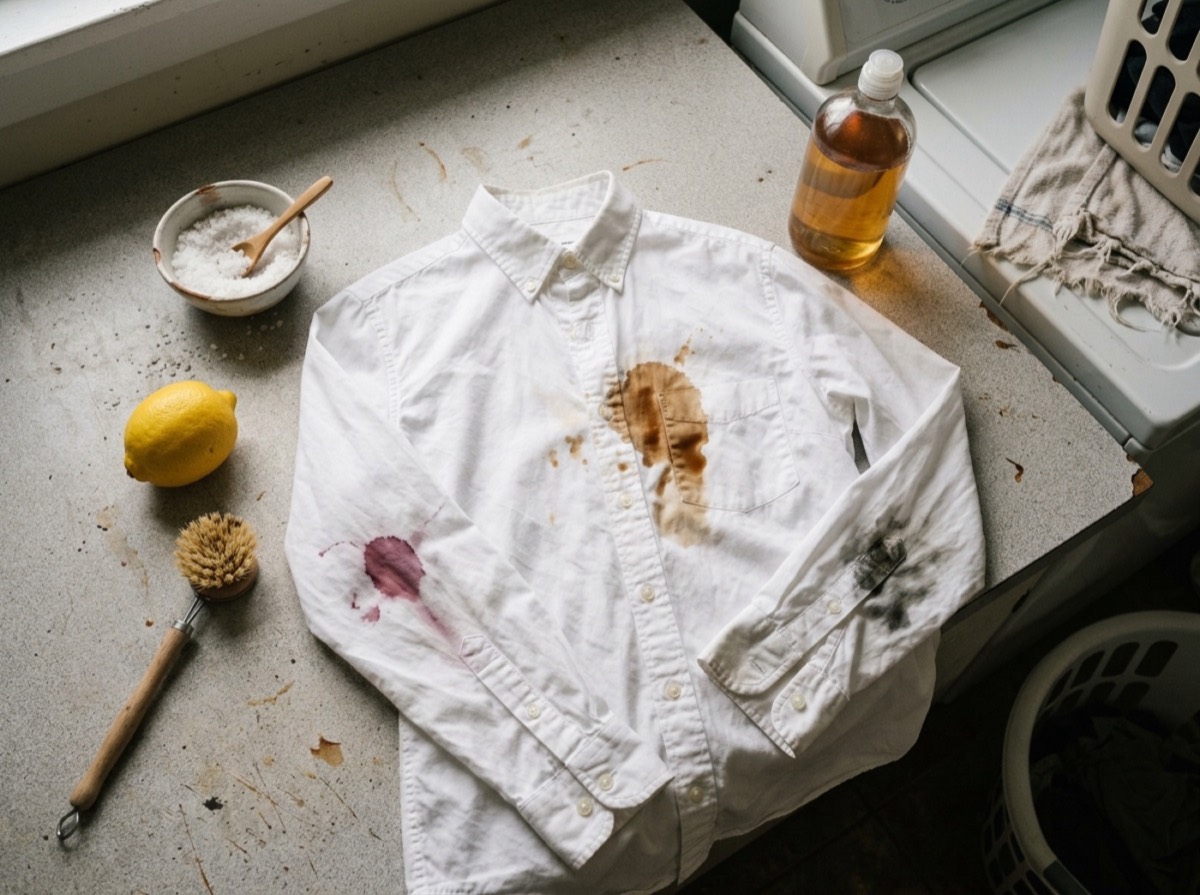 AI generated
Knowing how to remove common stains is mostly about acting quickly and choosing the right approach for the type of mark. Coffee, red wine, grease, blood and grass each behave differently, and the wrong move, such as hot water on blood or rubbing a fresh spill, can fix a stain for good.
This guide starts with the first-aid rules that apply to almost every stain, then explains which products do what, gives step-by-step methods for the most common stains on clothes and washable fabrics, and covers the chemical combinations you must never use.
The golden rules of stain removal
A few habits make the biggest difference, whatever the stain.
- Act fast: fresh stains come out far more easily than dried ones
- Blot, do not rub: rubbing spreads the stain and pushes it deeper into the fibres
- Scrape off solids first with a blunt knife or spoon
- Work from the back of the fabric so the stain is pushed out, not through
- Start with cold water; heat can set many stains, especially protein ones
- Read the care label and test products on a hidden seam first
- Check the stain is gone before tumble drying or ironing, as heat makes it permanent
- Be patient: repeating a gentle treatment is safer than one aggressive attempt
Which stain removers do what?
Most stains fall into a few families, and matching the product to the family is the key to success.
Never use chlorine bleach on wool, silk, leather or elastane, and do not use it on coloured fabrics unless the label allows it.
- Enzyme (biological) detergent: breaks down protein and starch stains such as blood, egg, grass, sweat and food
- Washing-up liquid: cuts through grease and oil
- Oxygen-based bleach: lifts coloured stains such as wine, tea, coffee and fruit, and is safe on most colourfast washable fabrics
- Rubbing alcohol: dissolves many inks and some dyes
- Chlorine bleach: strong whitener for white cotton and linen only
Always check a stain is gone before the dryer, because heat can make it permanent.
How to remove coffee, tea and red wine stains
Coffee, tea and red wine contain coloured compounds called tannins. Blot up as much liquid as you can straight away, then rinse the stain from the back under cold running water.
Rub a little liquid detergent into the mark, leave it for a few minutes and rinse again. For stubborn or dried marks, soak the garment in a solution of oxygen bleach and water, following the product instructions, then wash as usual at the warmest temperature the label allows. Coffee with milk contains protein as well, so an enzyme detergent helps.
For red wine on fabric you cannot rinse immediately, blotting and sprinkling salt can draw some liquid out until you get to a sink. White wine does not reliably neutralise red wine and adds more liquid, so plain cold water is the better first step.
How to remove grease and oil stains
Cooking oil, butter, salad dressing and make-up leave greasy marks that water alone cannot shift. Blot excess oil with kitchen paper. On fresh stains, sprinkle bicarbonate of soda, cornflour or talc, leave it for 15 to 30 minutes to absorb the oil, then brush it away.
Work a few drops of washing-up liquid into the stain with your fingers or a soft brush, leave it for several minutes, and wash in the warmest water the care label allows. Grease often needs warmth to release. Check before drying: oil stains can look faint when wet and reappear as the fabric dries.
How to get blood, sweat and grass stains out
Blood is a protein stain, so always use cold water. Rinse from the back until the water runs clear, then soak in cold water with an enzyme detergent before washing. On white cotton, a small amount of hydrogen peroxide can lift what remains; test it first, because it can bleach colours.
Yellow sweat marks under the arms build up from sweat and deodorant. Soak the area in an enzyme detergent solution, or apply a paste of bicarbonate of soda and water, before washing. Letting deodorant dry fully before dressing helps prevent new marks.
Grass contains both proteins and green pigment. Rub an enzyme detergent into the stain, leave it for at least 15 minutes, and wash. Rubbing alcohol dabbed on the stain can lift the remaining green on sturdy, colourfast fabrics.
How to remove ink, wax and other tricky stains
Several common stains need a specific approach.
- Ballpoint ink: place kitchen paper underneath and dab with rubbing alcohol on a cotton pad, changing pads as the ink transfers; then rinse and wash
- Candle wax: harden it with an ice cube, scrape off the solid wax, then lay kitchen paper over the mark and press with a warm iron to draw out the rest
- Chewing gum: freeze the garment in a bag until the gum is brittle, then chip it off
- Mud: let it dry completely, brush off the loose dirt, then pretreat with detergent and wash
- Tomato sauce and curry: rinse with cold water, apply washing-up liquid, and treat remaining colour with oxygen bleach; sunlight can also fade the leftover yellow on white fabrics
- Lipstick and foundation: dab with washing-up liquid or a little make-up remover, then wash
Stain removal safety: chemicals you must never mix
Household cleaners can react dangerously. Never mix chlorine bleach with ammonia, vinegar or other acids, or with other cleaning products. Bleach and ammonia release toxic chloramine gases, and bleach with acids releases chlorine gas. Hydrogen peroxide and vinegar should not be combined in one container either, as they form a corrosive acid.
Use one product at a time, rinse thoroughly before trying another, and work in a well-ventilated room. Wear gloves with bleach and solvents, keep products in their original labelled containers and store them out of reach of children. Rubbing alcohol and many solvent stain removers are flammable, so keep them away from heat and flames and let treated clothes air before washing.
Old stains, delicate fabrics and when to call a professional
Set-in stains that have been washed and dried often still improve with a long soak, sometimes overnight, in an enzyme detergent or oxygen bleach solution. Repeat the treatment two or three times before giving up.
Take silk, wool, suede, leather, velvet and anything labelled dry clean only to a professional cleaner, and tell them what caused the stain. The same goes for valuable, vintage or structured items like suits. Upholstery and carpets follow similar principles, but test carefully and avoid soaking the padding underneath.
Frequently asked questions
Should you use hot or cold water on stains?
+
Start with cold water. Heat can set protein stains such as blood, egg and sweat permanently. Warm water helps with grease once the stain has been pretreated.
How do you get dried red wine out of clothes?
+
Rinse the stain from the back with cold water, rub in liquid detergent, then soak the garment in an oxygen bleach solution according to the product instructions. Wash as the label allows and repeat before drying if any mark remains.
What is the best way to remove a grease stain?
+
Blot the excess, cover fresh stains with bicarbonate of soda or cornflour to absorb the oil, then work in washing-up liquid and wash at the warmest temperature the care label allows.
Can you remove a stain after it has been through the dryer?
+
Sometimes. Heat sets many stains, but a long soak in enzyme detergent or oxygen bleach, repeated a few times, can still lighten or remove them. Dry-cleaners may also be able to help.
Is it safe to mix vinegar and bleach for stains?
+
No. Mixing bleach with vinegar or any acid releases toxic chlorine gas. Never combine bleach with other cleaning products, and rinse fabric well before switching treatments.
How do you remove yellow sweat stains from white shirts?
+
Soak the underarm area in an enzyme detergent solution or apply a paste of bicarbonate of soda and water, leave it for a while and wash. On white cotton, an oxygen bleach soak often lifts remaining yellowing.
What removes ink from clothes?
+
Rubbing alcohol dissolves most ballpoint ink. Dab it on with a cotton pad over kitchen paper, replacing the pad as ink lifts, then rinse and wash. Test on a hidden area first.
Removing common stains is easier when you follow a few rules: act quickly, blot instead of rubbing, start with cold water and check the result before any heat. Match the product to the stain, with enzyme detergent for proteins, washing-up liquid for grease and oxygen bleach for coloured marks, and never mix bleach with other chemicals. Delicate or valuable items are best left to a professional cleaner.
How we research: Guides are written from established sources and checked for accuracy. They are general information, not professional advice.
Written by
Bitezine Editorial Team
Rankings, reviews & guides
Our editors research every piece from makers’ documentation, independent tests and owner reports, and update it when products change.