Guides
How to clean, season and care for a cast iron pan
Cast iron lasts for generations if you clean it right, keep it dry and build up its seasoning. Here is the simple routine, plus fixes for rust and sticking.
 Bitezine Editorial TeamRankings, reviews & guides 6 min read
 AI generated
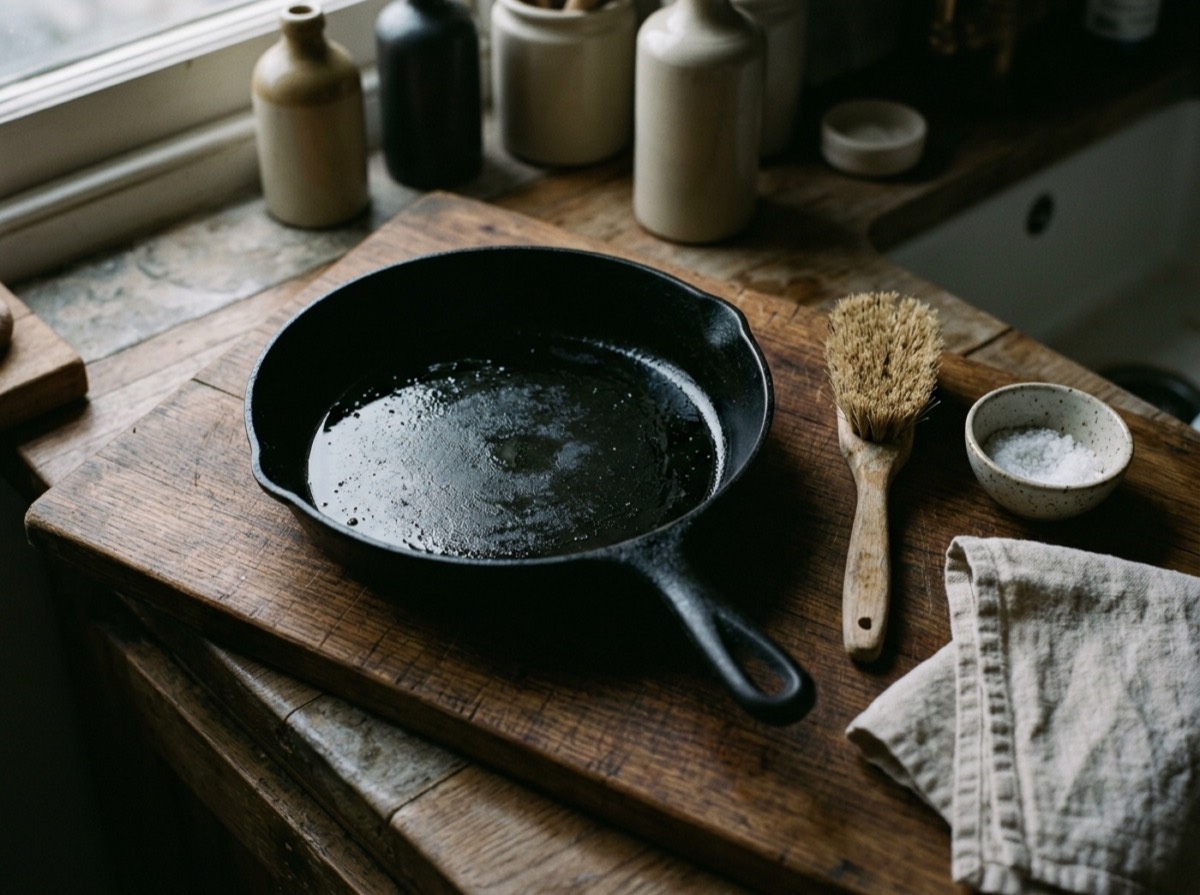
Learning how to care for cast iron takes a few minutes, and the payoff is a pan that can outlive you. A well-kept cast iron pan heats evenly, holds heat for a great sear, moves from hob to oven and becomes more non-stick the more you use it.
The secret is seasoning: thin layers of oil baked onto the metal until they bond into a hard, slick coating. Everything in this guide is about building that coating and not destroying it.
What is cast iron seasoning?
Seasoning is not a flavour. When a thin film of fat is heated past its smoke point, it goes through a process called polymerisation and turns into a hard, plastic-like layer that bonds to the iron. That layer protects the pan from rust and stops food from sticking.
Every time you cook with oil, you add a tiny bit more. That is why an old, well-used pan is often slicker than a new one. Many pans are sold pre-seasoned, which gives you a good start, but the coating improves with regular use.
How to clean cast iron after cooking
Clean the pan while it is still warm, which makes food release easily. The routine is quick and needs nothing special.
- Scrape out food with a flat spatula or pan scraper
- Rinse with hot water and scrub with a brush or non-scratch sponge
- For stuck-on bits, scrub with a spoonful of coarse salt and a little water, or simmer some water in the pan for a minute
- Dry immediately and thoroughly with a towel
- Put the pan on low heat for a few minutes to drive off remaining moisture
- Wipe a very thin layer of oil over the inside while warm, then buff it until it looks almost dry
Seasoning grows with use, rust can be scrubbed away, and mistakes are nearly always reversible.
Can you use soap on cast iron?
Yes. The old rule against soap comes from a time when soaps contained lye, which strips seasoning. Modern mild dish soap in small amounts will not remove properly bonded seasoning. A quick wash with a drop of soap is fine, especially after cooking fish or something pungent.
What you should avoid is soaking. Leaving cast iron in a sink of water is the fastest route to rust. Also skip the dishwasher, harsh detergents and steel wool for everyday cleaning, since these can wear through the coating.
How to season cast iron in the oven
Oven seasoning builds a durable, even coating. Do it when a pan is new and unseasoned, after removing rust, or when the surface looks dull, patchy or grey.
The most common mistake is using too much oil. Thick layers stay sticky and can bead into drips. Aim for a coat so thin that the pan looks nearly dry.
- Wash the pan and dry it completely, then warm it briefly in the oven
- Rub a small amount of oil over every surface, including the outside and handle
- Wipe off as much oil as you can with a clean cloth, as if you had applied too much
- Place the pan upside down in the oven at around 230 to 260°C (450 to 500°F), with foil or a tray on the rack below
- Bake for about an hour, then turn the oven off and let the pan cool inside
- Repeat two to four times for a stronger base layer
What is the best oil for seasoning cast iron?
Choose a neutral oil with a fairly high smoke point that you already have in the kitchen. Vegetable oil, canola (rapeseed) oil, sunflower oil, shortening and grapeseed oil all work well. Flaxseed oil can form a very hard layer, but many cooks find it prone to flaking.
In practice, technique matters far more than the oil. Thin coats, high heat and repetition will give good results with almost any common cooking fat.
How to remove rust from cast iron
Rust looks alarming, but it is almost always fixable. Surface rust is cosmetic and comes off with a little effort.
Scrub the rusty areas with steel wool or a stiff brush and a little water and soap until you reach bare, grey metal. For stubborn rust, a soak of no more than an hour in a mix of equal parts white vinegar and water loosens it; check often, as vinegar will start to eat the iron if left too long. Rinse, dry completely, warm the pan on the hob and then season it in the oven several times as described above.
Why is my cast iron sticky or food sticking?
A sticky, tacky surface means oil was applied too thickly or not heated long enough to polymerise. Put the pan back in a hot oven for another hour, and next time wipe the oil thinner.
Food sticking is a different issue. It usually means the pan was not preheated enough, you used too little fat, or the seasoning is still young. Preheat the pan gradually over medium heat for several minutes, add fat before the food and let proteins such as eggs or meat release on their own before you move them. Cooking fatty foods such as bacon, shallow-fried potatoes or cornbread helps build seasoning quickly.
Everyday cast iron care: cooking and storage tips
Acidic foods such as tomato sauce, wine or citrus can loosen seasoning and give food a metallic taste if simmered for a long time, especially in a newer pan. Short cooking is fine in a well-seasoned pan; for long braises, an enamelled pot is a better choice.
Avoid sudden temperature changes, such as pouring cold water into a hot pan, which can warp or crack the iron. Store the pan completely dry in a dry cupboard. If you stack pans, place a paper towel between them to protect the surface and absorb moisture. Leftovers should go into another container rather than stay in the pan.
Frequently asked questions
How often should I season my cast iron pan?
+
If you cook with it often and oil it lightly after cleaning, you rarely need a full oven seasoning. Re-season in the oven when the surface looks dull or patchy, after removing rust or when food starts sticking regularly.
Can cast iron go in the dishwasher?
+
No. The long exposure to water and strong detergent strips the seasoning and almost always causes rust. Wash cast iron by hand and dry it straight away.
Is it OK if my cast iron pan has black flakes?
+
Small black flakes are usually bits of seasoning or carbonised food, and they are not harmful. Scrub the pan well, dry it and apply a few thin oven-seasoning coats to rebuild the surface.
Can I use metal utensils on cast iron?
+
Yes. Well-built seasoning is tough, and metal spatulas can even help smooth the surface over time. Avoid gouging the pan with sharp edges, and do not worry about minor scratches, which fill in as you cook.
Can I cook tomatoes in cast iron?
+
You can for short cooking in a well-seasoned pan. Long simmering of acidic foods can strip seasoning and add a metallic taste, so use an enamelled or stainless pot for slow tomato sauces and wine braises.
How do I restore an old rusty cast iron pan?
+
Scrub the rust off down to bare metal, using a short vinegar-and-water soak for heavy rust. Rinse, dry completely on the hob, then apply several thin coats of oil and bake each one at high heat until the surface is dark and smooth.
Cast iron care comes down to a few habits: clean it warm, dry it fully, oil it lightly and keep cooking with it. Seasoning grows with use, rust can be scrubbed away, and mistakes are nearly always reversible. Treat the pan this way and it will keep getting better long after other cookware has worn out.
How we research: Guides are written from established sources and checked for accuracy. They are general information, not professional advice.
Written by
Bitezine Editorial Team
Rankings, reviews & guides
Our editors research every piece from makers’ documentation, independent tests and owner reports, and update it when products change.