Guides
How to prepare your garden for winter: an autumn checklist
How to prepare your garden for winter: protect tender plants and pots, care for the lawn and soil, look after wildlife, winterise taps and tools, and plan for spring.
 Bitezine Editorial TeamRankings, reviews & guides 6 min read
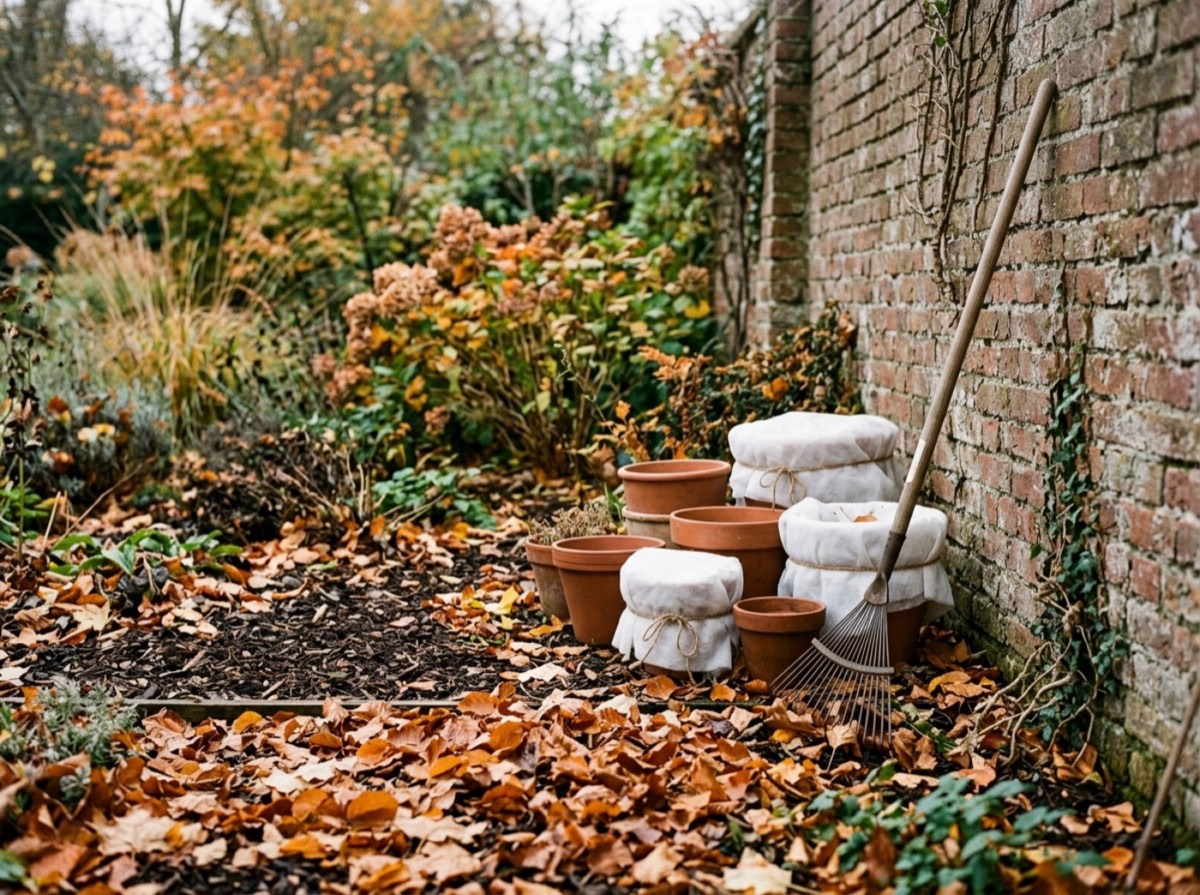 AI generated
Knowing how to prepare your garden for winter protects the plants you have spent all year growing and gives you a head start in spring. A few weekends of work in autumn, before the first hard frosts, can prevent cracked pots, burst pipes, lost plants and a waterlogged lawn.
This checklist covers the jobs that matter most: tidying with wildlife in mind, protecting tender plants and containers, feeding the soil, caring for lawns and ponds, planting for next year, and winterising tools, taps and garden furniture.
When should you start preparing the garden for winter?
Start in early to mid-autumn, when growth slows and before the first frost is forecast. In much of Central and Northern Europe that means from late September to November, but local conditions vary, so keep an eye on overnight temperatures.
Work when the soil is not frozen or waterlogged. Walking on wet soil compacts it and damages its structure, so use boards to spread your weight if you must work on beds after rain.
Tidy up, but leave some mess for wildlife
A spotless garden is a poor home for wildlife. Hollow stems, seed heads and leaf litter shelter overwintering insects, and seed heads feed birds. Leaving some perennials standing until late winter also adds structure and frosty beauty.
Do remove diseased plant material, such as leaves with blackspot or mildew, and dispose of it rather than composting it at home, because many home compost heaps do not get hot enough to kill disease. Clear rotting vegetable crops and fallen fruit that can harbour pests.
- Leave a pile of logs or leaves in a quiet corner as winter shelter
- Keep some seed heads and hollow stems standing until late winter
- Check bonfire heaps and leaf piles for hedgehogs and other animals before lighting or moving them
- Clean bird feeders and baths regularly and keep them topped up
- Put up bird boxes now, ready for the nesting season
- Do heavy hedge cutting before nesting begins; in Germany, radical cutting of hedges is prohibited between 1 March and 30 September, and wild bird nests are protected across Europe
A spotless garden in winter is a poor home for the wildlife that will help it in spring.
How to protect plants from frost
Tender plants such as pelargoniums, fuchsias, citrus, many succulents and some salvias will not survive hard frost outdoors. Bring them into a frost-free greenhouse, conservatory, garage with a window or bright cool room before the first frost.
Dahlias and cannas can be lifted once frost has blackened the foliage, dried and stored in a cool, frost-free place. In milder areas with free-draining soil, many gardeners leave them in the ground under a thick layer of mulch instead.
For borderline-hardy plants that stay outside, wrap them in horticultural fleece on cold nights and pack dry straw or bracken around the crowns. Avoid plastic sheeting directly on plants, as it traps moisture and can cause rot. Remove fleece during mild spells so plants get light and air.
How to protect potted plants in winter
Plants in containers are more exposed than those in the ground, because their roots can freeze on all sides. Wet compost that freezes also expands and can crack pots.
Many terracotta and glazed pots are not frost-proof; move them into shelter or empty them if in doubt.
- Group pots together against a sheltered house wall
- Raise pots on pot feet or bricks so water drains away
- Wrap pots in hessian, bubble wrap or fleece to insulate the roots
- Check pots under eaves occasionally; most plants need very little water in winter, but they should not dry out completely
- Empty and store pots of summer annuals
Feed the soil: mulching, compost and leaf mould
Autumn is the best time to mulch. A layer of about 5 to 8 cm of garden compost, well-rotted manure or bark over moist, weed-free soil insulates roots, reduces erosion from winter rain and feeds soil life. Keep mulch slightly away from the stems of woody plants to prevent rot.
Fallen leaves are a free resource. Rake them off lawns, paths and ponds and stack them in a wire cage or pierced bin bags. Kept moist, they break down into crumbly leaf mould in one to two years, an excellent soil conditioner and mulch.
Empty compost bins that are ready and spread the finished compost, which makes space for autumn clippings. Bare vegetable beds can be covered with mulch or sown with a green manure to protect the soil until spring.
Lawn care in autumn and winter
Autumn is a good time to repair lawns while the soil is still warm and moist. Rake out thatch, spike compacted areas with a garden fork to improve drainage, and overseed bare patches early in the season.
Raise the mower blades for the last few cuts and stop mowing when the grass stops growing. Keep leaves off the lawn, as a thick layer blocks light and encourages disease. Avoid walking on frozen or waterlogged grass, which damages it.
Planting in autumn for next year
Autumn and winter are planting seasons. Spring bulbs such as daffodils and crocuses go in during early autumn, and tulips are traditionally planted later in autumn. Bare-root trees, shrubs, roses and hedging plants are sold and planted during the dormant season, whenever the ground is neither frozen nor waterlogged.
Hardy perennials can be divided and replanted, and garlic and some hardy broad bean varieties can be sown for an early crop.
Winterise ponds, taps, tools and furniture
Water causes most of the winter damage around gardens, so a few practical steps are worth taking before frost.
- Net ponds against falling leaves and remove dying foliage from pond plants
- Float a ball on the pond to help keep a small area free of ice; never smash ice, because the shock can harm fish, and melt a hole with a pan of hot water instead
- Turn off and drain outdoor taps from the inside isolation valve if you have one, or insulate them with a tap cover
- Drain, coil and store hoses and remove attachments
- Disconnect and drain water butt pumps and fountains
- Clean, dry and oil tools, sharpen blades and store them dry
- Service or clean the lawnmower and, for petrol models, follow the manual on fuel storage
- Clean and cover garden furniture or store it in a shed
Frequently asked questions
What should I do in the garden before winter?
+
Protect tender plants and pots from frost, mulch beds, rake leaves off lawns, plant bulbs and bare-root plants, and drain taps, hoses and water features. Leave some seed heads and leaf piles for wildlife.
Should I cut back perennials in autumn or spring?
+
Either works for most plants. Cutting back diseased or collapsing foliage in autumn keeps things tidy, but leaving sturdy stems and seed heads until late winter feeds birds, shelters insects and protects plant crowns.
How do I protect plants from frost overnight?
+
Cover them with horticultural fleece, move pots against a sheltered wall or indoors, and mulch around the roots. Remove the fleece in the morning or during mild weather so plants get light and air.
Do potted plants survive winter outside?
+
Hardy plants usually do if their pots are frost-proof, raised off the ground for drainage and wrapped for insulation. Tender plants and non-frost-proof pots should be moved to shelter.
What can I do with fallen leaves?
+
Rake them into a wire cage or pierced bags and keep them moist to make leaf mould, a valuable soil conditioner. You can also use them as mulch on beds or leave some under hedges for wildlife.
How do I stop my outdoor tap freezing?
+
Turn off the water supply to the tap from the inside valve, open the tap to drain it, and fit an insulating cover. Disconnect hoses so water cannot freeze inside the fitting.
Preparing your garden for winter is a series of simple jobs: protect tender plants and containers from frost, feed the soil with mulch, look after the lawn, plant for spring and drain anything that holds water. Leave some wild corners and seed heads for birds and insects. An afternoon or two of work now means fewer losses, less repair work and a garden ready to grow as soon as the days lengthen.
How we research: Guides are written from established sources and checked for accuracy. They are general information, not professional advice.
Written by
Bitezine Editorial Team
Rankings, reviews & guides
Our editors research every piece from makers’ documentation, independent tests and owner reports, and update it when products change.