Guides
How to pack a suitcase efficiently: fit more and wrinkle less
How to pack a suitcase efficiently: plan a travel capsule wardrobe, roll or fold smartly, load heavy items first and pack liquids and batteries by airline rules.
 Bitezine Editorial TeamRankings, reviews & guides 6 min read
 AI generated
Learning how to pack a suitcase efficiently saves more than space. A well-packed case is quicker to get through the airport, easier to live out of at your destination and far less likely to leave you paying for excess weight or ironing a creased shirt in a hotel bathroom.
This guide covers the full process: planning what to bring, choosing between rolling and folding, loading the case in the right order, packing liquids and electronics by airline rules, and keeping essentials within reach. It works for a weekend carry-on and a two-week checked bag alike.
Start with a packing list and a capsule wardrobe
Overpacking starts before the suitcase is open. Write a list based on your itinerary: number of days, weather forecast, planned activities and whether you can do laundry. Plan outfits rather than individual items.
A travel capsule wardrobe keeps things lean. Pick two or three colours that all match, so every top works with every bottom. Choose fabrics that resist creases and dry quickly, such as merino wool, jersey and technical blends, and wear your bulkiest shoes and jacket while travelling.
Lay everything out on the bed before packing. Then remove anything you are packing just in case and that you could easily buy at your destination.
- Tops: one per day for short trips, or enough for a week if you can wash clothes
- Bottoms: two or three pairs that go with all tops
- Underwear and socks: one per day plus one or two spares
- One warm layer and one waterproof layer
- Two pairs of shoes, including the pair you wear
- Sleepwear, toiletries, medicines, chargers and documents
Rolling vs folding: which saves more space?
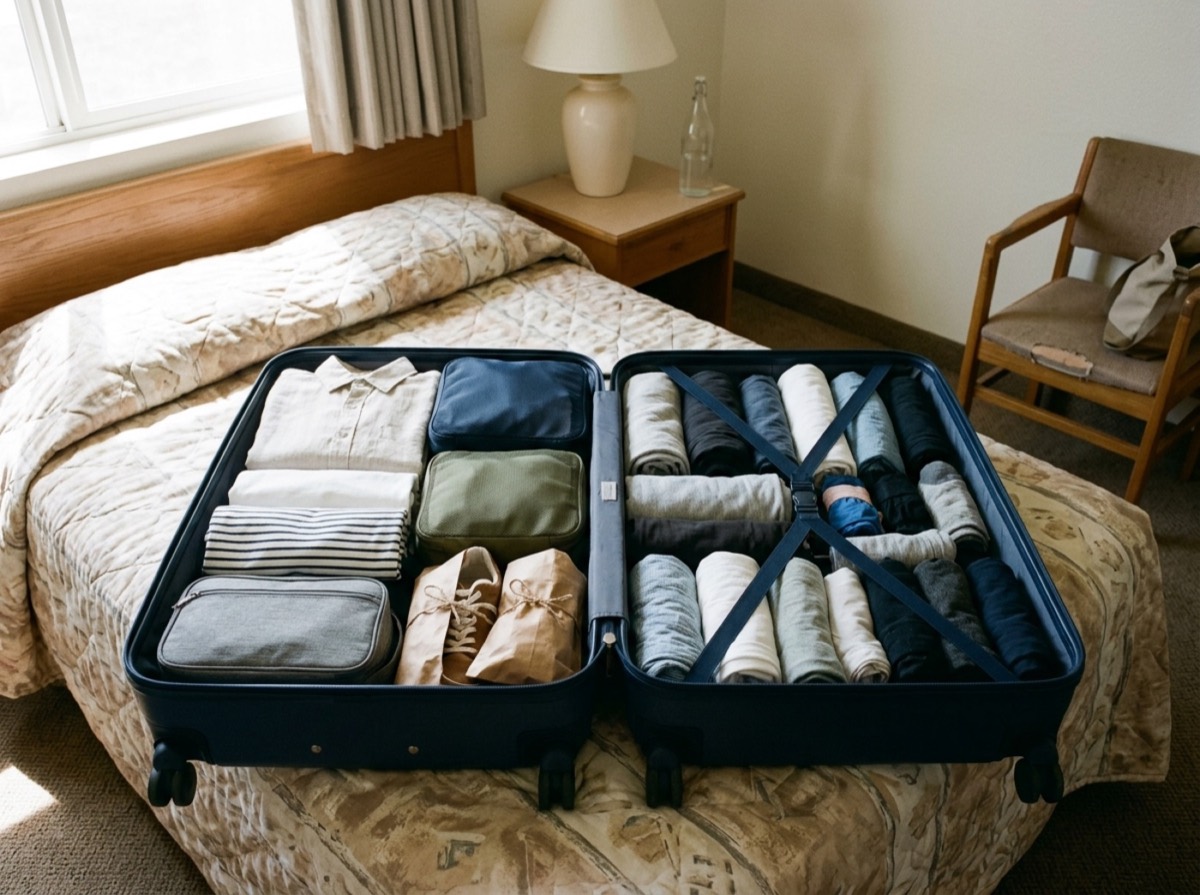
Both methods work, and the best approach mixes them. Rolling suits casual, soft and stretchy items such as T-shirts, jeans, leggings and sleepwear. Rolled clothes pack tightly into gaps and are easy to see at a glance.
Folding is better for structured items like shirts, blazers and trousers with a crease. Fold them along natural lines and lay them flat. For the fewest creases, try bundle packing: wrap larger garments around a soft core, such as a pouch of underwear, so there are no sharp folds.
Tissue paper or dry-cleaning bags between folded layers reduce friction and wrinkles for smart clothes.
The easiest way to pack light is to remove everything you are only bringing just in case.
How to pack a suitcase step by step
Order matters. Heavy items belong at the wheel end so the case stays stable when upright and does not tip over when you let go.
- Place shoes, heel to toe, and other heavy items along the bottom near the wheels; put shoes in bags to keep clothes clean
- Fill shoes with socks, chargers or small items to save space and keep their shape
- Add rolled clothes in a layer on top of and between heavy items
- Lay folded shirts, trousers and dresses flat in the middle
- Fill every gap with socks, belts and underwear
- Put your toiletry bag and items you need first on top
- Use the lid compartments for flat items such as scarves and a spare bag
- Close the case without forcing it; overstuffing strains zips and creases clothes
Are packing cubes worth it?
Packing cubes are zipped fabric pouches that group clothes by type or by day. They do not create space by magic, but they keep the case organised, make repacking quicker and stop the contents collapsing into a heap when you open the lid. Colour or size them by category, such as tops, bottoms and underwear.
Compression cubes and compression bags squeeze out air and can shrink bulky knitwear considerably. Remember that compressing clothes reduces volume, not weight, which makes it easier to exceed a weight limit without noticing.
Liquids, medicines and batteries: pack by the rules
Hand luggage rules on liquids differ between airports and are changing as new security scanners arrive. At many airports, liquids, gels and pastes in the cabin must be in containers of up to 100 ml, carried in one transparent, resealable bag of about one litre. Check the rules for every airport on your route, including the return, before you pack.
Pack toiletries in the checked case if you can, and tape or bag bottles in case of leaks, since air pressure changes can push liquid out of containers. Solid toiletries such as bar shampoo avoid liquid limits altogether.
Power banks and spare lithium batteries must travel in your hand luggage, not in checked bags, because of the fire risk. Most airlines limit their size by watt-hour rating and may ask you not to use or charge them on board. Protect loose battery terminals, and check your airline's current rules.
Keep prescription medicines in your hand luggage in their original packaging, with a copy of the prescription for anything unusual or controlled.
What to pack in hand luggage
Checked bags are occasionally delayed or lost, so anything you cannot do without for a day or two belongs with you.
- Passport or ID, tickets, insurance details and cards
- Medicines and glasses or contact lenses
- Phone, charger, power bank and headphones
- Laptop, camera and other valuables
- Keys, jewellery and irreplaceable items
- A change of underwear and a light layer
- An empty refillable water bottle and a snack
How to avoid overweight baggage fees
Weight limits vary by airline and ticket type, so read your booking before you pack. Weigh the case at home with a luggage scale or by weighing yourself with and without it on bathroom scales, and leave a margin for souvenirs.
If you are close to the limit, move heavy but compact items like books and chargers into your hand luggage, as long as it stays within its own limits, or wear the heaviest clothes. A lightweight suitcase also helps, because the case itself counts towards the limit.
Before leaving, attach a name tag with contact details that do not reveal your home address to strangers, photograph the contents and the case, and consider a luggage tracker for peace of mind.
Frequently asked questions
Is it better to roll or fold clothes in a suitcase?
+
Roll soft, casual items like T-shirts and jeans, which pack tightly and resist creasing. Fold structured items like shirts and blazers and lay them flat. Most efficient packers use both methods in the same case.
What should go at the bottom of a suitcase?
+
Heavy items such as shoes, toiletry bags and books should go at the wheel end of the case. This keeps it stable when standing upright and stops lighter clothes from being crushed.
Can I pack a power bank in checked luggage?
+
No. Power banks and spare lithium batteries must go in hand luggage because of the fire risk. Airlines also limit battery capacity, so check your airline's rules before flying.
How do I pack a suitcase without wrinkling clothes?
+
Choose crease-resistant fabrics, fold smart clothes along natural seams, layer them with tissue paper or thin plastic bags and do not overfill the case. Hang clothes in a steamy bathroom on arrival to release light creases.
How many outfits should I pack for a week?
+
Plan for around five to seven tops, two or three bottoms and underwear for each day, all in matching colours. If you can do laundry, pack for three or four days and wash halfway through.
Do packing cubes really save space?
+
Standard packing cubes mainly improve organisation rather than space. Compression cubes can reduce the volume of bulky clothes, but the weight stays the same, so keep an eye on baggage limits.
Packing a suitcase efficiently comes down to planning before you pack, mixing rolling and folding, loading heavy items at the wheel end and filling every gap. Keep valuables, medicines and batteries in your hand luggage, check liquids and weight rules for your airline and airports, and leave a little room for the trip home. With a good list and a clear order, packing takes less time and your clothes arrive ready to wear.
How we research: Guides are written from established sources and checked for accuracy. They are general information, not professional advice.
Written by
Bitezine Editorial Team
Rankings, reviews & guides
Our editors research every piece from makers’ documentation, independent tests and owner reports, and update it when products change.