Food & Drink
How to make pizza dough at home: a simple, reliable method
How to make pizza dough from four ingredients: which flour to use, hydration, kneading, slow fermentation in the fridge, shaping by hand and baking in a home oven.
 Bitezine Editorial TeamRankings, reviews & guides 6 min read
 AI generated
Knowing how to make pizza dough at home takes only four ingredients: flour, water, salt and yeast. What turns them into a light, chewy, blistered crust is time, gentle handling and a very hot oven.
This guide walks through a straightforward dough you can make by hand, explains the choices that change the result, such as flour type and fermentation time, and covers shaping, baking and the most common problems.
What ingredients do you need for pizza dough?
Classic Neapolitan pizza dough is famously plain. Under the rules for the Italian speciality, the dough contains only wheat flour, water, salt and yeast, with no fat and no sugar. Many home recipes add a spoon of olive oil for a softer, more tender crust and easier browning in a cooler oven, which is a sensible tweak.
Bakers describe dough in percentages of the flour weight. A good home starting point for four medium pizzas is below. Weighing with a digital scale gives far more consistent results than cups.
- 500 g flour (100%)
- 325 g lukewarm water (65% hydration)
- 10 to 15 g fine salt (2 to 3%)
- About 3 g instant dried yeast for a same-day dough, or 1 g for a slow fridge rise
- Optional: 1 tablespoon olive oil
Which flour is best for pizza dough?
Italian tipo 00 flour is finely milled and is the traditional choice for Neapolitan-style pizza. The name refers to how fine the grind is, not to protein, so check the packet: for pizza you want a flour labelled for pizza or with a moderate to high protein level. The official Neapolitan rules call for a medium-strength flour with roughly 11 to 13.5 percent protein.
Strong bread flour works very well in a home oven and gives a chewier crust. Plain or all-purpose flour will make a softer, less elastic dough that tears more easily. You can swap up to a fifth of the flour for wholemeal or semolina for extra flavour and bite, but add a little more water because they absorb more.
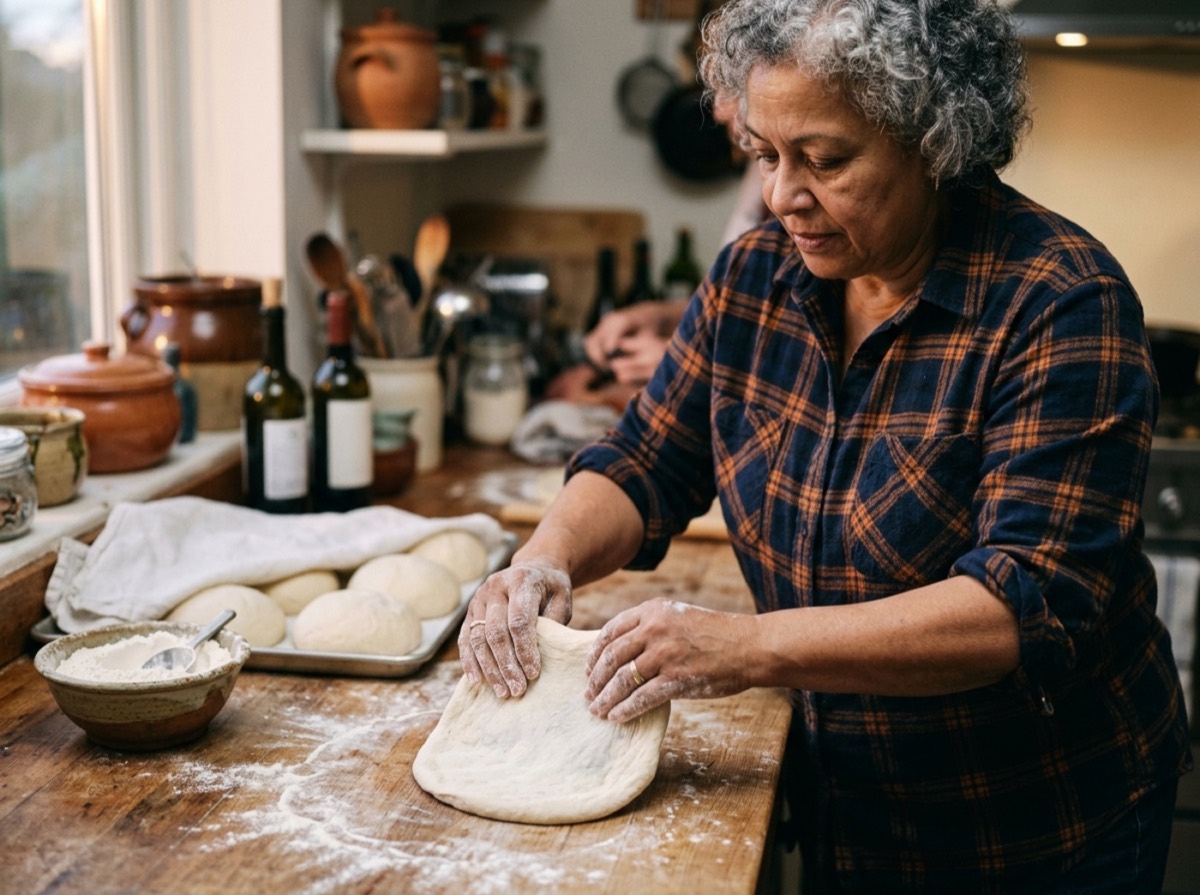
Flour, water, salt and yeast become a great crust through time, gentle hands and heat.
How to make pizza dough by hand, step by step
No mixer is needed. The process takes about 15 minutes of actual work.
- Stir the yeast into the lukewarm water. Water that feels just warm on your wrist is right; hot water can kill yeast.
- Put the flour in a large bowl, pour in most of the water and mix with your hand or a spoon until no dry flour remains.
- Rest the shaggy dough for 15 to 20 minutes. This lets the flour absorb water and makes kneading easier.
- Add the salt and the remaining water and squeeze it through the dough until absorbed.
- Knead on the counter for 8 to 10 minutes, stretching and folding, until the dough is smooth and springs back slowly when poked.
- Place it in a lightly oiled bowl, cover and let it rise.
How long should pizza dough rise?
For a same-day pizza, leave the covered dough at room temperature for about 2 hours, until roughly doubled. Then divide it into four balls of around 200 to 250 g, tuck the edges underneath so the tops are tight, and let them rest another 45 to 60 minutes.
For the best flavour, use less yeast and let the dough ferment slowly in the fridge for 24 to 72 hours. Cold fermentation gives the yeast and enzymes time to develop a more complex, slightly tangy taste and a crust that blisters and browns well. Shape the balls before chilling, keep them in a covered container, and take them out one to two hours before baking so they relax and warm up.
How to stretch pizza dough without a rolling pin
A rolling pin presses out the gas that makes the rim puff up, which is why Neapolitan pizza must be shaped by hand. Flour the counter and the dough ball. Press the centre flat with your fingertips, leaving a border of about 2 cm untouched. Then lift the dough and let gravity stretch it over your knuckles, turning it as you go, until it reaches around 25 to 30 cm.
If the dough keeps shrinking back, the gluten is tight. Cover it and wait ten minutes, then try again. A thin spot is fine; a hole can be pinched closed.
How to bake pizza in a home oven
A Neapolitan pizza bakes in 60 to 90 seconds in a wood-fired oven at about 485°C. Home ovens cannot reach that, so the aim is to get as much heat as possible into the base. Put a pizza stone or thick steel on the top shelf and preheat the oven at its highest setting for at least 45 minutes.
Top the pizza lightly, since heavy toppings make a soggy middle. Slide it onto the hot stone from a floured peel or the back of a baking tray and bake for about 6 to 10 minutes, until the rim is browned and the cheese bubbles. Switching to the grill for the last minute adds colour to the top. Without a stone, preheat an upturned heavy baking tray and use that instead.
Common pizza dough problems and fixes
A few small changes solve most issues. One safety note: do not taste raw dough. The US Food and Drug Administration points out that flour is a raw food that can carry bacteria such as Salmonella and E. coli, which are only killed by baking.
- Dough is too sticky: use wet hands or a scraper rather than adding lots of flour, and knead a few minutes longer.
- Dough will not rise: the yeast may be old or the water was too hot. Test yeast in warm water with a pinch of sugar first.
- Crust is tough and dense: too much flour, too much kneading after resting, or a rolling pin.
- Base is pale and soft: the oven or stone was not hot enough, or the toppings were too wet.
- Dough tastes flat: add the full amount of salt and try a longer fridge rise.
Frequently asked questions
Can I make pizza dough without yeast?
+
You can make a quick flatbread-style base with flour, baking powder, salt, water or yoghurt, but it will not have the chewy, airy texture of yeasted dough. Sourdough starter is another option and replaces commercial yeast entirely.
Is 00 flour necessary for pizza?
+
No. Tipo 00 flour is traditional and gives a fine, tender crust, especially in very hot ovens. Strong bread flour works equally well in a home oven and is easier to find.
Can you freeze pizza dough?
+
Yes. Freeze individual dough balls after the first rise, lightly oiled and wrapped. Thaw them overnight in the fridge, then leave them at room temperature for an hour or two before shaping.
How long does pizza dough last in the fridge?
+
Dough made with a small amount of yeast is commonly kept for up to about three days in the fridge, and the flavour improves over that time. If it smells strongly of alcohol or collapses, it has over-fermented.
Why does my pizza dough shrink when I stretch it?
+
The gluten is too tight, usually because the dough is cold or has not rested long enough since it was shaped. Cover it for 10 to 15 minutes and stretch again.
What temperature should the oven be for homemade pizza?
+
As hot as it goes, usually around 250 to 290°C for domestic ovens, preheated for at least 45 minutes with a stone or steel inside. Dedicated pizza ovens reach far higher temperatures and bake in about a minute or two.
Once you have made pizza dough a couple of times, the recipe becomes second nature. Weigh your ingredients, give the dough time in the fridge, shape it with your hands and get the oven as hot as it will go. Those four habits matter far more than any special equipment for a crisp, airy homemade pizza.
How we research: Guides are written from established sources and checked for accuracy. They are general information, not professional advice.
Written by
Bitezine Editorial Team
Rankings, reviews & guides
Our editors research every piece from makers’ documentation, independent tests and owner reports, and update it when products change.