Food & Drink
How to make pancakes: fluffy American and thin crêpe-style
How to make pancakes two ways: thick, fluffy American pancakes and thin crêpe-style pancakes, with batter ratios, pan heat, flipping tips and topping ideas.
 Bitezine Editorial TeamRankings, reviews & guides 5 min read
 AI generated
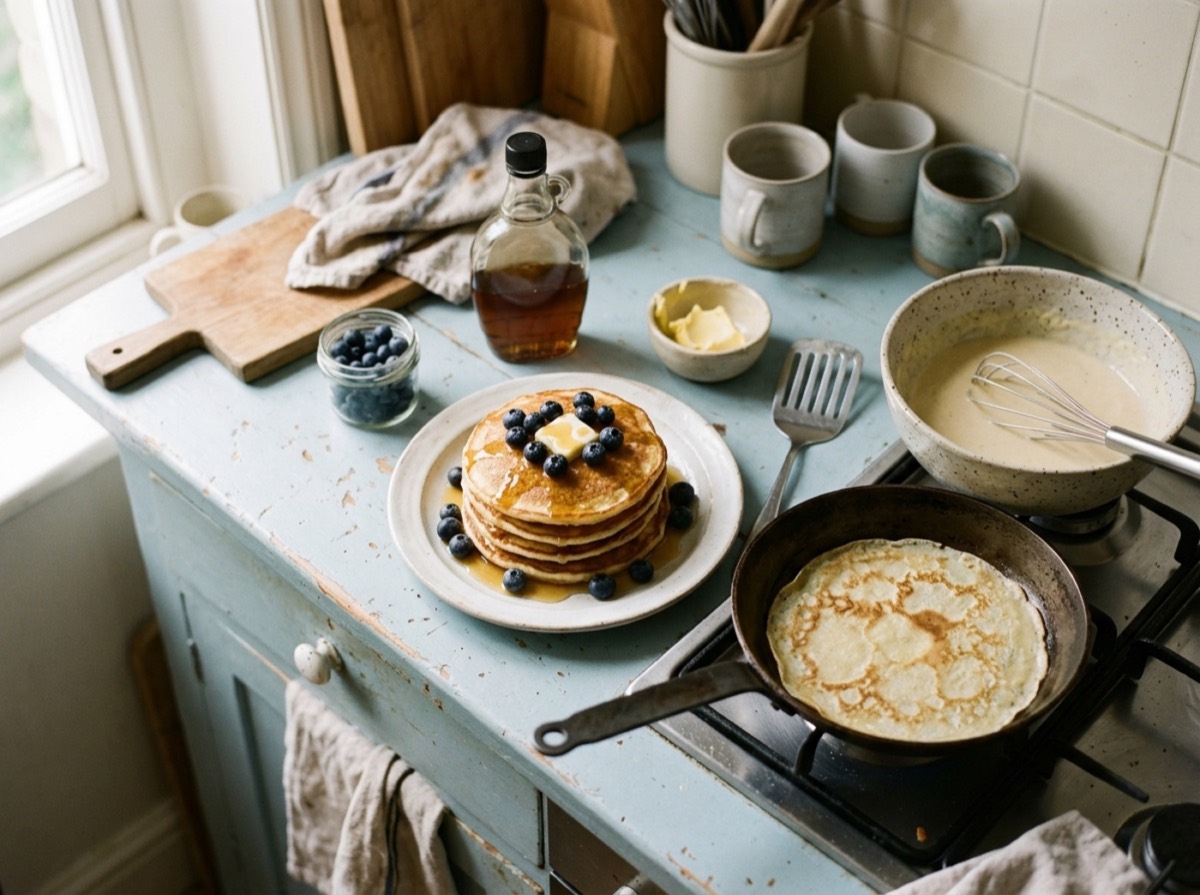
Learning how to make pancakes from scratch takes about ten minutes and ingredients you probably already have: flour, milk, eggs and a little butter. The same basic batter becomes thick, fluffy stacks or thin, lacy crêpes, depending on the ratio and whether you add a raising agent.
This guide covers both styles, explains the small details that make the difference, such as resting the batter and heating the pan properly, and helps you fix pancakes that come out flat, rubbery or pale.
What are the main types of pancakes?
American-style pancakes are thick and fluffy thanks to a raising agent, usually baking powder, and are often served in stacks with butter and maple syrup. British pancakes are thin and unleavened, made from flour, eggs and milk, and traditionally eaten with lemon juice and sugar on Shrove Tuesday, known as Pancake Day. French crêpes, from Brittany, are thinner still.
Across Europe you find close relatives: German Pfannkuchen, Austrian Palatschinken, Hungarian palacsinta and Polish naleśniki, often rolled around sweet or savoury fillings. Dutch baby pancakes are baked in the oven and puff up dramatically.
How to make fluffy American pancakes
This makes about 8 to 10 pancakes of around 10 cm.
The most important rule: mix only until the flour disappears. A few small lumps are fine. Overmixing develops gluten and gives tough, flat pancakes.
- Whisk 200 g plain flour, 2 teaspoons baking powder, 1 to 2 tablespoons sugar and a pinch of salt in a bowl.
- In a jug, whisk 1 egg, about 250 ml milk and 2 tablespoons melted butter.
- Pour the wet ingredients into the dry and stir gently with a fork or spatula until just combined.
- Rest the batter for 5 to 10 minutes while the pan heats.
- Cook ladlefuls in a lightly buttered pan over medium heat until bubbles form and pop on top and the edges look set, about 2 minutes.
- Flip and cook for another minute or so until golden and cooked through.
Mix only until the flour disappears; a few small lumps are fine.
How to make thin pancakes and crêpes
Thin pancakes need a runny batter with no raising agent. The batter should have the consistency of single cream.
- Whisk 100 g plain flour, a pinch of salt, 2 eggs and about 300 ml milk until smooth. Adding the milk gradually avoids lumps.
- Stir in 1 tablespoon melted butter.
- Rest the batter for at least 30 minutes, or in the fridge for longer.
- Heat a wide frying pan over medium-high heat and wipe it with a little butter or oil.
- Pour in a small ladleful and immediately tilt the pan in a circle to coat the base thinly.
- Cook for about a minute until the underside is lightly golden, then flip or toss and cook for 30 seconds more.
Why rest pancake batter?
Resting gives the flour time to absorb the liquid and lets the gluten relax, which makes pancakes more tender and less likely to tear. It also lets air bubbles from whisking settle out of thin batter, so crêpes cook more evenly. For fluffy pancakes, keep the rest short, because baking powder starts working as soon as it gets wet.
Rested batter usually thickens a little. If a crêpe batter becomes too thick to swirl, whisk in a splash of milk.
How hot should the pan be, and when to flip?
Medium heat is right for most pancakes. Too hot and the outside burns before the middle sets; too cool and they turn pale and rubbery. Test with a drop of water: it should sizzle and dance, not vanish instantly. The first pancake is often a test that tells you whether to adjust the heat.
For thick pancakes, flip when bubbles appear across the surface and start to pop, and the edges look dry. For thin ones, flip when the edge lifts easily and the underside has golden patches. A thin, wide spatula makes flipping much easier than tossing.
Why are my pancakes flat, tough or pale?
Most pancake problems come down to mixing, heat or leavening.
- Flat pancakes: old baking powder, overmixed batter or batter left standing too long.
- Tough or rubbery: too much mixing, or too little fat in the batter.
- Pale and soft: the pan is not hot enough.
- Burnt outside, raw inside: the pan is too hot or the pancakes are too thick.
- Sticking: the pan needs a light film of fat before each pancake, and the pancake should not be moved too early.
Egg-free pancakes, make-ahead tips and food safety
For pancakes without eggs, use a little extra milk and baking powder, or replace the egg with a mashed ripe banana or a tablespoon of ground flaxseed mixed with three tablespoons of water. Plant milks work in place of dairy milk.
Batter contains raw egg and raw flour, and the US Food and Drug Administration advises never to eat raw flour, dough or batter, because flour can carry bacteria such as Salmonella and E. coli that only cooking kills. Keep leftover batter covered in the fridge and use it soon. Cooked pancakes can be layered with baking paper, cooled, then refrigerated or frozen and reheated in a toaster, pan or oven.
Frequently asked questions
What is the basic pancake ratio?
+
For thin pancakes, a common ratio is 100 g flour, 2 eggs and 300 ml milk. For fluffy American pancakes, use about 200 g flour, 1 egg, 250 ml milk and 2 teaspoons baking powder.
How do I make pancakes fluffy?
+
Use fresh baking powder, mix the batter only until just combined and cook on medium heat. A short rest before cooking also helps.
Can you make pancake batter the night before?
+
Thin pancake batter keeps well covered in the fridge overnight and often improves. Batter with baking powder loses some lift over time, so for fluffy pancakes mix the dry and wet ingredients separately and combine them in the morning.
Can I make pancakes without milk?
+
Yes. Plant-based milks work well, and water gives a lighter, slightly less rich pancake. Buttermilk makes very tender American pancakes if you add a little bicarbonate of soda.
Why is the first pancake always bad?
+
The pan is usually not yet at an even temperature and the fat has not spread properly. Treat the first one as a test and adjust the heat.
How do you keep pancakes warm?
+
Place cooked pancakes on a plate or baking tray in a low oven, loosely covered, while you cook the rest.
Once you know how to make pancakes both ways, breakfast becomes easy to vary: fluffy stacks with fruit and syrup at the weekend, thin pancakes with lemon and sugar or savoury fillings on a weeknight. Mix gently, rest the batter, keep the heat at medium and remember that the first pancake is for the cook.
How we research: Guides are written from established sources and checked for accuracy. They are general information, not professional advice.
Written by
Bitezine Editorial Team
Rankings, reviews & guides
Our editors research every piece from makers’ documentation, independent tests and owner reports, and update it when products change.