Food & Drink
How to make nut butter at home: a simple method for any nut
Learn how to make nut butter at home with just nuts and a food processor: roasting times, blending stages, flavour ideas, storage and fixes for dry or grainy batches.
 Bitezine Editorial TeamRankings, reviews & guides 6 min read
 AI generated
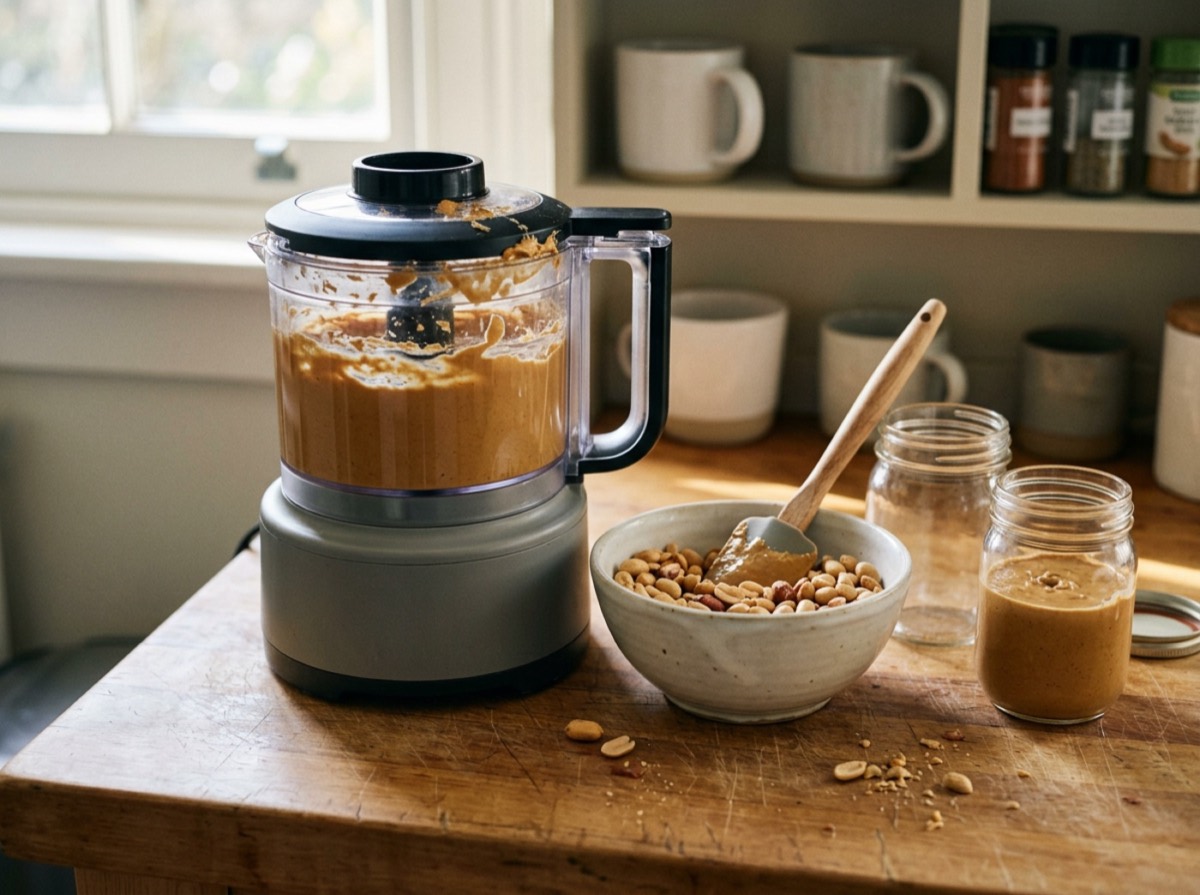
Learning how to make nut butter at home takes one ingredient, a food processor and about 15 minutes of patience. Nuts contain plenty of natural oil, and when they are ground long enough, that oil is released and the crumbs turn into a smooth, spreadable butter without anything added.
This guide walks through choosing and roasting nuts, the stages you will see while blending, how to add flavour, how long homemade nut butter keeps and what to do when a batch refuses to turn creamy.
What you need to make nut butter
A food processor with a sturdy S-blade is the most reliable tool. A high-powered blender also works, especially one with a tamper, but standard blenders often struggle because the thick paste stops circulating and the motor can overheat.
Use at least 300 g of nuts, about two to three cups. Too small a quantity just spins around the bowl without grinding evenly. You will also want a baking tray, a spatula and clean, dry jars.
- 300–500 g plain nuts: almonds, peanuts, cashews, hazelnuts, pecans, walnuts or a mix
- Optional: a pinch of salt
- Optional: a little neutral oil, honey, maple syrup, cinnamon or cocoa powder
- Food processor or powerful blender
- Baking tray and airtight jars
Should you roast nuts before making nut butter?
Roasting is optional but strongly recommended. Warm nuts release their oils more easily, so they blend faster and smoother, and roasting deepens the flavour. Raw nuts work too, but expect a longer blending time and a milder, sometimes slightly grassy taste.
Spread the nuts in a single layer and roast at about 160–175°C. Most nuts need 8 to 12 minutes; smaller or softer nuts like cashews, pecans and walnuts brown faster, while almonds may need a little longer. Shake the tray halfway and watch closely, because nuts can go from golden to burnt within a minute or two.
For hazelnuts, rub the warm nuts in a clean tea towel to remove most of the papery skins, which can taste bitter. Let roasted nuts cool until just warm, not hot, before blending.
Most batches that fail to turn creamy just needed a few more minutes of blending.
How to make nut butter step by step
The process looks the same for almost every nut. The key is to keep going longer than feels right.
- Add the warm roasted nuts to the food processor and blend.
- After about a minute they become a fine, crumbly meal. Stop and scrape down the sides.
- Keep blending. Within a few minutes the meal clumps into a thick ball or dough that knocks around the bowl.
- Continue, scraping down every minute or two. The ball breaks down and the mixture turns into a thick, grainy paste.
- Keep going until the paste loosens and becomes smooth and pourable. This can take anywhere from 8 to 15 minutes in total, depending on the nut and machine.
- Add salt or flavourings in the last minute, blend briefly and transfer to jars.
Tips for different nuts
Each nut has its own character, so blending times and textures vary.
- Peanuts: blend quickly and turn creamy easily; roasting gives the classic flavour
- Almonds: take the longest and can seem stuck at the paste stage; keep going
- Cashews: naturally sweet and very creamy, lovely raw or lightly roasted
- Hazelnuts: remove skins after roasting; pair well with cocoa powder
- Walnuts and pecans: high in oil, blend fast, but taste best eaten fresh
- Mixed nuts: combine a creamy nut like cashew with a firmer one like almond for balance
How to make crunchy or flavoured nut butter
For crunchy nut butter, set aside a handful of roasted nuts before you start. Once the rest is smooth, add the reserved nuts and pulse a few times until they are chopped into small pieces.
Flavour ideas include a pinch of salt, cinnamon or vanilla, a spoonful of cocoa powder, a little honey or maple syrup, or chilli flakes for savoury use. Add liquid sweeteners sparingly and at the end: they can make the butter thicken or stiffen, which is normal.
Why is my nut butter not getting creamy?
The most common reason is simply time. Many people stop at the thick paste stage, just before it turns smooth. Keep blending, scraping down regularly, and give the machine a short rest if the motor or base feels hot.
- Too few nuts: add more so the blade can grip the mixture
- Cold nuts: warm them briefly in the oven and try again
- Very dry nuts or an older machine: add a teaspoon of neutral oil at a time
- Seized, stiff mixture: water or a watery ingredient got in; use it in baking or sauces instead
- Bitter taste: nuts were over-roasted or skins were left on hazelnuts
How long does homemade nut butter last?
Homemade nut butter has no preservatives, and nut oils can turn rancid over time, especially when exposed to heat, light and air. Store it in a clean, airtight jar. At cool room temperature it is best used within a week or two; in the fridge it typically keeps for up to a few months, but always check for off smells before using.
Oil may separate and rise to the top. That is normal; just stir it back in. Refrigerated nut butter firms up, so take it out a little before you need it. Always use a clean, dry spoon, and discard any jar that smells sharp, bitter or paint-like, or shows signs of mould.
Ways to use homemade nut butter
Spread it on toast or apple slices, swirl it into porridge or yoghurt, blend it into smoothies, or whisk it with soy sauce, lime and warm water for a quick noodle or salad dressing. It also works in cookies, energy balls and savoury stews. Remember that nut butter contains nuts, so label jars clearly if you share them, as nut allergies can be serious.
Frequently asked questions
Do you need to add oil to make nut butter?
+
Usually not. Nuts contain enough natural oil to become smooth if you blend long enough. A teaspoon of neutral oil can help with drier nuts or a weaker machine.
Can I make nut butter in a blender?
+
Yes, if it is a high-powered blender with a tamper. Standard blenders often struggle, so work in shorter bursts, scrape down often and let the motor rest when it gets warm.
How long does it take to make nut butter?
+
Typically 8 to 15 minutes of blending, plus roasting and cooling time. Almonds tend to take the longest; peanuts and cashews are quicker.
Is it cheaper to make your own nut butter?
+
It depends on the nuts and where you buy them. Buying nuts in bulk can make it cheaper, and you control exactly what goes in, including salt and sweeteners.
Should homemade nut butter be refrigerated?
+
Refrigerating it helps it keep longer, often up to a few months, because it slows the oils going rancid. At room temperature, use it within a week or two.
Why did my nut butter turn hard when I added honey?
+
Liquid sweeteners contain water, which can make the mixture seize and stiffen. Add them in small amounts at the very end, or use a powdered flavouring instead.
Now you know how to make nut butter at home: roast, cool slightly, blend, scrape and keep blending until the paste turns silky. With a food processor and a bag of nuts you can make almond, peanut, cashew or hazelnut butter to your own taste, with exactly as much salt or sweetness as you like, and store it in the fridge for a fresh spread whenever you want it.
How we research: Guides are written from established sources and checked for accuracy. They are general information, not professional advice.
Written by
Bitezine Editorial Team
Rankings, reviews & guides
Our editors research every piece from makers’ documentation, independent tests and owner reports, and update it when products change.