Food & Drink
How to make fresh pasta by hand: dough, rolling, cutting and cooking
How to make fresh pasta with flour and eggs: the ratio, kneading, resting, rolling by hand or machine, cutting shapes, cooking times and storing it safely.
 Bitezine Editorial TeamRankings, reviews & guides 5 min read
 AI generated
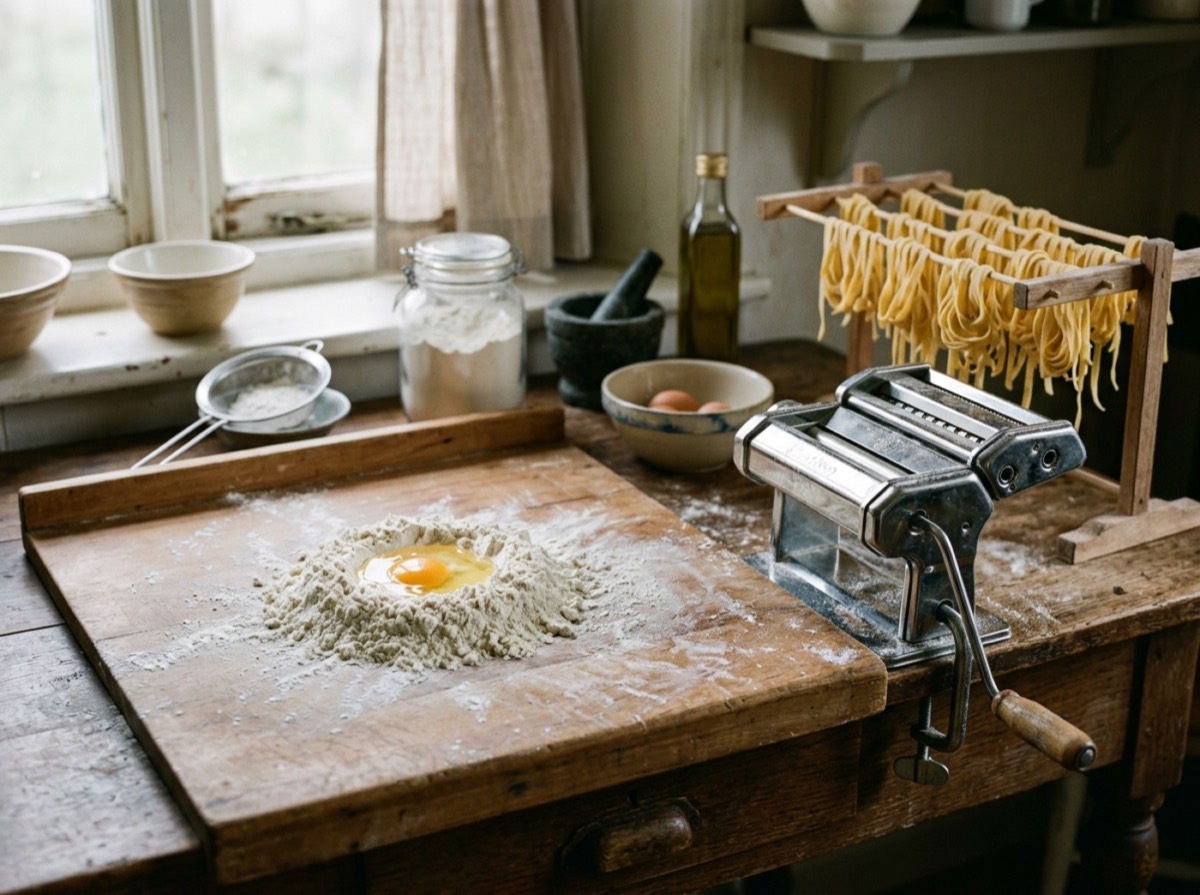
Learning how to make fresh pasta needs little more than flour, eggs and a clear surface. Homemade egg pasta is silky, cooks in a couple of minutes and holds sauce beautifully, and once you have the feel of the dough it takes well under an hour.
This guide covers the basic ratio, which flour to use, kneading and resting, rolling with or without a machine, cutting common shapes, cooking times and how to keep fresh pasta safely.
What is the best ratio for fresh pasta dough?
The classic starting point for northern Italian egg pasta is 100 g of flour for every large egg. Two eggs and 200 g of flour make enough for two generous main portions or four starters. Eggs vary in size, so treat the ratio as a guide and adjust by feel: add a spoon of water if the dough is crumbly, or a little flour if it sticks.
For richer, more golden pasta, replace one whole egg with two or three yolks. For eggless pasta, the southern Italian tradition uses durum wheat semolina and warm water, roughly two parts semolina to one part water by weight, which suits shapes like orecchiette and cavatelli.
Which flour should you use for fresh pasta?
Finely milled Italian tipo 00 flour gives a smooth, tender dough and is the usual choice for egg pasta such as tagliatelle and ravioli. Semolina, ground from hard durum wheat, gives a firmer, more textured pasta with more bite. Many cooks mix the two, for example three parts 00 to one part semolina.
Plain or all-purpose flour also works and is a fine place to start. The dough will be slightly softer and a little less elastic, but it will still taste far better than you expect. Semolina is also useful for dusting finished pasta, as it stops strands sticking without being absorbed.
Fresh pasta rewards practice more than equipment.
How to make pasta dough by hand
You can mix the dough in a bowl, but the traditional well method on a board is easy and needs no extra washing up.
- Heap the flour on a clean surface and make a wide well in the centre.
- Crack the eggs into the well and beat them with a fork, adding a pinch of salt if you like.
- Slowly draw flour from the inside walls into the eggs until it becomes a thick paste.
- Push the rest of the flour in with a scraper or your hands and bring it into a rough ball.
- Knead for 8 to 10 minutes, pushing with the heel of your hand and folding, until the dough is smooth and springy.
- Wrap it and rest it at room temperature for at least 30 minutes.
Why pasta dough needs to rest
Straight after kneading, the gluten network is tight and the dough fights back when you roll it. Resting lets the gluten relax and the flour finish absorbing the egg, so the dough becomes softer and much easier to roll thin. Thirty minutes is enough; up to an hour or two is fine. Keep it well wrapped so the surface does not dry out.
How to roll out pasta with or without a machine
With a pasta machine, cut the dough into four pieces and keep the rest covered. Flatten one piece, pass it through the widest setting, fold it in thirds and pass it through again two or three times. Then work down the settings one at a time until the sheet is thin enough. For tagliatelle, stop a notch or two before the thinnest setting; for filled pasta, go thinner so the joins are not thick.
Without a machine, use a long rolling pin. Roll from the centre outwards, turning the dough a quarter turn often, until it is thin enough that you can just see the shape of your hand through it. It takes practice and a bit of effort, but a slightly thicker hand-rolled pasta has a pleasant, rustic chew.
How to cut fresh pasta shapes
Let the rolled sheets dry for a few minutes until they feel like soft leather, which stops strands sticking together.
- Tagliatelle: dust a sheet with flour, roll it up loosely and slice into strips about 6 to 8 mm wide, then shake them out.
- Pappardelle: cut wider ribbons, about 2 to 3 cm.
- Lasagne: cut sheets to fit your dish; fresh sheets need no pre-boiling in most recipes.
- Ravioli: place small spoonfuls of filling on a sheet, cover with a second sheet, press out the air and cut around each one.
- Farfalle: cut small rectangles and pinch each in the middle.
How long does fresh pasta take to cook?
Fresh pasta cooks far faster than dried, often in about half the time or less. Bring a large pan of water to a rolling boil, salt it well, and add the pasta. Thin ribbons are usually ready in 2 to 3 minutes and filled pasta in 3 to 5, depending on thickness. Taste a piece: it should be tender with a slight bite. Lift it straight into the sauce with a splash of the cooking water, which helps the sauce cling.
How to store fresh pasta safely
Egg pasta contains raw egg and raw flour, so do not taste the dough before cooking, and wash your hands and surfaces after handling it. Fresh pasta is perishable: if you are not cooking it within a few hours, dust it with semolina, cover it and keep it in the fridge, then cook it soon.
For longer storage, freeze it. Spread nests or ravioli on a floured tray until firm, then bag them. Cook straight from frozen, adding a minute or so to the time. Pasta can also be fully dried on a rack until brittle, but it must dry completely, or it can go mouldy in storage.
Frequently asked questions
How much flour do I need per egg for pasta?
+
About 100 g of flour per large egg is the classic ratio. Adjust with a little water or flour until the dough is smooth and not sticky.
Can you make fresh pasta without a pasta machine?
+
Yes. Roll the dough with a long rolling pin, turning it often, until it is thin and slightly translucent. Hand-rolled pasta is usually a little thicker, which suits ribbons like pappardelle.
Is 00 flour or semolina better for pasta?
+
00 flour gives a silky, tender egg pasta, while semolina gives a firmer, chewier texture and is traditional for eggless southern shapes. A mix of both is a popular compromise.
Why is my pasta dough too dry or crumbly?
+
The eggs were small or there is too much flour. Wet your hands and knead the moisture in, or add a teaspoon of water at a time. Resting the dough also helps it come together.
Can you freeze homemade pasta?
+
Yes. Freeze it spread out on a tray, then transfer it to a bag. Cook it from frozen in plenty of boiling salted water without thawing first.
Do you need to add oil to fresh pasta water?
+
No. Oil floats on top and does little to stop sticking. Use a large pan of well-salted water and stir the pasta when it first goes in.
Fresh pasta rewards practice more than equipment. Start with the 100 g per egg ratio, knead until smooth, give the dough its rest and roll it as thin as you can. After a few batches you will know the dough by feel, and a plate of homemade tagliatelle will feel like an easy weeknight meal.
How we research: Guides are written from established sources and checked for accuracy. They are general information, not professional advice.
Written by
Bitezine Editorial Team
Rankings, reviews & guides
Our editors research every piece from makers’ documentation, independent tests and owner reports, and update it when products change.