Guides
How to jump-start a car safely with jump leads
How to jump-start a car safely: the correct order for connecting and removing jump leads, when not to try it, and what to do once the engine is running.
 Bitezine Editorial TeamRankings, reviews & guides 6 min read
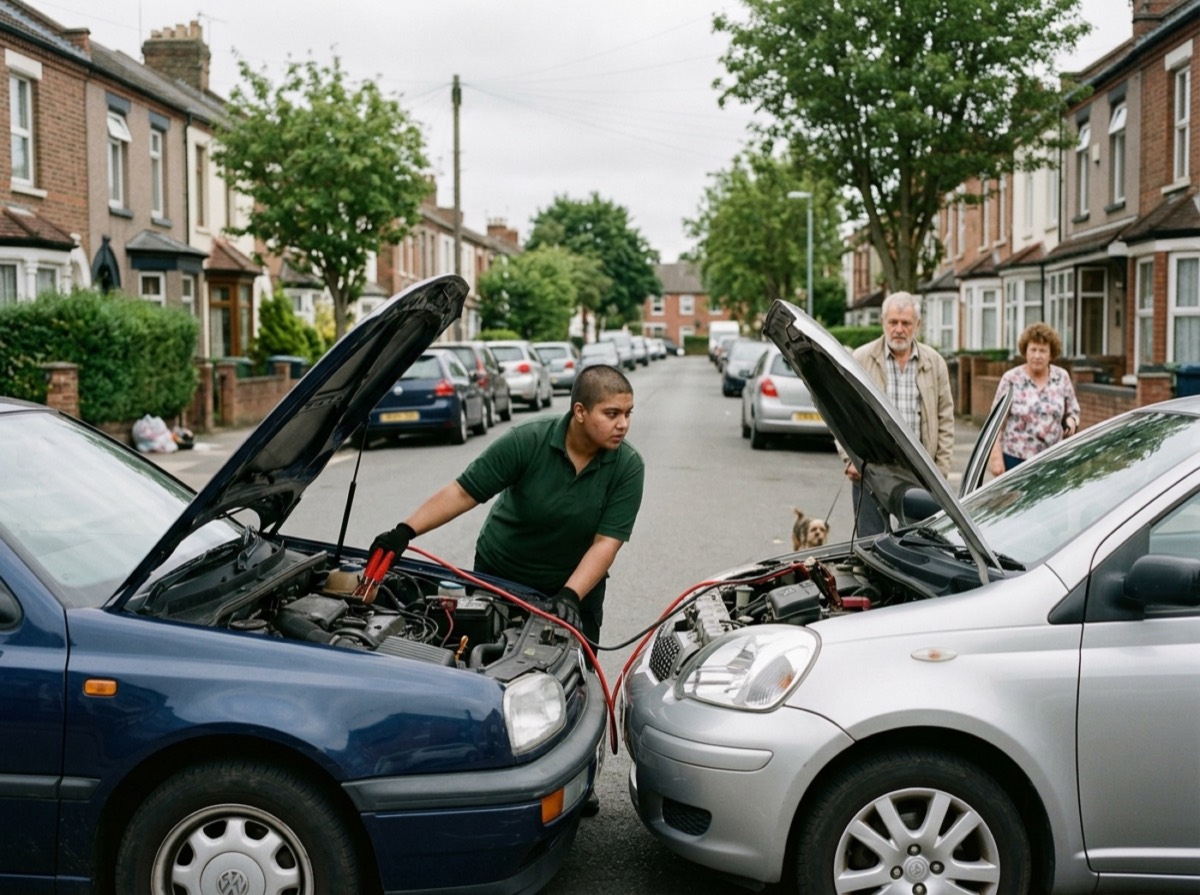 AI generated
Knowing how to jump-start a car can turn a flat battery from a ruined morning into a ten-minute delay. The method is simple, but the order in which you connect the jump leads matters for your safety and for the electronics in both cars.
This guide covers the signs of a flat battery, when you should not attempt a jump start, the step-by-step method with another car, using a portable jump starter, and what to do afterwards. Check your vehicle handbook as well, because many cars have specific jump-start points or instructions.
Is it a flat battery?
A flat battery usually shows itself in a few recognisable ways. When you turn the key or press the start button, you may hear a slow, laboured turning, rapid clicking or nothing at all. Dashboard lights may be dim or flicker, and the central locking may not respond.
If the engine turns over normally but does not fire, the battery is probably not the problem, and a jump start will not help. Common causes of a flat battery include lights left on, short journeys that never fully recharge it, cold weather, a long period without driving and simply an old battery.
Safety: when not to jump-start a car
Car batteries can release flammable gas and contain corrosive acid. Take these precautions seriously.
- Do not jump-start a battery that is cracked, leaking, bulging or badly corroded. Call for help instead.
- Do not attempt it if the battery might be frozen.
- Keep sparks, flames and cigarettes away from the batteries.
- Remove metal jewellery such as rings and watches, and wear gloves and eye protection if you have them.
- Never let the red and black clamps touch each other while any lead is connected.
- Check the handbook before using a hybrid or electric car as the donor vehicle. Many manufacturers advise against it.
- Keep hands, hair and clothing away from fans and belts, which can start moving once an engine runs.
- If you are on a busy road or motorway, move to safety and call breakdown assistance instead.
The order you connect the jump leads matters as much as the leads themselves.
What you need to jump-start a car
You need a set of jump leads (jumper cables) in good condition, with undamaged insulation and strong clamps, and a donor car with a healthy battery of the same voltage, which for ordinary cars is 12 volts. Thicker cables transfer current more effectively, especially for larger engines. Alternatively, you can use a charged portable jump starter.
How to jump-start a car step by step
Park the donor car close enough for the leads to reach, but make sure the two cars do not touch. Put both in neutral or Park with the handbrakes on, switch both engines off and turn off lights, heater fans and other electrical items. Open both bonnets and locate the batteries or the dedicated jump-start terminals shown in the handbooks. The positive terminal is usually marked with a plus sign and often has a red cover.
Then connect the leads in this order:
- Attach one red clamp to the positive (+) terminal of the flat battery.
- Attach the other red clamp to the positive (+) terminal of the donor battery.
- Attach one black clamp to the negative (-) terminal of the donor battery.
- Attach the other black clamp to an earth point on the car with the flat battery: a bare, unpainted metal part of the engine block or a designated earth point, away from the battery and moving parts. Avoid clamping it directly to the flat battery's negative terminal.
- Start the donor car and let it run for a few minutes.
- Try to start the car with the flat battery. Keep each attempt short, a few seconds at most, and pause between attempts to avoid overheating the starter motor.
- Once it starts, leave both engines running for a few minutes.
How to remove jump leads in the right order
Keep the rescued car's engine running while you disconnect, and follow any handbook advice on the donor car. Remove the leads in the exact reverse order of connection, making sure no clamp touches metal or another clamp as you work.
- Black clamp from the earth point on the previously flat car.
- Black clamp from the donor battery's negative terminal.
- Red clamp from the donor battery's positive terminal.
- Red clamp from the previously flat battery's positive terminal.
How to use a portable jump starter
A portable jump starter is a compact battery pack with built-in leads, so you do not need a second car. Make sure it is charged and suitable for your engine size. With the pack switched off, connect the red clamp to the positive terminal and the black clamp to an earth point or the negative terminal as the pack's instructions say, then switch it on and start the car.
Once the engine runs, switch the pack off and remove the black clamp first, then the red. Recharge the pack afterwards and check its charge every few months, as these units slowly lose power in storage.
What to do after a jump start
Do not switch the engine off straight away. Drive for at least around half an hour, ideally on open roads rather than stop-start traffic, so the alternator can put charge back into the battery. Keep unnecessary electrical loads such as heated seats and rear demisters off at first.
If the car will not start again later, or needs another jump start within days, the battery may be worn out or something may be draining it, such as a faulty alternator or a component that stays on. Have the battery and charging system tested by a garage. Car batteries often last several years, but heat, cold and short trips shorten their life.
Frequently asked questions
Which jump lead goes on first?
+
The red lead goes on first, to the positive terminal of the flat battery, then to the positive terminal of the donor. Then connect black to the donor's negative terminal and finally to a bare metal earth point on the car with the flat battery.
Why connect the black lead to metal and not the battery?
+
The last connection can create a small spark. Making it on bare metal away from the battery reduces the risk of igniting gas that a battery can give off.
How long should I leave the car running after a jump start?
+
Leave both cars running for a few minutes before removing the leads, then drive for around 30 minutes or more. A short trip round the block is not enough to recharge the battery.
Can an electric or hybrid car jump-start another car?
+
Many manufacturers advise against using a hybrid or electric car as a donor, as it may damage its electrical system. Check the handbook, and use a conventional car or a portable jump starter if in doubt.
Why won't my car start even with jump leads?
+
The leads may have poor contact, the cables may be too thin, or the donor may need to run longer first. If the engine still will not start, the fault may lie with the starter motor, alternator or fuel system rather than the battery.
Can jump-starting damage my car?
+
Done correctly, it rarely causes problems. Connecting leads the wrong way round or letting clamps touch can damage electronics, so follow the order carefully and check the handbook for specific jump-start points.
Now you know how to jump-start a car: red to the flat battery, red to the donor, black to the donor, black to bare metal on the dead car, then reverse the order to remove them. Keep a good set of jump leads or a charged portable starter in the boot, and treat repeated flat batteries as a sign to get the car checked.
How we research: Guides are written from established sources and checked for accuracy. They are general information, not professional advice.
Written by
Bitezine Editorial Team
Rankings, reviews & guides
Our editors research every piece from makers’ documentation, independent tests and owner reports, and update it when products change.