Guides
How to hang a picture straight and securely
How to hang a picture at the right height, choose the right fixing for your wall, hit the mark first time and keep frames level, with or without drilling.
 Bitezine Editorial TeamRankings, reviews & guides 5 min read
 AI generated
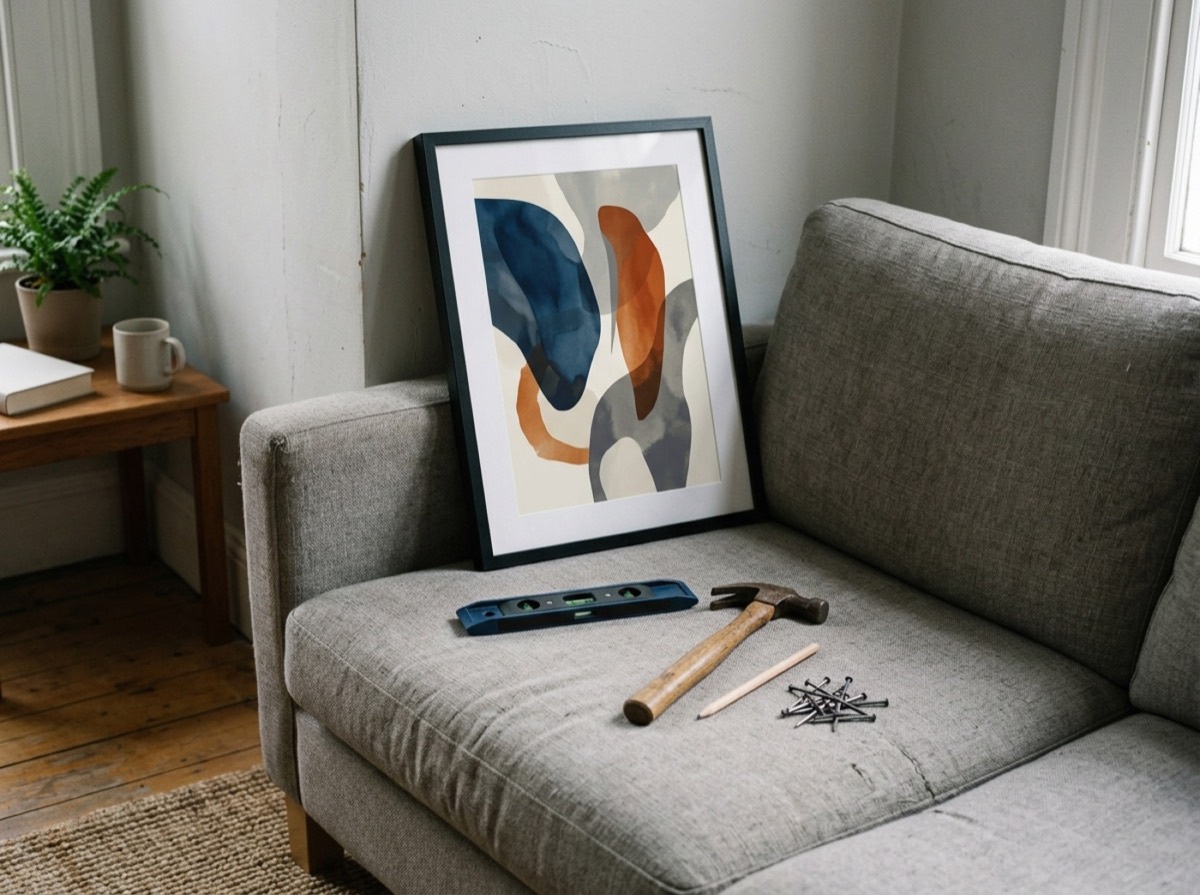
Knowing how to hang a picture well turns a pile of frames into a finished room. The job is simple, but a few details decide whether the result looks deliberate: the height, the fixing and whether the frame stays level.
This guide explains the ideal height for art, how to pick the right fixing for your wall type, a step-by-step method that puts the nail in the right place first time, and ways to hang frames without drilling.
How high should you hang a picture?
A widely used rule, followed by many galleries, is to place the centre of the picture at average eye level, roughly 145 to 150 cm from the floor. This keeps art comfortable to look at and makes pictures in different rooms feel consistent.
Adjust for furniture. Above a sofa, sideboard or bed, leave a gap of about 15 to 25 cm between the top of the furniture and the bottom of the frame so the two read as one group. In a dining room where people sit, you can hang a little lower. As a guide to width, a picture or group above furniture usually looks balanced at around two-thirds of the furniture's width.
Check your wall type and what is behind it
The right fixing depends on the wall. Knock on it: a hollow sound usually means plasterboard or a stud partition, while a dull, solid sound suggests brick, block or concrete.
Before drilling or hammering, check for hidden cables and pipes. Avoid the zones directly above and below switches and sockets and in line with them horizontally, where cables often run, and use a detector for extra certainty. If you rent, check your tenancy agreement or ask your landlord about making holes.
Measure from the hanger, not the frame, and the nail goes in the right place first time.
Choosing the right picture hook or fixing
Match the fixing to both the wall and the weight of the frame. Weigh the picture on bathroom scales if you are unsure, and check the load rating on the packaging.
- Light frames on plaster: traditional angled picture hooks with thin hardened pins work well and leave small holes.
- Solid brick or block walls: drill a hole, insert a wall plug of the right size and use a screw.
- Plasterboard: use cavity fixings designed for hollow walls, or screw into a timber or metal stud for heavier items.
- Heavy mirrors and large frames: use two fixing points, heavy-duty cavity anchors or screws into studs, and consider a French cleat or hanging rail.
- No drilling: adhesive strips and hooks rated for the weight, picture rails, or simply leaning frames on a shelf or ledge.
How to hang a picture step by step
This method gets the hook in the right place without guesswork.
- Decide the height of the picture's centre, for example 145 cm, and mark it lightly in pencil.
- Turn the frame over and pull the wire or cord taut upwards towards the top, as it will be when hanging. Measure from that highest point down to the top of the frame. If the frame has a D-ring or sawtooth hanger, measure from the hanger to the top instead.
- Measure the frame's height and halve it. Add that to your centre height, then subtract the distance from step 2. The result is the height for your hook.
- Mark the hook position on the wall, centred where you want the picture.
- Fit the hook, nail or wall plug and screw at the mark. For drilling, put a strip of masking tape over the spot first to reduce plaster chipping.
- Hang the picture, then level it with a spirit level or a level app on your phone.
How to keep pictures straight
Pictures hung on a single hook often tilt over time. Two hooks set apart at the same height keep a frame level and spread the weight. Use a spirit level to mark both points.
For frames with two D-rings, a simple trick helps: put a strip of masking tape across the back of the frame, mark the position of both rings on it, then peel the tape off and stick it level on the wall. Drill or nail through the marks and remove the tape. Small rubber or felt bumpers on the bottom corners of the frame also stop it sliding and protect the wall.
How to hang a gallery wall
A gallery wall is a group of pictures hung together. Plan it on the floor first, then trace each frame onto paper, cut the shapes out and tape them to the wall. Adjust until the layout looks right, and mark each hook position through the paper.
Keep spacing consistent, usually about 5 to 8 cm between frames, and treat the whole group as one large picture when applying the eye-level rule. A grid of identical frames looks calm and formal; a mix of sizes looks relaxed but still benefits from one shared line, such as a common centre or a level top or bottom edge.
Common picture hanging mistakes
The most frequent mistake is hanging art too high, which makes it feel detached from the room and the furniture below it. Another is choosing a fixing by guesswork rather than by the weight of the frame and the type of wall, which is how pictures end up on the floor.
Other easy-to-avoid errors include hammering before checking for cables and pipes, spacing a group of frames unevenly, and using a single hook for a wide frame. Take a minute to measure, check and level, and most of these problems never happen.
Frequently asked questions
What is the right height to hang a picture?
+
A common guideline is to put the centre of the picture about 145 to 150 cm from the floor, around average eye level. Above furniture, leave roughly 15 to 25 cm between the furniture and the bottom of the frame.
How can I hang a picture without nails or drilling?
+
Use adhesive picture strips or hooks rated for the weight of the frame, a picture rail with hanging cords, or a shelf or ledge to lean frames on. Follow the adhesive maker's instructions on clean, dry walls.
How do I hang a heavy picture or mirror?
+
Use two fixing points and fixings rated well above the item's weight. On solid walls use wall plugs and screws; on plasterboard use heavy-duty cavity anchors or screw into studs.
Can I hang a picture on plasterboard?
+
Yes. Light frames can hang from picture hooks designed for plasterboard, while heavier items need cavity fixings or a screw into a stud behind the board.
Why does my picture keep tilting?
+
A single central hook lets the frame pivot. Hanging it from two hooks at the same height and adding small bumpers to the bottom corners keeps it level.
How far apart should pictures be in a gallery wall?
+
Around 5 to 8 cm between frames is a common choice. Keeping the gap consistent matters more than the exact number.
Once you know how to hang a picture, the process is quick: choose the height, check the wall, pick a fixing that suits the weight and measure from the hanger before you mark the wall. Take a moment to level each frame, and your pictures will look planned rather than placed.
How we research: Guides are written from established sources and checked for accuracy. They are general information, not professional advice.
Written by
Bitezine Editorial Team
Rankings, reviews & guides
Our editors research every piece from makers’ documentation, independent tests and owner reports, and update it when products change.