Guides
How to fix a running toilet: find the cause and stop the leak
How to fix a running toilet yourself: the dye test, adjusting the float, replacing a worn flapper or seal, and when the fill valve needs changing.
 Bitezine Editorial TeamRankings, reviews & guides 6 min read
 AI generated
Learning how to fix a running toilet can save a surprising amount of water. A toilet that keeps running, refills on its own or trickles quietly into the bowl may waste thousands of litres a year, and the cause is almost always one of two parts inside the tank: the seal that holds water in, or the valve that lets water back in.
Both are inexpensive and designed to be replaced by hand. This guide shows you how to diagnose the problem, adjust or replace the parts and know when to call a plumber.
How a toilet tank works
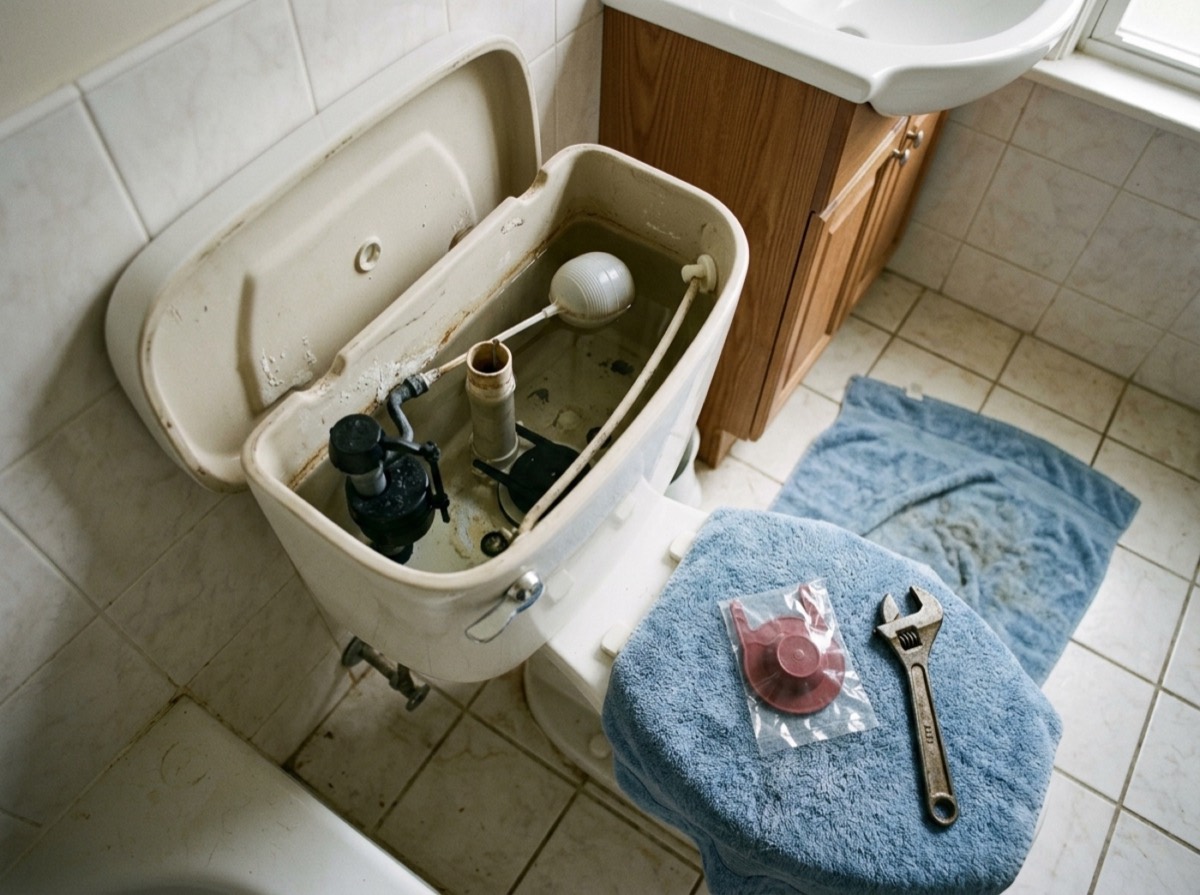
When you flush, a seal at the bottom of the tank lifts and water rushes into the bowl. In many toilets this seal is a rubber flapper on a chain; in many European and dual-flush toilets it is a flush valve with a rubber washer, operated by a push button. As the level drops, a float falls and opens the fill valve, which refills the tank until the float rises and shuts it off.
An overflow pipe inside the tank catches excess water. If water keeps flowing, either the seal is leaking or the fill valve is not closing before water reaches the overflow.
Step 1: Diagnose why the toilet keeps running
Lift the tank lid carefully and set it on a towel, since ceramic lids break easily. Watch the water level after a flush.
- If water is spilling into the overflow pipe, the fill valve or float is set too high or is faulty.
- If the level stays below the overflow but the valve keeps hissing or refills every so often, water is escaping past the flush seal.
- If you are unsure, do the dye test described below.
A silent leak is still a leak, and a few drops of food colouring will find it.
Step 2: Use the dye test to find a silent leak
Add a few drops of food colouring to the tank and do not flush. Wait about 10 to 15 minutes. If colour appears in the bowl, the flush seal is leaking. This test also catches silent leaks that you cannot hear, and toilets that refill briefly on their own, often called phantom flushing.
Flush afterwards so the dye does not stain the bowl.
Step 3: How to adjust the toilet float
The water should stop a couple of centimetres below the top of the overflow pipe; many tanks have a mark showing the correct level. On a float cup that slides up and down the fill valve, turn the adjustment screw or squeeze the clip and lower the cup. On an older ball float on an arm, turn the adjustment screw on top of the valve, or gently bend a metal arm downward.
Flush and check the new level. If adjusting the float does not stop the flow, the fill valve itself is likely worn.
Step 4: Check the chain and clean or replace the flapper
Turn off the water at the isolation valve behind or beside the toilet, usually by turning it clockwise or a quarter turn with a flat screwdriver. Flush to empty the tank.
On flapper toilets, check the chain first. It should have a little slack; too tight and the flapper cannot close, too long and it can get caught underneath. Then inspect the flapper. If it is warped, stiff, cracked or slimy, or if scale has built up on the valve seat, clean the seat with a scouring pad. Replace the flapper if cleaning does not help. Most unhook from two pegs on the overflow pipe; take the old one to the shop to match the size.
On push-button and dual-flush toilets, the flush valve usually twists or unclips out of the tank. Clean the base and replace the rubber seal at the bottom, which is a cheap part sized to the valve. Limescale is a common cause of leaks in hard water areas.
Step 5: When and how to replace the fill valve
If the tank overfills even with the float set low, or the valve hisses and struggles to shut off, the fill valve needs attention. Sometimes flushing out grit is enough: with the water off, remove the valve cap according to the maker's instructions, hold a cup over the opening and briefly turn the water on to clear debris.
To replace it, turn off the water, empty the tank and soak up the rest with a sponge. Disconnect the supply hose under the tank, with a bowl ready for drips, and unscrew the locknut holding the valve. Fit the new valve, set its height to match the overflow as instructed, tighten the locknut hand-tight plus a small turn, reconnect the hose and turn the water back on slowly. Check for drips over the next hour.
Safety notes and when to call a plumber
Always turn off the water supply before removing parts, and never overtighten plastic nuts or the bolts holding the tank to the bowl, as ceramic can crack. Wear gloves, since tank water is clean but parts can be slimy. If the isolation valve is stuck or leaks when turned, do not force it.
Call a plumber if water leaks onto the floor from the base of the toilet or between the tank and bowl, if the isolation valve will not close, if the tank is cracked, or if you have a concealed cistern behind a wall panel and are not comfortable accessing it.
Frequently asked questions
Why does my toilet keep running after I flush?
+
Usually the flush seal or flapper is not closing properly, or the fill valve is set too high so water spills into the overflow pipe. Check the water level and do a dye test to find out which.
How much water does a running toilet waste?
+
A lot. A constantly running toilet can waste many thousands of litres a year, and even a slow silent leak adds up. It is one of the most common causes of unexpectedly high water bills.
How do I know if my toilet flapper is bad?
+
Put food colouring in the tank and wait 10 to 15 minutes without flushing. Colour in the bowl means water is leaking past the flapper or seal. A stiff, warped or cracked flapper should be replaced.
Why does my toilet refill on its own every few minutes?
+
This is often called phantom flushing. Water slowly leaks from the tank into the bowl, the float drops and the fill valve briefly refills the tank. Replacing the flapper or flush valve seal usually fixes it.
Can I fix a running toilet myself?
+
Yes, in most cases. Adjusting the float, cleaning the seal or replacing a flapper or fill valve needs only basic tools. Call a plumber for leaks on the floor, cracked ceramics or hard-to-reach concealed cisterns.
How do I fix a dual flush toilet that keeps running?
+
Turn off the water, remove the flush valve, clean away limescale and replace the rubber seal at its base. Check that the button mechanism is not holding the valve partly open.
A running toilet is one of the easiest household repairs to do yourself. Diagnose with the water level and a dye test, adjust the float, then clean or replace the seal or fill valve as needed. Turn off the water first, handle ceramic parts gently and call a plumber for anything that leaks onto the floor.
How we research: Guides are written from established sources and checked for accuracy. They are general information, not professional advice.
Written by
Bitezine Editorial Team
Rankings, reviews & guides
Our editors research every piece from makers’ documentation, independent tests and owner reports, and update it when products change.