Guides
How to descale a coffee machine: drip, espresso and pod machines
How to descale a coffee machine the right way: how often, which descaler to use, whether vinegar is safe and step-by-step routines for drip, pod and espresso machines.
 Bitezine Editorial TeamRankings, reviews & guides 5 min read
 AI generated
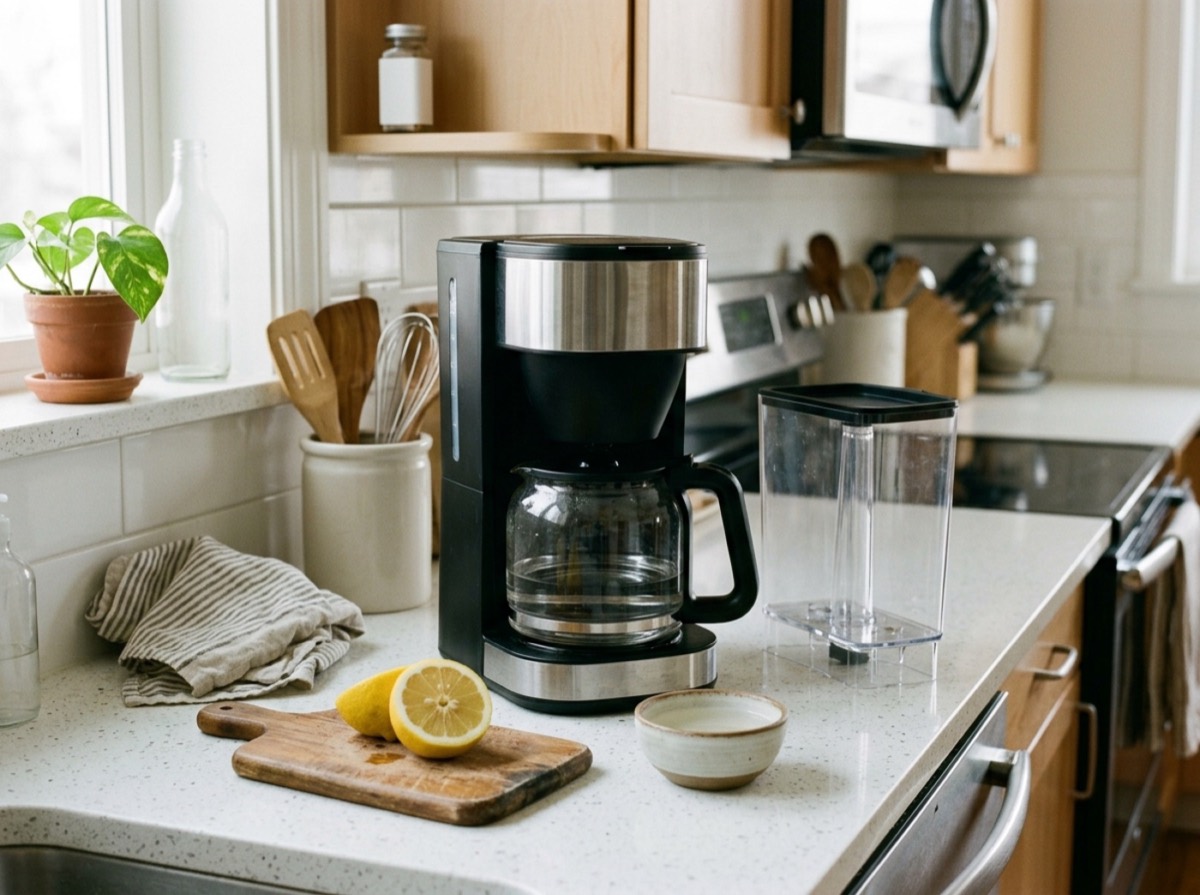
Learning how to descale a coffee machine is the simplest way to keep your coffee hot, your brew time short and your machine working for years. Every time you heat water, dissolved calcium and magnesium are left behind as limescale. It coats the heating element, narrows the water paths and slowly makes coffee taste flat and lukewarm.
Descaling dissolves that mineral layer with a mild acid. The job takes 20 to 40 minutes, most of it waiting, and the method is similar for drip, pod and espresso machines. The details below cover all three.
Signs your coffee machine needs descaling
Many machines have a descaling light or message. If yours does not, watch for these signs. They tend to creep in gradually, so it helps to set a reminder instead of waiting for them.
- Brewing takes noticeably longer than it used to.
- Coffee comes out less hot than before.
- The machine is louder, gurgles or pumps unevenly.
- Cups are smaller than the set volume.
- White flakes or a chalky film appear in the water tank or carafe.
- Coffee tastes bitter or dull even with fresh beans.
How often to descale a coffee machine
The right interval depends on your water hardness and how much coffee you make. As a rough guide, a household making a few cups a day with hard water should descale about once a month. With soft water, every two to three months is usually enough. Your local water supplier publishes the hardness for your area, and your machine's manual gives the manufacturer's interval, which should take priority.
Using filtered water or the machine's own water filter slows scale build-up, but it does not stop it completely. Keep descaling on a schedule even when you filter.
Filtering slows limescale down, but it never stops it completely.
Descaler, citric acid or vinegar?
A descaling product made for coffee machines is the safest choice, because it is formulated to dissolve limescale without harming seals and metal parts. Many use lactic, citric or sulfamic acid. Always follow the dilution on the pack.
Food-grade citric acid is a low-cost alternative that many people use successfully in drip machines. A common ratio is one to two tablespoons dissolved in a litre of water. Use it cold or lukewarm: hot citric acid can leave a residue that is harder to rinse out.
White vinegar works on scale, but it has drawbacks. It leaves a smell and taste that can take several rinses to remove, and some manufacturers advise against it because the acetic acid can wear rubber seals and certain metal parts over time. For espresso and bean-to-cup machines, stick to the descaler recommended in the manual. Using the wrong product can void the warranty.
How to descale a drip coffee maker
Drip machines are the easiest to descale because they have a simple water path.
- Empty the carafe and remove the filter and any coffee grounds.
- Fill the reservoir with descaling solution mixed as directed.
- Put the empty carafe in place and start a brew cycle.
- Halfway through, switch off and let the solution sit for 15 to 30 minutes to work on the heater.
- Switch on again and finish the cycle. Discard the solution.
- Run two or three full cycles with fresh water to rinse.
How to descale a pod coffee machine
Pod machines often have a dedicated descaling mode, started by holding a button combination described in the manual. Remove any used capsule, empty the drip tray and capsule container, and place a large container under the spout.
Fill the tank with the descaling solution, start the descaling mode and let the machine pump the liquid through in stages. When the tank is empty, rinse it thoroughly, fill it with clean water and run the rinse cycle. Exit the descaling mode as the manual describes, otherwise the machine may keep showing the warning.
How to descale an espresso or bean-to-cup machine
Espresso machines run at higher pressure and temperature, so follow the manufacturer's routine closely. Remove the water filter before descaling if your machine uses one, since descaler can damage it. Most bean-to-cup machines guide you through a menu program that alternates between the brewing unit and the steam wand.
For manual espresso machines, fill the tank with solution, run part of it through the group head and part through the steam or hot water wand, pause for the recommended time, then continue. Rinse with at least one full tank of fresh water through both outlets. Machines with a separate steam boiler may need a specific procedure or professional service.
Safety notes when descaling
Descaling solutions are acidic. Keep them away from children, avoid contact with eyes and skin, and wipe up spills on stone worktops quickly, since acids can etch marble and limestone. Never drink the liquid that comes out during descaling, and do not skip the rinse cycles.
Hot water and steam come out of the machine during the process, so keep hands away from the spout and wand. Do not mix different descaling products or add bleach or other cleaners to the tank.
Descaling vs cleaning: what is the difference?
Descaling removes mineral deposits from the inside of the machine. Cleaning removes coffee oils and residue from the parts coffee touches: the carafe, filter basket, brew group, portafilter and milk system. Both matter. Rinse removable parts daily, clean the milk system after each use, and use a coffee-oil cleaner on espresso machines as the manual recommends.
Frequently asked questions
Can I descale a coffee machine with vinegar?
+
Vinegar dissolves limescale, but it can leave a lingering taste and some manufacturers advise against it because it may wear seals. It is best avoided in espresso and bean-to-cup machines. Check your manual first.
How often should I descale my coffee machine?
+
With hard water and daily use, about once a month. With soft water, every two to three months. Follow the manufacturer's interval or the descaling light if your machine has one.
What happens if you never descale a coffee machine?
+
Scale builds up on the heater and in the pipes, so coffee becomes cooler and slower to brew. Eventually the machine can clog, overheat or fail completely, and scale damage is often not covered by warranty.
How much citric acid do I need to descale a coffee maker?
+
A common ratio is one to two tablespoons of food-grade citric acid dissolved in a litre of cold or lukewarm water. Run it through, then rinse with two or three tanks of fresh water.
How many times should I rinse after descaling?
+
At least two full tanks of fresh water, or until there is no smell or taste of descaler. Many machines have a built-in rinse cycle that follows the descaling program.
Does filtered water mean I never need to descale?
+
No. Filtering reduces minerals and slows scale build-up, so you can descale less often, but some minerals still get through. Keep descaling at a longer interval.
Descaling a coffee machine is a short, low-effort job that protects both the taste of your coffee and the machine itself. Match the interval to your water hardness, use the descaler your manual recommends, rinse thoroughly and treat the acidic solution with a little care. Put the next date in your calendar and it becomes a routine rather than a repair.
How we research: Guides are written from established sources and checked for accuracy. They are general information, not professional advice.
Written by
Bitezine Editorial Team
Rankings, reviews & guides
Our editors research every piece from makers’ documentation, independent tests and owner reports, and update it when products change.