Guides
How to choose a robot vacuum: features that matter and what to skip
How to choose a robot vacuum: navigation, suction, mopping, self-emptying docks, pet hair, height and running costs explained so you buy the right one for your home.
 Bitezine Editorial TeamRankings, reviews & guides 7 min read
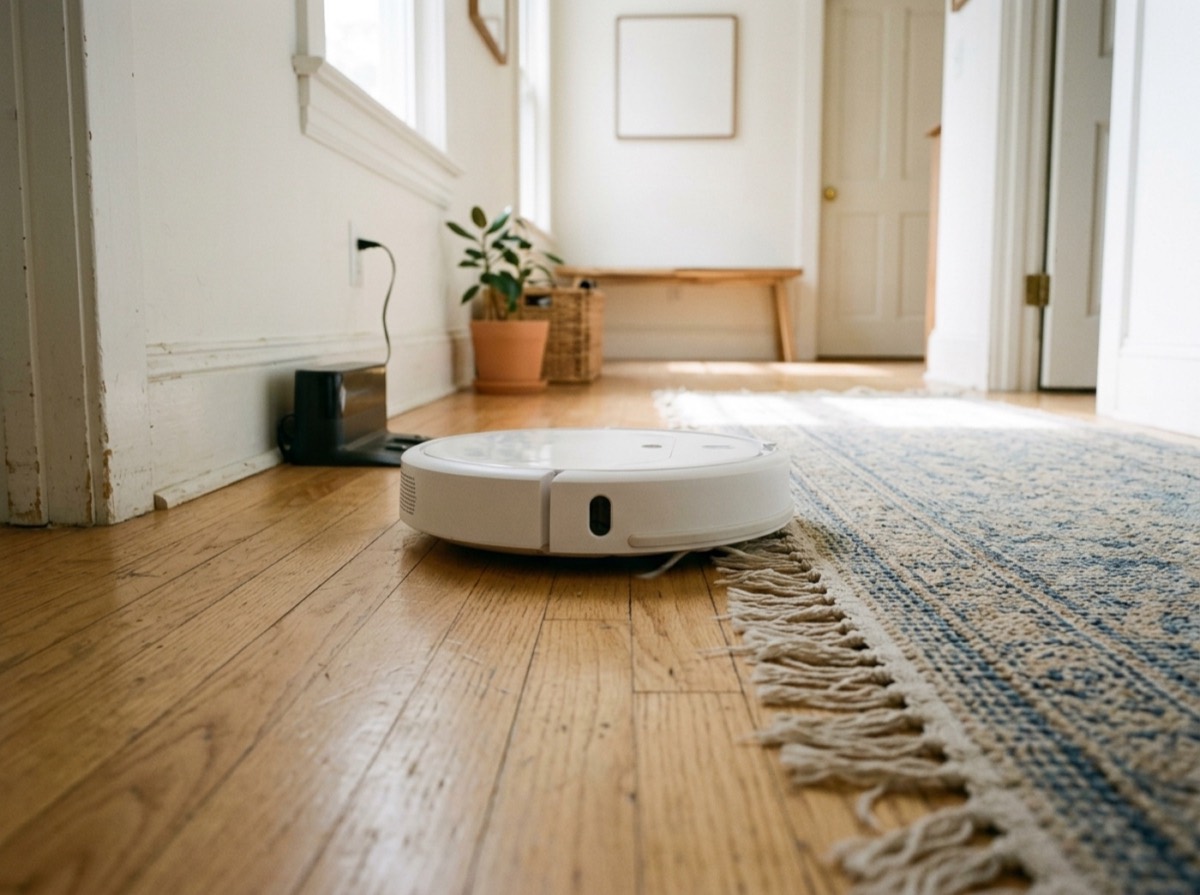 AI generated
Working out how to choose a robot vacuum is harder than it should be, because spec sheets are full of large numbers that are difficult to compare. The good news is that only a handful of features decide whether a robot will actually keep your floors clean: how it navigates, how it handles your floor types and clutter, and how much looking after it needs.
This buying guide explains each of those features in plain terms, what they are worth to different households, and the practical checks, such as the height under your sofa, that people often forget until the robot gets stuck.
Are robot vacuums worth it?
A robot vacuum is best at maintenance cleaning. Run daily or every few days, it keeps dust, crumbs and pet hair under control so floors never get really dirty. It will not replace a full vacuum entirely: stairs, sofas, corners, skirting boards and car interiors still need a handheld or stick vacuum.
Robots work best in homes with open floor space and a habit of keeping cables, socks and toys off the floor. If your home is very cluttered, has many steps between rooms or deep shag rugs, expect more rescues and fewer benefits.
Navigation: lidar, camera or bump-and-turn?
Navigation is the most important feature, because it decides whether the robot cleans the whole floor in orderly lines or wanders at random.
Models that map your home let you name rooms, set no-go zones around pet bowls and send the robot to clean just the kitchen after dinner. For anything larger than a studio flat, a mapping robot is worth the extra cost.
- Lidar (laser) navigation: a spinning sensor, usually in a small turret on top, builds an accurate map and works in the dark. It is the most common choice in mid-range and premium robots
- Camera-based navigation: uses images to map and recognise the room. It can work well but may struggle in dim light and raises more privacy questions
- Gyroscope or basic sensors: cleans in rough patterns without a saved map. Cheaper and fine for a single room, but less thorough in larger homes
- Random bump-and-turn: the most basic method, which covers floors unevenly and takes longer
A robot that cleans the whole floor in straight lines beats a stronger one that wanders at random.
Obstacle avoidance and height: check your furniture first
Front-facing sensors or cameras help a robot recognise and steer around cables, shoes and pet mess. Better obstacle avoidance means fewer tangled brushes and less tidying before each run, which matters most in family and pet homes.
Measure the gap under your sofa, beds and cabinets before buying. Robots vary in height, and a lidar turret adds a few centimetres. If the robot is too tall, it will skip the dusty areas you most want it to reach. Also check thresholds and rug edges: most robots climb low door strips, but the maximum climbing height in the specification tells you whether yours will be a problem.
Suction power and carpets: what the numbers mean
Suction is usually listed in pascals (Pa). Higher numbers generally help with carpets and embedded dirt, but manufacturers measure differently, so numbers from different brands are not reliable comparisons. Independent tests of pickup on carpet and hard floors are a better guide.
For mostly hard floors, even modest suction is enough. For thick rugs and carpets, look for automatic carpet detection that raises suction, and a main brush that reaches into the pile. Very long-pile or shaggy rugs and dark rugs can confuse some robots; cliff sensors may read dark patterns as a drop.
Robot vacuum for pet hair: brushes and bins
Hair wraps around bristle brushes quickly. Rubber or combined rubber-and-bristle main brushes tangle less and are easier to clean, and some designs actively cut or push hair off the roller.
Pet owners also benefit from a larger dustbin or a self-emptying dock, good obstacle recognition for toys and accidents, and a washable or high-efficiency filter to trap dander. Long hair from people causes similar tangles, so the same advice applies to many households without pets.
Mopping and self-emptying docks: worth paying for?
Combined vacuum and mop robots range from a simple damp pad dragged behind the robot to spinning or vibrating pads with their own water supply. Simple pads freshen up dusty hard floors; they do not scrub dried spills. Look for pads that lift or retract on carpet, otherwise you will need to remove them before every run over rugs.
Docking stations add convenience. A self-emptying base sucks the dust out of the robot into a larger bag or bin, so you empty it every few weeks rather than after each run. Advanced docks also refill water, wash and dry mop pads, but they are large, louder when emptying and more expensive. Make sure you have floor space for the dock with clearance on each side.
- Mostly carpets: skip mopping and spend on suction and brushes
- Mostly hard floors with light dust: a basic mop function is useful
- Kitchen, children or pets on hard floors: a robot with lifting pads and a washing dock saves the most effort
- Allergies: a bagged self-emptying dock reduces dust exposure when emptying
Battery, noise, privacy and running costs
Battery life matters less than it used to, because most mapping robots return to recharge and then resume where they stopped. For larger homes, check the runtime and whether the robot can recharge and resume automatically.
Noise varies between models and suction settings. If you plan to run it while at home or in the evening, look for a quiet mode and consider the loud emptying cycle of a self-emptying dock.
Robots with cameras and home maps collect data about your living space. Check where images are processed and stored, whether you can turn off the camera or cloud features, and how long the maker supplies security updates.
Finally, budget for consumables: filters, side brushes, main brushes, mop pads and dust bags all wear out. Check that replacements are easy to buy and that the battery can be replaced, as it is usually the first major part to fail.
Robot vacuum buying checklist
Run through these questions before choosing a model.
- How large is my home, and do I need room-by-room mapping?
- Will it fit under my sofa, beds and cabinets?
- Are my floors mostly hard, carpeted or mixed?
- Do I have pets, long hair or children's toys on the floor?
- Do I want mopping, and do the pads lift on carpet?
- Is there space for a self-emptying or washing dock?
- Are replacement parts and batteries easy to get?
- What data does it collect, and can I limit it?
Frequently asked questions
What is the most important feature in a robot vacuum?
+
Navigation. A robot with lidar or reliable camera mapping cleans in an orderly pattern, covers the whole floor and lets you set rooms and no-go zones. Suction and extras matter less if the robot misses half the floor.
Is lidar better than a camera for robot vacuums?
+
Lidar maps accurately and works in the dark, which makes it a dependable choice. Camera systems can recognise objects well but may struggle in low light and raise more privacy concerns. Many newer robots combine lidar with a front camera or sensors for obstacle avoidance.
Do robot vacuums work on thick carpet?
+
Most handle low and medium pile carpet well, especially with automatic carpet boost. Deep shag rugs and tasselled edges can cause them to get stuck. Check the maximum climbing height and independent carpet tests before buying.
Are robot vacuum and mop combos worth it?
+
They are worth it for homes with lots of hard flooring that needs regular light cleaning. Choose a model whose mop pads lift or detach automatically on carpet. They do not replace a proper mop for sticky or dried spills.
How often should a robot vacuum run?
+
Most households get good results from running it daily or every other day. Homes with pets or heavy foot traffic benefit from daily runs, while a small, tidy flat may need only two or three runs a week.
How do you maintain a robot vacuum?
+
Empty the bin or dock bag, remove hair from the brushes, and clean the filter and sensors regularly. Replace filters, brushes and mop pads when worn, following the maker's recommended intervals.
Choosing a robot vacuum becomes simple once you focus on the essentials: reliable mapping navigation, a height that fits under your furniture, brushes suited to your floors and pets, and only the extras you will use, such as mopping or a self-emptying dock. Check privacy settings and the price of replacement parts too. Match the robot to your home rather than to the biggest number on the box, and it will quietly keep your floors clean between deeper cleans.
How we research: Guides are written from established sources and checked for accuracy. They are general information, not professional advice.
Written by
Bitezine Editorial Team
Rankings, reviews & guides
Our editors research every piece from makers’ documentation, independent tests and owner reports, and update it when products change.