Guides
How to choose a mattress: type, firmness and size explained
How to choose a mattress that suits your body and sleep position: foam, pocket spring, latex and hybrid compared, firmness explained and what to check before buying.
 Bitezine Editorial TeamRankings, reviews & guides 6 min read
 AI generated
Knowing how to choose a mattress matters more than most purchases, because you will spend thousands of hours on it. The right one keeps your spine in a neutral line, relieves pressure at the shoulders and hips and does not leave you too hot. The wrong one can mean stiff mornings and restless nights for years.
There is no single best mattress for everyone. The right choice depends on how you sleep, your body weight, whether you share the bed and how warm you run. This guide walks through each factor so you can narrow the options before you buy.
Mattress types compared
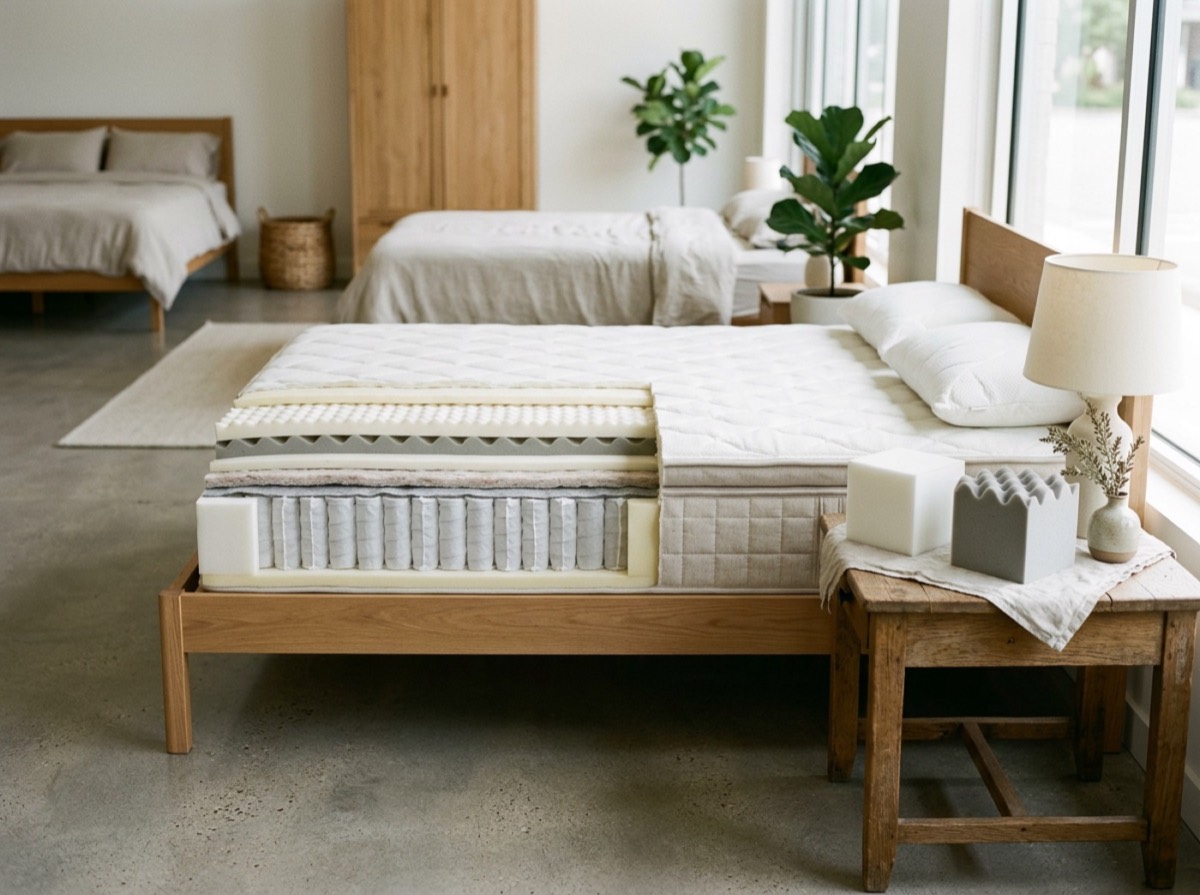
Most mattresses fall into a handful of construction types. Each has a distinct feel, and the labels can overlap, so read what is actually inside.
- Foam, including memory foam: contours closely to the body, relieves pressure well and absorbs movement, which suits couples. Some foams trap heat and feel slow to move on.
- Pocket spring: individually wrapped coils respond to each part of the body, with good airflow and a bouncier feel. Pressure relief depends on the comfort layers on top.
- Open coil or traditional innerspring: connected springs, usually the most affordable, with a springy feel but less pressure relief and more motion transfer.
- Latex: responsive and durable with moderate contouring and a buoyant feel. Natural latex tends to be heavier and more expensive.
- Hybrid: pocket springs combined with thick foam or latex layers, aiming for the contouring of foam with the bounce and airflow of springs.
How firm should your mattress be?
Firmness is how the surface feels; support is how well the mattress keeps your spine aligned. A mattress can feel soft on top and still be supportive underneath. Firmness is usually described on a scale from soft to firm, but there is no universal standard, so one brand's medium can feel like another's firm.
Body weight changes how a mattress feels. Lighter people sink in less and often find a firm mattress too hard, so softer to medium options usually suit them. Heavier people sink further and generally need a firmer, more supportive mattress to avoid sagging at the hips. Medium to medium-firm suits a wide range of people in between.
A good mattress is one you stop thinking about because you simply sleep well.
The best mattress for your sleep position
Your main sleep position is the most useful guide to firmness.
- Side sleepers: medium-soft to medium-firm, so shoulders and hips can sink in slightly and the spine stays straight.
- Back sleepers: medium-firm to firm, supporting the lower back without letting the hips dip.
- Stomach sleepers: firm, to stop the hips sinking and arching the lower back.
- Combination sleepers: medium, often with a responsive surface that makes turning over easy.
Choosing a mattress for back pain
It is a common belief that a very firm mattress is best for back pain, but that is not always true. What matters is keeping the spine in a neutral position, which for many people means a medium-firm mattress with good support in the middle. Zoned mattresses, which are firmer under the hips and softer under the shoulders, are one option.
If you have ongoing back or joint pain, speak to a doctor or physiotherapist. A mattress can make sleep more comfortable, but it is not a treatment for a medical condition.
Sleeping hot, sharing a bed and other factors
If you get hot at night, springs, latex and hybrids generally sleep cooler than dense traditional memory foam. Breathable covers and open-cell foams also help. Couples should look for good motion isolation, such as foam or pocket springs, and strong edge support if you both use the full width. Partners with very different needs can consider two single mattresses on one base, or a model with a different firmness on each side.
Check whether the cover is removable and washable, whether the mattress needs turning or only rotating, and what certifications the foams and textiles carry for emissions and harmful substances.
What size mattress do you need?
Mattress sizes differ between countries, so always check the exact dimensions against your bed frame. As a guide, the mattress should be at least 10 to 15 centimetres longer than the tallest sleeper. Couples are usually more comfortable on a double-width bed of at least 160 centimetres or on two singles, especially if one partner moves a lot or children and pets join in. Also check the base: slatted frames need slats close enough together to support the mattress properly.
How to test a mattress before buying
In a shop, wear comfortable clothes and lie on each mattress for at least 10 to 15 minutes in your usual sleep position. Bring your partner if you share. Ask someone to check whether your spine looks straight when you lie on your side.
Many retailers, especially online, offer home trial periods, often lasting several weeks or months. Read the terms carefully: how long the trial lasts, whether you must keep the mattress for a minimum time before returning it, who pays for collection and whether the cover must stay on. Give a new mattress a few weeks, because your body needs time to adjust.
When to replace your mattress
Many mattresses last around seven to ten years, depending on the materials, use and care. Signs it is time for a new one include visible sagging or dips, lumps, springs you can feel, waking up stiff or sore, sleeping better elsewhere and increased allergy symptoms. A mattress protector and regular rotating help extend its life.
Frequently asked questions
What type of mattress is best?
+
It depends on your needs. Foam suits people who want pressure relief and little motion transfer, pocket springs and hybrids suit those who want bounce and airflow, and latex suits those looking for a durable, responsive feel.
Is a firm or soft mattress better for your back?
+
Neither extreme is ideal for most people. A medium-firm mattress that keeps the spine neutral is often the best starting point for back comfort. Anyone with ongoing pain should get medical advice.
What mattress is best for side sleepers?
+
Side sleepers usually do best on a medium-soft to medium-firm mattress with a cushioning top layer. It lets the shoulders and hips sink in slightly so the spine stays straight.
How long should a mattress last?
+
Many mattresses last around seven to ten years. Replace yours sooner if it sags, feels lumpy, or you regularly wake up stiff or sleep better on other beds.
Is memory foam or pocket spring better?
+
Memory foam contours closely and isolates movement well, while pocket springs feel bouncier and sleep cooler. Hybrids combine both. Choose based on whether you value pressure relief or airflow more.
How long does it take to get used to a new mattress?
+
Often a few weeks. Your body needs time to adjust, especially if the new mattress is firmer or softer than the old one. Trial periods usually take this into account.
Are mattress firmness ratings the same across brands?
+
No. There is no universal standard, so a medium from one maker can feel firmer or softer than another's. Test in person or use a trial period whenever possible.
Choosing a mattress comes down to a few clear questions: how you sleep, how much you weigh, whether you share the bed and whether you run hot. Use them to pick a type and firmness, check the size and base, test properly and read the trial terms. A good mattress is one you stop thinking about because you simply sleep well.
How we research: Guides are written from established sources and checked for accuracy. They are general information, not professional advice.
Written by
Bitezine Editorial Team
Rankings, reviews & guides
Our editors research every piece from makers’ documentation, independent tests and owner reports, and update it when products change.