Culture
How to choose a first guitar: acoustic, classical or electric?
How to choose a first guitar: compare classical, acoustic and electric models, find the right size, check playability and avoid the mistakes that make beginners quit.
 Bitezine Editorial TeamRankings, reviews & guides 5 min read
 AI generated
Knowing how to choose a first guitar can decide whether a new player sticks with it or gives up after a month. A guitar that is hard to press, will not stay in tune or does not suit the music you love turns practice into a struggle. A comfortable one makes you want to pick it up.
This guide explains the three main types of guitar, how to find the right size, what to check before you buy and which accessories are actually useful for beginners.
Start with the music you want to play
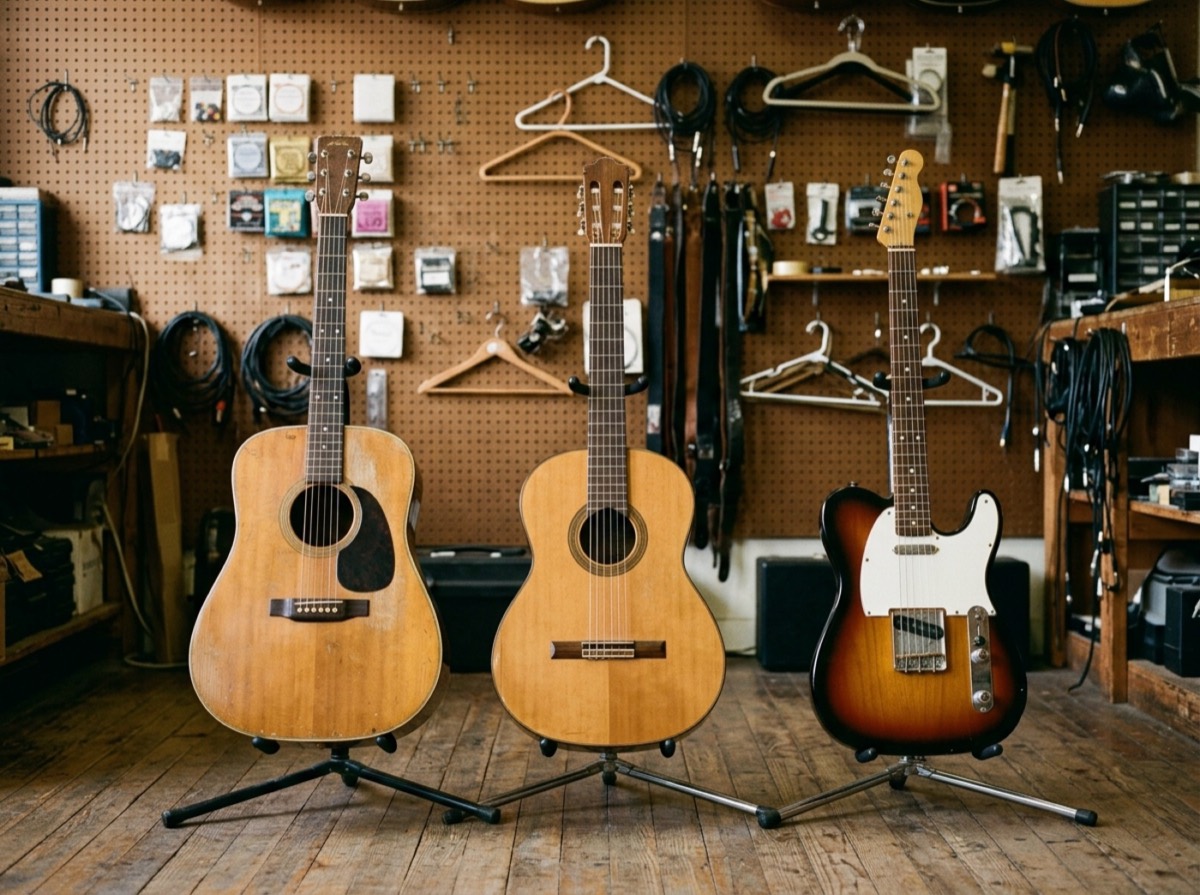
The best type of guitar for beginners is the one that fits the sound in your head. If you dream of strumming songs around a campfire, an acoustic makes sense. If you love rock, blues or indie with a band sound, an electric will keep you motivated. If you are drawn to classical, flamenco or bossa nova, or you are buying for a young child, a classical guitar is the natural choice.
Motivation matters more than any theoretical advantage. Players who can produce the sounds they like early on tend to practise more.
Classical vs acoustic vs electric guitar
Each type has its own feel and trade-offs.
- Classical guitar: nylon strings that are soft on the fingertips, a wider and flatter neck, and a warm, mellow tone. Gentle on beginners' hands, though the wide neck can feel like a stretch for some chord shapes.
- Steel-string acoustic guitar: a brighter, louder sound suited to pop, folk and singer-songwriter music. The strings are under more tension, so fingertips hurt more at first, but no amplifier is needed.
- Electric guitar: lighter strings, a slimmer neck and usually lower action make chords and single notes easier to press. It needs an amplifier or headphone amp, which adds cost, and it offers a huge range of sounds.
- Electro-acoustic guitar: an acoustic with a built-in pickup, handy if you plan to perform through a sound system.
A well set-up guitar of any type is easier to play than a badly set-up one of the supposedly easier kind.
Is electric guitar easier to learn?
In purely physical terms, many beginners find an electric easier to play because of lighter strings and lower action. An acoustic builds finger strength faster, and skills transfer well from acoustic to electric. Neither choice is wrong. A well set-up guitar of any type is easier to play than a badly set-up one of the supposedly easier kind.
Guitar sizes for kids and adults
Size is crucial for children and smaller adults. Classical guitars for young learners come in fractional sizes such as 1/4, 1/2 and 3/4, alongside full size. These labels are traditional names rather than exact proportions. A full-size classical guitar typically has a scale length of about 650 mm, the vibrating string length from nut to saddle.
Scale length varies on steel-string and electric guitars too. Many well-known electric designs use a scale of around 25.5 inches, while others use about 24.75 inches, and shorter scales feel slightly easier to fret and bend. A music teacher or shop can help with sizing. As a rough guide, the child should be able to reach the first fret comfortably with a relaxed arm while seated, without leaning forward, and the body should not dig into the thighs.
What to look for when buying a guitar
If you can, try guitars in person or take an experienced player along. Check these points before you buy.
- Action: the height of the strings above the fretboard. Low to medium action is easier to press; very high action makes a beginner's guitar painful.
- Neck: it should be straight, without obvious twists, and feel comfortable in your hand.
- Frets: the ends should not feel sharp when you slide your hand along the neck.
- Tuning stability: tuning pegs should turn smoothly and hold pitch.
- Intonation: a note at the twelfth fret should match the octave of the open string.
- Build quality: look for gaps, cracks, lifting bridges or buzzing when you play.
- Weight and shape: especially with electrics, make sure you can hold it comfortably for a whole practice session.
New or used, and should you get a setup?
A used guitar can offer excellent value, but check it carefully for neck problems, cracks and worn frets, or buy from a shop that inspects second-hand instruments. Starter packs that bundle a guitar, amp and accessories are convenient, though the quality of the extras varies.
Whatever you buy, a professional setup is one of the best investments a beginner can make. A technician adjusts the neck, action and intonation so the instrument plays as easily as it can. Many good shops set up a guitar before sale.
Left-handed players and beginner accessories
Left-handed players have a choice. Some learn on a standard right-handed guitar, others prefer a left-handed model with the strings reversed. Try both before deciding, since the choice is hard to change later.
A few accessories make learning easier: a clip-on tuner, a padded gig bag or case, a strap, a handful of picks in different thicknesses, spare strings and a stand, which keeps the guitar in sight and makes quick practice more likely. Electric players will also need a cable and an amplifier or headphone amp.
Frequently asked questions
What type of guitar is best for a beginner?
+
The best type is the one that matches the music you want to play. Classical guitars are gentlest on fingers, acoustic guitars suit strumming songs, and electric guitars are often easiest to press and suit rock and blues.
Is a classical or acoustic guitar better for beginners?
+
A classical guitar has soft nylon strings that hurt less at first, while a steel-string acoustic has a brighter sound for pop and folk. Choose based on the style you enjoy and how sensitive your fingertips are.
What size guitar does my child need?
+
It depends on height and arm length. Young children usually start on a 1/4 or 1/2 size classical guitar and move to 3/4 as they grow. Ask a teacher or music shop to check the fit.
What is guitar action and why does it matter?
+
Action is the height of the strings above the frets. High action makes strings harder to press and can put beginners off, while well-adjusted low action makes playing more comfortable.
Is it OK to buy a used guitar as a first guitar?
+
Yes, if it is in good condition. Check the neck, frets, tuning pegs and body for damage, or buy from a shop that inspects used instruments and offers a setup.
Do I need an amp to play electric guitar?
+
To hear it properly, yes. An electric guitar is quiet unplugged, so you need a practice amplifier or a headphone amp to play it with a full sound.
Learning how to choose a first guitar comes down to a few decisions: pick the type that matches your music, get the size right, check playability and have it set up well. With a comfortable instrument and a tuner in hand, the hardest part is simply starting, and the right first guitar makes that much easier.
How we research: Guides are written from established sources and checked for accuracy. They are general information, not professional advice.
Written by
Bitezine Editorial Team
Rankings, reviews & guides
Our editors research every piece from makers’ documentation, independent tests and owner reports, and update it when products change.