Guides
How to bleed a radiator: a safe step-by-step guide
How to bleed a radiator safely: signs of trapped air, the tools you need, which radiator to start with and how to check boiler pressure afterwards.
 Bitezine Editorial TeamRankings, reviews & guides 6 min read
 AI generated
Knowing how to bleed a radiator is one of the most useful bits of home maintenance you can learn. Air gets into central heating systems over time and collects at the top of radiators, where it stops hot water from circulating. The result is a radiator that is cold at the top, heating that takes longer and energy you pay for without feeling it.
Bleeding releases that trapped air through a small valve. It takes a few minutes per radiator and needs little more than a radiator key and a cloth. This guide covers when to do it, how to do it safely and what to check on your boiler afterwards.
Signs your radiators need bleeding
The classic sign is a radiator that is warm at the bottom but cool at the top. Air is lighter than water, so it rises and forms a pocket above the hot water. Other signs are gurgling, bubbling or clanking noises when the heating runs, and rooms that take longer than usual to warm up.
A radiator that is cold at the bottom but warm at the top is a different problem, often sludge build-up, which bleeding will not fix. Many people bleed their radiators once a year before the heating season, and again whenever the symptoms appear.
What you need
Gather everything before you start so you are not hunting for a cloth while water drips.
- A radiator bleed key, sold cheaply at hardware stores, or a flat screwdriver for valves with a slot.
- An old cloth or towel to catch drips.
- A small container or cup.
- Gloves, as the water inside is often dirty and can stain.
A radiator that is cold at the top is heating the air in your system, not your room.
Should the heating be on or off when bleeding radiators?
Turn it on first, then off. Run the heating for a while so you can find which radiators have cold spots. Then switch the heating off and let the radiators cool completely before bleeding.
This matters for safety and for the result. Water in a running system can be very hot and under pressure, and it can spray out and scald. With the pump off, air also settles at the top of each radiator, where the bleed valve can release it.
How to bleed a radiator step by step
Advice on which radiator to start with varies. A common approach is to begin with the radiator furthest from the boiler on the lowest floor and work your way closer and upward. Bleed every radiator that shows symptoms.
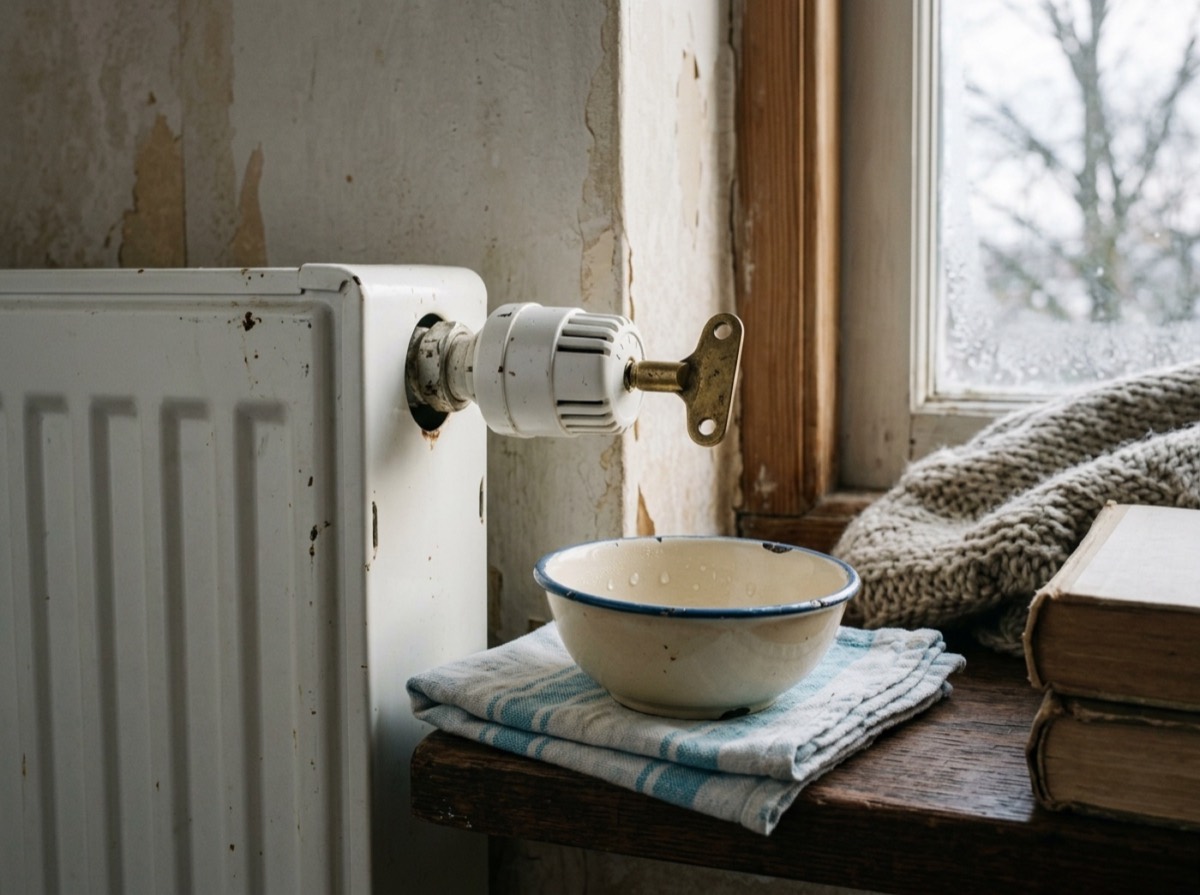
- Find the bleed valve: a small square fitting or slotted screw at one top corner of the radiator.
- Hold the cloth under the valve and put the key on the square fitting.
- Turn the key slowly anticlockwise, a quarter to half a turn is usually enough. Do not unscrew the valve fully.
- You should hear a hiss as air escapes.
- When the hissing stops and a steady trickle of water appears, close the valve by turning clockwise.
- Tighten gently. Overtightening can damage the valve.
- Wipe away any water and move on to the next radiator.
Check your boiler pressure after bleeding
Releasing air also releases a little water, which can lower the pressure in a sealed system, such as those with a combi or system boiler. Look at the pressure gauge on the boiler once you have finished. Many domestic systems are designed to sit at around 1 to 1.5 bar when cold, and some gauges mark the correct zone in green. Your boiler manual gives the exact figure for your system.
If the pressure is too low, top it up using the filling loop or the key and valve described in your manual. Open the valves slowly, watch the gauge and close them once the target is reached. Adding too much raises the pressure too far, and the relief valve may discharge water outside. If you cannot find the filling loop or the pressure keeps dropping, contact a qualified heating engineer.
Older open-vented systems with a feed tank in the loft refill automatically and have no pressure gauge to check.
Turn the heating back on and test
Switch the heating back on and let it run for a while. Feel each radiator you bled: it should now be evenly warm from top to bottom. Check that the bleed valves are not leaking. If a radiator gurgles again straight away, bleed it once more after the system has cooled.
Safety notes
Never bleed a radiator while the heating is running or the radiator is hot. Keep your face and hands away from the valve as you open it, and open it slowly so that water cannot spurt out. If the valve will not turn, do not force it with pliers, as a snapped valve can cause a leak that needs a plumber.
If the water that comes out is black or brown, the system may contain sludge. If you have to bleed the same radiator every few weeks, air may be entering through a fault, or gas may be forming from corrosion. Both are worth a check by a qualified heating engineer. Work on the boiler itself should always be left to a registered professional.
What if the radiator is still cold after bleeding?
Check that both radiator valves are open, including the thermostatic valve, which can stick closed after a summer of not being used. Tapping the pin under the thermostatic head gently can free it. A radiator that stays cold at the bottom may need a system flush to remove sludge. If several radiators stay cold, the system may need balancing or the pump may have a fault.
Frequently asked questions
How do I know if my radiator needs bleeding?
+
The top of the radiator feels cold while the bottom is warm, and you may hear gurgling or bubbling. These are signs of trapped air that bleeding should fix.
Should the heating be on when bleeding a radiator?
+
No. Run the heating to find the cold spots, then turn it off and let the radiators cool before bleeding. Hot water under pressure can scald you.
Which radiator should I bleed first?
+
A common approach is to start with the radiator furthest from the boiler on the lowest floor, then work your way closer and upstairs. Bleed every radiator that shows cold spots.
What should my boiler pressure be after bleeding radiators?
+
Many sealed domestic systems sit at around 1 to 1.5 bar when cold, but check your boiler manual or the marked zone on the gauge. Top up with the filling loop if it has dropped too low.
How often should I bleed my radiators?
+
Once a year before the heating season is a good habit, plus whenever you notice cold spots or gurgling. Needing to bleed very often points to a fault worth checking.
What if I don't have a radiator key?
+
Some bleed valves have a slot that fits a flat screwdriver. Most need a square radiator key, which is inexpensive at any hardware store. Avoid pliers, which can round off or break the valve.
Bleeding a radiator is quick, cheap and makes a noticeable difference to how warm your home feels. Turn the heating off, let everything cool, release the air slowly and always check the boiler pressure at the end. If the same radiator keeps filling with air or the water runs dark, bring in a heating engineer before the problem grows.
How we research: Guides are written from established sources and checked for accuracy. They are general information, not professional advice.
Written by
Bitezine Editorial Team
Rankings, reviews & guides
Our editors research every piece from makers’ documentation, independent tests and owner reports, and update it when products change.