Culture
German Expressionism explained: art, film and architecture
German Expressionism explained: Die Brücke and Der Blaue Reiter, the key artists, the shadowy films of the 1920s and where to see the movement today.
 Bitezine Editorial TeamRankings, reviews & guides 5 min read
 AI generated
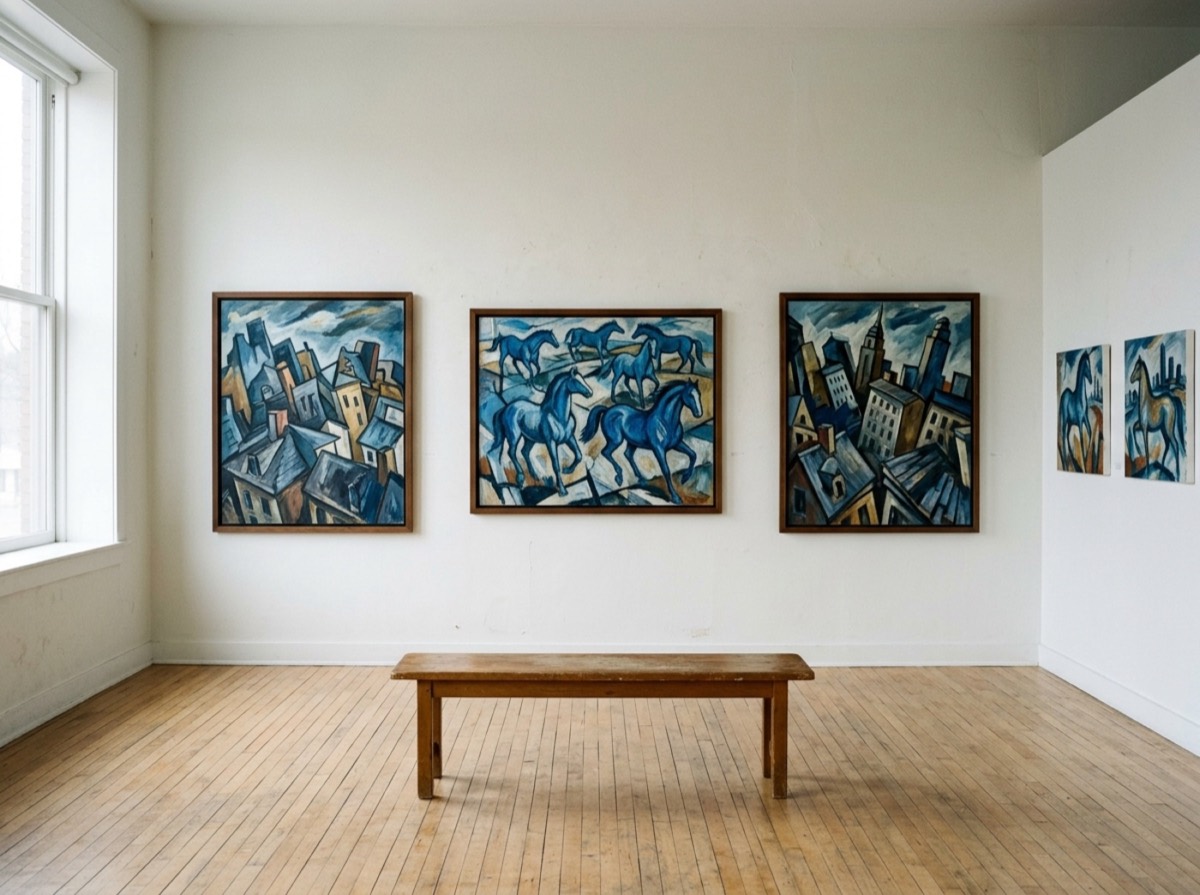
German Expressionism, explained in one line, is art that shows how the world feels rather than how it looks. In the early twentieth century, German artists used jarring colour, distorted forms and raw brushwork to express anxiety, longing and spiritual hope in a fast-changing society.
This guide covers the origins of the movement, its two main artist groups, its defining features, its famous films and buildings, its suppression under the Nazis and the museums where you can see it today.
What is German Expressionism?
Expressionism was a broad movement that touched painting, printmaking, sculpture, literature, theatre, music, film and architecture. Its high point in Germany ran from roughly 1905 into the 1920s.
The artists reacted against academic tradition and against Impressionism, which focused on capturing light and visual impressions. Expressionists turned inward. They painted emotion and inner experience, often in response to industrial city life, social tension and, later, the trauma of the First World War. They also drew inspiration from Vincent van Gogh, Paul Gauguin, Edvard Munch, medieval German woodcuts and art from outside Europe.
Die Brücke: the Dresden group
Die Brücke, meaning The Bridge, was founded in Dresden in 1905 by four architecture students: Ernst Ludwig Kirchner, Erich Heckel, Karl Schmidt-Rottluff and Fritz Bleyl. Max Pechstein and, briefly, Emil Nolde later joined.
The group favoured flat areas of intense colour, angular figures and a deliberately rough finish. They revived the woodcut as a powerful expressive medium. Early works show nudes in nature and studio scenes, and after several members moved to Berlin around 1911, Kirchner's street scenes captured the nervous energy of the metropolis. The group dissolved in 1913.
German Expressionism is art that shows how the world feels rather than how it looks.
Der Blaue Reiter: the Munich circle
Der Blaue Reiter, or The Blue Rider, formed in Munich in 1911 around Wassily Kandinsky and Franz Marc. Artists associated with it include August Macke, Gabriele Münter, Alexej von Jawlensky, Marianne von Werefkin and Paul Klee. The group published an influential almanac in 1912.
Where Die Brücke was raw and urban, the Blue Rider circle was more spiritual and interested in the symbolic power of colour. Marc painted animals in vivid hues as symbols of purity, and Kandinsky moved step by step towards pure abstraction. The circle broke apart with the outbreak of war in 1914. Macke was killed that year and Marc in 1916.
Key characteristics of Expressionist art
You can usually recognise German Expressionism by several shared features:
- Intense, non-natural colours chosen for emotional effect.
- Distorted, elongated or angular figures and spaces.
- Bold outlines and visible, energetic brushwork.
- Simplified forms inspired by folk art and non-European art.
- Themes of alienation, city life, sexuality, spirituality and war.
- A strong revival of printmaking, especially woodcuts.
Other major German Expressionist artists
Beyond the two groups, many artists are linked with the movement. Emil Nolde painted glowing flowers, seascapes and religious scenes. Käthe Kollwitz made moving prints and sculptures about poverty, grief and war. Paula Modersohn-Becker, working in Worpswede, is often seen as an important forerunner. Oskar Kokoschka, originally from Austria, and Max Beckmann produced intense portraits and allegories, while artists such as Otto Dix and George Grosz, after the war, moved towards the sharper social criticism associated with New Objectivity.
German Expressionist film
After the First World War, Expressionism shaped a remarkable period of German cinema. The Cabinet of Dr. Caligari (1920), directed by Robert Wiene, used painted sets with twisted streets, slanted walls and harsh shadows to show a disturbed state of mind.
Other landmark films include F. W. Murnau's Nosferatu (1922), Fritz Lang's Metropolis (1927) and Lang's M (1931), which shows the style's influence on early sound film. Typical elements are stark contrasts of light and dark, exaggerated sets, dramatic camera angles and stories about madness, doubles and dark forces.
Many German filmmakers and cinematographers later worked in Hollywood, and their visual language fed into horror films and film noir. The look still echoes in modern gothic and fantasy cinema.
Expressionist architecture
Architects also pursued emotional, sculptural forms. Erich Mendelsohn's Einstein Tower in Potsdam, completed in the early 1920s, has flowing curves that look moulded rather than built. In Hamburg, Fritz Höger's Chilehaus uses dark clinker brick and a sharp, ship-like corner, a key example of Brick Expressionism. Many Expressionist designs remained on paper, but they influenced later modern architecture.
Suppression and legacy
The Nazi regime condemned Expressionism as 'degenerate'. Thousands of works were removed from German museums, and the 1937 'Degenerate Art' exhibition in Munich mocked modern artists. Many were banned from working or went into exile, and some works were sold abroad or destroyed. Kirchner died in Switzerland in 1938.
After 1945, the movement was rehabilitated, and it later inspired the Neo-Expressionist painters of the 1970s and 1980s. Good places to see German Expressionism include the Brücke-Museum in Berlin, the Lenbachhaus in Munich with its major Blue Rider collection, the Buchheim Museum on Lake Starnberg, the Nolde Foundation in Seebüll and many national galleries worldwide.
Frequently asked questions
What is German Expressionism in simple terms?
+
It is an early twentieth-century movement in which German artists used strong colour, distorted forms and dramatic contrasts to express feelings and inner experience rather than to depict reality accurately.
What are the two main German Expressionist groups?
+
Die Brücke, founded in Dresden in 1905, and Der Blaue Reiter, formed in Munich in 1911. Die Brücke was rawer and more urban, while the Blue Rider circle focused on spirituality and the symbolic meaning of colour.
What is the most famous German Expressionist film?
+
The Cabinet of Dr. Caligari from 1920 is the classic example, with its painted, distorted sets. Nosferatu and Metropolis are also landmarks of the style.
What is the difference between Expressionism and Impressionism?
+
Impressionism tried to capture light and fleeting visual impressions of the outside world. Expressionism turned inward, distorting form and colour to convey emotion and psychological states.
Why did the Nazis ban Expressionism?
+
The regime rejected modern art that did not fit its ideology and labelled it 'degenerate'. Works were seized from museums, shown in the 1937 Degenerate Art exhibition and many artists were banned or forced into exile.
Where can I see German Expressionist art?
+
The Brücke-Museum in Berlin and the Lenbachhaus in Munich are key destinations. The Buchheim Museum, the Nolde Foundation in Seebüll and major national galleries in Germany and abroad also hold important works.
German Expressionism, explained through its paintings, prints, films and buildings, is a movement about feeling made visible. Its artists turned colour and distortion into a language for modern anxiety and hope, and despite persecution their work shaped much of the art and cinema that followed. A visit to one of the major collections is the best way to feel its force.
How we research: Guides are written from established sources and checked for accuracy. They are general information, not professional advice.
Written by
Bitezine Editorial Team
Rankings, reviews & guides
Our editors research every piece from makers’ documentation, independent tests and owner reports, and update it when products change.