Culture
Famous German composers and the works to know
Famous German composers from Hildegard of Bingen to Bach, Beethoven, Wagner and Strauss: who they were, their key works and where to start listening.
 Bitezine Editorial TeamRankings, reviews & guides 5 min read
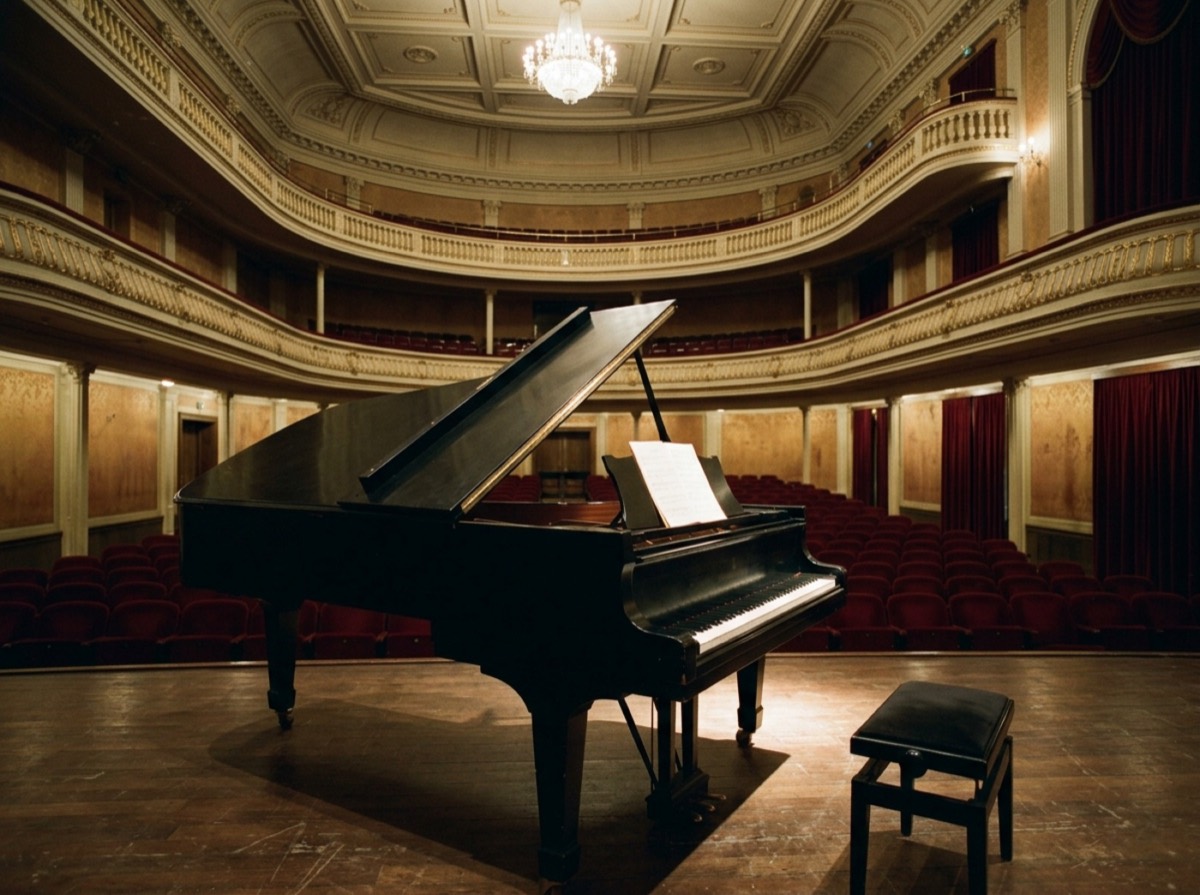 AI generated
Famous German composers shaped much of the classical music heard in concert halls today. From the Baroque masterpieces of Johann Sebastian Bach to the symphonies of Ludwig van Beethoven and the music dramas of Richard Wagner, German-speaking lands produced an extraordinary line of musical innovators.
This guide introduces the key figures in roughly chronological order, with the works to hear first and a few places in Germany connected to their lives.
Early German music: Hildegard of Bingen
Hildegard of Bingen (1098–1179) was a Benedictine abbess, writer, visionary and composer in the Rhineland. She wrote a large body of sacred chant with soaring, wide-ranging melodies, as well as a morality play set to music, Ordo Virtutum. She is one of the earliest composers in Western music whose name and a substantial body of work are known, and she remains a reference point for medieval music today.
German Baroque composers: Bach, Handel and Telemann
Johann Sebastian Bach (1685–1750) was born in Eisenach and spent his final decades as Thomaskantor in Leipzig. His music combines complex counterpoint with deep expression. Essential works include the Brandenburg Concertos, the St Matthew Passion, the Mass in B minor, the Goldberg Variations, The Well-Tempered Clavier and the cello suites. Many musicians regard him as the foundation of Western classical music.
George Frideric Handel (1685–1759) was born in Halle, the same year as Bach, but built his career largely in London. He is best known for the oratorio Messiah, the orchestral suites Water Music and Music for the Royal Fireworks, and many Italian operas.
Georg Philipp Telemann (1681–1767), born in Magdeburg and later based in Hamburg, was one of the most prolific composers in history and highly celebrated in his own lifetime. His chamber music and concertos are a lively entry point to the period.
German-speaking lands produced an extraordinary line of musical innovators.
Beethoven: the bridge to Romanticism
Ludwig van Beethoven (1770–1827) was born in Bonn and moved to Vienna as a young man. He began in the Classical style but pushed it towards greater drama, scale and personal expression. Remarkably, he continued to compose major works after losing most of his hearing.
Start with the Fifth and Ninth Symphonies, the 'Emperor' Piano Concerto, the 'Moonlight' and 'Appassionata' piano sonatas and the Violin Concerto. The 'Ode to Joy' melody from the Ninth Symphony is used as the anthem of the European Union. His birthplace in Bonn is now a museum, the Beethoven-Haus.
German Romantic composers
The nineteenth century brought a wave of German Romantic composers who explored emotion, nature, literature and national identity:
- Carl Maria von Weber (1786–1826): his opera Der Freischütz became a cornerstone of German Romantic opera.
- Felix Mendelssohn (1809–1847): born in Hamburg, he wrote the Violin Concerto in E minor, the 'Italian' Symphony and A Midsummer Night's Dream music, and led a famous revival of Bach's St Matthew Passion in 1829.
- Robert Schumann (1810–1856): born in Zwickau, known for piano cycles such as Carnaval and Kinderszenen, song cycles and four symphonies.
- Clara Schumann (1819–1896): born in Leipzig, one of the leading pianists of the century and a composer of piano works, songs and a piano concerto.
- Johannes Brahms (1833–1897): born in Hamburg, he wrote four symphonies, A German Requiem, two piano concertos, the Violin Concerto and the Hungarian Dances.
Richard Wagner and German opera
Richard Wagner (1813–1883), born in Leipzig, transformed opera into what he called music drama, uniting music, poetry and staging. He used leitmotifs, recurring musical themes tied to characters and ideas, to build enormous works such as The Ring of the Nibelung, a cycle of four operas. Other key works are Tristan und Isolde, The Mastersingers of Nuremberg, Lohengrin and Parsifal.
Wagner designed his own festival theatre in Bayreuth, where the Bayreuth Festival has presented his operas since 1876. His music remains hugely influential, while his antisemitic writings and later appropriation by the Nazi regime make him a contested figure.
Twentieth-century German composers
Richard Strauss (1864–1949), born in Munich, wrote vivid tone poems such as Also sprach Zarathustra, whose opening became famous through film, and operas including Salome, Elektra and Der Rosenkavalier. His Four Last Songs are among the most beloved late Romantic works.
Other important names include Paul Hindemith, a composer and theorist; Kurt Weill, whose collaboration with Bertolt Brecht produced The Threepenny Opera in 1928; Carl Orff, whose Carmina Burana is widely performed; and Karlheinz Stockhausen, a pioneer of electronic and experimental music after the Second World War.
Was Mozart German? The Austrian question
Wolfgang Amadeus Mozart was born in Salzburg, which today is in Austria, and Joseph Haydn, Franz Schubert and Gustav Mahler are also usually described as Austrian. In their lifetimes, national borders were very different, and German-speaking composers worked across a shared cultural space centred on cities such as Vienna, Leipzig and Berlin. Lists of German composers sometimes include them for this reason, but strictly speaking they are Austrian.
The three Bs and where to start listening
The phrase 'the three Bs' refers to Bach, Beethoven and Brahms, a grouping popularised in the nineteenth century and still used as shorthand for the core German tradition. A simple listening plan for beginners:
- Bach: Brandenburg Concerto No. 3 and the Goldberg Variations.
- Handel: selections from Messiah and Water Music.
- Beethoven: Symphony No. 5 and the 'Moonlight' Sonata.
- Mendelssohn: Violin Concerto in E minor.
- Brahms: Symphony No. 4 and the Hungarian Dances.
- Wagner: the Prelude to Tristan und Isolde and 'Ride of the Valkyries'.
- Strauss: Four Last Songs.
Frequently asked questions
Who is the most famous German composer?
+
Johann Sebastian Bach and Ludwig van Beethoven are usually named as the most famous. Bach is revered for his Baroque mastery and Beethoven for transforming the symphony and piano sonata.
Was Mozart German or Austrian?
+
Mozart was born in Salzburg, now part of Austria, so he is generally considered Austrian. He worked in the wider German-speaking musical world, which is why he sometimes appears on lists of German composers.
Who are the three Bs of classical music?
+
Bach, Beethoven and Brahms. The phrase was popularised in the nineteenth century to describe three pillars of the German musical tradition.
Who are famous female German composers?
+
Hildegard of Bingen in the Middle Ages, Clara Schumann in the Romantic era and Fanny Hensel, Felix Mendelssohn's sister, are among the best known. Their music is increasingly performed and recorded.
Where was Beethoven born?
+
Beethoven was born in Bonn in 1770. His birthplace is now the Beethoven-Haus museum. He moved to Vienna in his early twenties and lived there until his death in 1827.
What are some famous German Baroque composers?
+
Johann Sebastian Bach, George Frideric Handel and Georg Philipp Telemann are the leading names. Dieterich Buxtehude, who worked in Lübeck, and Heinrich Schütz were also highly influential.
Famous German composers span almost a thousand years, from medieval chant to electronic experiments. Start with a few landmark works by Bach, Beethoven and Brahms, then follow your ears to Wagner's operas, Schumann's piano music or Strauss's songs. Visiting Leipzig, Bonn or Bayreuth adds a sense of place to music that still fills concert halls worldwide.
How we research: Guides are written from established sources and checked for accuracy. They are general information, not professional advice.
Written by
Bitezine Editorial Team
Rankings, reviews & guides
Our editors research every piece from makers’ documentation, independent tests and owner reports, and update it when products change.