Food & Drink
EU organic certification explained: the logo, the rules and what it means
EU organic certification explained: what the green leaf logo guarantees, the 95% rule, farming rules, inspections, the code number and imported food.
 Bitezine Editorial TeamRankings, reviews & guides 6 min read
 AI generated
EU organic certification explained simply: if a packaged food sold in the European Union carries the green logo with a leaf made of stars, it was produced and processed under one common set of organic rules and checked by an approved inspector. The logo is the same in every member state, so it means the same thing in a supermarket in Lisbon as in Leipzig.
This explainer covers what the rules require from farmers and food makers, what the 95% rule means, how inspection works, how to read the code next to the logo and what organic does and does not promise.
What is EU organic certification?
EU organic certification is a legal scheme, not a private marketing label. Terms such as organic, bio and eco (and their translations) are protected for food and feed. A business may only use them if it follows the EU organic regulation and is registered with the control system.
The EU has had organic rules since the early 1990s. The current framework is Regulation (EU) 2018/848, which has applied since 1 January 2022 and replaced the earlier 2007 regulation. It covers farming, livestock, aquaculture, processing, labelling, imports and controls, and it is supplemented by more detailed implementing rules.
What does the EU organic logo mean?
The EU organic logo, often called the Euro-leaf, has been compulsory on pre-packaged organic food produced in the EU since July 2010. It is a green rectangle with twelve white stars arranged in the shape of a leaf. Imported organic food may carry it if it meets the EU import rules, and loose or unpackaged organic produce may use it voluntarily.
The logo cannot be used on products with less than 95% organic agricultural ingredients, on products from farms still in conversion, or on goods outside the scope of the regulation, such as cosmetics. It must appear in its standard design, with a one-colour version allowed where needed.
The green leaf guarantees how a food was produced, not how healthy it is.
The 95% rule for processed organic food
For a processed food to be sold as organic, at least 95% of its agricultural ingredients by weight must be organic. The remaining 5% may only come from a limited list of non-organic agricultural ingredients that are hard to source in organic quality. The same ingredient cannot appear in both organic and non-organic form in one product.
Water and salt are not counted as agricultural ingredients. Additives and processing aids are restricted to a short approved list, much shorter than for conventional food. Products that fall below 95% can still name organic ingredients in the ingredient list, but they cannot call the whole product organic or use the logo.
What rules do organic farmers follow?
Organic farming in the EU is built around soil fertility, crop rotation and animal welfare. The rules are detailed, but the main principles are easy to summarise.
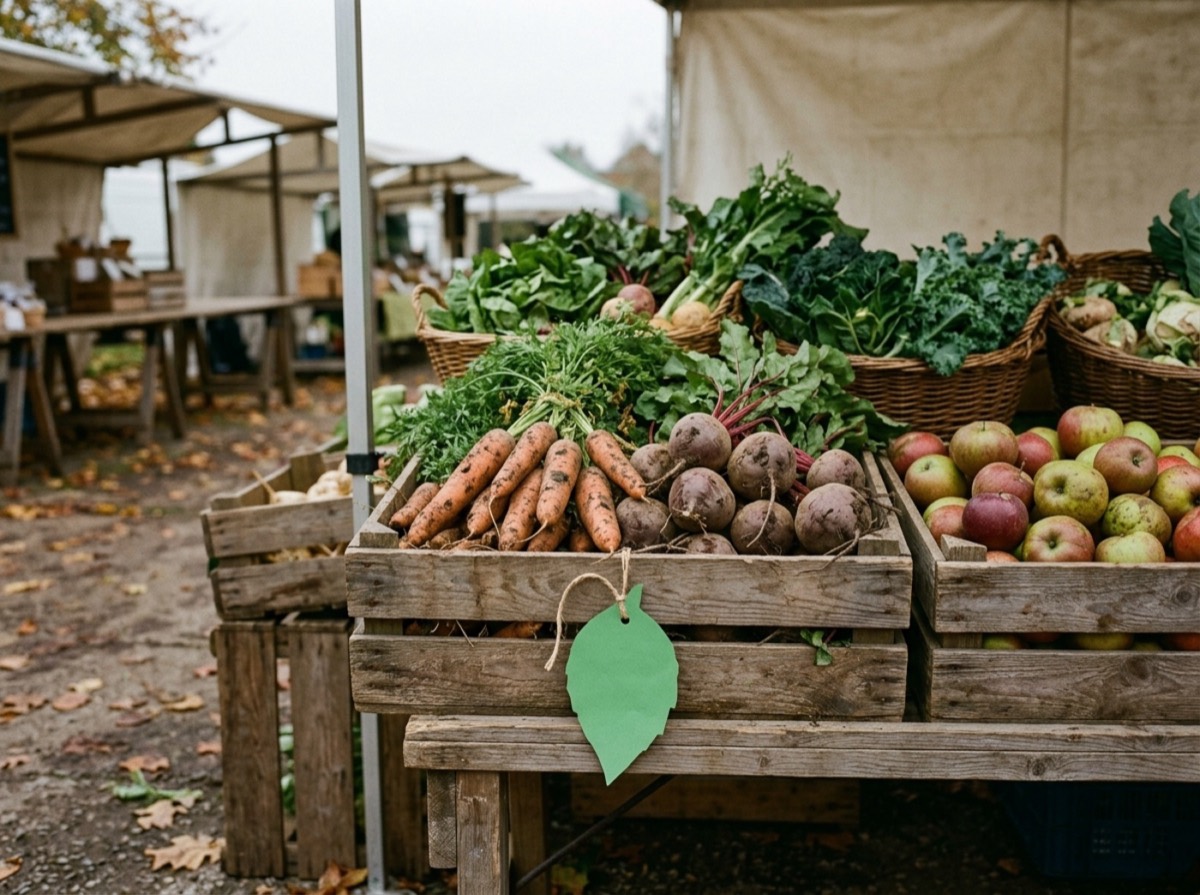
- Synthetic chemical fertilisers are not allowed; fertility comes from rotations, legumes, manure and compost.
- Most synthetic pesticides are banned; only a limited list of approved substances may be used, mainly of natural origin.
- Genetically modified organisms are prohibited, as is irradiation of food.
- Animals must have access to open-air areas or grazing, more space than in conventional systems and organic feed.
- Routine preventive use of antibiotics is not allowed, and growth promoters are banned.
- Land must go through a conversion period, usually two years for annual crops and grassland and three years for perennial crops, before its harvest can be sold as organic.
How does organic inspection work?
Every business that produces, processes, stores, imports or sells organic products must notify the authorities and join the control system, with limited exemptions for some small retailers selling pre-packed goods directly to consumers. Each member state supervises the control bodies or control authorities that do the checking.
Operators are inspected at least once a year as a rule, with a possible longer interval for some low-risk operators with a clean record. Inspectors look at fields, stables, stores and factories, check records and invoices to confirm that what was sold matches what was bought or grown, and may take samples to test for residues. Unannounced visits are also part of the system. Operators that pass receive a certificate, and serious breaches can lead to products losing their organic status.
How to read the code and origin next to the logo
Next to the logo you will find a code that identifies the control body or authority that certified the last operator who handled the product. It starts with the country abbreviation, followed by a term referring to organic production and a reference number. In Germany, for example, codes follow the pattern DE-ÖKO- followed by three digits.
Directly below the code is the place of farming of the agricultural raw materials: EU Agriculture, non-EU Agriculture, or EU/non-EU Agriculture when ingredients come from both. When practically all the raw materials come from one country, the country name can replace or supplement the word EU. This line tells you where the ingredients were grown, not where the product was packed.
Imported organic food and national labels
Organic food from outside the EU can enter the market in two main ways: from countries whose organic systems the EU recognises as equivalent under trade agreements, or through operators certified by control bodies that the EU recognises for that purpose. Shipments must be accompanied by an electronic certificate of inspection before they are released as organic.
Some countries also have national or private labels. Germany's hexagonal Bio-Siegel, introduced in 2001, uses the same legal standard as the EU logo and can appear alongside it. Private farming associations often set stricter rules than the EU minimum, for example on feed, fertiliser or additives, and use their own logos on top of the EU one.
What organic does and does not guarantee
The EU organic logo guarantees a production method that has been checked. It does not guarantee that a food is healthier, lower in sugar or fat, or better for every environmental measure. An organic biscuit is still a biscuit, so the nutrition panel matters as much as the logo.
Organic also does not mean zero pesticides. Some approved substances are used, and traces from neighbouring fields or the environment can occur. Studies and official monitoring do tend to find pesticide residues less often in organic produce than in conventional produce. Organic rules also say nothing directly about fair wages, packaging or transport distance, which other schemes address.
Frequently asked questions
What does the EU organic logo mean?
+
It means the product was made under the EU organic regulation and checked by an approved control body. For processed food, at least 95% of the agricultural ingredients are organic. The logo is mandatory on pre-packaged organic food produced in the EU.
Is EU organic food completely pesticide-free?
+
No. Synthetic pesticides are largely banned, but a limited list of approved substances, mostly of natural origin, may be used, and traces from the environment can occur. Residues are generally found less often than in conventional produce.
What does 'EU Agriculture' or 'non-EU Agriculture' mean on organic labels?
+
It shows where the agricultural raw materials were farmed. 'EU/non-EU Agriculture' means the ingredients come from both inside and outside the EU. When nearly everything comes from one country, the country name can be shown instead.
How long does it take to become certified organic in the EU?
+
Land normally has to go through a conversion period before its harvest can be sold as organic: typically two years for annual crops and grassland and three years for perennial crops such as orchards and vineyards. The operator is inspected during that time.
How often are organic farms inspected in the EU?
+
As a rule, at least once a year, including a physical inspection. Some low-risk operators with a good compliance record can be inspected at longer intervals, and control bodies also make unannounced visits and take samples.
What is the difference between the German Bio-Siegel and the EU organic logo?
+
The German Bio-Siegel is a national label based on the same EU organic rules, so it adds no stricter requirements. Private association labels, by contrast, often go beyond the EU minimum standard.
Is organic food healthier?
+
The organic logo describes how food was produced, not its nutritional quality. Organic processed foods can still be high in sugar, salt or fat, so read the nutrition information as well.
With EU organic certification explained, the green leaf becomes easier to read: a legally protected, inspected production method with a clear code and a statement of where the ingredients were farmed. Use it together with the ingredient list and nutrition panel, and you will know exactly what you are buying.
How we research: Guides are written from established sources and checked for accuracy. They are general information, not professional advice.
Written by
Bitezine Editorial Team
Rankings, reviews & guides
Our editors research every piece from makers’ documentation, independent tests and owner reports, and update it when products change.