Food & Drink
Cocoa bean varieties explained: Criollo, Forastero, Trinitario and beyond
Cocoa bean varieties explained: how Criollo, Forastero, Trinitario and Nacional differ, what modern genetics says, and how origin and processing shape flavour.
 Bitezine Editorial TeamRankings, reviews & guides 5 min read
 AI generated
Cocoa bean varieties are one of the most talked-about and most misunderstood topics in chocolate. Labels mention Criollo, Trinitario or rare heirloom beans, yet most chocolate in the world comes from a small group of hardy, high-yield trees, and the old three-variety system does not fully match what scientists now know about cacao.
This explainer covers the classic types of cocoa beans, the newer genetic picture, how much each group contributes to world supply and why fermentation, drying and origin often matter as much as the variety itself.
Where do cocoa beans come from?
Cocoa beans are the seeds of Theobroma cacao, a small understorey tree native to the tropical forests of South America. Research points to the upper Amazon as the place where people first used and domesticated cacao, several thousand years ago, before it spread to Central America, where Mesoamerican cultures prized it as a drink.
The tree grows in a narrow belt roughly 20 degrees either side of the equator. Today the largest producers are in West Africa, with Côte d'Ivoire and Ghana supplying more than half of the world's cocoa, followed by countries such as Indonesia, Ecuador, Cameroon, Nigeria and Brazil.
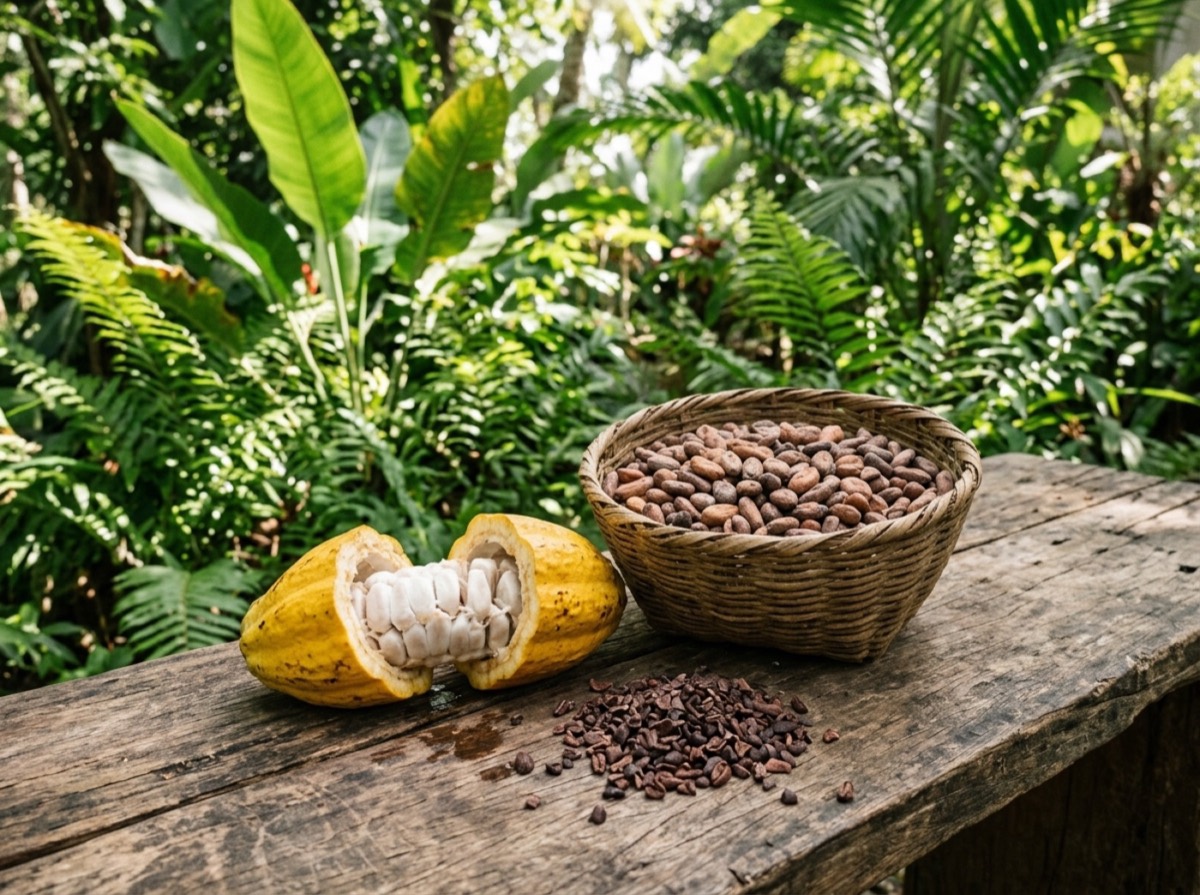
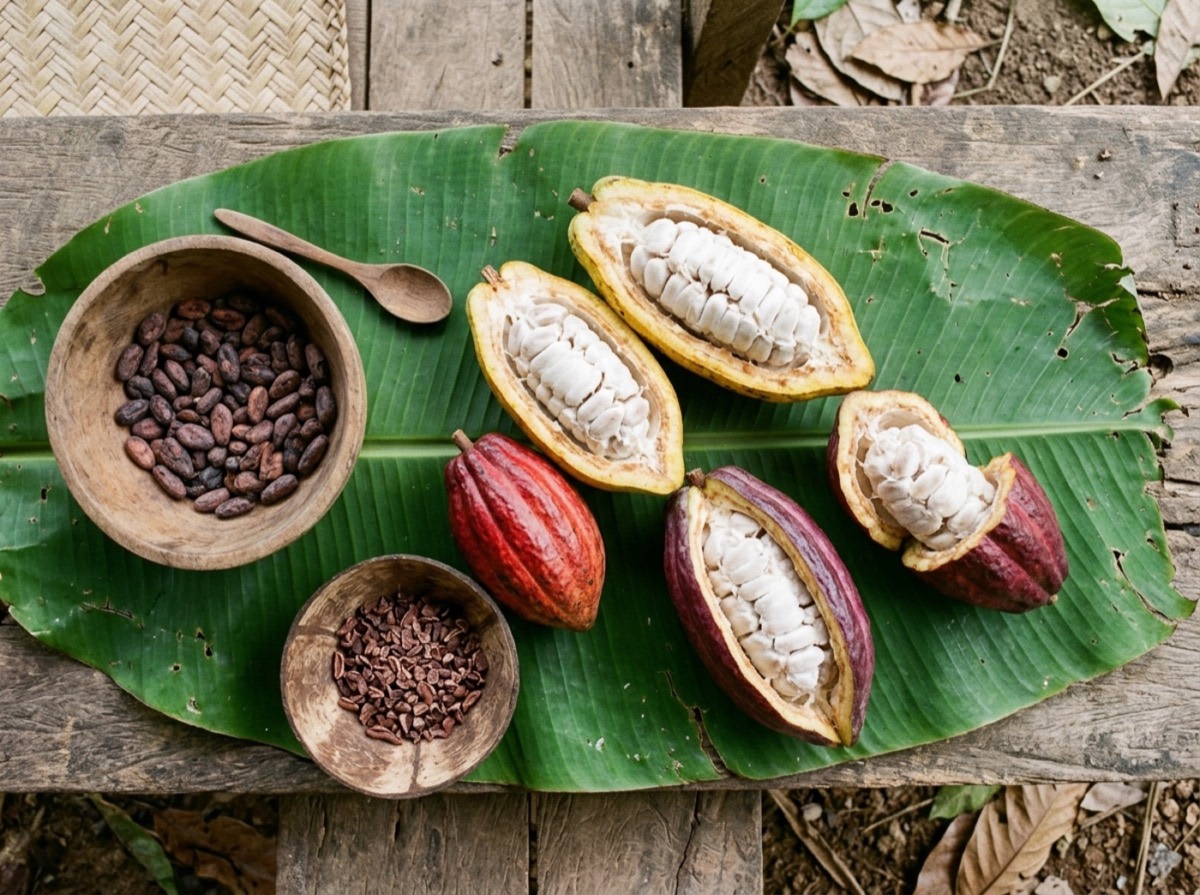
Each tree produces pods on its trunk and main branches. Inside each pod are roughly 20 to 60 beans wrapped in sweet white pulp. The words cocoa and cacao refer to the same plant; many people use cacao for the tree and the raw beans and cocoa for the processed product, but there is no strict rule.
Criollo: the rare, delicate classic
Criollo is traditionally the most prized cocoa bean variety. The beans are often pale inside, low in bitterness and known for mild, nutty, sometimes fruity or caramel-like notes. Criollo trees are, however, lower-yielding and vulnerable to disease, so they are expensive to grow.
Estimates vary, but true Criollo makes up only a small share of world production, commonly put at well under a tenth. Much cocoa sold as Criollo is actually a hybrid with Criollo ancestry.
Variety sets the potential of a cocoa bean, but fermentation and drying decide much of its flavour.
Forastero: the backbone of world chocolate
Forastero, meaning 'foreigner' in Spanish, is a broad label for the robust Amazonian cacao that dominates global supply, often estimated at around 80 percent or more. Its most widely grown form is Amelonado, named for its smooth, melon-shaped pods, which is the traditional tree of West Africa.
Forastero beans tend to have a stronger, more straightforward cocoa flavour with more bitterness and astringency. That makes them a dependable base for everyday chocolate, cocoa powder and cocoa butter, though well-grown and well-fermented Forastero can also be very good.
Trinitario: the hybrid from Trinidad
Trinitario is a cross between Criollo and Forastero that emerged on the island of Trinidad in the 18th century, after Criollo plantings there were largely lost and new Forastero trees were brought in. The hybrids combined some of Criollo's aroma with Forastero's vigour.
Because it is a hybrid group, Trinitario is very diverse. Flavour ranges from fruity and wine-like to earthy and spicy, depending on the parent trees and the region. It is widely used in fine and craft chocolate.
Nacional and other named cacaos
Nacional is a native Ecuadorian cacao historically associated with the 'Arriba' flavour, often described as floral with fruity and nutty notes. Pure Nacional trees became rare after disease outbreaks in the 20th century, and much Ecuadorian cocoa today comes from hybrids.
Ecuador is also home to CCN-51, a high-yield, disease-resistant clone developed in the country. It is valued by farmers for its productivity, but its beans are often described as more acidic and less aromatic unless fermented with care, which makes it a frequent topic of debate among chocolate makers.
What modern genetics says about cocoa varieties
The Criollo, Forastero and Trinitario system dates from a time before DNA testing. In 2008, a large genetic study led by Juan Carlos Motamayor proposed classifying cacao into ten genetic groups, mostly named after the regions where they were found.
- Amelonado
- Contamana
- Criollo
- Curaray
- Guiana
- Iquitos
- Marañón
- Nacional
- Nanay
- Purús
Why processing and origin matter as much as variety
Variety sets the potential, but what happens after harvest decides much of the flavour. Fresh beans taste nothing like chocolate. They are fermented in heaps or wooden boxes for several days, during which the pulp breaks down, the beans warm up and the compounds that later become chocolate flavour develop. They are then dried, often in the sun, before shipping.
Under-fermented beans taste bitter, astringent and flat; badly dried beans can pick up mould or smoky off-flavours. Soil, climate and the other plants growing nearby add further differences, which is why chocolate makers often talk about origin, farm and harvest rather than variety alone.
In the trade, 'fine or flavour cocoa' describes beans with distinctive aroma, usually from Criollo, Trinitario or Nacional heritage and careful processing, as opposed to 'bulk' or 'ordinary' cocoa. The International Cocoa Organization recognises certain producing countries as exporters of fine or flavour cocoa.
How to use this when buying chocolate
Treat variety names as a clue, not a guarantee. A bar that states the country or region of origin, the cocoa percentage and ideally the farm or cooperative tells you far more than a vague 'rare beans' claim.
Tasting side by side is the easiest way to learn. Try two dark chocolates of similar percentage from different origins and note differences in fruitiness, bitterness, acidity and aroma. Over time you will recognise the styles you enjoy.
Frequently asked questions
What are the three main types of cocoa beans?
+
The traditional three are Criollo, Forastero and Trinitario. Criollo is rare and delicate, Forastero is hardy and makes up most world production, and Trinitario is a hybrid of the two. Nacional from Ecuador is often named as a fourth.
Which cocoa bean variety is the best?
+
There is no single best variety. Criollo has the highest reputation, but careful fermentation, drying and chocolate making matter just as much. Well-processed Trinitario, Nacional or Forastero beans can make excellent chocolate.
What is the most common cocoa bean?
+
Forastero, especially the Amelonado type grown widely in West Africa. It is usually estimated to account for around 80 percent of world cocoa.
What is the difference between cocoa and cacao?
+
They refer to the same plant and beans. Cacao is often used for the tree and raw or minimally processed beans, and cocoa for roasted and processed products, but usage varies and neither term is legally defined that way.
How many varieties of cacao are there?
+
A widely cited 2008 genetic study grouped cacao into ten genetic clusters. Within those groups there are many local cultivars and hybrids, so the number of named varieties is much larger.
What is CCN-51 cocoa?
+
CCN-51 is a high-yielding, disease-resistant cacao clone developed in Ecuador. Farmers value its productivity, while its flavour is often considered less aromatic and more acidic unless it is carefully fermented.
Cocoa bean varieties give chocolate its starting character, but the full story includes genetics, soil, climate and the care taken during fermentation and drying. Knowing the difference between Criollo, Forastero, Trinitario and Nacional helps you read labels with a sharper eye, and tasting chocolates by origin is the most enjoyable way to put that knowledge to work.
How we research: Guides are written from established sources and checked for accuracy. They are general information, not professional advice.
Written by
Bitezine Editorial Team
Rankings, reviews & guides
Our editors research every piece from makers’ documentation, independent tests and owner reports, and update it when products change.