Culture
Art Deco explained: history, key features and where to see it
Art Deco explained: where the style came from, how to recognise it in buildings, furniture and posters, and the cities around the world where it still shines.
 Bitezine Editorial TeamRankings, reviews & guides 5 min read
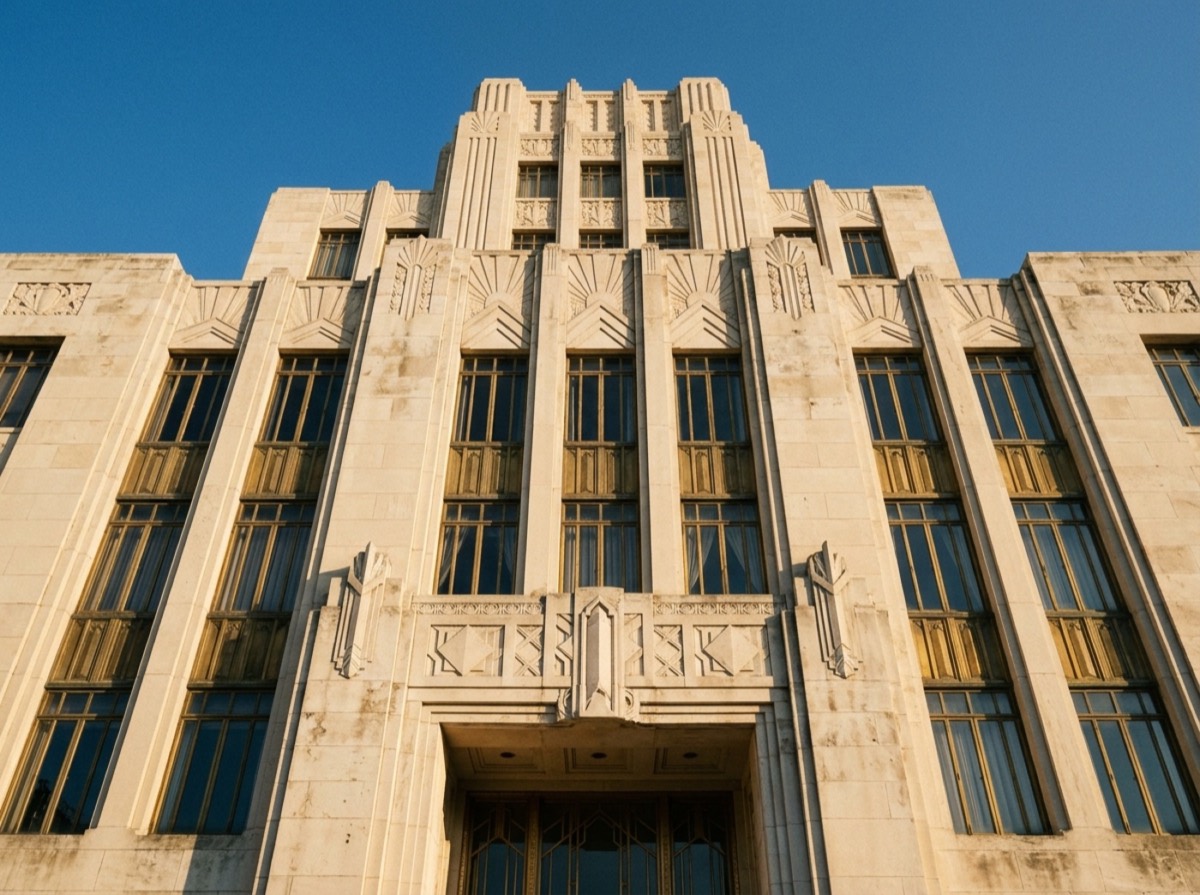 AI generated
Art Deco, explained simply, is the design style of the machine age: bold geometry, rich materials and a confident belief in progress. It shaped skyscrapers, cinemas, ocean liners, jewellery, posters and furniture, and it remains one of the most recognisable looks of the twentieth century.
This guide covers where the style came from and how it got its name, the features that make Art Deco easy to spot, how it differs from Art Nouveau, and where to see outstanding examples today.
What is Art Deco?
Art Deco is an international style of architecture, decorative arts and design that emerged in France shortly before the First World War and flourished from the 1920s into the 1930s, with influence lasting into the 1940s. It stood for luxury, glamour and modernity, and it combined fine craftsmanship with the sleek forms of industry.
Unlike many art movements, it was never a single school with a manifesto. Instead, it was a shared visual language adopted by architects, furniture makers, graphic artists, fashion designers and manufacturers across the world.
Why is it called Art Deco?
The name comes from the Exposition internationale des arts décoratifs et industriels modernes, a major exhibition of modern decorative and industrial arts held in Paris in 1925. At the time, people used terms such as style moderne or simply modern.
The short form Art Deco became widely used only decades later. The historian Bevis Hillier helped popularise it as a stylistic label with his 1968 book on the decorative arts of the 1920s and 1930s, which coincided with a revival of interest in the period.
If the ornament looks like it grew, think Nouveau; if it looks like it was engineered, think Deco.
The history of Art Deco and its influences
Art Deco drew on a remarkable range of sources. Cubism and other avant-garde movements encouraged simplified, geometric forms. The Vienna Secession offered bold, stylised ornament. The vivid costumes and sets of the Ballets Russes brought strong colour to Paris.
Archaeology also played a part. The discovery of Tutankhamun's tomb in 1922 set off a wave of Egyptian motifs, and designers borrowed from Mesopotamian, Pre-Columbian and African art as well. Meanwhile, cars, aeroplanes, radios and ocean liners supplied a modern vocabulary of speed and precision. In the 1930s, a sleeker offshoot known as Streamline Moderne emerged, with rounded corners, horizontal lines and polished surfaces inspired by aerodynamic design.
Art Deco style characteristics: how to recognise it
Once you know the signs, Art Deco is easy to spot.
- Geometric shapes: zigzags, chevrons, stepped forms, circles and strong symmetry.
- Sunburst and fan motifs, often radiating from a central point.
- Vertical emphasis in buildings, with setbacks that step inward as they rise.
- Stylised nature: plants, animals and figures simplified into clean, angular forms.
- Luxurious materials: lacquer, exotic woods, ivory, marble, shagreen and gilding.
- New industrial materials: chrome, stainless steel, Bakelite and other early plastics, and glass.
- Bold colour and contrast: black and gold, silver and jade, deep blues and cream.
- Streamlined curves in later work, with porthole windows and horizontal speed lines.
Art Deco vs Art Nouveau: what is the difference?
The two styles are often confused, but they look quite different. Art Nouveau, which peaked around the turn of the twentieth century, favours flowing, organic lines inspired by plants, tendrils and the female form. Its curves are asymmetrical and natural.
Art Deco came after it and largely reacted against it. Where Art Nouveau is sinuous and handcrafted in feel, Art Deco is geometric, symmetrical and machine-inspired. A quick test: if the ornament looks like it grew, think Nouveau; if it looks like it was engineered, think Deco.
Famous Art Deco buildings and cities
New York has some of the most celebrated Art Deco skyscrapers. The Chrysler Building, completed in 1930, is famous for its stainless-steel crown of stacked arches, and the Empire State Building, finished in 1931, remains an icon of the style. In Paris, the Théâtre des Champs-Élysées, completed in 1913, is often cited as an early example.
Several cities are known for concentrations of the style. Miami Beach has one of the largest collections of Art Deco buildings in the world, many in a pastel Tropical Deco variant. In New Zealand, Napier was rebuilt largely in Art Deco style after a devastating earthquake in 1931 and now hosts a popular annual Art Deco festival. In India, the Victorian Gothic and Art Deco Ensembles of Mumbai, including buildings along Marine Drive, were added to the UNESCO World Heritage List in 2018. Many other cities, from London to Shanghai and Havana, have notable Deco cinemas, apartment blocks and factories.
Art Deco interior design today
Art Deco influence is visible in interiors, lighting and jewellery to this day. To bring a touch of it home, focus on a few signature elements rather than recreating a period set.
Choose one or two geometric patterns, such as a fan-shaped tile, a chevron rug or a sunburst mirror. Add metallic accents in brass, gold or chrome, and pair them with rich colours like emerald, navy or black. Curved sofas, lacquered or high-gloss surfaces, glass lamps and symmetrical arrangements complete the look. Original vintage pieces, from mirrors to posters, are widely collected; check condition and provenance carefully before buying.
Frequently asked questions
What is Art Deco in simple terms?
+
Art Deco is a design style that became popular in the 1920s and 1930s. It is known for bold geometric shapes, symmetry, luxurious and industrial materials, and a glamorous, modern feel.
Where does the name Art Deco come from?
+
It comes from the 1925 Paris Exposition internationale des arts décoratifs et industriels modernes. The shortened term Art Deco became common in the 1960s, helped by historian Bevis Hillier's 1968 book.
What is the difference between Art Deco and Art Nouveau?
+
Art Nouveau, which came first, uses flowing, organic curves inspired by nature. Art Deco is more geometric, symmetrical and influenced by machines and modern industry.
What is the most famous Art Deco building?
+
The Chrysler Building in New York, completed in 1930, is often named the most famous, thanks to its gleaming stepped crown. The Empire State Building is another celebrated example.
Which city has the most Art Deco buildings?
+
Miami Beach is often described as having the largest concentration of Art Deco architecture in the world. Napier in New Zealand and Mumbai in India are also renowned for their Art Deco buildings.
What is Streamline Moderne?
+
Streamline Moderne is a later offshoot of Art Deco that developed in the 1930s. It favours smooth curves, long horizontal lines and polished surfaces inspired by aerodynamic trains, ships and aircraft.
With Art Deco explained, the style becomes easy to spot: geometric patterns, sunbursts, stepped towers, gleaming metals and a sense of optimism about the modern world. From the Paris exhibition of 1925 to the skylines of New York, Miami Beach, Napier and Mumbai, its influence endures, and a few well-chosen details can bring the same glamour into a home today.
How we research: Guides are written from established sources and checked for accuracy. They are general information, not professional advice.
Written by
Bitezine Editorial Team
Rankings, reviews & guides
Our editors research every piece from makers’ documentation, independent tests and owner reports, and update it when products change.