Review · Food & Drink
Wüsthof Classic chef's knife review: the German benchmark, pros and cons
The forged Wüsthof Classic 20 cm chef's knife keeps winning independent tests. We look at steel, sharpness, weight, care and value in 2026.
 Bitezine Editorial TeamRankings, reviews & guides 7 min read
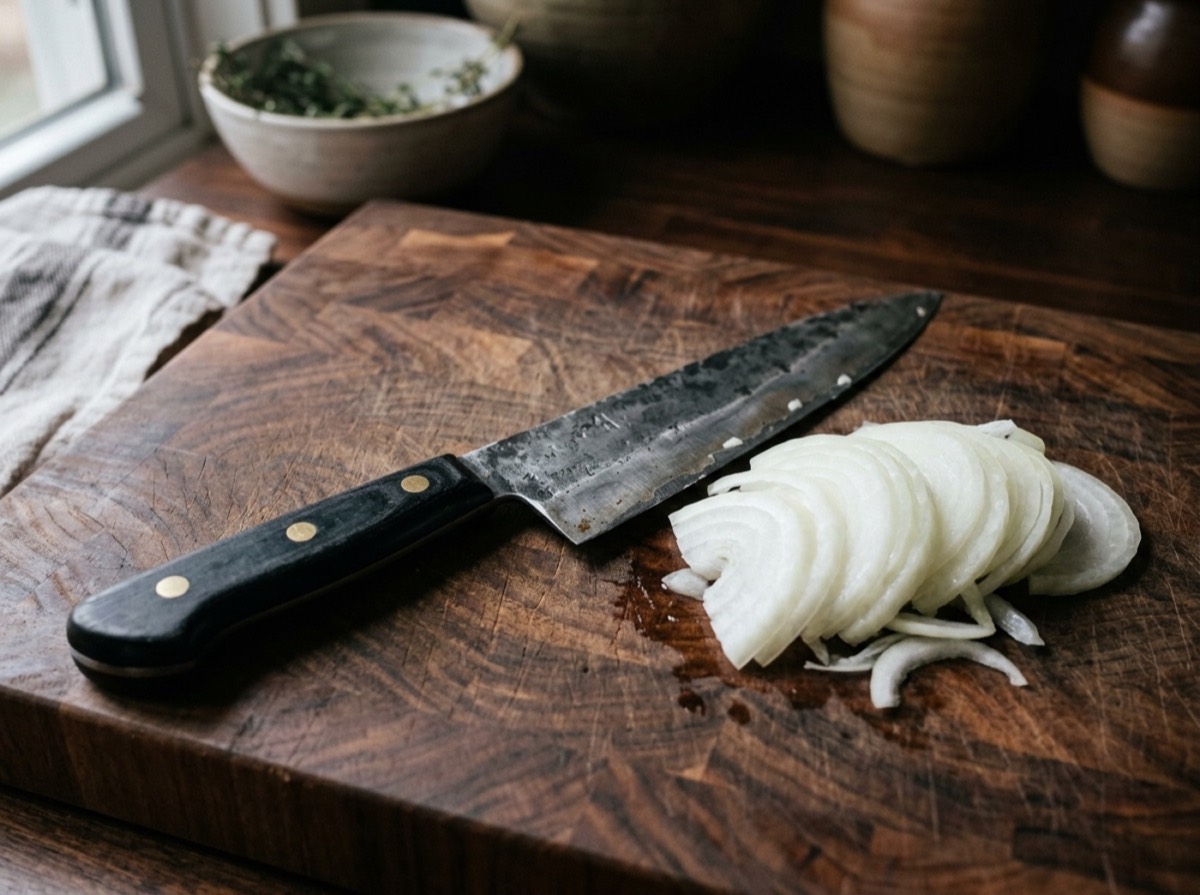 AI generated
 Chef's knife · Premium
Wüsthof Classic Chef's Knife 20 cm (8-inch)
The Wüsthof Classic is a sharp, balanced and durable forged chef's knife that tops independent tests, with its weight and thick handle the main things to consider.
What we like
- +Consistently rated a top chef's knife by independent testers
- +Forged, full-tang build with a solid, balanced feel
- +58 HRC steel with laser-guided PEtec edge holds its sharpness well
- +Curved belly suits the rocking chop most Western cooks use
- +Textured synthetic handle stays secure when wet
- +Made in Solingen, Germany, with a lifetime warranty on defects
What could be better
- −Heavy at around 260 g, which can tire some users
- −Thick handle may feel bulky for small hands
- −Full bolster makes sharpening the heel section harder
- −Premium price
- −Not dishwasher safe
Best for: Home cooks who want a Western chef's knife for decades
Visit Wüsthof →The Wüsthof Classic chef's knife is the knife many cooks picture when they think of a German blade, and this Wüsthof Classic chef's knife review looks at whether it still deserves that status in 2026. Wüsthof has been a family-owned company in Solingen since 1814, and the Classic, with its black three-rivet handle and full bolster, is its best-known range.
Our assessment is based on Wüsthof's specifications and independent tests, including Serious Eats, which named it the best chef's knife again in its September 2026 update, and TechGearLab, which ranked it first of 13 with a score of 91. We look at sharpness, edge retention, weight, handle comfort, care and how it compares with budget and Japanese knives.
Design and build: forged in Solingen
The Classic is precision-forged from a single piece of steel, with a full tang running through the handle and a full bolster where blade meets handle. The synthetic handle is secured with three rivets and has a matte finish that Serious Eats found easy to grip. The knife is made in Solingen and is also available with coloured handles.
The result feels solid and substantial. Independent tests put the 20 cm model at around 260 g, much heavier than stamped knives like the Victorinox Fibrox. TechGearLab still praised its balance and rated its ergonomics 9.5 out of 10.
Sharpness and edge retention
Wüsthof uses X50CrMoV15 stainless steel hardened to 58 HRC and sharpened with its PEtec system, which uses laser measurements to set the edge angle on each blade. The brand says this gives a sharper edge with longer retention than its older process.
Testers agree the knife is sharp and stays that way. Serious Eats saw it dice carrots cleanly and handle tomatoes and onions without crushing them. TechGearLab reported it still sliced tomato skins as easily after about 100 days of use as on day one. It measured the edge slightly more obtuse than the stated 14 degrees, at nearly 16, which is still sharp for a German knife.
- Clean cuts through soft tomatoes and onions
- Enough heft for squash, carrots and chicken joints
- Good edge retention for a Western stainless knife
Weight and handling: who will like it?
The Classic's weight is both a strength and a weakness. It helps the blade power through dense vegetables and makes rocking cuts feel effortless. But Serious Eats noted that the heft and thick handle make it more work to control, and TechGearLab mentioned that some users may tire during long prep sessions.
If you prefer a light, nimble blade and a push-cut style, a Japanese gyuto is likely to suit you better. If you like a confident, weighty knife with a curved belly, the Classic is hard to beat.
Care and sharpening
Wüsthof advises washing the knife by hand with warm water and mild soap and drying it immediately. It should not go in the dishwasher. Regular honing keeps the edge aligned between sharpenings.
The full bolster is worth knowing about. It protects your fingers and adds balance, but it runs down to the edge at the heel, which can make that part of the blade harder to sharpen on a whetstone over the years.
Wüsthof Classic vs Victorinox Fibrox vs Japanese knives
Against the budget Victorinox Fibrox, the Classic is heavier, harder, better finished and holds its edge longer, but costs several times as much. The Fibrox is lighter and easier to sharpen.
Against Japanese knives such as the Misono 440 Molybdenum Gyutou, Serious Eats' Japanese-style pick, the Wüsthof is heavier and more robust, while the Japanese knife is thinner, lighter and better suited to precise slicing. Neither is better overall; it depends on your cutting style.
Is the Wüsthof Classic worth it?
For most home cooks who want one high-quality Western chef's knife, yes. It is a premium buy, but its forged construction, hard steel and lifetime warranty on defects mean it can last for decades with basic care. If your budget is tight or you prefer light knives, look at the alternatives below.
Key specs
- Blade length
- 20 cm (8 in)
- Construction
- Forged from one piece, full tang, full bolster, three rivets
- Steel
- X50CrMoV15 stainless steel
- Hardness
- 58 HRC
- Edge
- PEtec laser-controlled edge, about 14° per side (independent measurement closer to 16°)
- Weight
- About 260 g (9.1-9.2 oz), per independent tests
- Handle
- Synthetic polymer
- Made in / warranty
- Solingen, Germany / lifetime warranty on manufacturing defects
Alternatives to consider
- Victorinox Fibrox Chef's Knife 20 cm: A light, stamped budget knife that is easy to sharpen, at a fraction of the price.
- Mercer Culinary Millennia 8-Inch Chef's Knife: Serious Eats' budget pick for cooks who want good performance for little money.
- Misono 440 Molybdenum Gyutou: A thinner, lighter Japanese-style chef's knife for precise slicing.
Frequently asked questions
Is the Wüsthof Classic chef's knife worth it?
+
Yes, for cooks who want a durable, high-quality Western chef's knife. It tops independent tests from Serious Eats and TechGearLab and can last decades. Its weight and price are the main drawbacks.
What steel does the Wüsthof Classic use?
+
It uses X50CrMoV15 stainless steel hardened to 58 HRC. The edge is finished with Wüsthof's laser-guided PEtec sharpening process.
How heavy is the Wüsthof Classic 8-inch chef's knife?
+
Independent tests weigh it at about 260 g (around 9.1 to 9.2 oz). That is heavy compared with stamped or Japanese knives, which some cooks like and others find tiring.
Can the Wüsthof Classic go in the dishwasher?
+
No. Wüsthof recommends washing it by hand with mild soap and water and drying it right away to protect the edge and handle.
Wüsthof Classic or Victorinox Fibrox: which is better?
+
The Wüsthof is better built, harder and holds its edge longer. The Victorinox is much cheaper, lighter and easier to sharpen. Choose based on budget and how much you cook.
Where are Wüsthof knives made?
+
Wüsthof Classic knives are made in Solingen, Germany, where the family-owned company has been based since 1814.
Is the Wüsthof Classic good for beginners?
+
Yes, if you are comfortable with a heavier knife. Its secure handle and forgiving curved blade suit beginners, though some prefer a lighter knife while learning.
The Wüsthof Classic chef's knife is still the German benchmark. Its forged build, hard steel, strong edge retention and secure handle explain why independent testers keep putting it at the top. It is heavy, not dishwasher safe and priced at the premium end, but for a knife you might use daily for decades, those trade-offs are easy to accept for most home cooks.
How we research: Reviews are based on the maker’s specifications, published independent tests and owner reports. Scores compare the product with others in its class.
Written by
Bitezine Editorial Team
Rankings, reviews & guides
Our editors research every piece from makers’ documentation, independent tests and owner reports, and update it when products change.