Review · Food & Drink
Victorinox Fibrox chef's knife review: the budget workhorse, pros and cons
The Victorinox Fibrox chef's knife is a cheap, tough Swiss-made kitchen staple. We weigh its sharpness, handle and value against newer budget rivals in 2026.
 Bitezine Editorial TeamRankings, reviews & guides 7 min read
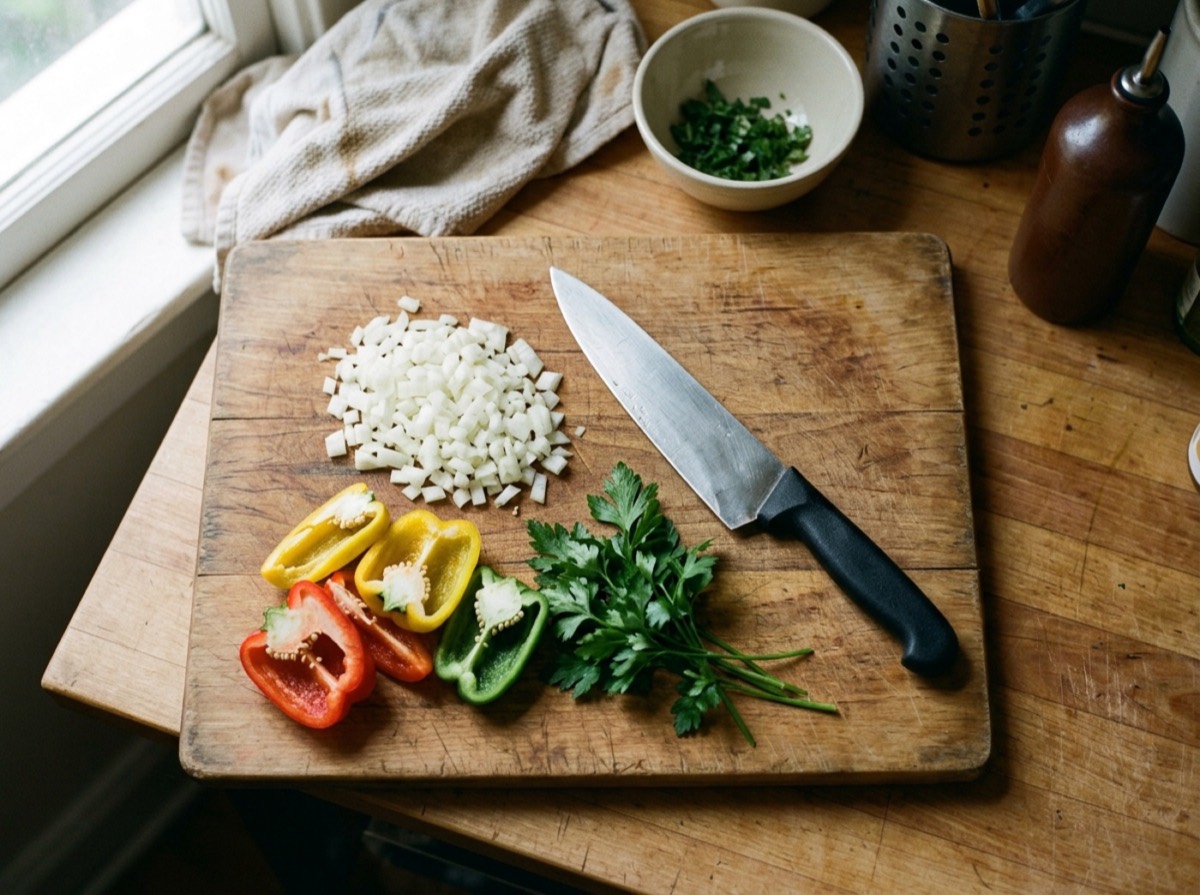 AI generated
 Chef's knife · Budget
Victorinox Fibrox Chef's Knife 20 cm (Fibrox Pro 8-inch in the US)
The Victorinox Fibrox is a light, tough and easy-to-sharpen budget chef's knife that still makes sense for beginners and busy kitchens, though its handle and softer steel are not for everyone.
What we like
- +Low price for a Swiss-made knife with a lifetime warranty
- +Light at about 181 g, easy on the wrist
- +Softer steel resists chipping and is easy to sharpen
- +Textured, non-slip handle that grips well when wet
- +Officially dishwasher safe, useful in shared or busy kitchens
What could be better
- −Softer steel needs more frequent honing and sharpening
- −Wide, chunky handle feels uncomfortable to some users, especially with small hands
- −Serious Eats found it struggled with tomato skin in its 2026 test
- −Plain, utilitarian look
- −The handle-to-blade joint can trap dirt over time, according to one long-term reviewer
Best for: Budget buyers, beginners and hard-working everyday prep
Visit Victorinox →The Victorinox Fibrox chef's knife has long been the answer to the question "what is the best cheap chef's knife?", and this Victorinox Fibrox chef's knife review checks whether that still holds in 2026. Made in Switzerland by the company behind the Swiss Army knife, the Fibrox line is widely used in professional kitchens. In the US it is sold as the Fibrox Pro 8-inch; in Europe it is the Fibrox chef's knife, 20 cm.
This review is based on Victorinox's specifications, retailer technical data, independent reviews from Serious Eats and Chef Panko, and extensive owner feedback. We look at sharpness, steel, handle comfort, care and how the Fibrox compares with the Mercer Millennia and premium German knives such as the Wüsthof Classic.
Design: a no-frills professional knife
The Fibrox is a stamped knife, meaning the blade is cut from a sheet of steel rather than forged. That keeps it thin, light and inexpensive. The 20 cm blade has a flat heel and a curved front section that supports a rocking chop, and there is no bolster, so you can sharpen the full length of the edge easily.
The handle is made from a textured thermoplastic elastomer designed to stay grippy with wet or greasy hands. Victorinox lists the knife at about 181 g, far lighter than most forged German chef's knives, and it comes with a lifetime warranty against defects.
Sharpness and steel
Out of the box, most owners find the Fibrox sharp enough for everyday prep. Retailer data lists the steel at around 56 HRC with an edge of about 18 degrees per side. That is softer than premium German knives, which are usually about 58 HRC, and much softer than many Japanese knives.
Softer steel has pros and cons. Chef Panko notes that it resists chipping and is quick to sharpen and hone, which makes it a forgiving tool for beginners. The trade-off is edge retention: expect to hone it regularly and sharpen it more often than harder blades. In its 2026 chef's knife test, Serious Eats found the Victorinox struggled to slice through tomato skin.
Handle comfort: love it or not
The handle divides opinion more than anything else. Chef Panko found it comfortable for larger hands and ideal for a pinch grip at the curved indent. Serious Eats, by contrast, moved the knife to its not recommended list in 2026, mainly because its wide handle was uncomfortable for its tester. If you have small hands, try one in a shop if you can.
One long-term reviewer also reported that the joint between handle and blade can collect dirt as the seal ages, so it is worth cleaning that area carefully.
Care: can it go in the dishwasher?
Victorinox lists the Fibrox as dishwasher safe, which is rare and useful in shared kitchens. Even so, retailers and most knife experts advise hand washing, since dishwashers can dull edges and knock blades against other items.
Maintenance is simple: hone it before use, sharpen it on a whetstone or a guided sharpener when honing no longer helps, and store it in a block, on a magnetic strip or with a blade guard.
- Hand wash and dry straight away
- Hone often to keep the edge aligned
- Sharpen easily thanks to the softer steel and no bolster
Victorinox Fibrox vs Mercer and Wüsthof
Among budget knives, the Mercer Culinary Millennia 8-inch is now Serious Eats' pick under $40, so the Fibrox no longer stands alone. The two are similar in price and purpose; handle preference is often the deciding factor.
Compared with a forged knife such as the Wüsthof Classic, the Fibrox is much lighter and far cheaper, but the Wüsthof uses harder steel, holds its edge longer and feels more solid. If you cook every day and want a knife for decades, a premium knife can be worth it. If you want a reliable workhorse you will not worry about, the Fibrox still delivers.
Who should buy the Victorinox Fibrox?
It suits beginners, students, holiday homes, busy family kitchens and anyone who wants a capable knife without the fuss. It is also a good second knife for rough jobs. People who value fit and finish, have small hands or want long edge retention may prefer something else.
Key specs
- Blade length
- 20 cm (7.9 in)
- Blade height
- About 5.6 cm (2.2 in), wide profile
- Weight
- About 181 g (6.4 oz)
- Construction
- Stamped stainless steel blade (not forged)
- Hardness
- About 56 HRC, per retailer data
- Handle
- Thermoplastic elastomer (TPE), textured
- Care
- Dishwasher safe per Victorinox; hand washing recommended
- Made in / warranty
- Switzerland / lifetime warranty
Alternatives to consider
- Mercer Culinary Millennia 8-Inch Chef's Knife: A similarly priced budget knife that Serious Eats currently prefers.
- Wüsthof Classic Chef's Knife 20 cm: A forged German knife with harder steel and better edge retention at a much higher price.
- Misono 440 Molybdenum Gyutou: A lighter, sharper Japanese-style option for those willing to spend more.
Frequently asked questions
Is the Victorinox Fibrox chef's knife worth it?
+
For a budget knife, yes. It is light, tough, easy to sharpen and backed by a lifetime warranty. Its softer steel needs frequent honing, and some people find the handle too wide.
Is the Victorinox Fibrox the same as the Fibrox Pro?
+
Fibrox Pro is the name used in the US for the same style of knife. In Europe it is sold as the Fibrox chef's knife, for example the 20 cm model 5.2063.20.
Is the Victorinox Fibrox dishwasher safe?
+
Victorinox lists it as dishwasher safe. Most experts still recommend hand washing and drying to keep the edge sharp for longer.
What steel is the Victorinox Fibrox made of?
+
It uses a stainless steel blade, which retailer data puts at about 56 HRC. That makes it softer and easier to sharpen than premium German knives, but it needs sharpening more often.
Is the Victorinox Fibrox forged or stamped?
+
It is stamped. That keeps it light, thin and affordable, while forged knives are usually heavier and feature a bolster.
Victorinox Fibrox or Wüsthof Classic: which should I buy?
+
Choose the Fibrox for a light, cheap, low-maintenance knife. Choose the Wüsthof Classic if you want harder steel, longer edge retention and a heavier, more solid feel, and are happy to pay much more.
The Victorinox Fibrox chef's knife remains a practical, honest tool: light, durable, easy to sharpen and inexpensive. It is no longer the undisputed budget champion, with rivals like the Mercer Millennia winning some tests and critics pointing to its wide handle and softer edge. But for beginners and anyone who wants a capable everyday knife without worry, it is still a sensible and good-value choice.
How we research: Reviews are based on the maker’s specifications, published independent tests and owner reports. Scores compare the product with others in its class.
Written by
Bitezine Editorial Team
Rankings, reviews & guides
Our editors research every piece from makers’ documentation, independent tests and owner reports, and update it when products change.