Review · Culture
The Three-Body Problem review: Liu Cixin's mind-expanding sci-fi hit
The Hugo-winning Chinese novel behind Netflix's 3 Body Problem. A spoiler-light review of its premise, ideas, pacing and whether it is worth reading.
 Bitezine Editorial TeamRankings, reviews & guides 7 min read
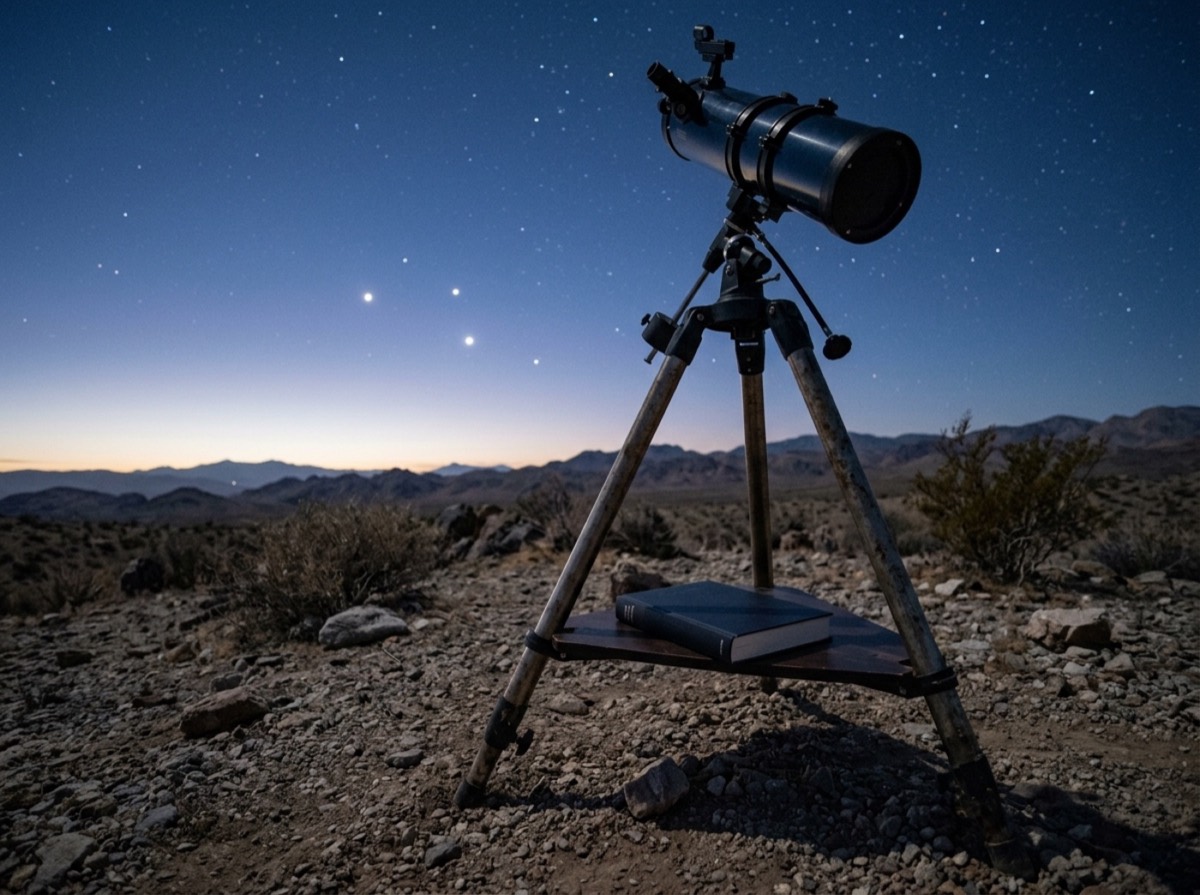 AI generated
 Book (science fiction novel) · Budget
The Three-Body Problem
The Three-Body Problem is a bold, idea-driven science fiction novel with a gripping central mystery, though its thin characters and science-heavy passages will not win over every reader.
What we like
- +Original premise with genuinely surprising scale
- +Gripping mystery structure that builds steadily
- +Rich blend of physics, history and philosophy
- +Fresh perspective from Chinese history and culture
- +Opens a trilogy that becomes even more ambitious
What could be better
- −Characters are often less developed than the ideas
- −Dense scientific explanations can slow the pace
- −Slow, historically heavy opening for some readers
- −Works best if you continue with the sequels
Best for: Readers who love big scientific ideas and mysteries
Visit Liu Cixin (author); first published in book form by Chongqing Publishing House, 2008; English edition Tor Books, 2014 →Liu Cixin's The Three-Body Problem was first serialised in the Chinese magazine Science Fiction World in 2006 and published as a book in 2008. Ken Liu's English translation, released by Tor Books in 2014, won the Hugo Award for Best Novel in 2015, the first translated novel to do so. Since then it has become a global phenomenon, adapted in China as a TV series and by Netflix as 3 Body Problem in 2024.
This spoiler-light review is based on the novel, critical reception and reader feedback. It explains the premise, what makes the book special, where readers struggle and whether it is worth your time.
What is The Three-Body Problem about? (No spoilers)
The story moves between two timelines. One begins during China's Cultural Revolution, where a young astrophysicist, Ye Wenjie, witnesses a tragedy that shapes her life and later joins a secretive military research project. The other follows Wang Miao, a nanomaterials researcher in the present day, who is drawn into an investigation after a string of scientists die in mysterious circumstances.
Wang's search leads him to a strange virtual reality game set in a world with an unpredictable sun. How the game, the deaths and the past connect is the core mystery, and discovering it yourself is a large part of the book's appeal.
Ideas and science: the book's greatest strength
Liu is known for hard science fiction, meaning the story is built on real scientific concepts, pushed to dramatic extremes. The title refers to a classic physics problem about predicting the motion of three bodies under mutual gravity. The novel uses physics, astronomy and computing to build scenes that many readers describe as unforgettable.
The book also asks big questions about humanity's place in the universe, trust in science and what people might do if they lost faith in their own civilisation.
Writing style and pacing: is it hard to read?
The prose is clear and direct, and Ken Liu's translation is widely praised for its readability, with helpful footnotes on Chinese history. The challenge lies elsewhere: long scientific explanations and a historically dense opening. Characters often serve the ideas rather than the other way round, which is a frequent criticism.
Readers who push through the first chapters usually find the mystery hard to put down. A few tips help:
- Read the translator's footnotes for historical context
- Do not worry about following every scientific detail
- Note the two timelines and how they alternate
- Plan to continue with The Dark Forest if you enjoy it
The trilogy: Remembrance of Earth's Past
The Three-Body Problem is the first book in a trilogy, followed by The Dark Forest and Death's End. Many readers consider the sequels even stronger, with a far larger scope. The first book is best seen as an opening act: satisfying on its own, but clearly setting up a bigger story.
Book vs Netflix's 3 Body Problem
The Netflix series, created by David Benioff, D. B. Weiss and Alexander Woo, moves much of the story to the UK and blends characters and events from across the trilogy. The Chinese adaptation, Three-Body (2023), follows the novel more closely. The book offers a richer look at Chinese history and the science behind the story, so it is worth reading even if you have already seen a series.
Why the novel became a global phenomenon
Before The Three-Body Problem, very little Chinese science fiction was widely available in English. Its Hugo win, praise from high-profile readers and later TV adaptations brought huge attention to Liu Cixin and to Chinese genre fiction as a whole. For many readers, it was the first time they saw familiar science fiction themes, such as first contact and humanity's future, explored from a different cultural and historical perspective.
The book's success also opened doors for other translated works. If you enjoy it, exploring Liu's short story collections and anthologies of Chinese science fiction edited and translated by Ken Liu is a natural next step.
Who should read it, and is it worth it?
It is a must-read for fans of hard science fiction and anyone curious about Chinese science fiction. Readers who prioritise deep characters and emotional storytelling may find it cold. With inexpensive paperback and ebook editions, it is a low-risk way to try one of the most discussed science fiction novels of the century.
Audiobook editions are also popular and can make the denser sections easier to follow for some listeners.
Key specs
- Author
- Liu Cixin
- Translator
- Ken Liu (English edition)
- First published
- Serialised 2006; book 2008 (China); English 2014 (Tor)
- Length
- Approx. 400 pages (English paperback)
- Series
- Book 1 of Remembrance of Earth's Past
- Awards
- Hugo Award for Best Novel, 2015
- Genre
- Hard science fiction
Alternatives to consider
- Dune by Frank Herbert: A classic epic that balances big ideas with political drama.
- Project Hail Mary by Andy Weir: Accessible, science-driven storytelling with a warmer tone.
- Blindsight by Peter Watts: Challenging hard science fiction exploring first contact and consciousness.
Frequently asked questions
Is The Three-Body Problem worth reading?
+
Yes, especially if you enjoy big scientific ideas and mysteries. It is one of the most influential science fiction novels of recent decades and won the Hugo Award for Best Novel in 2015.
Is The Three-Body Problem hard to read?
+
The prose is straightforward, but the opening and some scientific sections are dense. Most readers find it becomes gripping once the central mystery takes shape.
Should I read the book or watch the Netflix series first?
+
Either works. The book contains more detail on history and science, while the Netflix series changes settings and combines storylines from all three novels. Reading first gives you the original experience.
What is the reading order of the trilogy?
+
Start with The Three-Body Problem, then The Dark Forest, then Death's End. Together they form Remembrance of Earth's Past. There is also an authorised companion novel by another author, The Redemption of Time.
Who translated The Three-Body Problem into English?
+
Ken Liu translated the first and third books. The Dark Forest was translated by Joel Martinsen.
Do you need to know physics to enjoy it?
+
No. The novel explains its key ideas, and you can enjoy the story without following every detail. A curiosity about science does make it more rewarding.
Is The Three-Body Problem suitable for teenagers?
+
Generally yes for older teens and confident readers. It contains some violence, including scenes set during the Cultural Revolution, but little explicit content. The science-heavy sections suit readers who enjoy ideas and puzzles.
The Three-Body Problem is a rare novel that makes the universe feel bigger and stranger than you expected. Its characters are not its strongest point, and the science can slow things down, but its central mystery and bold ideas make it a science fiction landmark. If big-concept storytelling appeals, it is well worth reading in 2026, and the trilogy only grows from here.
How we research: Reviews are based on the maker’s specifications, published independent tests and owner reports. Scores compare the product with others in its class.
Written by
Bitezine Editorial Team
Rankings, reviews & guides
Our editors research every piece from makers’ documentation, independent tests and owner reports, and update it when products change.