Review · Business
Tesla Model Y as a company car: review, tax and running costs in Germany
The refreshed Tesla Model Y is back among Germany's best-selling EVs. We look at range, practicality, the 0.25% company car rule and the drawbacks for fleet drivers.
 Bitezine Editorial TeamRankings, reviews & guides 9 min read
 AI generated
 Electric SUV / company car · Premium
Tesla Model Y
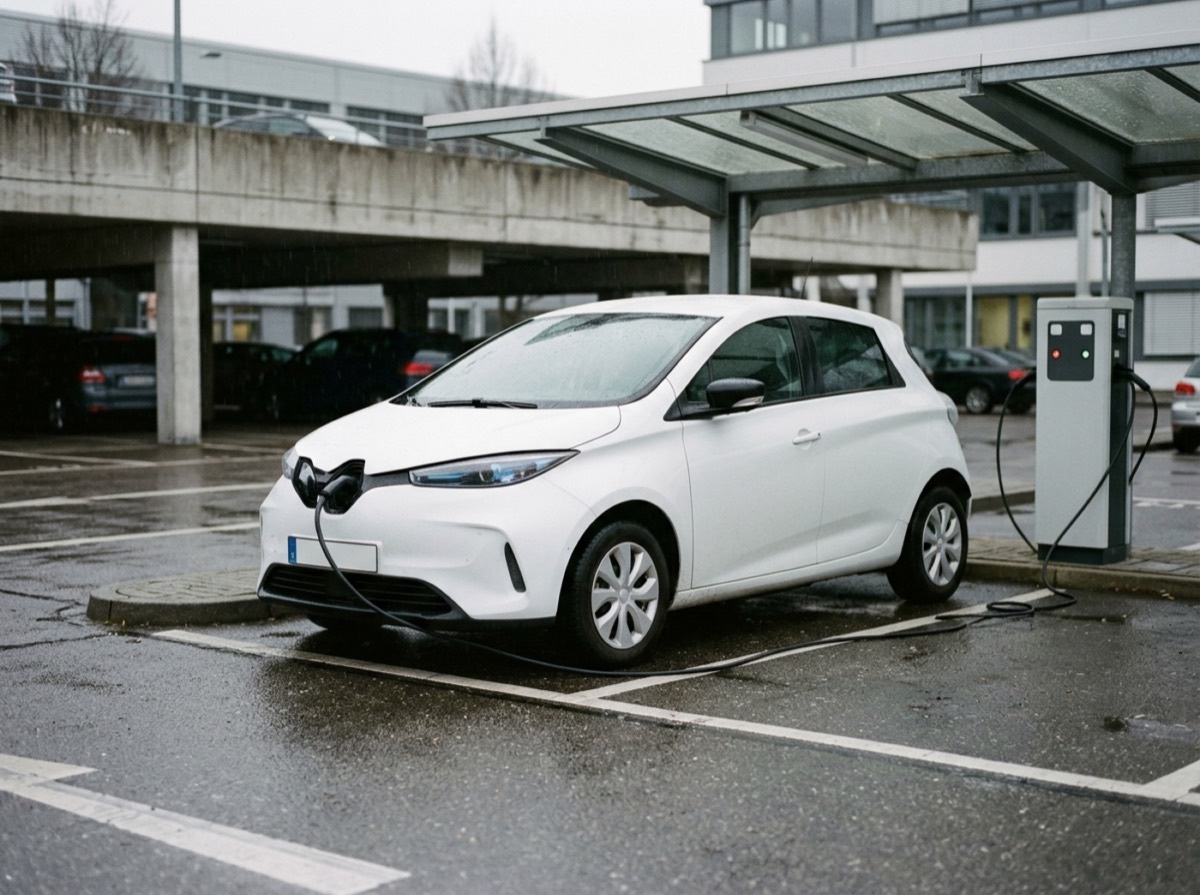
With low energy use, a huge boot and every version falling under Germany's 0.25% company car rule, the refreshed Model Y is a very strong fleet choice, as long as drivers can live with its touchscreen-heavy controls.
What we like
- +All current German versions list well below the 100,000 euro cap for the 0.25% rule
- +Very efficient: the ADAC measured 16.4 kWh/100 km for the Standard version
- +Large, flexible load space plus a front boot
- +Access to Tesla's Supercharger network
- +Strong performance even in the base version
- +Build quality praised by the ADAC after the 2025 facelift
What could be better
- −Almost everything runs through the touchscreen, which the ADAC criticised as distracting
- −No Apple CarPlay or Android Auto, and no head-up display
- −Base Standard version charges more slowly and loses several comfort features
- −Ride can feel firm over bumps
- −Prices and versions change frequently
Best for: Company car drivers who cover long distances and want space
Visit Tesla, Inc. →The Tesla Model Y is one of the most requested company cars in Germany, and after a difficult 2025 it has climbed back up the registration charts. This Tesla Model Y company car review looks at the refreshed model, often called Juniper, from the perspective of a fleet manager or employee choosing a Dienstwagen.
We draw on the ADAC's 2026 test of the Model Y Standard, published data from InsideEVs Germany, tax guidance from German tax publishers and independent reviews. We cover the 0.25% rule, range, charging, practicality, the different versions and the car's weak spots.
Company car tax: how the 0.25% rule applies
For pure electric company cars in Germany, only a quarter of the gross list price counts when calculating the taxable benefit of private use. This works with both the 1% flat-rate method and the logbook method. For cars bought or leased from 1 July 2025, the list price cap for this benefit rose from 70,000 to 100,000 euros, and the rule runs for vehicles acquired until the end of 2030.
According to InsideEVs' price overview, even the Model Y Performance lists well below that 100,000 euro limit, so every current version qualifies. For employees this makes the Model Y much cheaper to run as a company car than a comparable petrol or diesel SUV. Always confirm the details with your payroll or tax adviser, since individual circumstances differ.
What changed with the 2025 facelift
Tesla refreshed the Model Y in early 2025 with a new front and rear design, including full-width light bars on the upper versions, better aerodynamics, improved sound insulation and a retuned suspension. Rear passengers gain a touchscreen for climate controls on the Premium versions, along with powered, heated rear seats.
The ADAC praised the result, noting that build quality and materials are now at a high level and that panel gaps were no longer a problem on its test car.
Which Model Y version suits a company car driver?
In mid-2026 Tesla Germany offers four versions. The Standard model has rear-wheel drive, a 60 kWh LFP battery and a simpler specification. The two Premium Maximum Range versions add equipment such as a glass roof, vegan leather, a better sound system and adaptive lights, with rear-wheel drive or all-wheel drive. The Performance tops the range.
For drivers who cover many motorway kilometres, a Premium Maximum Range version is the better tool thanks to its WLTP range of roughly 600 km and faster 250 kW charging. The Standard version suits shorter commutes and tighter budgets.
- Standard RWD: lowest price, 505 to 534 km WLTP, slower DC charging
- Premium Maximum Range RWD: around 603 to 609 km WLTP
- Premium Maximum Range AWD: up to 629 km WLTP
- Performance: fastest, about 580 km WLTP
Range, efficiency and charging
Efficiency is a major strength. The ADAC measured 16.4 kWh per 100 km for the Model Y Standard including charging losses, and a real-world range of 438 km in its tougher test cycle. That is a good result for a car of this size with a relatively small battery.
Charging is more mixed. On the ADAC's DC charger the Standard version peaked at 186 kW but dropped off sharply after 30 percent, averaging 107 kW up to 80 percent. The larger-battery versions support up to 250 kW. Tesla's Supercharger network remains a practical advantage for business travel.
Space and practicality
The Model Y is roomy front and rear. The ADAC measured a 420-litre boot on the Standard version that grows to 1,380 litres with the seats folded, plus extra storage under the floor and a front boot of around 80 litres. It can tow up to 1,600 kg, which is useful for tradespeople and families alike. It is currently sold as a five-seater in Germany.
Controls and driving: the main criticisms
Nearly every function runs through a large central touchscreen, and there is no driver display or head-up display. The ADAC gave the controls its worst score, criticising the distraction involved in adjusting climate or vents and the touchscreen-based gear selection. There is a conventional indicator stalk, but no Apple CarPlay or Android Auto.
On the road the Model Y is quick and agile, with direct steering. The suspension is more comfortable than before, but the ADAC still found it can feel firm over potholes. Its testers also noted a long braking distance and middling driver-assistance performance.
Key specs
- Versions (Germany, mid-2026)
- Standard RWD, Premium Maximum Range RWD, Premium Maximum Range AWD, Performance
- WLTP range
- About 505 to 629 km depending on version
- Power (RWD)
- 220 kW (299 PS)
- DC charging
- About 175 kW (Standard, per EV Database; the ADAC saw a 186 kW peak) or 250 kW (other versions)
- Boot space (ADAC, Standard)
- 420 litres, up to 1,380 litres, plus about 80-litre front boot
- Length
- 4,797 mm
- Towing capacity
- 1,600 kg (ADAC)
- Vehicle warranty
- 4 years or 80,000 km
Alternatives to consider
- Volkswagen ID.4: A familiar electric SUV with conventional dealer support and a similar size.
- Skoda Enyaq: A roomy electric SUV available as a long-range 85 version with around 580 km WLTP.
- Hyundai Ioniq 5: An 800-volt EV that charges noticeably faster than the Model Y.
Frequently asked questions
Does the Tesla Model Y qualify for the 0.25% company car rule?
+
Yes. It is a pure electric car, and all current German versions list below the 100,000 euro cap that applies to cars bought or leased from 1 July 2025. Only 25% of the list price is then used to calculate the private-use benefit.
What is the range of the Tesla Model Y?
+
WLTP range runs from about 505 km for the Standard version to up to 629 km for the Premium all-wheel-drive version. In the ADAC's more demanding test, the Standard version managed 438 km.
Which Tesla Model Y is best as a company car?
+
For frequent long trips, a Premium Maximum Range version offers more range, faster 250 kW charging and more equipment. The Standard version is cheaper and fine for shorter daily distances.
Does the Tesla Model Y have Apple CarPlay?
+
No. The Model Y does not support Apple CarPlay or Android Auto, which the ADAC listed as a drawback. Tesla's own system handles navigation, media and calls.
How big is the Tesla Model Y boot?
+
The ADAC measured 420 litres as standard and up to 1,380 litres with the rear seats folded, plus underfloor storage and a front boot of about 80 litres.
How long does the 0.25% rule for electric company cars last?
+
It applies to electric cars acquired or leased by 31 December 2030. For cars acquired before 1 July 2025, the older list price caps still apply.
Tesla Model Y or VW ID.4 as a company car?
+
The Model Y is more efficient and has access to Superchargers, while the ID.4 offers more conventional controls and a traditional dealer network. Both qualify for the 0.25% rule, so test drive both.
As a company car in Germany, the Tesla Model Y makes a compelling case. Low energy use, a big boot, strong performance and full eligibility for the 0.25% rule keep costs down for both employer and driver. The touchscreen-centred controls and missing smartphone mirroring will put some people off, so a proper test drive is essential. For drivers who value range, space and efficiency, it remains one of the best electric company cars of 2026.
How we research: Reviews are based on the maker’s specifications, published independent tests and owner reports. Scores compare the product with others in its class.
Written by
Bitezine Editorial Team
Rankings, reviews & guides
Our editors research every piece from makers’ documentation, independent tests and owner reports, and update it when products change.