Review · Tech
Steam Deck OLED review: the best way to carry your Steam library
Valve's Steam Deck OLED adds a 7.4-inch HDR OLED screen, a 50Wh battery and Wi-Fi 6E. Performance is unchanged, so here is who it suits in 2026.
 Bitezine Editorial TeamRankings, reviews & guides 8 min read
 AI generated
 Handheld gaming PC · Premium
Steam Deck OLED
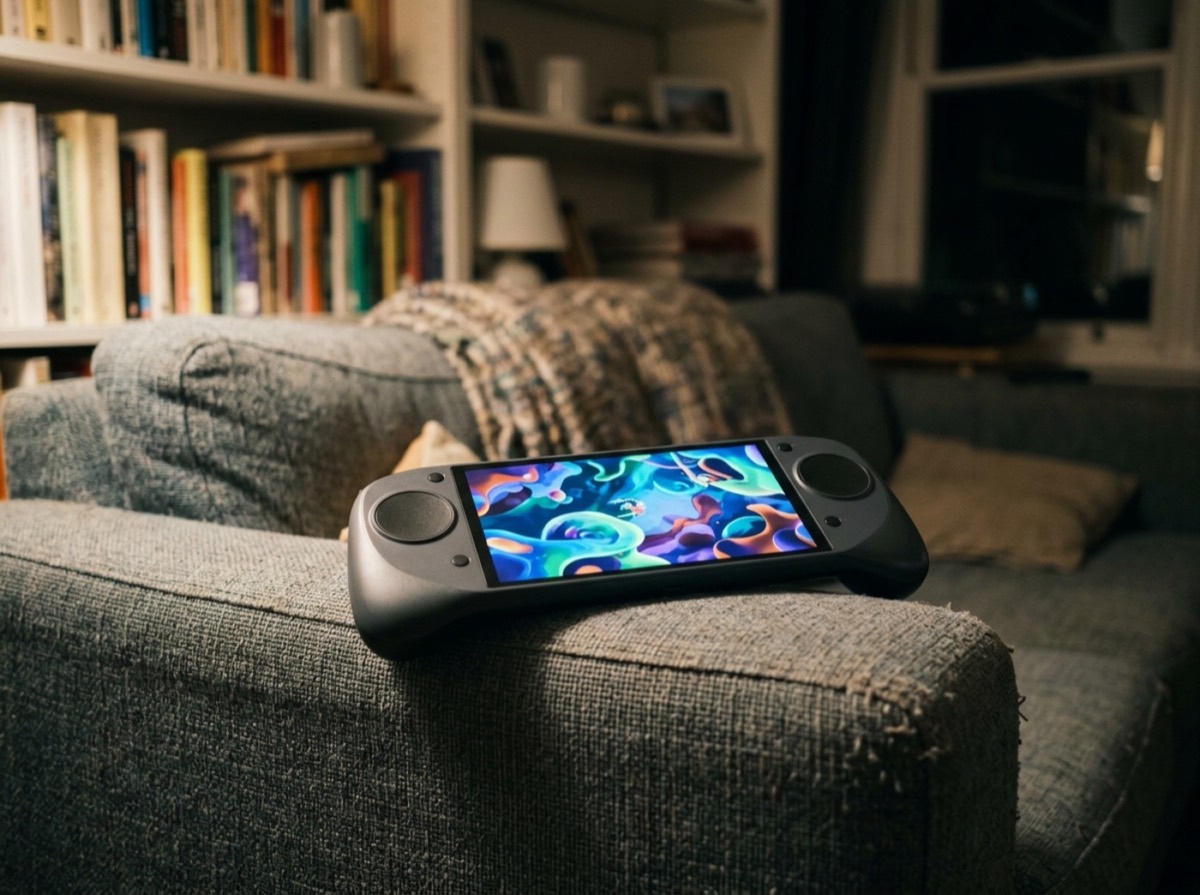
The most polished handheld for playing your Steam library, with a superb HDR OLED screen and better battery life, though its ageing chip struggles with the newest big games.
What we like
- +Beautiful 7.4-inch HDR OLED display at up to 90Hz
- +30 to 50% more battery life than the LCD model
- +Excellent controls: trackpads, gyro and four back buttons
- +SteamOS is console-like, with fast suspend and resume
- +Wi-Fi 6E, Bluetooth 5.3 and easier repairs
- +Upgradeable SSD and microSD expansion
What could be better
- −Same performance as the 2022 original
- −Many new AAA games need low settings
- −Battery can still drop to around two hours in demanding games
- −Large and fairly heavy at about 640g
- −Stock and prices affected by 2026 memory shortages
Best for: PC gamers who want a simple, portable Steam machine
Visit Valve →Valve's Steam Deck OLED launched in November 2023 as a mid-life refresh of the original Steam Deck. Almost three years later it is still Valve's flagship handheld, and with the LCD model discontinued, it is the main Steam Deck you can buy in 2026. Valve has said a true Steam Deck 2 will wait for a meaningful leap in chip technology.
This review is based on Valve's specifications, expert reviews, and owner reports. The verdict: the OLED is the best Steam Deck ever made, but you should know its performance limits before you buy.
Design and controls
The OLED keeps the original's shape: a wide, chunky handheld at about 298 x 117 x 49mm and roughly 640g, about 5% lighter than the LCD model. The grips are deep and comfortable, and Valve refined the thumbsticks, shoulder buttons, D-pad and trackpad haptics.
Controls are a major strength. You get two full-size thumbsticks with capacitive touch, two square trackpads, a gyroscope and four assignable back buttons. Trackpads make mouse-driven PC games playable, and the gyro can help with precise aiming. Repairs are simpler thanks to Torx screws into metal threads, and replacement parts are available through iFixit.
There are stereo speakers with improved bass, a 3.5mm headphone jack, a dual-microphone array and a microSD slot. The LED indicator now shows more colours, and the included carrying case protects the device in a bag.
Steam Deck OLED display
The screen is the headline upgrade. The 7.4-inch HDR OLED panel offers perfect blacks, vivid colours, up to 1,000 nits peak brightness in HDR and a refresh rate of up to 90Hz. Reviewers consistently call it one of the best screens on any handheld. The resolution stays at 1280 x 800, which keeps demands on the chip low. The 1TB model adds premium anti-glare etched glass.
Performance: good, but not new
The AMD APU moves to a more efficient 6nm process, but its Zen 2 CPU and RDNA 2 graphics deliver the same performance as the original. Older and well-optimised games run very well, and indie titles look superb. Expert reviewers reported smooth results in games like God of War and Control at sensible settings, and 90fps in some lighter titles.
Recent AAA releases are a different story. Some games carry a Deck Verified badge yet still need careful tuning to hit a stable 30fps, and a few run poorly. Rivals like the ASUS ROG Ally X are faster, though usually at a higher cost and with Windows' rougher handheld experience.
Settings like FSR upscaling, a frame rate limiter and per-game performance profiles let you balance smoothness and battery life. Many owners lock demanding games to 30 or 45fps for a steadier experience, while lighter titles can take advantage of the 90Hz screen.
Steam Deck OLED battery life
Valve increased the battery from 40Wh to 50Wh and the OLED panel draws less power, giving 30 to 50% more runtime. Valve quotes 3 to 12 hours depending on the game. In practice, demanding games can still drain it in around two hours at mid brightness, while 2D and indie games can last five hours or more. Frame-rate limits and lower brightness help.
Charging is faster too, from 20% to 80% in as little as 45 minutes with the included 45W charger.
- Battery: 50Wh (up from 40Wh)
- Valve estimate: 3 to 12 hours
- Demanding AAA games: roughly 2 hours
- 20 to 80% charge in about 45 minutes
SteamOS and everyday use
SteamOS gives the Deck a console-like feel: press power to suspend, press again to resume where you left off. Your Steam library, cloud saves and friends list are all there, and Proton lets many Windows games run without modification. A desktop mode offers a full Linux PC for installing other launchers and apps. Wi-Fi 6E speeds up downloads, and a USB-C port with DisplayPort support connects to TVs and monitors.
Docking is flexible. Valve's official Docking Station adds HDMI, DisplayPort, Ethernet and USB ports, but many third-party USB-C hubs also work. On a TV, the Deck behaves like a small console with a controller, or like a desktop PC with a keyboard and mouse.
Availability and value in 2026
The global memory shortage has hit the Steam Deck. Stock ran low in several regions during 2026, and Valve raised the prices of both OLED models in May 2026. The 512GB model suits most players, especially with a microSD card for extra space, while the 1TB version adds more storage, the etched glass and a better case.
Is the Steam Deck OLED worth it?
If you already own a Steam library and want to play it on the sofa, in bed or while travelling, yes. It remains the most refined handheld PC experience. If you mostly want the latest AAA games at high settings, or Nintendo exclusives, consider a more powerful Windows handheld or the Switch 2.
Key specs
- Display
- 7.4-inch HDR OLED, 1280 x 800, up to 90Hz, 1,000 nits peak HDR
- Processor
- AMD custom APU, Zen 2 4-core/8-thread, RDNA 2 graphics, 6nm
- Memory
- 16GB LPDDR5 at 6400 MT/s
- Storage
- 512GB or 1TB NVMe SSD, microSD slot
- Battery
- 50Wh, about 3 to 12 hours depending on the game
- Connectivity
- Wi-Fi 6E, Bluetooth 5.3, USB-C with DisplayPort 1.4
- Weight / size
- About 640g, 298 x 117 x 49mm
- Software
- SteamOS 3 with KDE Plasma desktop mode
Alternatives to consider
- Nintendo Switch 2: Nintendo exclusives, easy TV docking and a 120Hz 1080p screen.
- ASUS ROG Ally X: Faster Windows handheld with a large battery and access to every PC store.
- Lenovo Legion Go: A big 8.8-inch high-resolution screen and detachable controllers for PC gamers.
Frequently asked questions
Is the Steam Deck OLED worth it in 2026?
+
Yes, if you want to play your Steam library on the go. The HDR OLED screen, longer battery life and polished SteamOS make it the best Steam Deck. Just expect to lower settings in the newest AAA games.
What is the difference between the Steam Deck OLED and LCD?
+
The OLED has a larger 7.4-inch HDR OLED screen at up to 90Hz, a 50Wh battery, a more efficient 6nm chip, Wi-Fi 6E, better haptics and a lighter build. Performance is essentially the same.
How long does the Steam Deck OLED battery last?
+
Valve quotes 3 to 12 hours depending on the game. Demanding titles can drain it in about two hours, while lighter indie games can last five hours or more.
Is there a Steam Deck 2?
+
Not yet. Valve has said a true successor will come when chip technology allows a significant performance jump, rather than on a fixed schedule.
Can the Steam Deck OLED play Windows games?
+
Yes. Many Windows games run through Valve's Proton compatibility layer, and Steam's Deck Verified labels indicate how well a game works.
Should I buy the 512GB or 1TB Steam Deck OLED?
+
The 512GB model is enough for most players, especially with a microSD card. Choose 1TB if you install many large games or want the anti-glare etched screen.
Steam Deck OLED vs Nintendo Switch 2: which is better?
+
Choose the Steam Deck OLED if you already own many PC games and want an OLED screen and PC flexibility. Choose the Switch 2 for Nintendo exclusives, family play and simpler TV docking.
The Steam Deck OLED turns a great idea into a polished product. A stunning screen, better battery life and thoughtful hardware tweaks make it a joy to use, even though its performance has not moved on since 2022. For Steam players who value comfort and simplicity over raw power, it remains the handheld to beat in 2026.
How we research: Reviews are based on the maker’s specifications, published independent tests and owner reports. Scores compare the product with others in its class.
Written by
Bitezine Editorial Team
Rankings, reviews & guides
Our editors research every piece from makers’ documentation, independent tests and owner reports, and update it when products change.