Review · Tech
Sony Alpha 7 V review: the a7 IV successor becomes a true all-rounder
Sony's a7 V replaces the a7 IV with a 33MP partially stacked sensor, 30fps bursts and 7K-oversampled 4K60. Here is who should upgrade in 2026.
 Bitezine Editorial TeamRankings, reviews & guides 8 min read
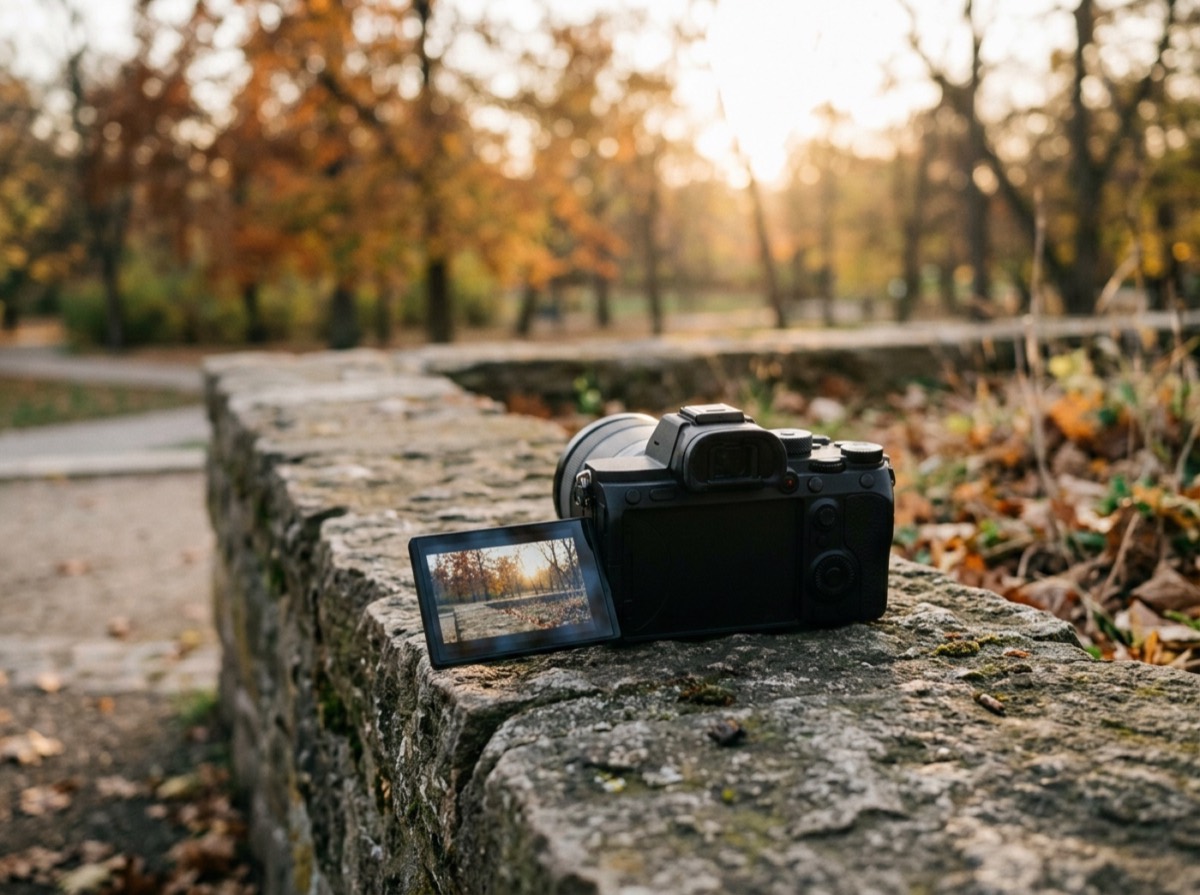 AI generated
 Mirrorless camera · Premium
Sony Alpha 7 V (ILCE-7M5)
The a7 V turns Sony's everyday full-frame camera into a fast, clean and dependable hybrid, held back mainly by a cramped grip and a video spec that stops short of raw or open gate.
What we like
- +33MP partially stacked sensor with excellent dynamic range
- +30fps bursts with full autofocus and a pre-capture buffer
- +Reliable subject recognition for people, animals, birds, insects and vehicles
- +7K-oversampled 4K60 with much lower rolling shutter than the a7 IV
- +Strong battery life and long 4K recording before heat limits
- +In-body stabilisation rated up to 7.5 stops at the centre
What could be better
- −Grip can feel tight and dig into fingers on long days
- −No raw video or open-gate recording
- −4K120 needs an APS-C crop
- −Menus are still dense for newcomers
- −Clearly more expensive than the a7 IV was at launch
Best for: Enthusiasts and working hybrid shooters who want one camera for stills and video
Visit Sony →If you searched for a Sony a7 IV review, you should know the story has moved on. Sony announced the Alpha 7 V (a7 V) in December 2025 as the direct successor to the a7 IV, the camera that for years was the default recommendation for enthusiasts who shoot both photos and video. The a7 IV is still sold in some shops, but the a7 V is now Sony's current core full-frame model, so this review covers the new camera and explains what changed.
This is a research-based review built on Sony's specifications, published expert tests and owner reports. The short version: the a7 V fixes the a7 IV's biggest weaknesses, namely slow bursts, visible rolling shutter and cropped 4K60, and lands as one of the best all-round mirrorless cameras of 2026.
Design and handling
From the outside, the a7 V looks like a careful evolution rather than a redesign. It weighs about 695g with battery and card, so it sits in the same class as the Canon EOS R6 III and Nikon Z6III. The big practical change is the new 4-axis articulating screen, which flips out to the side like a vlogging camera but can also tilt straight up for waist-level stills without swinging off the axis of the lens.
The electronic viewfinder is a 3.68-million-dot OLED panel with 0.78x magnification, and you can choose between a speed-first or a resolution-first mode. There are two card slots: one takes CFexpress Type A or UHS-II SD, the other UHS-II SD only. Two USB-C ports split the work, with the upper one handling fast 10Gbps data transfer and the lower one mainly for power.
The most common complaint in expert reviews is the grip. Several testers found it shallow enough that fingers get squeezed against the lens mount, which makes the camera feel heavier than its weight suggests during long sessions. People with large hands should try one in a shop or budget for an extension grip.
Sensor and image quality
The a7 V uses a new 33MP full-frame sensor that Sony describes as partially stacked. Resolution is the same as the a7 IV, but readout is much faster, which matters for both the electronic shutter and video. Published lab tests found excellent dynamic range for stills, with a meaningful improvement in shadow detail over the a7 IV when using the mechanical shutter.
In practice, 33MP remains a sweet spot: enough detail to crop wildlife or print large, without the huge files of 50MP-plus bodies. Colours follow Sony's recent profiles, and skin tones are widely reported as pleasing straight out of the camera. One quirk noted by reviewers is that you cannot shoot HLG HEIF stills and raw files at the same time.
Autofocus and burst shooting
Autofocus is the other headline upgrade. The BIONZ XR2 processor has AI processing built in, and Real-time Recognition AF can detect people (with pose estimation), animals, birds, insects, cars and trains, and aircraft, plus an automatic mode that picks the subject type for you. The 759 phase-detection points cover about 94% of the frame.
Burst speed jumps from 10fps on the a7 IV to 30fps with full autofocus and exposure tracking when using the electronic shutter. A configurable pre-capture buffer can save up to one second of frames from before you fully press the shutter, which is valuable for birds taking off or unpredictable sports moments. Together, these features make the a7 V a credible wildlife and action camera, not just a generalist.
Sony a7 V video specs
For video, the a7 V records 4K at up to 60p oversampled from 7K using the full sensor width, a clear step up from the a7 IV's cropped 4K60. 4K at 120p is available, but only from an APS-C (about 1.5x) crop. Codecs include 10-bit 4:2:0 H.265, 8-bit H.264 and 10-bit 4:2:2 All-Intra, with S-Log3, S-Cinetone and HLG on board.
Because of the faster sensor, rolling shutter is much lower than on the a7 IV, with published measurements in the low-teens of milliseconds. Heat is well controlled: expert testing reported around 90 minutes of 4K60 at room temperature and around an hour even at 41°C. What you do not get is raw video or open-gate recording, which some rivals now offer for filmmakers who reframe for social media.
Sony a7 V battery life and stabilisation
The camera uses Sony's NP-FZ100 battery and can be charged over USB-C Power Delivery. Its CIPA rating is about 630 shots using the viewfinder and about 750 using the rear screen, and real-world counts are usually much higher because CIPA tests are strict. Most owners can get through a day of mixed shooting on one or two batteries.
In-body stabilisation is rated at up to 7.5 stops in the centre of the frame and 6.5 stops at the edges, which helps with slow handheld shutter speeds and smoother walking video.
Sony a7 V vs a7 IV: should you upgrade?
Expert reviewers agree the a7 V beats the a7 IV in almost every area. The upgrade is most compelling if you shoot action, wildlife, events or 4K60 video. If you mainly photograph landscapes, portraits or travel at a relaxed pace, a discounted a7 IV still produces excellent 33MP files and can be the smarter buy.
Against the Canon EOS R6 III, the choice is close and often comes down to lenses and handling. Compared with the Nikon Z6III, reviewers generally rate the a7 V as the stronger all-rounder, especially for stills resolution.
- Upgrade if: you need faster bursts, better tracking, full-width 4K60 or less rolling shutter
- Stay with the a7 IV if: you shoot slow subjects and want to save money
- Consider rivals if: you need raw or open-gate video
Value and who it is for
The a7 V is a premium purchase, noticeably pricier than the a7 IV was at launch. In return you get a camera that covers weddings, wildlife, travel and video production with very few compromises, plus access to the huge E-mount lens range from Sony, Sigma, Tamron and others. For enthusiasts and hybrid professionals who want one body that does almost everything, it is easy to recommend.
Key specs
- Sensor
- 33MP full-frame partially stacked Exmor RS BSI-CMOS
- Processor
- BIONZ XR2 with integrated AI processing
- Autofocus
- 759-point phase detection covering about 94% of the frame, Real-time Recognition AF
- Burst
- Up to 30fps with AF/AE (electronic shutter), pre-capture up to 1 second
- Video
- 4K60 oversampled from 7K; 4K120 in APS-C crop; 10-bit 4:2:2 options, S-Log3, S-Cinetone, HLG
- Stabilisation
- 5-axis IBIS, up to 7.5 stops centre / 6.5 stops edge
- Viewfinder / screen
- 3.68M-dot OLED EVF (0.78x); 4-axis articulating touchscreen
- Storage / weight
- CFexpress Type A/SD + SD slots; about 695g with battery and card
Alternatives to consider
- Canon EOS R6 Mark III: A close rival with excellent handling and strong video features for Canon RF users.
- Nikon Z6III: A fast partially stacked 24MP body with good video, often available for less.
- Sony a7 IV: Still a capable 33MP camera and a sensible saving if you do not need speed.
Frequently asked questions
Is the Sony a7 IV discontinued?
+
Sony replaced the a7 IV with the a7 V, announced in December 2025. The a7 IV was still available from some retailers afterwards, often at lower prices, but the a7 V is now Sony's current core full-frame hybrid.
What is the difference between the Sony a7 V and a7 IV?
+
Both have 33MP sensors, but the a7 V's is partially stacked, so it reads out much faster. That enables 30fps bursts instead of 10fps, full-width 7K-oversampled 4K60 instead of cropped 4K60, lower rolling shutter and more advanced AI subject recognition. The a7 V also adds a 4-axis articulating screen and a pre-capture buffer.
What is the Sony a7 V battery life?
+
The a7 V has a CIPA rating of about 630 shots with the viewfinder and about 750 with the rear screen, using the NP-FZ100 battery. Real-world shot counts are often higher. It can also be charged over USB-C.
Does the Sony a7 V overheat?
+
Published tests found it records 4K60 for around 90 minutes at room temperature and roughly an hour at 41°C before heat becomes an issue. That is enough for most events and interviews.
Can the Sony a7 V shoot 4K 120fps?
+
Yes, but 4K120 uses an APS-C crop of about 1.5x. Full-width 4K is available up to 60p, oversampled from 7K.
Is the Sony a7 V good for wildlife photography?
+
Yes. The combination of 30fps bursts, a pre-capture buffer of up to one second and bird, animal and insect recognition makes it a strong wildlife camera, especially paired with a long E-mount telephoto lens.
Sony a7 V vs Canon R6 III: which should I buy?
+
Both are excellent hybrid cameras, and reviewers call the choice difficult. The Sony offers higher stills resolution and the wide E-mount lens range, while the Canon is praised for handling and video options. Your existing lenses should usually decide it.
The Sony a7 V is the upgrade a7 IV owners were waiting for: faster, sharper in motion and far better for video, while keeping the 33MP resolution that made its predecessor so popular. Try the grip before you buy and accept that raw video is missing. If those points do not bother you, this is one of the most complete full-frame cameras you can buy in 2026.
How we research: Reviews are based on the maker’s specifications, published independent tests and owner reports. Scores compare the product with others in its class.
Written by
Bitezine Editorial Team
Rankings, reviews & guides
Our editors research every piece from makers’ documentation, independent tests and owner reports, and update it when products change.