Review · Tech
Samsung Galaxy S26 review: a compact flagship that gets almost everything right
The Galaxy S26 pairs a bright 6.3-inch screen, flagship speed and seven years of updates with a light body. Slow charging and a higher price hold it back.
 Bitezine Editorial TeamRankings, reviews & guides 7 min read
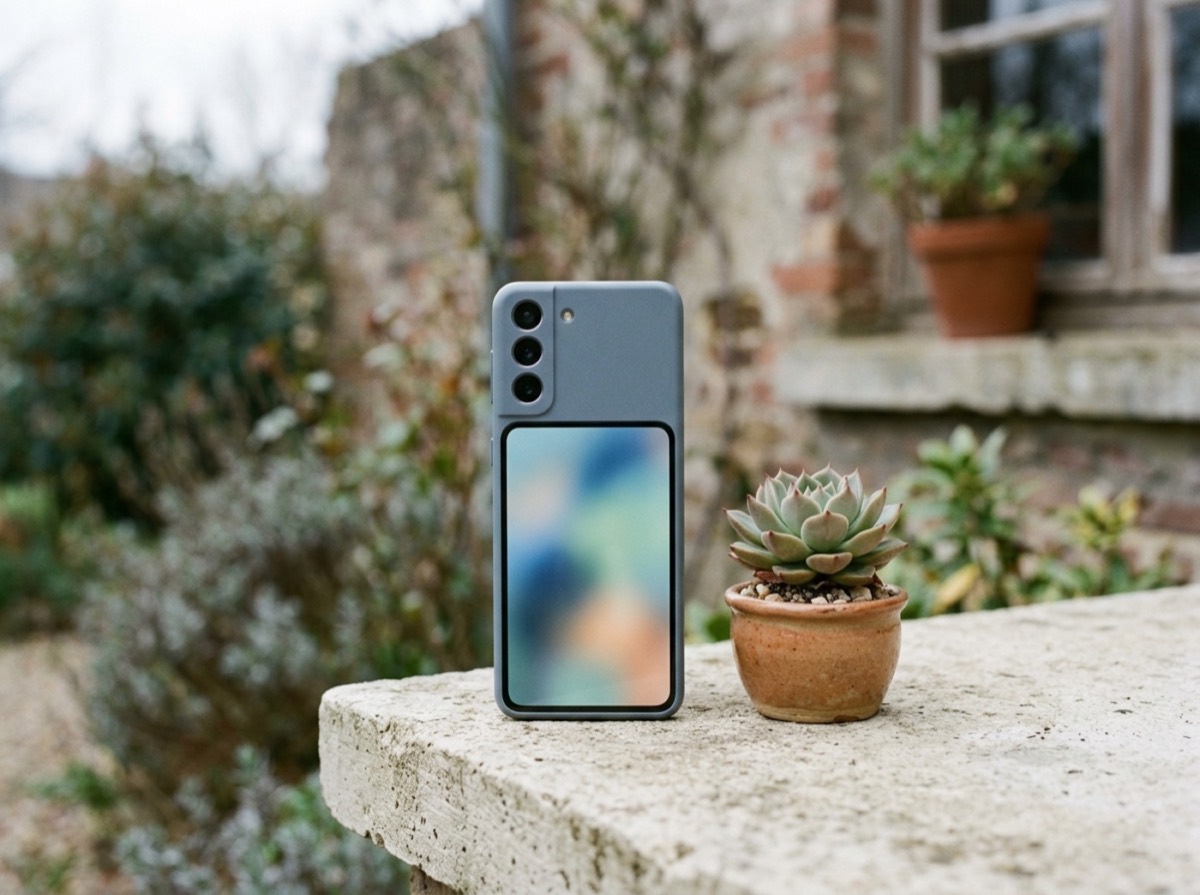 AI generated
 Smartphone · Premium
Samsung Galaxy S26
A light, well-built flagship with a superb screen and long software support, but 25W charging and the price rise make it best bought on sale.
What we like
- +Bright, sharp 6.3-inch AMOLED display with 1-120Hz refresh rate
- +Light at 167 g and easy to use one-handed
- +Fast flagship chip and 12GB of RAM
- +Storage now starts at 256GB
- +Seven years of Android and security updates
- +Horizon Lock keeps video level even when the phone rotates
What could be better
- −25W wired charging is slow for the price
- −Qi2 wireless charging but no built-in magnets
- −Launch price is higher than the Galaxy S25
- −Camera hardware is unchanged from last year
- −Battery results in lab tests are only average
Best for: People who want a compact, fully featured Android flagship
Visit Samsung →This Samsung Galaxy S26 review looks at the smallest and least expensive model in Samsung's 2026 flagship line. Samsung announced the S26, S26+ and S26 Ultra on 25 February 2026 and started shipping them on 11 March. The base S26 has a slightly larger 6.3-inch screen, a redesigned camera bump, a bigger battery and double the starting storage of the Galaxy S25. It still weighs only 167 g.
Our assessment is based on Samsung's specifications, published lab tests from TechRadar and Tom's Guide, and early owner feedback. We cover battery life, charging, cameras, performance and Galaxy AI, and we look at whether the Galaxy S26 is worth it against the iPhone 17 and Google Pixel 10.
Design and build: familiar, light and easy to hold
At first glance the Galaxy S26 looks a lot like last year's phone. The main visual change is on the back, where the three lenses now sit in one pill-shaped camera bump instead of separate rings. Reviewers note that this bump sticks out more than before. The aluminium frame and Gorilla Glass Victus 2 on both sides feel premium, and the phone has an IP68 rating for dust and water.
At 149.6 x 71.7 x 7.2 mm and 167 g, the S26 is one of the easiest flagships to use with one hand. Reviewers who normally carry large phones said they liked the smaller size and did not find the screen cramped. Colours are Cobalt Violet, Sky Blue, Black and White, and Samsung's own store adds Silver Shadow and Pink Gold.
Display: one of the best small screens you can buy
The 6.3-inch Dynamic AMOLED 2X panel runs at 2340 x 1080 with an adaptive refresh rate from 1 to 120Hz. Samsung rates its peak brightness at 2,600 nits, and testers report that it stays readable in direct midday sun. Text is sharp, colours are punchy in Samsung's default mode, and games that support 120Hz feel very smooth.
The S26 does not get the Ultra's new Privacy Display, which narrows viewing angles, and its resolution is lower than the Ultra's QHD+ panel. At this screen size, few people will notice the difference in sharpness.
Performance: Snapdragon or Exynos?
Samsung uses two chips for the S26. US and Chinese models get the Qualcomm Snapdragon 8 Elite Gen 5, and many other markets get Samsung's own Exynos 2600. Both come with 12GB of RAM and fast UFS 4.0 storage. The US review units scored about 3,600 single-core and 10,800 multi-core in Geekbench 6, which is firmly flagship territory.
In daily use, testers describe apps opening instantly and multitasking without lag. The one weak spot is heat: during long gaming sessions and benchmark runs, one reviewer measured about 45 °C with an infrared thermometer. The phone never got too hot to hold, but it is worth knowing if you play demanding games for hours. If the chip matters to you, check the model number in your country before you buy, as most published tests used the Snapdragon version.
Galaxy S26 battery life and charging
The battery grows from 4,000mAh to 4,300mAh. Real-world reports are positive: one tester regularly finished a 16-hour day of heavy use with charge left over and saw only 4 to 5 percent drain overnight. Lab results are more modest. Tom's Guide's web-browsing battery test ran for 11 hours 28 minutes, shorter than the iPhone 17 and Pixel 10 in the same test.
Charging is the clearest weakness. The S26 is limited to 25W wired, which Tom's Guide measured at 29 percent in 15 minutes and 57 percent in 30 minutes. TechRadar needed about 1 hour 35 minutes for a full charge. Wireless charging reaches 15W and supports Qi2, but there are no magnets in the phone, so you need a magnetic case to use snap-on chargers and accessories. Reverse wireless charging at 4.5W can top up earbuds or a watch.
Cameras: reliable, but not new
The camera hardware is carried over from the Galaxy S25: a 50MP main camera, a 12MP ultra-wide and a 10MP telephoto with 3x optical zoom, plus a 12MP selfie camera. Reviewers describe bright, colourful photos in good light and solid detail at dusk, with Samsung's usual slightly saturated look. Digital zoom beyond 3x gets soft quickly, and the 30x maximum is only useful in a pinch.
The standout new feature is Horizon Lock for video, which keeps footage level even if the phone rotates. Tom's Guide called it the most practical camera upgrade, though it tops out at QHD rather than 4K. The phone can also record 8K video at 30fps.
Software and Galaxy AI
The S26 launched with Android 16 and One UI 8.5, and Samsung promises seven years of OS upgrades and security patches. That long support makes it a sensible phone to keep for years. Galaxy AI features include call screening, writing and photo-editing tools, notification summaries and Now Nudge, which suggests actions based on what is on screen. Reviewers found Object Eraser dependable.
One UI 8.5 splits the swipe-down gesture: the left part of the screen opens notifications and the top-right corner opens quick settings. Some testers needed time to get used to it. Samsung has also retired its own Messages app in favour of Google Messages, which cuts down on duplicate apps.
Who should buy the Galaxy S26, and is it good value?
The Galaxy S26 suits people who want a small, light phone without giving up a flagship screen, chip or long software support. It is also a natural pick if you already use a Galaxy Watch, Galaxy Buds or a Samsung tablet.
Value is where it struggles. The launch price went up compared with the S25, and both major reviews say the phone is best bought when Samsung or a retailer discounts it, which happens often. If fast charging or magnetic accessories matter to you, look at the alternatives below.
- Buy it if you want a compact Android flagship with 7 years of updates
- Buy it on sale, as discounts are frequent
- Skip it if you need fast charging or built-in Qi2 magnets
- Skip it if you want a big camera upgrade over the Galaxy S25
Key specs
- Display
- 6.3-inch Dynamic AMOLED 2X, 2340 x 1080, 1-120Hz, 2,600 nits peak
- Chip
- Snapdragon 8 Elite Gen 5 or Exynos 2600, depending on region
- Memory and storage
- 12GB RAM, 256GB or 512GB
- Rear cameras
- 50MP main, 12MP ultra-wide, 10MP 3x telephoto
- Battery and charging
- 4,300mAh, 25W wired, 15W Qi2 wireless, 4.5W reverse wireless
- Size and weight
- 149.6 x 71.7 x 7.2 mm, 167 g
- Durability
- IP68, Gorilla Glass Victus 2 front and back
- Software
- Android 16 with One UI 8.5 at launch, 7 years of updates
Alternatives to consider
- Google Pixel 10: Similar size with a larger battery, Qi2 magnets built in and a lower launch price.
- Apple iPhone 17: Matches the S26 on size and performance, and charged faster in Tom's Guide's test, if you are happy on iOS.
- Samsung Galaxy S26+: Same features with a bigger 6.7-inch screen, a 4,900mAh battery and 45W charging.
Frequently asked questions
Is the Samsung Galaxy S26 worth buying?
+
Yes, if you want a small flagship with a great screen and seven years of updates. The launch price is higher than the S25's, so it is best value when discounted. If charging speed matters, the Galaxy S26+ or Pixel 10 may suit you better.
How long does the Galaxy S26 battery last?
+
Reviewers report a full day of heavy use, often with charge left for the next morning. In Tom's Guide's standardised browsing test it lasted 11 hours 28 minutes, which is decent but behind the iPhone 17 and Pixel 10.
How fast does the Galaxy S26 charge?
+
It supports 25W wired charging, which reached 57 percent in 30 minutes in Tom's Guide's test. A full charge takes about an hour and a half. Wireless charging is 15W with Qi2 support.
Does the Galaxy S26 have Qi2 magnets?
+
No. It supports the Qi2 charging standard but has no built-in magnets. You need a Qi2 case with a magnet ring to attach magnetic chargers, wallets or mounts.
Does the Galaxy S26 use Exynos or Snapdragon?
+
It depends on where you buy it. US and Chinese models use the Snapdragon 8 Elite Gen 5, while many other regions get the Exynos 2600. Check the model details from your retailer if the chip matters to you.
What is the difference between the Galaxy S26 and S25?
+
The S26 has a slightly larger 6.3-inch screen, a 4,300mAh battery instead of 4,000mAh, 256GB base storage, a newer chip and a new camera bump. The camera sensors are the same, and charging stays at 25W.
Is the Galaxy S26 waterproof?
+
It is rated IP68, so it is protected against dust and can survive immersion in fresh water under the tested conditions. Samsung does not recommend using it in salt water or pools.
The Samsung Galaxy S26 is a polished compact flagship: light, fast, bright and backed by seven years of updates. Its weak points are practical rather than fundamental, namely 25W charging, no Qi2 magnets and a higher launch price. If you want a small Android phone that will last, the Galaxy S26 is worth it, especially at a sale price. If you charge in a hurry or rely on magnetic accessories, compare it with the Pixel 10 and Galaxy S26+ first.
How we research: Reviews are based on the maker’s specifications, published independent tests and owner reports. Scores compare the product with others in its class.
Written by
Bitezine Editorial Team
Rankings, reviews & guides
Our editors research every piece from makers’ documentation, independent tests and owner reports, and update it when products change.