Review · Home & Living
Philips Azur 8000 Series steam iron review: powerful steam with no temperature dial
The Philips Azur 8000 Series pairs 3000 W, strong steam and a 260 g turbo shot with OptimalTEMP, so you never set a temperature. Is it the steam iron to buy in 2026?
 Bitezine Editorial TeamRankings, reviews & guides 7 min read
 AI generated
 Steam iron · Mid-range
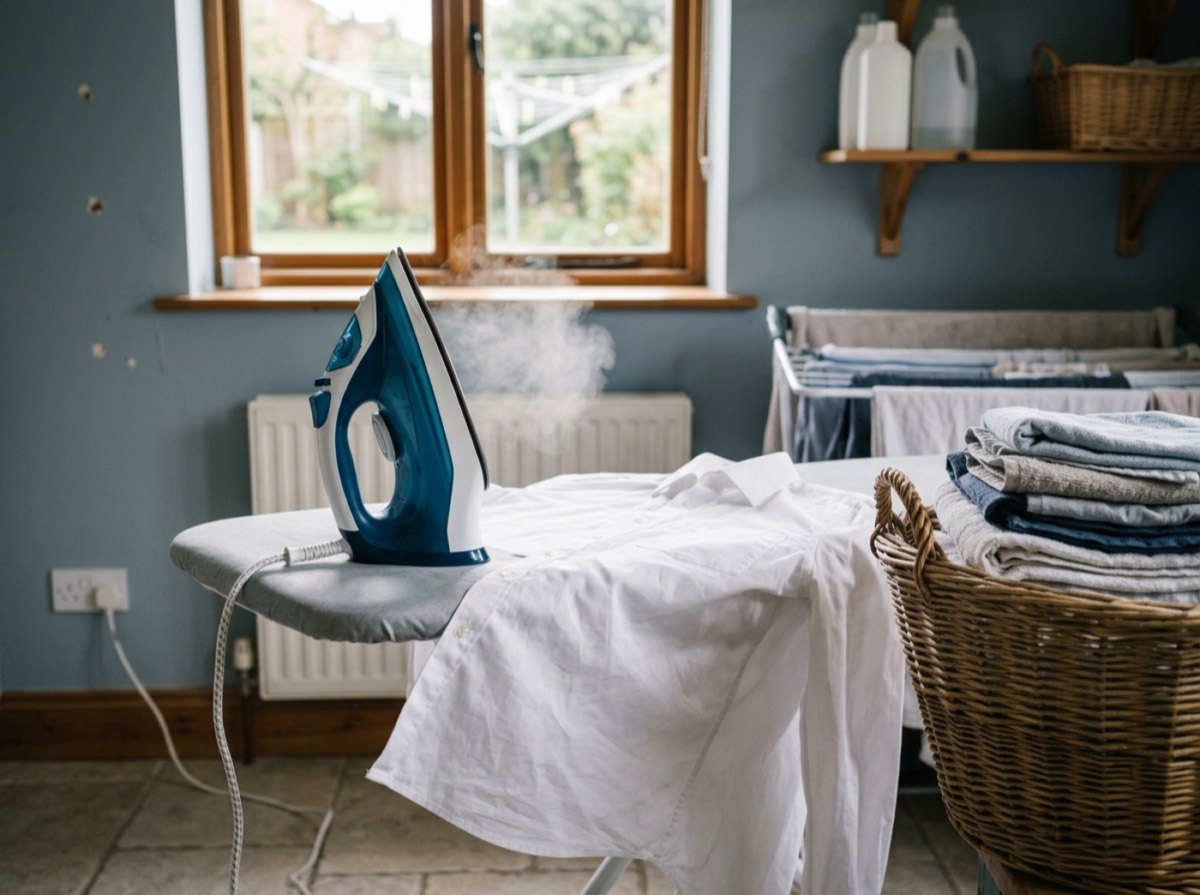
Philips Azur 8000 Series Steam Iron (DST8050)
The Philips Azur 8000 Series is a strong, easy steam iron that removes guesswork with OptimalTEMP and handles tough creases well, though it is heavy and its tank is not the largest.
What we like
- +OptimalTEMP means no temperature dial and safe use on ironable fabrics
- +Strong continuous steam and a 260 g turbo shot
- +Quick Calc Release makes descaling simple
- +Works with tap water
- +Long 3 m cord on the DST8050
- +Vertical steaming for hanging clothes and curtains
What could be better
- −Heavy at about 1.8 kg
- −350 ml tank means refills on big loads
- −Philips' listings give different continuous steam figures
- −Still slower than a steam generator for large piles
Best for: Households that iron mixed fabrics and hate adjusting settings
Visit Philips (Versuni) →Philips' Azur name has been attached to its better steam irons for years, and the Azur 8000 Series is the current top of the range for classic irons. The DST8050 model combines 3000 W of power, strong continuous steam and a large turbo shot with OptimalTEMP technology, which means there is no temperature dial at all. Philips' domestic appliances business now operates as Versuni, which sells the iron under the Philips brand.
This Philips Azur steam iron review is based on Philips' published specifications for the DST8050 and related Azur models. Independent hands-on reviews of this exact model are scarce, so where Philips' own figures differ, we say so. It covers the steam performance, OptimalTEMP, soleplate, descaling and whether a steam iron like this is the right choice over a steam generator.
Design and handling
The Azur 8000 is a substantial iron. Philips lists it at about 1.78 kg, which helps press creases flat but makes long sessions more tiring, especially with vertical steaming. It has a pointed tip for collars and around buttons, a drip stop to prevent leaks at low heat and an auto shut-off for safety.
The DST8050 comes with a 3 m power cord, which gives plenty of reach from the socket. The related DST8020 has a shorter 2.5 m cord and a 300 ml tank, so compare model numbers carefully.
OptimalTEMP: no more temperature settings
OptimalTEMP is the main reason to choose a Philips Azur. Instead of a dial for silk, cotton and linen, the iron runs at one temperature that Philips says is safe for all ironable fabrics. You can go from a synthetic shirt to cotton trousers without waiting for the plate to heat or cool, and without scorching delicate items.
This makes ironing faster and less stressful, especially in homes where different people iron different fabrics. The trade-off is less manual control, which a few experienced users may miss for very heavy linen.
Steam performance
Philips lists 3000 W and a 260 g turbo steam shot for the DST8050. For continuous steam, Philips' own listings show both up to 100 g/min and 85 g/min, so treat it as a strong output in the 85 to 100 g/min range. Either way, that is well above many budget irons.
In practice, this level of steam helps with thick cotton, denim and stubborn creases. Vertical steaming lets you refresh hanging shirts, jackets and curtains.
- 3000 W for fast heat-up
- Continuous steam of up to 85–100 g/min
- 260 g turbo shot for tough creases
- Vertical steaming for hanging fabrics
- Water spray for dampening dry fabric
Soleplate and glide
The SteamGlide Elite soleplate with a rose copper finish is Philips' premium plate. It is designed to glide smoothly and resist scratches, and Philips' own spec sheets give this plate family its top rating for both. A smooth plate matters more than many buyers realise, as it reduces the effort needed on every stroke.
Descaling with Quick Calc Release
Limescale build-up is a common reason steam irons lose power over time. The Azur 8000 uses Philips' Quick Calc Release system: when the iron reminds you, you remove a small container, rinse out the scale and put it back. It works with tap water, so you do not need to buy distilled water. If you live in a hard-water area, regular descaling will keep steam output strong.
Steam iron or steam generator?
A steam iron like the Azur 8000 is compact, cheaper and easy to store. A steam generator with a separate tank offers more steam and fewer refills, which suits big families who iron large piles. If you iron a few shirts a week, the Azur is plenty. If you iron for hours at a time, a generator iron will save time.
Who is the Philips Azur 8000 for?
The Azur 8000 suits households that iron a mix of fabrics each week and want quick results without fiddling with settings. Its strong steam helps with cotton shirts, bedding and trousers, while vertical steaming handles jackets and curtains. It is less suited to people with limited grip strength, because of its weight, and to those who iron large family loads in one go, who will get more from a steam generator.
Key specs
- Power
- 3000 W
- Continuous steam
- Up to 85–100 g/min (Philips listings vary)
- Steam boost
- 260 g
- Soleplate
- SteamGlide Elite, rose copper finish
- Water tank
- 350 ml
- Cord length
- 3 m
- Weight
- About 1.78 kg
- Warranty
- 2-year worldwide guarantee
Alternatives to consider
- Tefal Ultimate Pure: A powerful steam iron with an anti-calc collector, a common rival at a similar level.
- Philips 7000 Series steam iron: A lighter, cheaper Philips with the same SteamGlide Elite plate but less steam and adjustable steam levels.
- Russell Hobbs Colour Control Pro: A budget-friendly steam iron for lighter ironing loads.
Frequently asked questions
Is the Philips Azur steam iron worth it?
+
Yes, for most households that iron regularly. OptimalTEMP saves time, the steam output is strong, and descaling is easy. If you only iron occasionally, a cheaper iron will do the job.
What does OptimalTEMP mean on a Philips iron?
+
OptimalTEMP means the iron works at one set temperature that Philips says is safe for all ironable fabrics. There is no dial, so you can switch between fabrics without adjusting anything.
Can I use tap water in the Philips Azur 8000?
+
Yes. Philips says tap water is suitable. In hard-water areas, use the Quick Calc Release system regularly to remove limescale.
How do I descale a Philips Azur iron?
+
When the iron signals it, let it cool, remove the Quick Calc Release container, empty and rinse it, then refit it. Always follow the steps in the manual for your exact model.
What is the difference between the Philips Azur DST8050 and DST8020?
+
Both are Azur 8000 Series irons with 3000 W and OptimalTEMP. Philips lists the DST8050 with a larger 350 ml tank, a 3 m cord and a 260 g steam shot, while the DST8020 has a 300 ml tank, a 2.5 m cord and a 240 g shot.
How heavy is the Philips Azur 8000?
+
Philips lists the iron at about 1.78 kg. The weight helps flatten creases but can feel tiring during long sessions.
Is the Philips Azur 8000 safe for delicate fabrics?
+
Philips says OptimalTEMP makes the iron safe for all ironable fabrics, including delicates like silk, so you do not need to change settings. As with any iron, check the care label first, since some fabrics should not be ironed at all.
The Philips Azur 8000 Series is a capable, low-fuss steam iron. OptimalTEMP removes the most annoying part of ironing, the steam is strong, and the Quick Calc Release system helps it last. It is heavy and not a replacement for a steam generator on huge loads, but for everyday ironing it is one of the easier irons to recommend in 2026.
How we research: Reviews are based on the maker’s specifications, published independent tests and owner reports. Scores compare the product with others in its class.
Written by
Bitezine Editorial Team
Rankings, reviews & guides
Our editors research every piece from makers’ documentation, independent tests and owner reports, and update it when products change.