Review · Food & Drink
Hario V60 review: the pour-over cone that set the standard
The Hario V60 is cheap, simple and used in cafés worldwide. We look at taste, materials, sizes and the learning curve to see if it suits you in 2026.
 Bitezine Editorial TeamRankings, reviews & guides 7 min read
 AI generated
 Pour-over coffee dripper · Budget
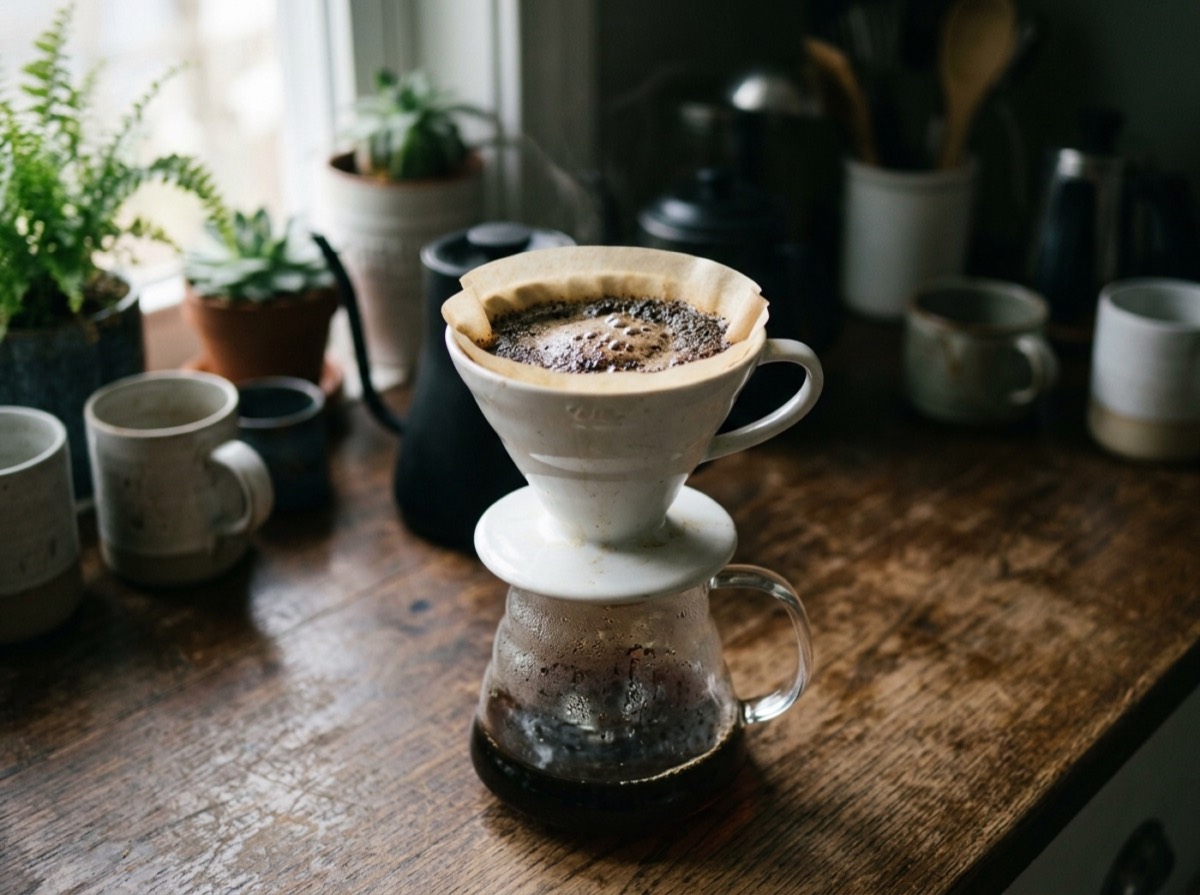
Hario V60 Coffee Dripper 02 (Ceramic)
The Hario V60 makes clean, expressive coffee for very little money, and it rewards practice more than any other mainstream dripper.
What we like
- +Clean, clear cups that show off the flavour of specialty beans
- +Very affordable, especially in plastic
- +Choice of plastic, Tritan, ceramic, glass and metal versions
- +Most online pour-over recipes are written for it
- +Small, light and easy to clean
What could be better
- −Steep learning curve; small changes in pour or grind change the result
- −Works best with a gooseneck kettle and a good burr grinder
- −Needs V60-specific cone filters
- −Ceramic and glass versions can break and need preheating
Best for: Pour-over fans who want control over flavour
Visit Hario Co., Ltd. →The Hario V60 is the pour-over dripper you will see behind the bar in countless specialty cafés, and this Hario V60 review explains why. Hario, a Japanese glassware company founded in 1921, launched the V60 in 2005. Its name comes from the V-shaped cone with a 60-degree angle, and its simple design has made it the reference point for manual filter coffee.
This review is based on Hario's product information, independent tests from Serious Eats, Tom's Guide and the German coffee site brewww, plus a large body of owner experience. We cover how the V60 brews, which material and size to buy, what you need to use it well, and how it compares with the Chemex and Kalita Wave.
Design: why the V60 cone matters
Three features define the V60. The cone shape builds a deeper bed of coffee, and Hario says it directs water to the centre so it stays in contact with the grounds longer. Spiral ribs on the inside wall create space between filter and dripper, letting air escape and the coffee bed expand. And a single large hole at the bottom means very little restricts the flow.
That last point is key. Because the dripper itself barely slows the water, your pouring speed controls the brew. Pour quickly for a lighter cup, or slowly for a richer one. This is what gives the V60 its flexibility and also what makes it less forgiving than flat-bottomed drippers.
Taste: what does V60 coffee taste like?
Serious Eats named the ceramic V60 its best pour-over coffee maker after testing more than 20, describing a clean cup with medium body, balance and clarity that lets tasting notes come through. Brewww, a German coffee guide, praises the same clarity and complexity and calls it outstanding value for money.
Compared with the Chemex, the V60 usually produces a slightly fuller cup because its filters are thinner. Tom's Guide, which tested both side by side, found the results similar, with the Chemex a touch lighter. Both avoid the silt of a French press.
Ceramic vs plastic vs glass: which V60 should you buy?
The shape is the same across materials, so the choice is mostly about durability, heat and looks. Brewww notes that the plastic version is unbreakable, absorbs little heat and is a favourite with many professionals, while ceramic holds heat well but needs preheating and can chip or break. Glass looks lovely but is the most fragile.
The ceramic 02 is made in Japan from porcelain and comes in many colours. Hario also sells a clear Tritan version, metal and titanium drippers, glass models with wooden bases and newer variants such as the V60 Dripper NEO.
- Plastic: cheapest, lightest, travel-proof
- Ceramic: heavy, stable, stylish, preheat before use
- Glass: attractive, fragile
- Metal: durable, good for travel or cafés
01 vs 02: which size is right?
Size 01 is for one to two cups, and size 02 handles one to four cups, which makes it the most versatile choice for most homes. Size 03 suits larger batches. If you brew mostly single mugs, the 01 is fine, but the 02 gives more headroom for guests without hurting single-cup brewing.
What you need and how hard it is to learn
The V60 is simple but not foolproof. A typical brew takes around three to four minutes, and grind size, water temperature and pouring technique all affect the result. Serious Eats notes that the ideal spiral pour takes practice and is much easier with a gooseneck kettle. A burr grinder and a kitchen scale with a timer help a lot.
You also need V60 cone filters. They are inexpensive, and Tom's Guide calculated them at under ten US cents each, cheaper per brew than Chemex filters.
Who should buy the Hario V60?
It is ideal for coffee drinkers who enjoy tweaking recipes and want café-style filter coffee at home for a tiny outlay. If you prefer a brewer that gives the same result with little effort, a flat-bottomed dripper like the Kalita Wave or an immersion brewer such as the AeroPress may suit you better. For bigger batches, a Chemex is more practical.
Key specs
- Shape
- 60° cone with spiral ribs and a single large outlet
- Sizes
- 01 (1-2 cups), 02 (1-4 cups), 03 (larger batches)
- Materials
- Plastic, Tritan, ceramic (porcelain), glass, metal
- Ceramic version made in
- Japan
- Weight (02 ceramic)
- About 440 g (15.5 oz), per Serious Eats
- Filters
- Hario V60 cone paper filters (sold separately)
- Typical brew time
- About 3 to 4 minutes
Alternatives to consider
- Kalita Wave: A flat-bottomed dripper that is more forgiving of uneven pouring, also a Serious Eats favourite.
- Chemex Classic: Better for brewing several cups at once, with an even cleaner cup from thicker filters.
- AeroPress Clear: An easy, tough single-cup brewer with less technique required.
Frequently asked questions
Is the Hario V60 worth it?
+
Yes. It costs very little, makes clean and flavourful coffee, and is the dripper most pour-over recipes are designed around. Just expect to practise your pouring technique to get consistent results.
Which is better, Hario V60 ceramic or plastic?
+
Both brew the same way. Plastic is cheaper, unbreakable and loses little heat, which many baristas like. Ceramic is heavier and looks nicer but must be preheated and can break.
Should I get the V60 01 or 02?
+
The 01 suits one to two cups and the 02 handles one to four. Most people are better served by the 02 because it covers single cups and small batches.
Do you need a gooseneck kettle for a V60?
+
It is not strictly required, but it helps a lot. A gooseneck kettle lets you pour slowly and evenly, which has a big effect on V60 results.
Hario V60 vs Chemex: which is better?
+
The V60 is cheaper and gives slightly more body, with more control for single cups. The Chemex brews larger batches and uses thicker filters for an especially clean cup, but it is fragile and its filters cost more.
Can you use normal coffee filters in a V60?
+
V60 cone filters are recommended because they match the dripper's 60-degree shape. Other cone filters may fit poorly and change the flow.
Two decades after launch, the Hario V60 is still the pour-over dripper to beat. It is inexpensive, available in a material for every kitchen and capable of excellent coffee. The catch is that it asks for some skill, a decent grinder and ideally a gooseneck kettle. If you enjoy the ritual of brewing, it is one of the best-value coffee tools you can buy.
How we research: Reviews are based on the maker’s specifications, published independent tests and owner reports. Scores compare the product with others in its class.
Written by
Bitezine Editorial Team
Rankings, reviews & guides
Our editors research every piece from makers’ documentation, independent tests and owner reports, and update it when products change.