Review · Home & Living
Google Nest Learning Thermostat (4th gen) review: smarter, prettier, but not for Europe
Google's fourth-generation Nest thermostat adds a bigger screen, a remote temperature sensor, Matter and smarter schedules. It is excellent, but only sold in North America.
 Bitezine Editorial TeamRankings, reviews & guides 7 min read
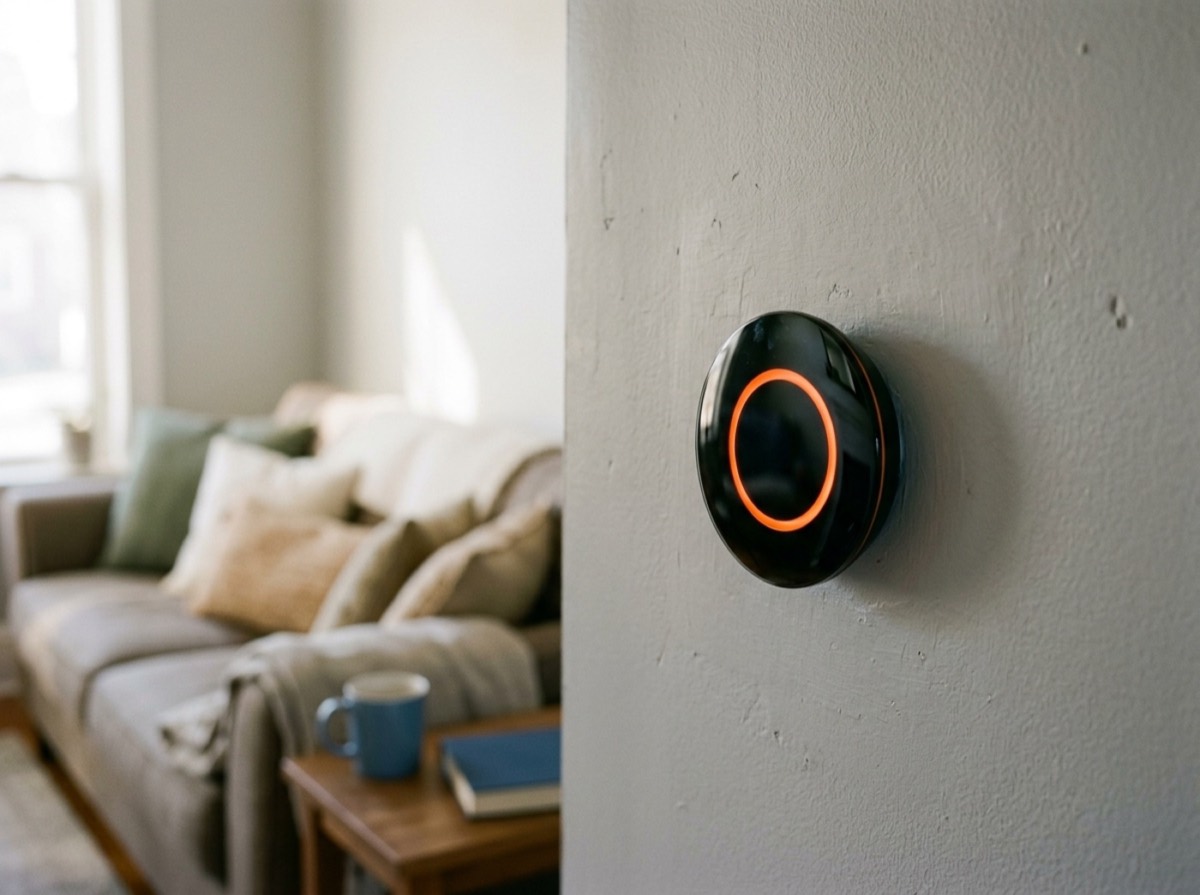 AI generated
 Smart thermostat · Premium
Google Nest Learning Thermostat (4th gen)
A beautiful, genuinely smarter thermostat with a bundled room sensor and Matter support, held back by a premium price and the fact that Google does not sell it in Europe.
What we like
- +Sleek design with a much larger, customisable display
- +Nest Temperature Sensor included in the box
- +Matter support works with Apple Home, Alexa and SmartThings
- +No C-wire needed in most homes
- +Smart Schedule suggests changes you can accept or reject
- +HVAC health monitoring and outdoor-weather awareness
What could be better
- −One of the most expensive smart thermostats
- −Not sold in Europe or the UK
- −Upgrading from an older Nest means a new installation
- −Extra sensors cost more and only measure temperature
Best for: North American homes with compatible central heating and cooling
Visit Google →This Google Nest Learning Thermostat review covers the fourth-generation model, released on 20 August 2024. It is the first full redesign of Google's flagship thermostat in almost a decade, with a slimmer shape, a much larger screen, a bundled room temperature sensor and support for the Matter smart home standard.
There is one important point for readers in Germany and the rest of Europe: in 2025 Google said it would stop selling new Nest thermostats in Europe, and the fourth generation was never launched there. This review is based on Google's specifications, independent reviews from Tom's Guide and TechRadar, and owner reports. It will help North American buyers decide, and help European readers understand what they are missing and what to buy instead.
Design: a thermostat that looks like jewellery
The 4th gen Nest drops the metal ring of earlier models for a domed glass front with a slim, colour-matched edge. Its base is narrower than the face and sits on an oval backplate, so the thermostat seems to float on the wall. Reviewers compare the look to a smartwatch. It measures 3.9 inches across and comes in Polished Silver, Polished Obsidian and Polished Gold.
The display is about 60 percent larger than on the previous model. Controls are still simple: turn the outer ring to change temperature and press the face to open menus.
Farsight and presence detection
Google's Soli radar sensor detects when someone approaches, and the screen wakes to show a customisable Farsight face. You can choose a digital or analogue clock, indoor and outdoor temperature, weather and more. Because the thermostat can draw power more reliably than before, Tom's Guide's reviewer left the display on all the time without battery worries.
The same sensing helps the thermostat know when you are at home, which feeds into its eco settings.
Smarter scheduling and energy features
The Nest still learns your routine, but it now presents its ideas as Smart Schedule suggestions in the Google Home app, which you can accept or reject. Earlier models made such changes quietly, which some owners disliked. The thermostat also considers outdoor conditions: it can pause heating on a sunny winter day or anticipate a warmer house when outdoor humidity is high.
Other features include a System Health Monitor that tracks your HVAC system's behaviour and flags possible problems, and Smart Ventilation, which runs fresh-air systems when outdoor air quality is good. Google says the thermostat itself uses less than 1 kWh per month. How much energy you save depends heavily on your home, climate and habits, so treat any savings figure as a rough guide.
Nest Temperature Sensor and Matter
Every 4th gen thermostat comes with a Nest Temperature Sensor (2nd gen). Place it in a bedroom or a room that runs hot or cold, and the thermostat can prioritise that space at set times. You can add up to six sensors. Unlike ecobee's remote sensors, Google's only measure temperature, not occupancy.
Matter support is a big step. You no longer have to use Google Home: the thermostat can be controlled from Apple Home, Amazon Alexa, Samsung SmartThings and other Matter apps. The old Nest app is no longer needed; setup and control happen in Google Home.
Installation and compatibility
Google offers an online compatibility checker, and it is worth using before you buy. The 4th gen works with most 24V heating and cooling systems, including gas, oil, electric, forced air, radiant and heat pumps. It does not require a C-wire in most homes thanks to a power-sharing design, which solves a common problem with earlier Nests that sometimes had to be removed and recharged.
The Google Home app walks you through labelling wires and mounting the new backplate. Reviewers found the process quick even when swapping from an older smart thermostat. Note that the old Nest base is not reused, so upgrading means a fresh install. Professional installation is available in the US.
Before you start, turn off power to your heating and cooling system at the breaker, photograph the existing wiring and keep the labels from the box on each wire. If your system is unusual, for example with multiple zones or accessories such as humidifiers, professional installation is the safer route. Once installed, the thermostat walks you through a few questions about your system and preferred temperatures so it can start building a schedule.
Availability in Germany and Europe
Google cited the variety of European heating systems when it announced in 2025 that it would stop selling new Nest thermostats in Europe. The 4th gen is therefore not officially available in Germany, Austria, Switzerland or the UK, and it is designed around North American HVAC wiring. European homes, which often use combi boilers and radiator valves, are better served by thermostats built for them.
Google also ended software updates for the first- and second-generation Nest Learning Thermostats on 25 October 2025. If you own one of those, it will keep working as a basic thermostat but without new features or app control.
Is the Nest Learning Thermostat worth it?
For North American homeowners in Google's ecosystem, or anyone who wants a smart thermostat that also looks good, the 4th gen Nest is one of the best available. The included sensor offsets part of the price rise over the previous model, and Matter makes it a safer long-term purchase. If you want the lowest price or occupancy-sensing remote sensors, ecobee is worth a look.
- Buy it if you are in the US or Canada and have a compatible 24V system
- Buy it if you care about design and want Matter support
- Skip it if you live in Europe; choose a locally sold system instead
- Skip it if you only need basic scheduling on a tight budget
Key specs
- Size
- 3.9 x 1.1 inches (about 99 x 28 mm)
- Weight
- 161.8 g
- Sensors
- Soli radar for presence, temperature, humidity, ambient light
- Included
- Nest Temperature Sensor (2nd gen); up to 6 supported
- Connectivity
- Wi-Fi (2.4 and 5 GHz), Thread, Matter
- Compatibility
- Most 24V systems: gas, electric, oil, forced air, radiant, heat pumps
- Finishes
- Polished Silver, Polished Obsidian, Polished Gold
- Availability
- US and Canada
Alternatives to consider
- ecobee Smart Thermostat Premium: Includes a remote sensor that detects both temperature and occupancy, plus a built-in air quality monitor.
- tado Smart Thermostat X: Designed for European boilers and radiators, and widely sold in Germany.
- Google Nest Thermostat: Google's cheaper North American model for people who want basic smart control.
Frequently asked questions
Is the Nest Learning Thermostat 4th gen available in Germany?
+
No. Google has not launched it in Europe and said in 2025 that it would stop selling new Nest thermostats there. European buyers should consider systems built for local boilers and radiators, such as tado.
Does the Nest Learning Thermostat 4th gen need a C-wire?
+
In most homes, no. It uses a power-sharing design so it can run without a dedicated C-wire. Google's compatibility checker will confirm whether your system is supported.
Does the Nest Learning Thermostat work with Apple Home?
+
Yes. The 4th gen supports Matter, so it can be added to Apple Home, Amazon Alexa, Samsung SmartThings and other Matter-compatible platforms.
What is the difference between the 3rd and 4th gen Nest Learning Thermostat?
+
The 4th gen has a new design with a roughly 60 percent larger screen, a bundled temperature sensor, Matter support, smarter schedule suggestions and no C-wire requirement in most homes. It is also more expensive.
How many Nest Temperature Sensors can I use?
+
You can connect up to six sensors. One is included with the 4th gen thermostat, and more can be bought separately.
Will older Nest thermostats stop working?
+
First- and second-generation Nest Learning Thermostats stopped receiving software updates on 25 October 2025. They still work as manual thermostats but lose app control and new features.
Does a Nest thermostat really save money?
+
It can help by learning your schedule, adjusting for weather and reducing heating or cooling when you are away. Actual savings vary a lot by home, climate and how you used your old thermostat.
The fourth-generation Google Nest Learning Thermostat is the most polished Nest yet: better looking, easier to install, more open thanks to Matter, and more useful with its bundled sensor. Its biggest drawbacks are the premium price and, for European readers, the simple fact that it is not sold here. If you live in North America and want a smart thermostat that looks as good as it works, it is worth it. In Germany, look at locally supported smart heating systems instead.
How we research: Reviews are based on the maker’s specifications, published independent tests and owner reports. Scores compare the product with others in its class.
Written by
Bitezine Editorial Team
Rankings, reviews & guides
Our editors research every piece from makers’ documentation, independent tests and owner reports, and update it when products change.