Review · Food & Drink
Gaggia Classic E24 review: the modding favourite, refreshed
The Gaggia Classic E24 keeps the 58mm portafilter and Italian build that made the Classic a legend. Here is what changed and who should buy it in 2026.
 Bitezine Editorial TeamRankings, reviews & guides 7 min read
 AI generated
 Espresso machine · Mid-range
Gaggia Classic E24
The Gaggia Classic E24 is a durable, café-style espresso machine that rewards skill and a good grinder, but it lacks the temperature control beginners benefit from.
What we like
- +Commercial-size 58mm stainless steel portafilter with pressurised and non-pressurised baskets
- +Brass boiler and group with improved heat retention
- +Proper steam wand capable of microfoam
- +Designed and manufactured in Italy, with widely available spare parts
- +Huge community of guides, upgrades and repair know-how
What could be better
- −No PID temperature control as standard, so temperature surfing is often needed
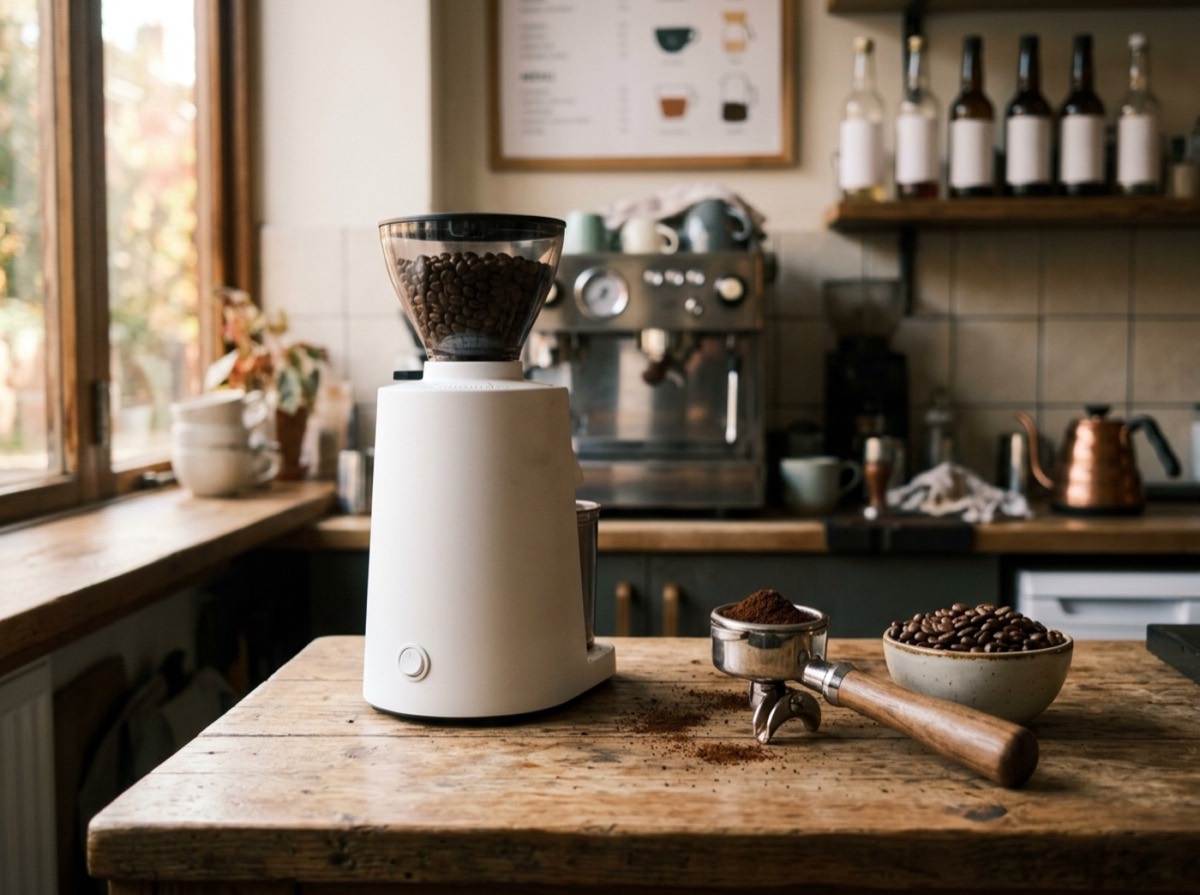
- −No built-in grinder; a capable espresso grinder is essential
- −Single boiler means waiting between brewing and steaming
- −Small drip tray and low clearance for tall cups
Best for: Hands-on home baristas who already own a quality grinder
Visit Gaggia →Few home espresso machines have a following like the Gaggia Classic. First launched in the early 1990s, it earned a reputation as a simple, repairable machine that can pull café-quality shots in the right hands. The Classic E24 is the 2024 refresh, and it is the current model in 2026, also offered in colourful Energy Vibes versions in some markets.
This review is based on Gaggia's official specifications, independent reviews and owner feedback. We look at what the E24 changes compared with the Classic Pro and Classic Evo Pro, how it performs for espresso and milk drinks, and who it suits best.
What is new in the Gaggia Classic E24?
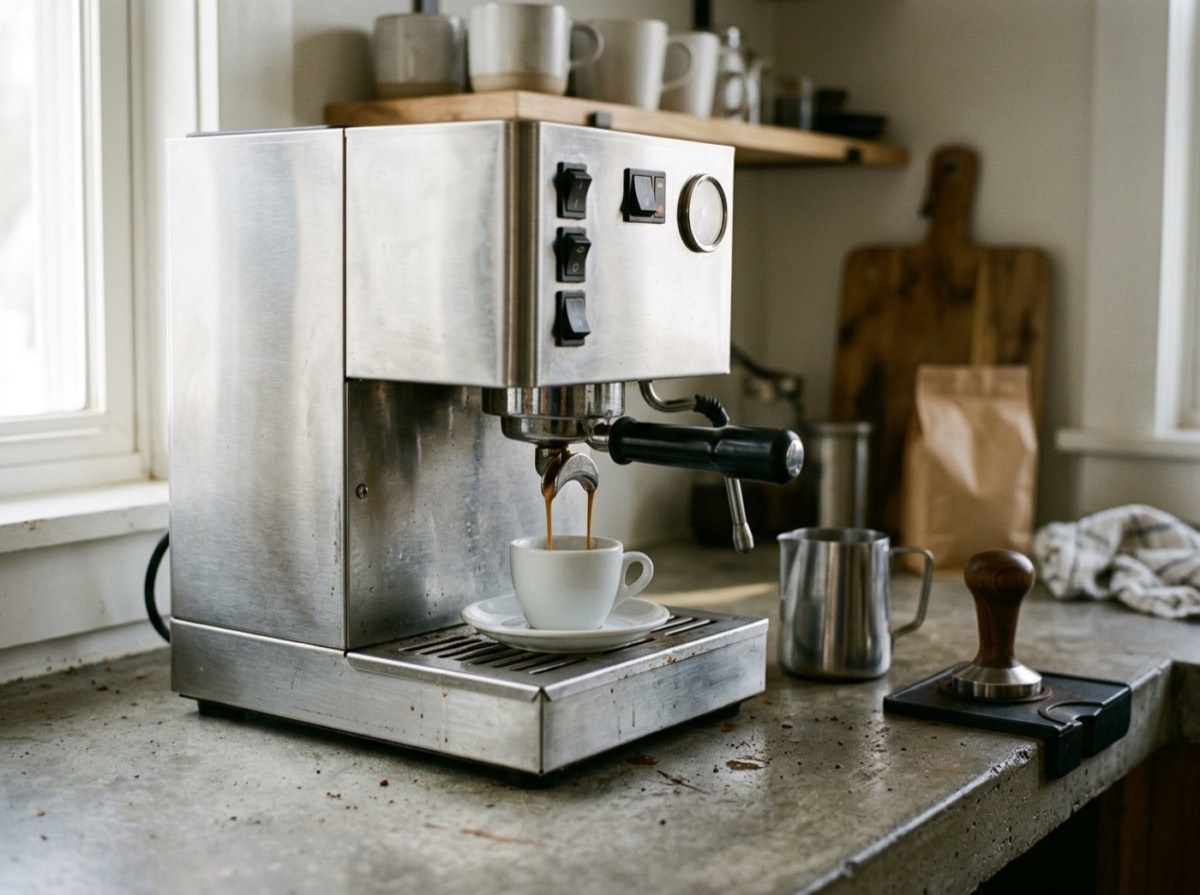
The E24 is an evolution rather than a reinvention. Gaggia highlights a higher-capacity brass boiler with better heat retention, a lead-free brass group, a premium stainless steel portafilter, redesigned rocker switches with indicator lights and a more stable drip tray. Some regional versions add a standby energy-saving function.
The core formula is unchanged: a single boiler, a vibration pump, three rocker switches and a true 58mm group. That is good news for anyone who values simplicity and long-term repairability.
Design and build quality
The brushed stainless steel body is compact at about 20 cm wide, so it fits in kitchens where larger all-in-one machines do not. At 8.1 kg it feels solid, and the heavy chrome-plated brass group gives it a professional feel.
The trade-off of the compact shape is a small drip tray that needs regular emptying and limited space under the spouts. Taller mugs will not fit; most owners brew into a cup or shot glass.
Espresso performance
With a good grinder and non-pressurised baskets, the Classic E24 is capable of rich, well-structured espresso. The 58mm basket and heavy group help with even extraction and temperature stability during a shot.
The catch is temperature control. Unlike machines with PID, the Classic relies on thermostats, so brew temperature swings as the heating element cycles. Experienced users manage this with temperature surfing, and a popular aftermarket upgrade is a PID kit. Beginners can use the included pressurised basket for more forgiving results, even with pre-ground coffee, though the flavour ceiling is lower.
Gaggia lists a 15-bar nominal pump rating. Many enthusiasts adjust the over-pressure valve towards 9 bar for espresso; check the regional specification before assuming how your unit is set.
Steaming milk
The commercial-style steam wand is a clear upgrade over the panarello-style wands on older Classics. Reviewers report it can produce silky microfoam suitable for latte art with a little practice. Because the same boiler handles steam, you need to flip the steam switch and wait for it to heat up after brewing, and steam power drops during very long steaming sessions.
Who is the Gaggia Classic E24 for?
It suits people who enjoy the craft of espresso and want a machine they can keep for many years. It is also a favourite platform for tinkerers thanks to the extensive online modding community.
It is not the best choice if you want coffee at the press of a button, or if you have no budget left for a grinder.
- Great for: learning manual espresso, small kitchens, long-term ownership
- Less ideal for: pure beginners, households making many milk drinks back to back
Maintenance and long-term ownership
A big part of the Classic's appeal is how long it can last. Its simple design means common service parts such as group gaskets, shower screens and solenoid valves are widely available and relatively easy to replace, and there is extensive online guidance for doing so at home. Regular descaling, backflushing with a blind basket and cleaning the shower screen keep it performing well.
Using filtered water helps reduce scale, which is the most common cause of problems in boiler machines. Owners who look after their Classic often keep it for many years, which makes the initial price look even more reasonable over time.
Value: is the Gaggia Classic E24 worth it?
In the mid-range bracket, the E24 competes with machines like the Breville Bambino and Lelit Anna. Those rivals offer friendlier features such as PID or fast heat-up, but few match the Classic's metal build and 58mm group at this level. Remember to budget for a capable espresso grinder, a proper tamper and a scale; together they make a bigger difference to taste than the machine alone.
Key specs
- Boiler
- Single, lead-free brass, higher capacity than earlier models
- Pump
- Vibration pump, 15 bar nominal
- Portafilter
- 58mm stainless steel, 3 baskets
- Steam
- Stainless steel commercial-style steam wand
- Water tank
- 2.1 litres, removable
- Power
- 1200 W (230 V) / 1350 W (120 V)
- Dimensions / weight
- 20 x 35.5 x 27 cm, 8.1 kg
Alternatives to consider
- Breville Bambino Plus: Faster heat-up, PID and automatic milk frothing for less effort.
- Lelit Anna PL41TEM: Compact 58mm machine with PID control from the factory.
- Breville Barista Express Impress: Includes a grinder and assisted tamping if you want an all-in-one setup.
Frequently asked questions
What is the difference between the Gaggia Classic E24 and the Classic Pro?
+
The E24 keeps the same basic layout but adds a higher-capacity lead-free brass boiler, a better stainless steel portafilter, redesigned switches with indicator lights and a more stable drip tray. The espresso-making approach is essentially the same.
Does the Gaggia Classic E24 have a PID?
+
No, it uses thermostats rather than a PID controller. Many owners add an aftermarket PID kit for tighter temperature control.
Can I use pre-ground coffee in the Gaggia Classic E24?
+
Yes, the included pressurised basket is designed to work with pre-ground coffee. For the best results, however, fresh beans ground for espresso and the non-pressurised baskets are recommended.
Which grinder should I pair with the Gaggia Classic E24?
+
Choose a grinder designed for espresso with fine, stepless or micro-stepped adjustment. Popular choices among owners include models from Eureka, Baratza and DF-series single-dose grinders.
Where is the Gaggia Classic E24 made?
+
Gaggia states that the Classic E24 is designed and manufactured in Italy.
Is the Gaggia Classic E24 good for latte art?
+
Yes, its commercial-style steam wand can produce microfoam suitable for latte art. It takes some practice, and the single boiler means steam power is modest compared with dual-boiler machines.
Is the Gaggia Classic E24 good for beginners?
+
It can be, if you are willing to learn. The pressurised basket makes early shots forgiving, but getting the best from the machine requires a good grinder, practice with dosing and tamping, and some attention to temperature. Beginners who want more automation may prefer a PID or grinder-equipped machine.
The Gaggia Classic E24 stays true to what made the Classic famous: a simple, metal, Italian-built machine with a real 58mm group and a steam wand that can texture milk properly. It asks more of the user than PID-equipped rivals, and it needs a good grinder to shine, but for anyone who wants to learn espresso properly and keep a machine for years, it remains an excellent choice.
How we research: Reviews are based on the maker’s specifications, published independent tests and owner reports. Scores compare the product with others in its class.
Written by
Bitezine Editorial Team
Rankings, reviews & guides
Our editors research every piece from makers’ documentation, independent tests and owner reports, and update it when products change.