Review · Tech
DJI Mini 5 Pro review: the Mini 4 Pro successor gets a 1-inch sensor
The DJI Mini 5 Pro replaces the Mini 4 Pro with a 1-inch sensor, LiDAR and a rotating gimbal, all near the 250g line. Here is what it does well and what to watch.
 Bitezine Editorial TeamRankings, reviews & guides 8 min read
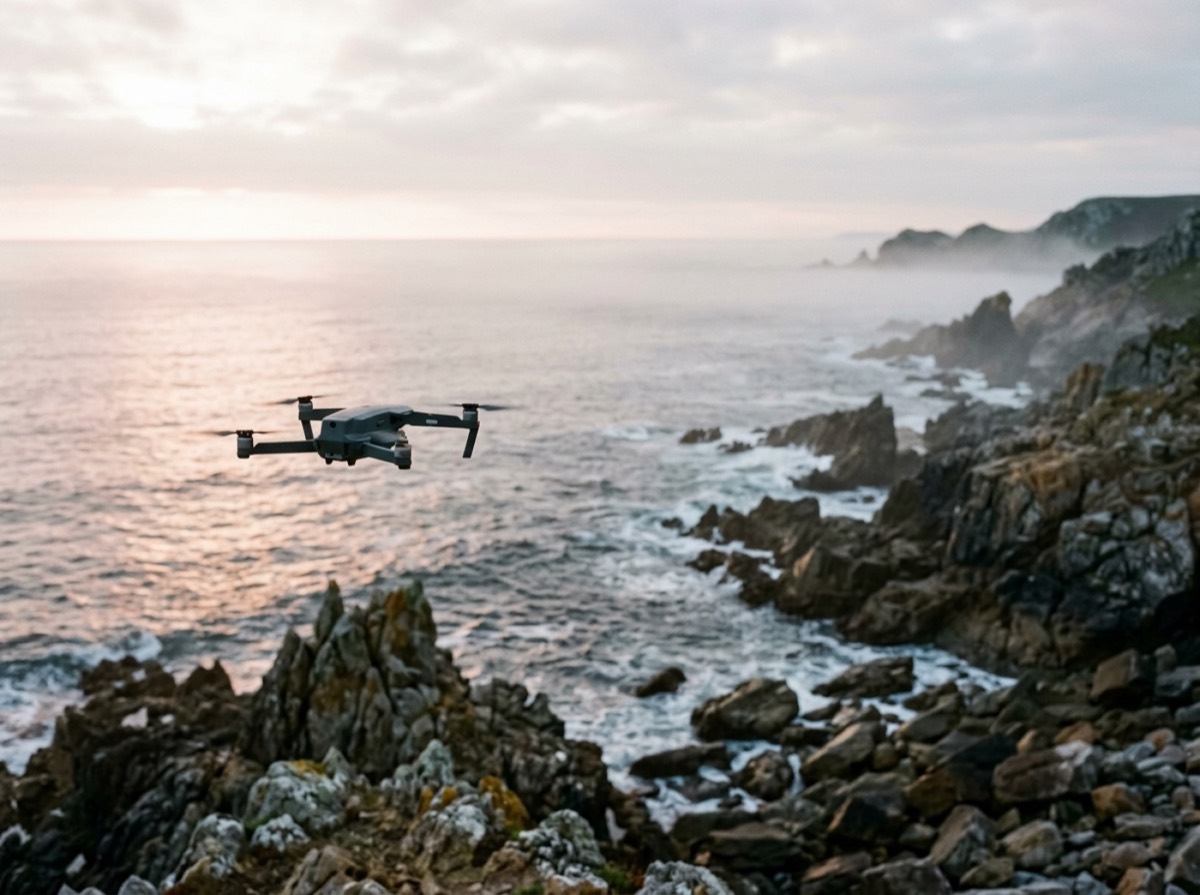 AI generated
 Camera drone · Mid-range
DJI Mini 5 Pro
The Mini 5 Pro is the most capable small drone you can buy, with a 1-inch camera and excellent obstacle sensing, though its weight margin and patchy US availability need checking before you buy.
What we like
- +1-inch 50MP sensor, the largest yet in a DJI Mini
- +Omnidirectional vision sensing plus forward-facing LiDAR
- +Gimbal rotates for true vertical video and creative roll shots
- +4K up to 120fps with D-Log M and HLG
- +42GB internal storage plus a microSD slot
- +Long flight time, especially with the Plus battery
What could be better
- −Weight can vary by about 4g, which may push units past 250g
- −Not sold directly by DJI in the US at launch
- −Plus battery moves it into a stricter category
- −Lens aperture slightly narrower than the Mini 4 Pro's
- −Costs much more than entry-level mini drones
Best for: Travellers and creators who want pro-looking aerial video in a tiny drone
Visit DJI →If you are looking for a DJI Mini 4 Pro review in 2026, you will find that DJI has already moved on. The DJI Mini 5 Pro launched on 17 September 2025 as the successor to the Mini 4 Pro, and it is now the flagship of DJI's sub-250g line. This review covers the Mini 5 Pro and explains what has changed from the older model.
It is a research-based review drawing on DJI's specifications, published expert tests and owner reports. The headline: DJI squeezed a 1-inch sensor and LiDAR into a drone that still officially weighs 249.9g, and reviewers widely call it the best mini drone available.
Design and the 250g question
The Mini 5 Pro keeps the folding layout of earlier Minis but uses a darker finish and a redesigned gimbal area. The rear arms have no landing legs, which helps when landing on uneven ground. Folded, it fits easily in a small bag alongside the controller.
Weight is the key legal detail. DJI lists 249.9g with the standard battery but states a tolerance of about ±4g, and several reviewers weighed units slightly above 250g. In Europe it is officially a C0 drone and in the UK a UK1 drone, the sub-250g classes, and DJI puts both C0 and C1 class stickers in the box. The US FAA has taken a stricter view, so American pilots should weigh their drone and register it if needed. Fitting the larger Intelligent Flight Battery Plus puts it into a heavier category in every region.
Availability also differs by country. At launch DJI did not sell the Mini 5 Pro directly in the US, and stock there has mainly come through third-party retailers. Check local rules and retailer warranties before buying.
Camera and image quality
The biggest upgrade is the 1-inch CMOS sensor, up from the Mini 4 Pro's 1/1.3-inch chip. A larger sensor gathers more light, so footage has less noise at dusk and more dynamic range in high-contrast scenes. Stills are 50MP, and raw capture is available for editing.
Video tops out at 4K at 120fps for slow motion, with 1080p up to 240fps. D-Log M and HLG profiles give colour graders room to work. The aperture is f/1.8, a touch narrower than the Mini 4 Pro's f/1.7, but reviewers found the bigger sensor more than makes up for it.
The gimbal can roll through 225 degrees, so switching to vertical video for social media is a button press rather than a crop. It also enables sweeping rotating shots that used to need a larger drone.
Obstacle sensing and safety features
The Mini 5 Pro combines omnidirectional vision sensors with a forward-facing LiDAR unit and a downward infrared sensor. LiDAR helps the drone detect obstacles in poor light, where camera-only systems struggle, and reviewers report that return-to-home can work even without a GPS signal.
ActiveTrack subject following has been refined and works through a full 360 degrees around the subject. For beginners, this sensing is arguably worth more than the camera upgrade because it greatly reduces the risk of crashing into trees or buildings.
DJI Mini 5 Pro flight time and range
DJI rates the Mini 5 Pro at up to 36 minutes with the standard battery and up to 52 minutes with the Plus battery. As with all drones, real flights are shorter because of wind, temperature and the reserve you should keep for landing. Expert reviewers note that battery life has not jumped dramatically over the Mini 4 Pro, so a Fly More kit with spare batteries is still worth considering.
Video transmission uses DJI's O4+ system with a range of up to 10km under CE rules, and wind resistance is rated at 12 m/s. Internal storage has grown to 42GB, a huge step up from the 2GB on the Mini 4 Pro, and there is still a microSD slot.
DJI Mini 5 Pro vs Mini 4 Pro
Reviewers describe the Mini 5 Pro as a big upgrade for roughly the same launch price as the Mini 4 Pro. If you already own a Mini 4 Pro and fly mostly in good light, the older drone remains very capable. If you fly at sunrise and sunset, want better safety in dim conditions or shoot lots of vertical content, the upgrade is easy to justify.
- Sensor: 1-inch vs 1/1.3-inch
- Stills: 50MP vs 48MP
- Slow motion: 4K120 vs 4K100
- Obstacle sensing: vision plus LiDAR vs vision only
- Internal storage: 42GB vs 2GB
Who should buy the Mini 5 Pro?
It suits travellers who want a drone that fits in a day bag, content creators who need vertical video, and beginners who can afford a mid-range drone and value strong collision avoidance. If your budget is tight, simpler models like the DJI Mini 4K cost much less but lack obstacle sensing. If you want dual cameras and more wind resistance, the heavier DJI Air 3S remains an option.
Key specs
- Takeoff weight
- 249.9g with standard battery (±4g manufacturing tolerance)
- Camera
- 1-inch CMOS, 50MP stills, f/1.8
- Video
- 4K at up to 120fps, 1080p at up to 240fps, D-Log M and HLG
- Flight time
- Up to 36 min (standard battery), up to 52 min (Plus battery)
- Obstacle sensing
- Omnidirectional dual vision, forward LiDAR, downward infrared
- Transmission
- DJI O4+, up to 10km (CE)
- Gimbal
- 3-axis mechanical, 225° roll range for vertical shooting
- Storage / wind
- 42GB internal + microSD; wind resistance 12 m/s
Alternatives to consider
- DJI Air 3S: Heavier, but adds a second telephoto camera, longer flights and better wind handling.
- DJI Mini 4K: A much cheaper beginner drone, though without obstacle sensing.
- DJI Flip: A foldable sub-250g drone with propeller guards that is friendlier for first-time pilots.
Frequently asked questions
Is the DJI Mini 4 Pro discontinued?
+
DJI replaced the Mini 4 Pro with the Mini 5 Pro in September 2025. Some retailers may still have Mini 4 Pro stock, but the Mini 5 Pro is now DJI's current flagship mini drone.
Does the DJI Mini 5 Pro weigh under 250g?
+
DJI lists it at 249.9g with the standard battery, but with a tolerance of about ±4g, so some units weigh slightly more. European and UK regulators class it as a sub-250g drone, while US pilots should weigh their unit and register if it is over the limit.
What is the DJI Mini 5 Pro flight time?
+
Up to 36 minutes with the standard battery and up to 52 minutes with the Intelligent Flight Battery Plus, under ideal conditions. Using the Plus battery raises the weight above 250g.
Can I buy the DJI Mini 5 Pro in the USA?
+
DJI did not sell it directly in the US at launch. It has appeared through third-party retailers, so check the seller, warranty and current FAA rules before buying.
Is the DJI Mini 5 Pro good in low light?
+
Yes, it is one of the best small drones for low light thanks to its 1-inch sensor. The forward LiDAR also helps obstacle detection when light is poor, although you should still follow local rules on night flying.
Can the DJI Mini 5 Pro shoot vertical video?
+
Yes. Its gimbal rotates through a 225-degree range, so it can switch to true vertical recording without cropping the frame.
The DJI Mini 5 Pro takes everything people liked about the Mini 4 Pro and adds a much bigger sensor, LiDAR-assisted safety and a more flexible gimbal. Before you buy, check the rules where you fly, particularly around weight and registration, and confirm the seller if you are in the US. Get those details right and you have the best small camera drone of 2026.
How we research: Reviews are based on the maker’s specifications, published independent tests and owner reports. Scores compare the product with others in its class.
Written by
Bitezine Editorial Team
Rankings, reviews & guides
Our editors research every piece from makers’ documentation, independent tests and owner reports, and update it when products change.