Review · Culture
Dixit review: a dreamy storytelling game for every age
Dixit swaps words and dice for surreal art and clever clues. We look at how it plays, scoring, player count, expansions and whether it is worth buying in 2026.
 Bitezine Editorial TeamRankings, reviews & guides 7 min read
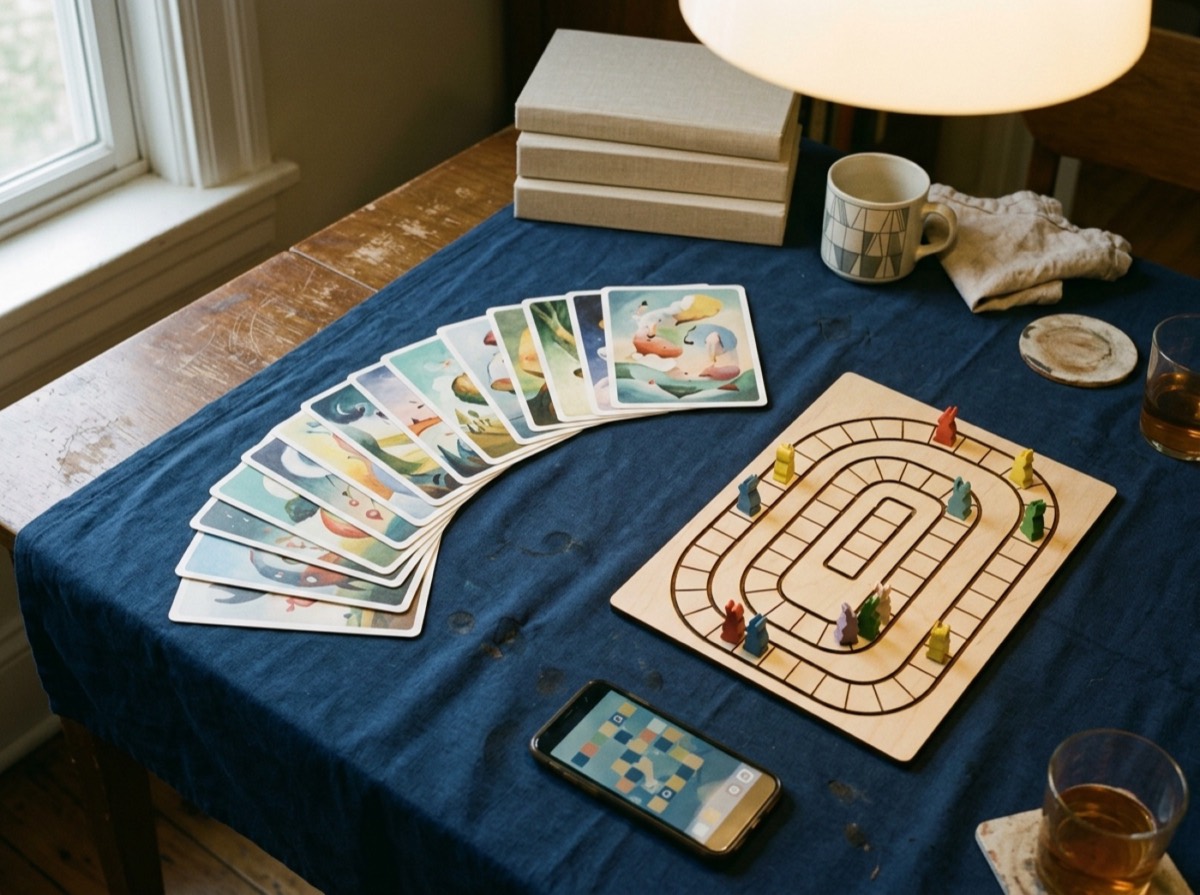 AI generated
 Party game · Mid-range
Dixit
Dixit is a charming, creative party game with stunning art that works for almost any group, though its replay value depends on adding expansion cards over time.
What we like
- +84 large, beautifully illustrated cards with no text
- +Very easy to teach, even to children
- +Language-independent, so mixed groups can play together
- +Clever scoring rewards clues that are neither too easy nor too hard
- +Expansion card packs are fully compatible
What could be better
- −Cards become familiar after many plays without expansions
- −Less satisfying with only three players
- −Groups that know each other well have an advantage
- −Players who want strategy may find it too light
Best for: Families and mixed-age groups who enjoy creativity
Visit Libellud →Dixit is the board game people reach for when they want something creative instead of competitive, and this Dixit review explains its lasting appeal. Designed by Jean-Louis Roubira with art by Marie Cardouat, it was published by French studio Libellud in 2008 and won the Spiel des Jahres in 2010. Its dreamlike cards have since become one of the most recognisable sights in modern board gaming.
This review draws on the publisher's information, independent reviews and player feedback. It covers the rules and scoring, the best group size, expansions and whether Dixit is worth buying in 2026.
How to play Dixit
Each player holds a hand of six picture cards. The active player, the storyteller, picks one card and says a clue about it. The clue can be a word, a phrase, a song lyric, a sound or anything else. Everyone else then secretly chooses a card from their own hand that best fits the clue.
The storyteller shuffles all chosen cards and lays them out face up. The other players then vote in secret for the card they think belongs to the storyteller. After scoring, everyone draws back to six cards and the next player becomes the storyteller.
- The storyteller gives a clue for one card
- Other players add a matching card from their hand
- Cards are shuffled and revealed
- Everyone votes for the storyteller's card
Dixit scoring rules and why they work
Scoring is what turns Dixit from a drawing-room exercise into a real game. If everyone or no one finds the storyteller's card, the storyteller scores nothing and all other players score two points. Otherwise, the storyteller and each correct guesser score three points. Players also earn a bonus point for each vote their own card attracts.
This means the storyteller has to aim for a clue that some, but not all, players will get. Too obvious fails, too obscure fails. That sweet spot is the core challenge, and it is why a good Dixit clue feels so rewarding.
Art and components
The large cards are the star of the show. Each shows a surreal, detailed scene that can be read in many ways, which is exactly what the game needs. Reviewers consistently praise the art, and many players say they buy expansions as much for the illustrations as for the extra variety.
The current edition refreshed the components and supports up to eight players. Scoring uses a track in the box, and voting is done with tokens so nobody reveals their choice early.
Who Dixit is for
Dixit suits families with children from around eight years old, mixed groups of friends, and people who normally avoid board games. Because there is no text on the cards, players of different ages and languages can compete fairly. It is also popular with teachers and therapists as a conversation starter.
The game is weaker with three players, where the scoring is less interesting, and it can feel thin for players who want deep strategy. Groups of close friends also have an edge, since in-jokes make great clues.
Expansions and replay value
The biggest limitation of the base box is its 84 cards. After a dozen games, players start to recognise them and clues can become repetitive. Libellud has released many expansion packs, each with 84 new cards by different artists, and all of them work with the base game. Adding even one pack noticeably refreshes the experience.
There are also versions for larger groups, such as Dixit Odyssey, plus spin-offs such as Stella, which uses the same art style in a different game.
Tips for giving great Dixit clues
The best Dixit clues sit in the middle ground between obvious and obscure. Describing exactly what you see, such as 'a boat on the sea', usually lets everyone find your card, so you score nothing. Referring to a private memory that only you know means nobody finds it, with the same result.
Good storytellers use feelings, film titles, song lines, proverbs or a single abstract word, then pick a card that fits in more than one way. It also helps to think about your audience: a reference one or two players will recognise is often ideal.
When you are not the storyteller, choose a card from your hand that could honestly match the clue, since every vote on your card earns a bonus point. Many groups say this part of the game, trying to fool friends with a plausible decoy, is just as much fun as telling the story.
Is Dixit worth it in 2026?
Dixit sits in the mid-range price bracket for a party game. For families and mixed groups it is excellent value, because it gets people talking and laughing without any complicated rules. If you plan to play often, budget for one expansion pack to keep it fresh.
Key specs
- Designer
- Jean-Louis Roubira
- Illustrator
- Marie Cardouat (base game)
- Publisher
- Libellud (2008)
- Players
- 3 to 8 (current edition)
- Age
- 8+
- Play time
- About 30 minutes
- Components
- 84 illustrated cards, scoring track, player pieces, voting tokens
- Award
- Spiel des Jahres 2010
Alternatives to consider
- Codenames: A more competitive team word game that works brilliantly for larger adult groups.
- Mysterium: A cooperative deduction game with a similar dreamlike art style and picture clues.
- Concept: A picture-icon guessing game that also avoids heavy language requirements.
Frequently asked questions
Is Dixit worth buying?
+
Yes, especially for families and groups with different ages or languages. It is easy to teach, beautiful to look at and very social. Heavy strategy fans may find it too light.
How many players can play Dixit?
+
The current edition supports 3 to 8 players. Most groups find five or more players the most fun, and Dixit Odyssey supports even larger groups.
How does scoring work in Dixit?
+
If all or none of the players find the storyteller's card, the storyteller scores zero and everyone else scores two. Otherwise the storyteller and correct guessers score three, and players get a bonus point for each vote on their own card.
What age is Dixit suitable for?
+
Dixit is rated for ages 8 and up. Younger children can often play with some help, because the cards contain no text.
Which Dixit expansion is best?
+
There is no single best pack; each adds 84 new cards with a different artistic style. Pick the art you like most, as all expansions are compatible with the base game.
Dixit or Codenames: which is better for families?
+
Dixit is usually better for families with younger children or mixed language skills, because it uses pictures. Codenames is better for teens and adults who enjoy word puzzles and team play.
Dixit proves that a board game can be relaxing, creative and genuinely clever at the same time. Its art invites stories, its scoring rewards subtlety, and its rules take minutes to learn. For family evenings and mixed groups it is one of the best party games you can buy in 2026, especially once you add an expansion pack.
How we research: Reviews are based on the maker’s specifications, published independent tests and owner reports. Scores compare the product with others in its class.
Written by
Bitezine Editorial Team
Rankings, reviews & guides
Our editors research every piece from makers’ documentation, independent tests and owner reports, and update it when products change.