Review · Food & Drink
De'Longhi Stilosa review: a budget espresso machine that knows its limits
The De'Longhi Stilosa is one of the cheapest pump espresso machines from a major brand. Here is what it does well, where it falls short and who should buy it.
 Bitezine Editorial TeamRankings, reviews & guides 7 min read
 AI generated
 Espresso machine · Budget
De'Longhi Stilosa Espresso Machine (EC260 / EC230)
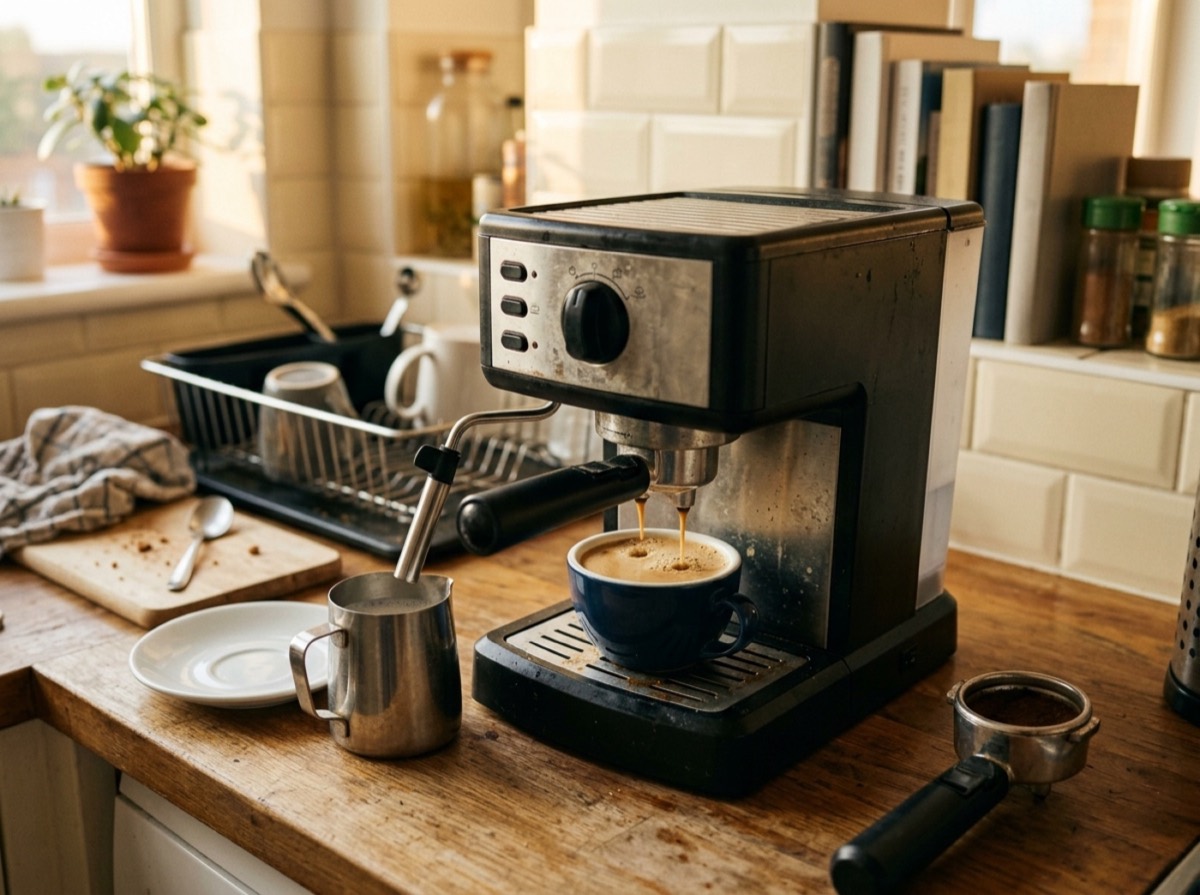
The De'Longhi Stilosa is a sensible first espresso machine for milk drinks on a tight budget, but its pressurised baskets and slow workflow cap how good the coffee can get.
What we like
- +One of the most affordable pump espresso machines from a major brand
- +Simple dial control that is easy to learn
- +Manual steam wand for milk drinks
- +Stainless steel boiler and compact footprint
- +Works with ground coffee and ESE pods
What could be better
- −Pressurised baskets limit espresso quality with fresh, finely ground beans
- −Small portafilter and flimsy plastic tamper
- −Low cup clearance for tall mugs
- −Slow switching between brewing and steaming, no temperature control
Best for: Beginners who mostly drink lattes and cappuccinos
Visit De'Longhi →Most people who want real espresso at home hit the same wall: good machines are expensive. The De'Longhi Stilosa is the Italian brand's answer for tight budgets, a compact manual pump machine with a steam wand for lattes and cappuccinos. It is sold as the EC260 in the US and as the EC230 and EC235 in other markets.
Drawing on De'Longhi's specifications, independent reviews and owner feedback, this review explains what you can realistically expect from the Stilosa, where it cuts corners and whether it is still worth buying in 2026.
Design and build
The Stilosa is compact, at roughly 21 cm wide, and light enough to move around easily. The body is mostly plastic with metal-look accents, and it sits on a two-level drip tray that lets you raise a small espresso cup closer to the spouts. A single rotary dial handles standby, brewing and steaming, and there is no display.
It feels budget, and the included plastic tamper is widely criticised. Replacing it with a properly sized metal tamper is one of the first upgrades many owners make.
Espresso quality
The Stilosa uses pressurised filter baskets. These create extra resistance so that even coarse, pre-ground supermarket coffee produces a thick-looking crema. That makes the machine forgiving for beginners, but it also limits how much flavour detail you can extract, and it means the machine does not respond well to fine, fresh espresso grinds the way a non-pressurised setup does.
Reviewers generally describe the espresso as good for the price and far better than drip coffee, but not in the same league as machines that let you dial in shots precisely. There is no temperature control, so results can vary from shot to shot. Letting the machine and portafilter preheat fully helps consistency.
Milk frothing
The manual steam wand is the Stilosa's strongest point for many buyers. It can make frothy milk for cappuccinos and, with practice, reasonably smooth foam for lattes. Steam power is modest, so it works best with small amounts of milk. After steaming you need to let the machine cool slightly before brewing another shot, or the coffee can taste burnt.
Everyday use and cleaning
Day to day, the workflow is simple: fill the tank, wait for the ready light, dose and tamp, brew, then switch to steam. The removable tank and drip tray are easy to clean. Regular descaling is important, as with any machine with a boiler, and owner reports suggest that neglected units are the most likely to develop problems.
- Preheat the portafilter by running a blank shot
- Use a scale to weigh doses for more consistency
- Purge the steam wand before and after each use
- Descale on the schedule recommended for your water hardness
Stilosa vs Dedica vs Bambino
The De'Longhi Dedica costs a little more and uses a Thermoblock for faster heat-up in a slimmer body. The Breville Bambino costs noticeably more but adds a 54mm portafilter, PID temperature control, a three-second heat-up and non-pressurised baskets, which raise the quality ceiling considerably. The Stilosa is the choice when budget is the deciding factor.
Easy upgrades that make a difference
Owners who stick with the Stilosa often make a few inexpensive changes. A heavier metal tamper that fits the basket improves consistency, and a small digital scale helps you use the same amount of coffee each time. Some buyers try third-party non-pressurised baskets together with a proper espresso grinder, which can improve flavour but also makes the machine less forgiving and may affect warranty coverage, so check before modifying.
Using filtered or softened water reduces scale build-up, which protects the boiler and keeps the flow consistent. Fresh, recently roasted beans ground just before brewing will also taste noticeably better than old pre-ground coffee, even with the stock baskets.
Who should buy the De'Longhi Stilosa?
Buy it if you are curious about espresso, drink mostly milk-based coffee and want to spend as little as possible on a real pump machine. Skip it if you want to explore specialty beans seriously, since you will likely outgrow it quickly and end up upgrading.
For many first-time buyers, the Stilosa is also a low-risk way to find out whether home espresso is a hobby worth investing in. If it is, the skills you learn with it, from dosing to steaming milk, carry over directly to a better machine later. Owners also appreciate that it takes up little space on the counter.
Key specs
- Pump
- 15 bar
- Boiler
- Stainless steel, single
- Portafilter
- Approx. 51mm with single and double filters
- Water tank
- Approx. 1 litre (33.8 oz)
- Power
- 1100 W (US model)
- Dimensions
- Approx. 34 x 21 x 29 cm; about 3.9 kg
- Max cup height
- Approx. 11 cm (4.3 in)
Alternatives to consider
- De'Longhi Dedica Style: Slim Thermoblock machine that heats faster for a small step up in price.
- Breville Bambino: PID, fast heat-up and non-pressurised baskets for much better espresso potential.
- Bialetti Moka Express: A far cheaper stovetop option if you want strong coffee without a machine.
Frequently asked questions
Is the De'Longhi Stilosa a good espresso machine?
+
For its price, yes. It makes decent espresso-style coffee and milk drinks, but its pressurised baskets and lack of temperature control limit the quality compared with more expensive machines.
What size is the De'Longhi Stilosa portafilter?
+
It is commonly measured at around 51mm. Check this before buying an aftermarket tamper or basket, as sizes vary slightly between regions and production runs.
Can the De'Longhi Stilosa use pods?
+
De'Longhi lists compatibility with ESE (Easy Serving Espresso) paper pods. It does not accept Nespresso-style capsules.
What is the difference between the Stilosa EC260 and EC230?
+
They are regional versions of the same basic machine, with minor differences in colour, trim and electrical specification. Performance is broadly the same.
Does the Stilosa need a grinder?
+
Not necessarily. Its pressurised baskets work with pre-ground coffee. A grinder helps with freshness, but you will not unlock the full benefit of fine grinding with the stock baskets.
How long does the De'Longhi Stilosa take to heat up?
+
Owners typically report a wait of a minute or two for the boiler to reach brewing temperature, with extra time to switch to steam.
Is the De'Longhi Stilosa worth it in 2026?
+
It is worth it if your budget is tight and you mainly want milk drinks at home. If you can spend more, a machine with non-pressurised baskets and temperature control, such as the Breville Bambino, offers a much higher ceiling for espresso quality.
The De'Longhi Stilosa does exactly what a budget espresso machine should: it makes enjoyable espresso-style coffee and milk drinks at a low cost, with minimal learning. It will not satisfy people chasing specialty-level shots, but as an entry point into home espresso, or a practical machine for latte lovers, it is a reasonable buy in 2026.
How we research: Reviews are based on the maker’s specifications, published independent tests and owner reports. Scores compare the product with others in its class.
Written by
Bitezine Editorial Team
Rankings, reviews & guides
Our editors research every piece from makers’ documentation, independent tests and owner reports, and update it when products change.