Review · Culture
Codenames review: the word party game that never gets old
Codenames turns one-word clues into tense team battles. We look at how it plays, the best player count, spin-offs like Duet and whether it is worth buying in 2026.
 Bitezine Editorial TeamRankings, reviews & guides 7 min read
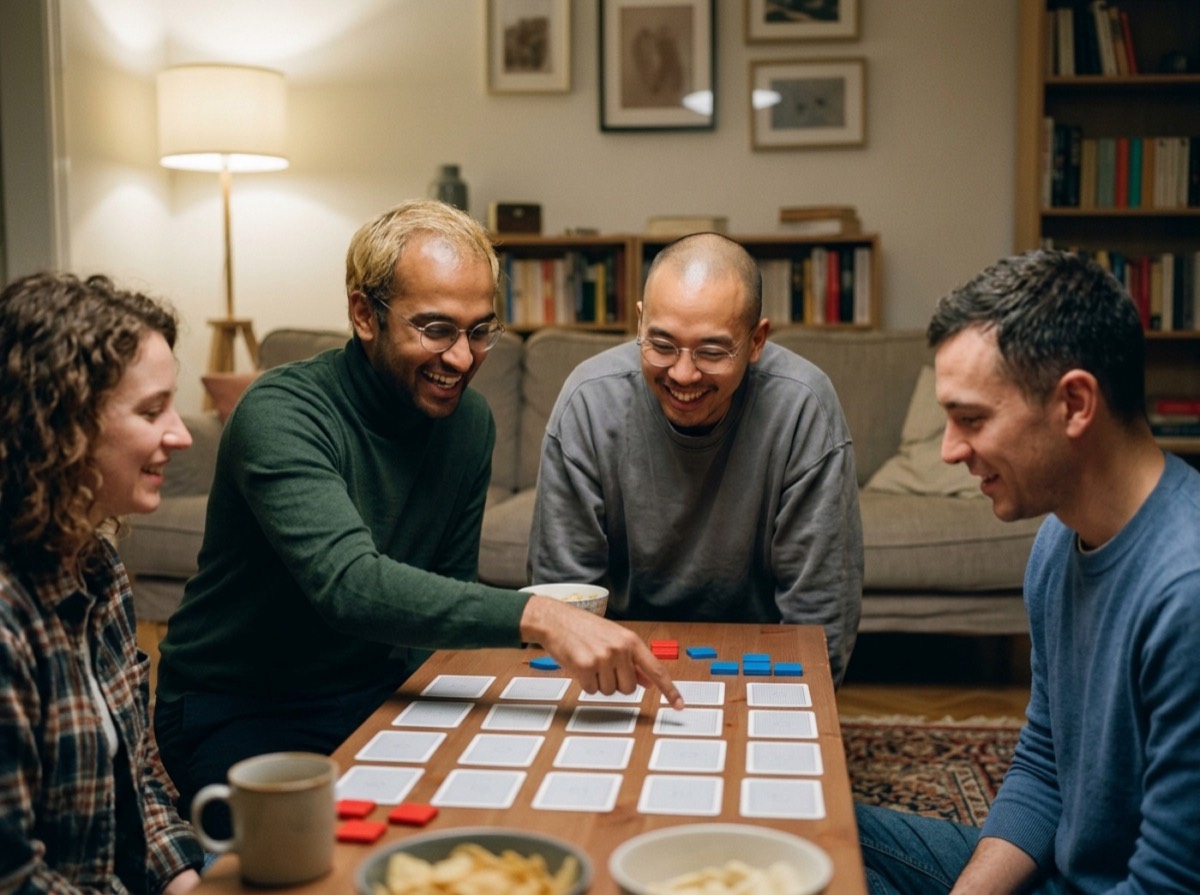 AI generated
 Party game · Budget
Codenames
Codenames is one of the best party games you can buy: quick to teach, affordable, endlessly replayable and just as fun for families as for adult game nights.
What we like
- +Rules can be explained in a couple of minutes
- +400 code words and random key cards give huge replay value
- +Scales well to large groups
- +Satisfying mix of creativity and deduction
- +Budget price and compact box
- +Many versions, including a co-op two-player edition
What could be better
- −Needs at least four players for the standard game
- −The spymaster role can feel stressful for some players
- −Slow clue-givers can create long pauses
- −Word play depends on language skill, which can unbalance teams
Best for: Game nights with 4 to 8 players
Visit Czech Games Edition →Codenames is the party game most board game fans recommend first, and this Codenames review explains why. Designed by Vlaada Chvátil and published by Czech Games Edition in 2015, it won the Spiel des Jahres in 2016 and has since been translated into dozens of languages. A decade later it is still a fixture at game nights, family gatherings and office events.
This review is based on the publisher's information, independent reviews and player feedback. It covers the rules, the best group size, the spin-offs and whether Codenames is worth buying in 2026.
How to play Codenames
Players split into two teams, red and blue. Each team picks a spymaster. Twenty-five word cards are laid out in a five by five grid. The spymasters share a secret key card that shows which words belong to their team, which are innocent bystanders and which single word is the assassin.
Taking turns, each spymaster gives a clue made of one word and one number, such as 'ocean, 3'. Their teammates then touch cards they think match. A correct guess lets them keep going, a bystander ends the turn, an opponent's word helps the other team, and the assassin loses the game on the spot. The first team to find all of its agents wins.
- Split into two teams and pick spymasters
- Spymasters give one-word clues with a number
- Teammates guess words on the grid
- Avoid the assassin at all costs
Why Codenames works so well
The genius of Codenames is the clue. Linking three or four unrelated words with one idea is hard, and watching your team slowly work out what you meant is hugely satisfying. When a clue lands, the whole table feels it. When it fails, the discussion afterwards is often just as funny.
The rules are short enough to teach in a couple of minutes, and a round lasts around 15 minutes, so groups usually play several in a row and swap spymasters. With 400 code words and a stack of key cards, the same grid almost never appears twice.
Best player count and group size
Codenames is listed for 4 to 8 or more players, and it handles large groups better than most board games because only two people need to think hard at any moment: the spymasters. Six to eight players is the sweet spot, with enough voices on each team for lively debate.
With exactly four players, each team has only one guesser, which removes the discussion. For two or three players, the official rules offer variants, but most people are better served by Codenames: Duet, a dedicated co-op version.
Weaknesses to know about
The spymaster job is demanding. Some players love the puzzle, others freeze and take a long time, which leaves the rest of the table waiting. Many groups add a sand timer to keep things moving.
Because it is a word game, Codenames rewards vocabulary and shared cultural references. Mixed groups with children or non-native speakers can feel unbalanced unless teams are chosen carefully. For those groups, Codenames: Pictures, which uses images instead of words, is often a better fit.
Codenames versions and spin-offs
The Codenames family has grown a lot since 2015. The main versions are worth knowing before you buy.
- Codenames: Duet (2017), a cooperative game for two or more players
- Codenames: Pictures (2016), with image cards on a smaller grid
- Codenames XXL, with oversized cards for easier reading
- Themed editions such as Disney, Marvel and Harry Potter
- An official Codenames app and web version for playing online
Tips for better Codenames games
A few simple habits make Codenames more fun for everyone. Spymasters should start with safe clues for two words rather than risky clues for four, especially in the first rounds, because one wrong guess can hand the other team a big lead. Checking the assassin word before every clue is the single most important safety rule.
Guessers should talk through their reasoning out loud, which helps the whole team and often reveals a second meaning of the clue. Remember that you may make one extra guess beyond the number given, which is useful for picking up a word from an earlier clue.
For groups with slow spymasters, a one or two minute sand timer keeps the energy high. For mixed groups, swapping teams between rounds keeps things fair and social. Families with younger children can also agree on simpler clue rules, such as allowing only everyday words, so nobody feels left out.
Is Codenames worth it?
Codenames sits in the budget price bracket and delivers more laughs per euro than almost any other game. It fits in a bag, sets up in a minute and works for teenagers, adults and families with older children. The only real reason to skip it is if you rarely have four or more people around a table, in which case Duet is the smarter purchase.
Key specs
- Designer
- Vlaada Chvátil
- Publisher
- Czech Games Edition (2015)
- Players
- 4 to 8+
- Age
- 10+
- Play time
- About 15 minutes per round
- Components
- 200 cards with 400 code words, agent tiles, key cards, card stand
- Awards
- Spiel des Jahres 2016, three Origins Awards 2015
Alternatives to consider
- Dixit: A picture-based storytelling game that is gentler for mixed ages and language levels.
- Just One: A cooperative word-guessing game that is even easier to teach for large groups.
- Wavelength: A team party game about reading your friends' minds on a sliding scale.
Frequently asked questions
Is Codenames worth buying?
+
Yes, for anyone who regularly plays with four or more people. It is affordable, very quick to teach and has huge replay value thanks to 400 code words. It is one of the most recommended party games of the last decade.
Can you play Codenames with 2 players?
+
The standard game needs four players to feel right. For two players, Codenames: Duet is the better choice, a cooperative version where both players give clues to each other.
What age is Codenames for?
+
The publisher recommends ages 10 and up. Younger children often do better with Codenames: Pictures or the Disney Family edition, which use simpler content.
How long does a game of Codenames take?
+
A round takes about 15 minutes. Most groups play several rounds in a row and rotate the spymaster role.
What is the difference between Codenames and Codenames Pictures?
+
Codenames uses word cards on a five by five grid, while Pictures uses illustrated cards on a smaller five by four grid. Pictures is often easier for mixed-language groups and younger players.
Can I play Codenames online?
+
Yes. Czech Games Edition offers an official Codenames app and web version, which lets friends play together remotely.
Codenames or Dixit: which is better?
+
Codenames is more competitive and puzzle-like, and works best with larger groups. Dixit is calmer and more artistic, and is often better for families and players of different language levels.
Codenames is a modern classic for good reason. It takes two minutes to teach, fits any occasion and turns a table of friends into two noisy teams trying to read each other's minds. If you are building a game collection and want one party game that almost everyone enjoys, Codenames should be near the top of your list in 2026.
How we research: Reviews are based on the maker’s specifications, published independent tests and owner reports. Scores compare the product with others in its class.
Written by
Bitezine Editorial Team
Rankings, reviews & guides
Our editors research every piece from makers’ documentation, independent tests and owner reports, and update it when products change.