Review · Culture
Carcassonne review: the tile-laying classic for two to five
Carcassonne builds a medieval landscape one tile at a time. We look at how it plays, the current edition with the River and Abbot, its best player counts and its value in 2026.
 Bitezine Editorial TeamRankings, reviews & guides 7 min read
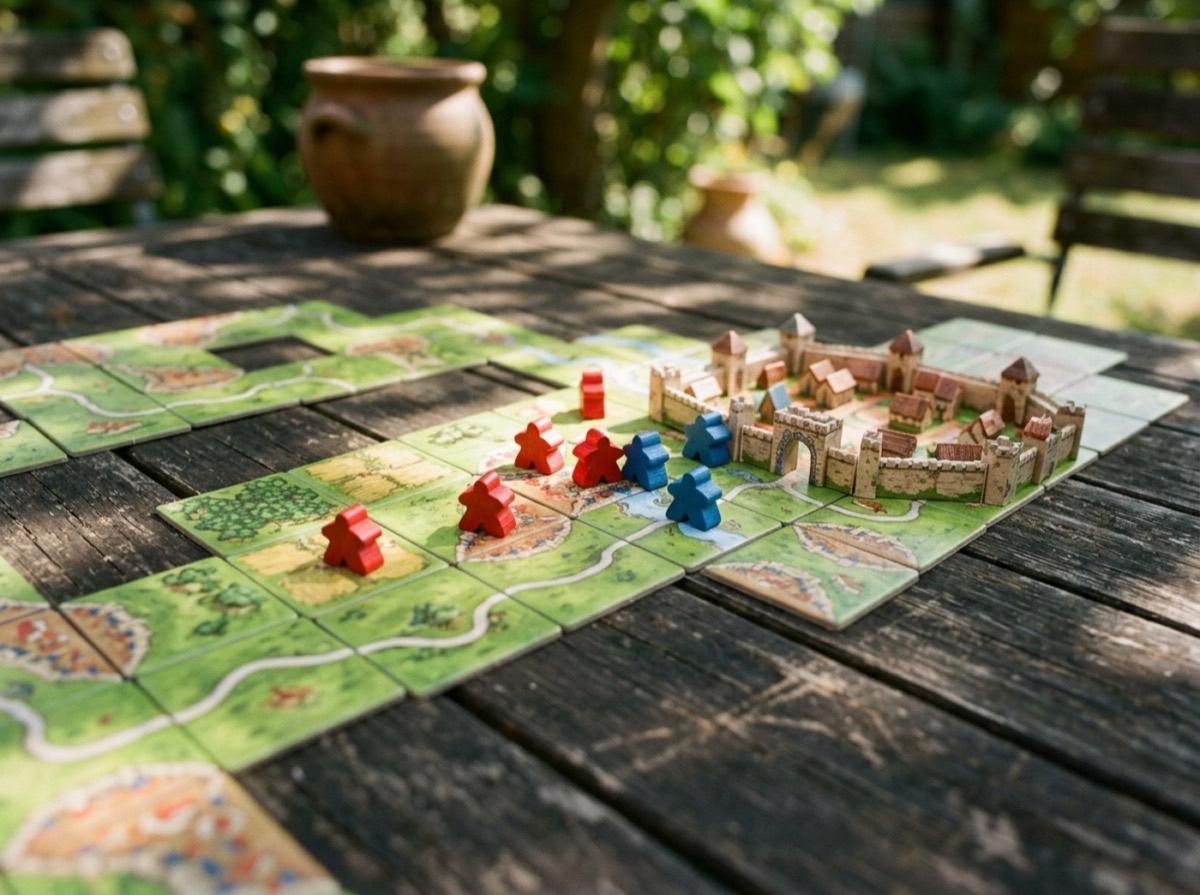 AI generated
 Board game · Budget
Carcassonne
Carcassonne is a relaxed yet surprisingly tactical tile-laying game that shines with two players and remains one of the best gateway games more than two decades after release.
What we like
- +Very simple turn: place a tile, maybe place a meeple
- +Excellent with two players
- +A different map every game
- +Current edition includes the River and Abbot mini-expansions
- +Budget price with a huge expansion range
- +Short play time of 30 to 45 minutes
What could be better
- −Tile draws add a fair amount of luck
- −Field scoring confuses many new players
- −Scoring can feel mean with five players and little control
- −Expansions are needed for long-term variety
Best for: Couples and families looking for an easy first strategy game
Visit Hans im Glück / Z-Man Games →Carcassonne is one of the best-known tile-laying games in the world, and this Carcassonne review looks at why it still matters. Klaus-Jürgen Wrede's game, named after the walled city in southern France, was published by Hans im Glück in 2000 and won both the Spiel des Jahres and the Deutscher Spiele Preis in 2001. It has since grown into a family of expansions, spin-offs and digital versions.
This review is based on publisher information, independent reviews and years of player feedback. It covers how Carcassonne plays, how the current edition differs, where it works best and whether it is worth buying in 2026.
How to play Carcassonne
Each turn you draw one land tile and add it to the shared map so that its edges match: roads connect to roads, cities to cities, fields to fields. After placing it, you may put one of your meeples on a feature of that tile, as long as nobody already claims the connected feature.
When a road, city or monastery is finished, its owner scores points and gets the meeple back. Cities and monasteries are worth more than roads, so there is a constant tension between big, valuable projects and quick, safe points. Farmers placed in fields stay there until the end and score for completed cities they supply. The game ends when the last tile is placed, followed by final scoring.
- Draw and place a tile
- Optionally place a meeple as knight, thief, monk or farmer
- Score completed features and take back meeples
The current edition: River and Abbot included
The redesigned edition sold in recent years has fresh artwork and includes two small expansions in the box. The River gives the map a more interesting starting point, with 12 river tiles laid out before the main game. The Abbot gives each player a special figure that can claim monasteries or gardens and be withdrawn early for points.
Together that makes 84 tiles in the base box. For newcomers, these additions are easy to ignore in the first game and easy to add once everyone knows the rules.
Strategy and luck
Carcassonne looks gentle, but it has real bite. Experienced players join their meeples to an opponent's city to share or steal its points, leave hard-to-finish tiles near a rival's projects, and manage their limited supply of seven followers carefully. Knowing which tiles remain in the bag becomes a real advantage.
Luck still plays a role, because you never know which tile you will draw next. Reviewers generally agree that this keeps the game light and accessible, while skilled players still win more often over time.
Best player count
Carcassonne is listed for two to five players, and two is often called its best count. With two, you get more turns, more control and a direct tactical duel. With four or five, the game becomes more chaotic and social, since the map changes a lot between your turns.
The age rating of 7 and up makes it a good family game, and many families teach younger children with field scoring left out at first.
Expansions and spin-offs
Few games have as many add-ons as Carcassonne. The most popular big expansions are Inns and Cathedrals, which adds a sixth player and higher-stakes features, and Traders and Builders, which adds goods tokens and a builder figure that gives extra turns. Beyond those, there are dozens of mini-expansions.
There are also stand-alone versions such as Hunters and Gatherers, South Seas, Amazonas and a Star Wars edition, plus digital adaptations on PC and mobile.
Tips for new Carcassonne players
Beginners often run out of meeples because they place them on big cities that never get finished. Keep at least two followers in reserve so you can react to good tiles later, and favour small, quick features early in the game.
Monasteries are reliable points, since they only need surrounding tiles to complete, and every tile placed around them helps. Roads are cheap to finish and return your meeple quickly. Large cities score well, but only when you are confident the missing pieces are still in the bag.
Once everyone knows the basics, add farmers. They are placed permanently, so a well-timed farmer in a large field late in the game can swing the final score. Experienced players also watch which tiles are left, since the base game has a fixed tile mix, and use that knowledge to block rivals or finish their own projects.
Is Carcassonne worth it?
Carcassonne sits in the budget price bracket and offers excellent value. It is quick to set up, easy to explain and deep enough that couples play it for years. Its main weaknesses, luck and the field scoring learning curve, are minor for its target audience.
If you want an easy strategy game for two or for family evenings, Carcassonne is one of the safest buys in board gaming.
Key specs
- Designer
- Klaus-Jürgen Wrede
- Original publisher
- Hans im Glück (2000)
- Players
- 2 to 5
- Age
- 7+
- Play time
- 30 to 45 minutes
- Components
- 72 land tiles, 12 river tiles, 40 meeples, 5 abbots, scoreboard
- Awards
- Spiel des Jahres 2001, Deutscher Spiele Preis 2001
Alternatives to consider
- Kingdomino: An even faster tile-laying game that is perfect for families and short sessions.
- Catan: A more social game built around trading, better for groups of three or four.
- Azul: An elegant abstract tile game with less luck and beautiful components.
Frequently asked questions
Is Carcassonne good for 2 players?
+
Yes, many players consider two the best player count. The game becomes a tactical duel with more control over the map and your score.
What age is Carcassonne suitable for?
+
The official rating is 7 and up. Families often leave out farmers in the first games to keep scoring simple for younger kids.
How long does Carcassonne take?
+
A game takes 30 to 45 minutes according to the publisher. Two-player games are usually quicker, while five-player games with expansions take longer.
What is the best Carcassonne expansion?
+
Inns and Cathedrals is the most common first pick, because it adds a sixth player and bigger scoring opportunities without much complexity. Traders and Builders is a popular second expansion.
Does the new Carcassonne include the River?
+
Yes. The current redesigned edition includes the River and the Abbot mini-expansions in the box, for a total of 84 tiles.
Carcassonne or Catan: which should I buy?
+
Carcassonne is better for couples and quieter groups, since it plays well with two and has no trading. Catan is better for groups of three or four who enjoy negotiating.
How do farmers score in Carcassonne?
+
Farmers stay on their field until the end of the game and score points for each completed city that borders their field. It is the trickiest rule for beginners, so many groups add it after a few games.
More than 20 years after its Spiel des Jahres win, Carcassonne is still one of the best gateway games around. It is cheap, quick and calm on the surface, with enough tactics to keep couples and families coming back. With the River and Abbot included in the current box, it is an easy recommendation in 2026.
How we research: Reviews are based on the maker’s specifications, published independent tests and owner reports. Scores compare the product with others in its class.
Written by
Bitezine Editorial Team
Rankings, reviews & guides
Our editors research every piece from makers’ documentation, independent tests and owner reports, and update it when products change.