Ranked · Tech
Best VR headsets in 2026
The ten best VR headsets of 2026, from the Meta Quest 3 and Quest 3S to PS VR2, Apple Vision Pro and high-end PC VR headsets, ranked on comfort and visuals.
 Bitezine Editorial TeamRankings, reviews & guides 10 min read
 AI generated
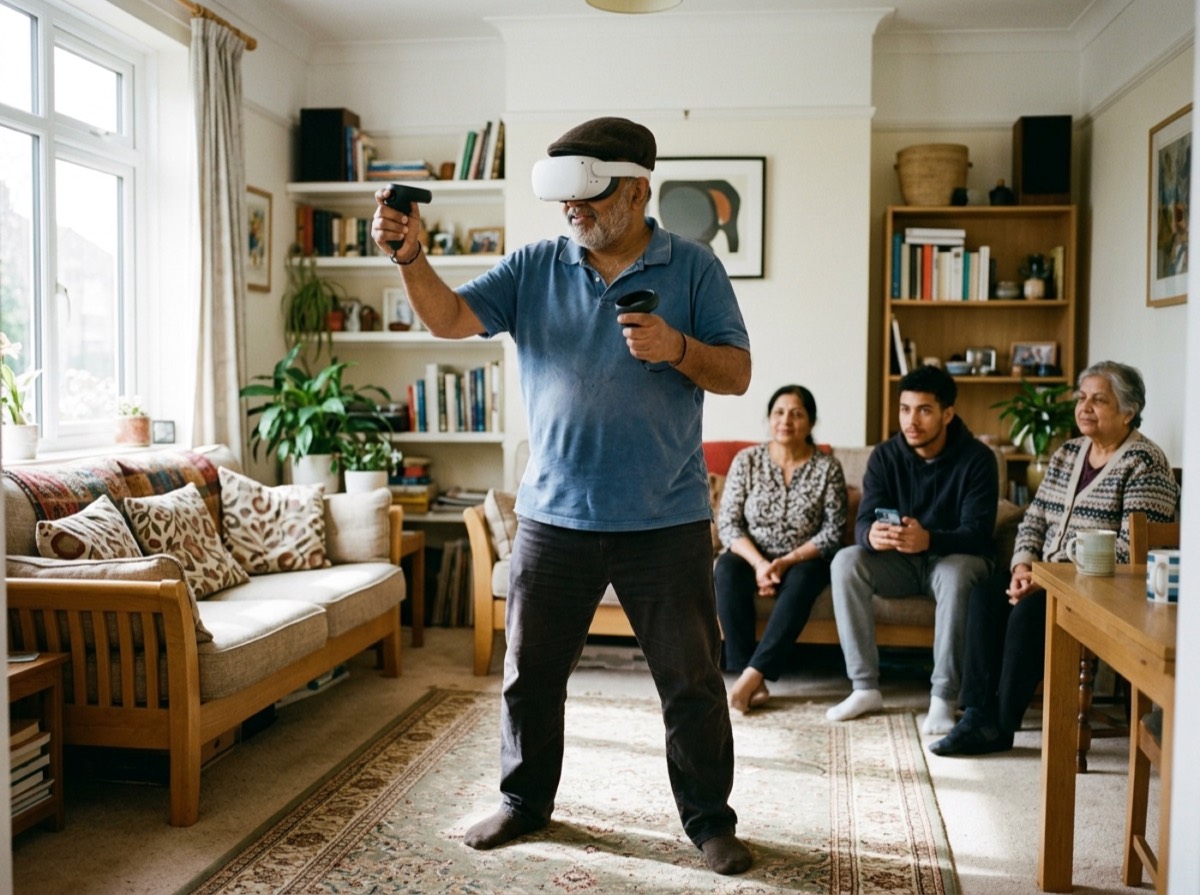
The best VR headsets in 2026 range from affordable standalone devices you can set up in minutes to ultra-sharp PC headsets and premium spatial computers. Meta's Quest 3 and Quest 3S still offer the biggest game library and the best value, while Sony's PS VR2 brings console exclusives and works with PCs through an adapter. At the top end, Apple Vision Pro and Samsung Galaxy XR focus on mixed reality, entertainment and work, and PC enthusiasts can choose lightweight micro-OLED headsets from Bigscreen and Pimax. Valve's new Steam Frame is also due to launch this month.
To build this ranking we compared tested guides from TechRadar and Tom's Guide and checked each headset's specifications on the maker's website. We scored display sharpness, lenses and field of view, tracking, comfort, passthrough for mixed reality, battery life, content library, PC connectivity and value. We included standalone headsets, a console headset, premium spatial computers and dedicated PC VR options. Every headset here is on sale in 2026, though some are only available in certain countries.
At a glance

#1 · Best for Most people
Meta Quest 3
The best VR headset overall
The Quest 3 is a fully standalone headset with a Snapdragon XR2 Gen 2, 2064 x 2208 pixels per eye, a 110-degree field of view and refresh rates up to 120Hz. Pancake lenses keep the image sharp across the view, and colour passthrough with a depth sensor enables convincing mixed reality. It runs the full Meta Horizon Store library and can stream PC VR. Battery life is two to three hours.
- Standalone, no PC needed
- 2064 x 2208 per eye, pancake lenses
- Colour passthrough mixed reality
- Up to 120Hz
- PC VR streaming via Link
- Type
- Standalone
- Resolution
- 2064 x 2208 per eye
- Battery
- 2 to 3 hours
- Price range
- Mid-range

#2 · Best for First VR headset
Meta Quest 3S
The best cheap VR headset
The Quest 3S offers the same Snapdragon XR2 Gen 2, 8GB of RAM and game library as the Quest 3 at a much lower price. It uses Fresnel lenses and 1832 x 1920 pixels per eye, so the image is less sharp and the field of view is narrower. Colour passthrough and Meta's regular Horizon OS updates are included, and battery life is slightly better than the Quest 3.
- Same chip as Quest 3
- 1832 x 1920 per eye
- Full Meta Quest library
- Colour passthrough
- Lightweight standalone design
- Type
- Standalone
- Resolution
- 1832 x 1920 per eye
- Storage
- 128GB or 256GB
- Price range
- Budget

#3 · Best for PS5 gamers
Sony PlayStation VR2
The best VR headset for PS5
PS VR2 connects to a PS5 with a single cable and uses OLED displays at 2000 x 2040 pixels per eye, with eye tracking, headset haptics and advanced Sense controllers. Exclusive games like Horizon Call of the Mountain and a VR mode for Gran Turismo 7 make it stand out. A PC adapter opens up SteamVR. It is wired and relies on the PlayStation ecosystem for its best content.
- OLED, 2000 x 2040 per eye
- Eye tracking
- Headset and controller haptics
- PS5 exclusives
- Works with PC via adapter
- Type
- Console / PC tethered
- Resolution
- 2000 x 2040 per eye
- Requires
- PS5 or PC with adapter
- Price range
- Mid-range

#4 · Best for Apple users and media
Apple Vision Pro (M5)
The most polished spatial computer
The latest Vision Pro runs on Apple's M5 chip alongside the R1 sensor processor and uses micro-OLED displays with 23 million pixels in total, at refresh rates up to 120Hz. Eye and hand tracking make visionOS intuitive for films, work and FaceTime. It weighs 750 to 800g plus a 353g battery pack, lasts about 2.5 hours and costs far more than gaming headsets.
- Apple M5 and R1 chips
- Micro-OLED, 23 million pixels
- Eye and hand tracking
- Up to 120Hz
- Deep Apple ecosystem integration
- Type
- Standalone spatial computer
- Battery
- About 2.5 hours
- Storage
- 256GB to 1TB
- Price range
- Premium

#5 · Best for Sim racing and social VR
Bigscreen Beyond 2e
The lightest high-end PC VR headset
The Beyond 2e weighs about 108g, far less than any mainstream headset, and uses two 1-inch micro-OLED displays with a combined 5120 x 2560 resolution and a 116-degree diagonal field of view. The 2e adds eye tracking for foveated rendering. It needs a gaming PC, SteamVR base stations and controllers such as Valve Index controllers.
- About 108g
- Micro-OLED, 5120 x 2560 total
- Eye tracking (2e)
- 75Hz and 90Hz
- 116-degree diagonal field of view
- Type
- PC VR, tethered
- Tracking
- SteamVR base stations
- Weight
- About 108g
- Price range
- Premium

#6 · Best for Android users
Samsung Galaxy XR
Android XR headset for work and play
Galaxy XR is the first headset running Google's Android XR. It uses a Snapdragon XR2+ Gen 2 with 16GB of RAM, micro-OLED displays at 3552 x 3840 pixels per eye and eye and hand tracking. It has Gemini built in and supports Android apps. The external battery lasts about two hours, and availability is limited to selected countries.
- Android XR with Gemini
- Micro-OLED, 3552 x 3840 per eye
- Snapdragon XR2+ Gen 2, 16GB RAM
- Eye and hand tracking
- Optional controllers
- Type
- Standalone mixed reality
- Battery
- About 2 hours
- Storage
- 256GB
- Price range
- Premium

#7 · Best for PC VR enthusiasts
Pimax Dream Air
Compact PC VR with 4K-class displays
Pimax's Dream Air is a small PC VR headset with Sony micro-OLED panels at 3840 x 3552 per eye and pancake lenses. It offers 120Hz eye tracking for dynamic foveated rendering and is available with inside-out SLAM tracking or base station support. Tom's Guide rates it its best PC VR headset. It lacks colour passthrough and the Pimax software can be clunky.
- Micro-OLED, 3840 x 3552 per eye
- Pancake lenses
- 120Hz eye tracking
- SLAM or base station tracking
- Light, compact design
- Type
- PC VR, tethered
- Resolution
- 3840 x 3552 per eye
- Connection
- DisplayPort
- Price range
- Premium

#8 · Best for Quest alternative in Europe
Pico 4 Ultra
The closest Quest 3 rival
The Pico 4 Ultra uses the same Snapdragon XR2 Gen 2 as the Quest 3 but with 12GB of RAM and 256GB of storage. It has 2160 x 2160 pixels per eye, a 105-degree field of view, 90Hz refresh and two 32MP passthrough cameras. Pico's optional motion trackers suit fitness and full-body games. Its game library is smaller than Meta's.
- Snapdragon XR2 Gen 2, 12GB RAM
- 256GB storage
- 2160 x 2160 per eye
- 32MP colour passthrough
- Optional motion trackers
- Type
- Standalone
- Resolution
- 2160 x 2160 per eye
- Availability
- Europe and Asia
- Price range
- Mid-range

#9 · Best for PC and standalone flexibility
HTC Vive Focus Vision
Standalone and PC VR in one
The Vive Focus Vision is a standalone headset that also works as a PC VR headset over a DisplayPort-capable USB-C connection, with up to 120Hz in DisplayPort mode. It has 2448 x 2448 pixels per eye, up to a 120-degree field of view, 120Hz eye tracking with automatic IPD and a hot-swappable battery. Its app library is smaller than Meta's.
- 2448 x 2448 per eye
- DisplayPort mode for PC VR
- Eye tracking with auto IPD
- Hot-swappable battery
- Up to 120-degree field of view
- Type
- Standalone and PC VR
- Resolution
- 2448 x 2448 per eye
- Battery
- About 2 hours, swappable
- Price range
- Upper mid-range

#10 · Best for Compact mixed reality
HTC Vive XR Elite
Compact mixed reality headset
The Vive XR Elite is a compact standalone headset with a Snapdragon XR2, 12GB of RAM and 1920 x 1920 pixels per eye at 90Hz. Its removable rear battery acts as a counterweight and lasts up to two hours, and IPD adjusts from 54 to 73mm. It can stream PC VR games. It is older than the other standalone headsets here and less powerful.
- Compact, glasses-like front
- 12GB RAM, 128GB storage
- Removable rear battery
- PC VR streaming
- Wide IPD range
- Type
- Standalone
- Resolution
- 1920 x 1920 per eye
- Battery
- Up to 2 hours
- Price range
- Upper mid-range
How to choose
Decide how you want to play. A standalone VR headset such as the Meta Quest 3, Quest 3S, Pico 4 Ultra or HTC Vive Focus Vision needs no PC or console and has its own app store, and most can also stream PC VR games. A console headset like PS VR2 requires a PS5 for its exclusives. Dedicated PC VR headsets such as the Bigscreen Beyond 2e and Pimax Dream Air deliver the sharpest image but need a powerful graphics card and sometimes external base stations.
Then compare comfort and visuals. Pancake lenses, as on the Quest 3, are sharper and slimmer than the older Fresnel lenses of the Quest 3S. Higher resolution per eye and micro-OLED displays make text and distant details clearer, and eye tracking enables foveated rendering. Check the weight and strap, the adjustment range for eye distance (IPD) and whether glasses fit. Battery life on standalone headsets is usually two to three hours. For children, check the manufacturer's minimum age, which is 10 for Meta Quest accounts and 12 or 13 for many other headsets.
Frequently asked questions
What is the best VR headset in 2026?
+
The Meta Quest 3 is the best VR headset for most people. It is fully standalone, has 2064 x 2208 pixels per eye, pancake lenses, a 110-degree field of view and colour passthrough for mixed reality, and it can stream PC VR games. The cheaper Quest 3S uses the same Snapdragon XR2 Gen 2 chip.
Meta Quest 3 or Quest 3S: which should I buy?
+
Buy the Quest 3S if price matters most: it runs the same games with the same processor and 8GB of RAM. The Quest 3 has sharper pancake lenses, a higher resolution, a wider field of view, a depth sensor and smoother IPD adjustment, which make it more comfortable to use for long sessions.
Do I need a PC to use VR?
+
No. Standalone headsets such as the Meta Quest 3, Quest 3S, Pico 4 Ultra and HTC Vive Focus Vision work on their own. A PC is only required for dedicated PC VR headsets like the Bigscreen Beyond 2e and Pimax Dream Air, although standalone headsets can also connect to a PC for more demanding games.
What is the best VR headset for PS5?
+
PlayStation VR2 is the only VR headset for PS5. It has OLED displays with 2000 x 2040 pixels per eye, eye tracking and haptic feedback, and exclusive games such as Horizon Call of the Mountain. With Sony's PC adapter it also works with SteamVR games.
Is VR worth it in 2026?
+
VR is worth it if you enjoy immersive games, fitness workouts or watching films on a giant virtual screen. Affordable headsets like the Quest 3S make it easy to try, and the game library is larger than ever. Sessions are usually limited by battery life and comfort, so it complements rather than replaces a TV or monitor.
What is the best Meta Quest alternative?
+
The Pico 4 Ultra is the closest alternative, with a Snapdragon XR2 Gen 2, 12GB of RAM, 256GB of storage and 2160 x 2160 pixels per eye, and it is sold in Europe and Asia rather than the US. The HTC Vive Focus Vision adds eye tracking and a DisplayPort mode for PC VR.
When does the Valve Steam Frame come out?
+
Valve announced the Steam Frame in November 2025 as the successor to the Valve Index, and it is expected to be released on 18 September 2026. It is a standalone headset running SteamOS that can also stream games wirelessly from a PC. The Valve Index has been discontinued.
The Meta Quest 3 is the best VR headset for most people in 2026, with sharp pancake lenses, good colour passthrough and the largest library of standalone games and fitness apps. The Quest 3S is the best cheap VR headset, and PS VR2 is the top choice for PS5 owners. If money is no object, Apple Vision Pro remains the most polished spatial computer, with the Samsung Galaxy XR as a lighter-priced Android XR alternative. PC VR fans should look at the Bigscreen Beyond 2e and Pimax Dream Air, and the Pico 4 Ultra and HTC Vive Focus Vision are strong Quest alternatives in Europe.
How we research: We compare each product on the same criteria, using makers’ documentation, independent reviews and owner feedback, and re-check the list when products change.
Written by
Bitezine Editorial Team
Rankings, reviews & guides
Our editors research every piece from makers’ documentation, independent tests and owner reports, and update it when products change.