Ranked · Tech
Best mirrorless cameras in 2026
The ten best mirrorless cameras of 2026, from the Sony A7 V and Canon EOS R5 Mark II to beginner-friendly APS-C bodies, ranked for photos, video and value.
 Bitezine Editorial TeamRankings, reviews & guides 11 min read
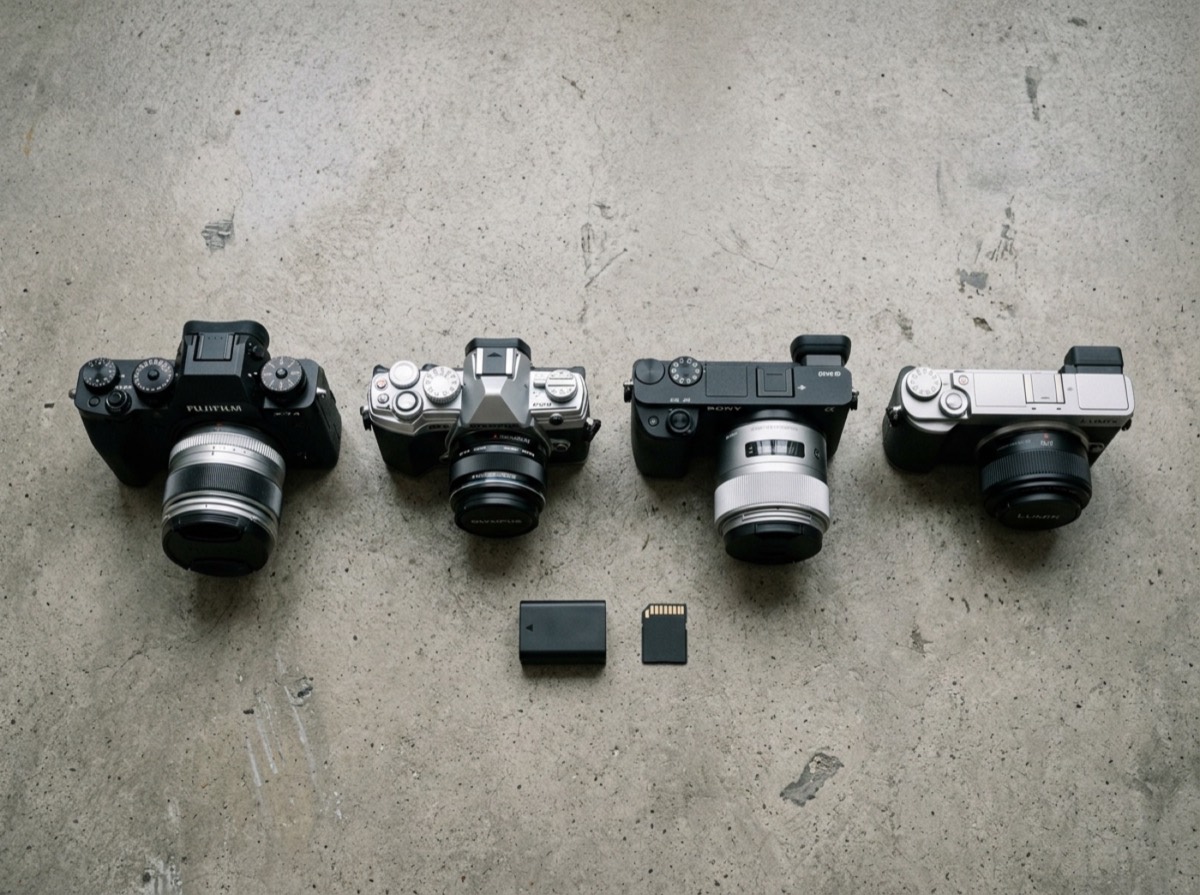 AI generated
The best mirrorless cameras in 2026 focus faster, shoot longer bursts and record better video than any DSLR, thanks to AI subject detection and in-body stabilisation that are now common even in mid-range bodies. Sony, Canon, Nikon, Fujifilm and Panasonic all offer strong systems, and the right mirrorless camera depends on sensor size, the lenses you want and whether you care more about stills or video. Full-frame cameras give the best low-light quality, while APS-C models are smaller, lighter and cheaper.
To build this ranking we compared tested buying guides and reviews from TechRadar, Tom's Guide and other specialist reviewers and checked specifications against manufacturer data and reference sources. We weighed image quality, autofocus, burst speed, stabilisation, video features, handling, battery life, lens choice and value. The list includes a best overall pick, value full-frame options, a professional body, a video specialist, enthusiast APS-C cameras and a compact travel model. All ten are current in 2026.
At a glance

#1 · Best for Enthusiast hybrid shooters
Sony A7 V
The best mirrorless camera overall
Sony's A7 V builds on the popular A7 IV with a 33MP partially stacked full-frame sensor and the BIONZ XR2 processor with a built-in AI unit. It shoots blackout-free at 30fps with full autofocus, has in-body stabilisation rated up to 7.5 stops at the centre and records 4K 60p oversampled from 7K. TechRadar praises its handling and class-leading battery life. Video tops out at 4K with no open gate.
- 33MP partially stacked sensor
- 30fps blackout-free bursts
- AI subject detection
- Up to 7.5-stop IBIS
- 4K 60p from 7K
- Sensor
- Full-frame, 33MP
- Mount
- Sony E
- Video
- 4K 60p
- Price range
- Upper mid-range

#2 · Best for First full-frame camera
Nikon Z5 II
Best-value full-frame camera
The Z5 II is Nikon's entry full-frame body, announced in 2025. It adds a back-illuminated 24MP sensor, the EXPEED 7 processor with much better subject-detection autofocus, a brighter viewfinder, pre-release capture and a dedicated Picture Control button. It records uncropped 4K 30p video. It is not as fast as pro bodies, but offers a lot of camera for the money.
- 24MP BSI full-frame sensor
- EXPEED 7 autofocus
- Pre-release capture
- Bright electronic viewfinder
- In-body stabilisation
- Sensor
- Full-frame, 24MP
- Mount
- Nikon Z
- Video
- 4K 30p uncropped
- Price range
- Mid-range

#3 · Best for Professional photographers
Canon EOS R5 Mark II
The best mirrorless camera for most pros
The R5 Mark II has a 45MP stacked sensor, 30fps electronic bursts and 8K raw video at up to 60fps. Its autofocus covers the whole frame, recognises many subjects and adds Canon's eye-control focus. In-body stabilisation is rated up to 8.5 stops, and it has dual CFexpress and SD slots. It is expensive, especially with RF lenses.
- 45MP stacked sensor
- 30fps electronic bursts
- 8K 60p raw video
- Eye-control autofocus
- Up to 8.5-stop IBIS
- Sensor
- Full-frame, 45MP
- Mount
- Canon RF
- Video
- 8K 60p
- Price range
- Premium

#4 · Best for Filmmakers
Panasonic Lumix S1 II
The best mirrorless camera for video
The Lumix S1 II is a 24MP full-frame L-mount camera built around video. It records 6K at 60p, offers many codecs and a dynamic range boost mode, and combines class-leading stabilisation with reliable phase-detection autofocus. A 5.76-million-dot viewfinder and a dual-axis vari-angle screen help both stills and video. Battery life is shorter than Sony's.
- 6K 60p video
- Class-leading stabilisation
- Phase-detection autofocus
- Dual-axis vari-angle screen
- L-mount lens system
- Sensor
- Full-frame, 24MP
- Mount
- L-mount
- Video
- 6K 60p
- Price range
- Upper mid-range

#5 · Best for Pro hybrid work
Nikon Z8
Flagship performance in a smaller body
The Z8 uses the same 45.7MP stacked sensor and autofocus system as Nikon's flagship Z9 in a body about 30% smaller. It records 8K video, has in-body stabilisation and sensor cleaning, and its 493-point autofocus recognises a wide range of subjects. TechRadar rates it the best hybrid camera for pros. It is heavy compared with enthusiast cameras.
- 45.7MP stacked sensor
- Z9-class autofocus
- 8K video
- In-body stabilisation
- Sensor cleaning
- Sensor
- Full-frame, 45.7MP
- Mount
- Nikon Z
- Video
- 8K
- Price range
- Premium

#6 · Best for Street and landscape photography
Fujifilm X-T5
The best APS-C camera for photographers
The X-T5 combines a 40.2MP X-Trans sensor, the highest resolution in APS-C, with dedicated dials for shutter speed, ISO and exposure compensation. It has 7-stop in-body stabilisation, weather sealing, a 3.69-million-dot OLED viewfinder and records 6.2K 30p and 4K 60p video. Fujifilm's film simulations make great JPEGs straight from camera.
- 40.2MP APS-C sensor
- Classic control dials
- 7-stop IBIS
- Weather-resistant body
- Film simulations
- Sensor
- APS-C, 40.2MP
- Mount
- Fujifilm X
- Video
- 6.2K 30p
- Price range
- Mid-range

#7 · Best for Travel and wildlife
Sony A6700
Best Sony APS-C for enthusiasts
The A6700 packs a 26MP APS-C sensor, 759-point phase-detection autofocus with AI subject recognition and five-axis stabilisation into a compact body with a good grip. It shoots 11fps with tracking and records 4K up to 120fps, though that mode is heavily cropped. Battery life is excellent, making it a strong travel camera. The menus can be hard to navigate.
- 26MP APS-C sensor
- AI subject recognition
- Five-axis IBIS
- 4K up to 120fps
- Vari-angle touchscreen
- Sensor
- APS-C, 26MP
- Mount
- Sony E
- Video
- 4K 120p (cropped)
- Price range
- Mid-range

#8 · Best for Beginners
Canon EOS R10
The best mirrorless camera for beginners
The EOS R10 is a compact APS-C camera with a 24.2MP sensor, strong subject-tracking autofocus and 15fps bursts with the mechanical shutter. It has a vari-angle touchscreen and records uncropped 4K 30p. It lacks in-body stabilisation and a headphone port, and there are fewer native RF-S lenses than in some rival systems.
- 24.2MP APS-C sensor
- 15fps mechanical bursts
- Subject-tracking autofocus
- Vari-angle touchscreen
- Compact, light body
- Sensor
- APS-C, 24.2MP
- Mount
- Canon RF
- Video
- 4K
- Price range
- Budget to mid-range

#9 · Best for Travel vloggers
Fujifilm X-M5
Tiny camera for travelling creators
The X-M5 is Fujifilm's smallest X-series camera. It uses the 26.1MP X-Trans sensor and X-Processor 5 from the X-S20, records 6.2K open-gate video at 30fps and has a vari-angle touchscreen. There is no viewfinder and no in-body stabilisation, so it leans towards video and casual shooting. With a small lens it slips into a jacket pocket.
- 26.1MP APS-C sensor
- 6.2K open-gate video
- Vari-angle touchscreen
- Film simulation dial
- Very compact
- Sensor
- APS-C, 26.1MP
- Mount
- Fujifilm X
- Video
- 6.2K 30p
- Price range
- Budget to mid-range

#10 · Best for Sports and wildlife pros
Sony A9 III
The fastest camera for action
The A9 III was the first full-frame camera with a global shutter, which removes rolling-shutter distortion and allows flash sync at any shutter speed. It shoots up to 120fps with autofocus, has a 24.6MP sensor and records 4K at up to 120fps. It is aimed at sports and wildlife professionals, and its price and modest resolution make it a specialist tool.
- Global shutter
- Up to 120fps bursts
- 24.6MP full-frame sensor
- Flash sync at any speed
- 4K up to 120fps
- Sensor
- Full-frame, 24.6MP
- Mount
- Sony E
- Video
- 4K 120p
- Price range
- Premium
How to choose
Pick the system before the body, because lenses last longer than cameras. Sony E-mount has the widest lens choice, including third-party options from Sigma and Tamron. Canon RF and Nikon Z have excellent native lenses, and Fujifilm X offers compact primes and classic dials. Next choose a sensor size: full-frame cameras such as the Sony A7 V or Nikon Z5 II deliver cleaner high-ISO images and shallower depth of field, while APS-C bodies like the Sony A6700 or Canon EOS R10 are lighter and more affordable, with a crop factor that helps wildlife and sports shooters.
Then match features to your subjects. For sport and wildlife, look for fast burst rates, a stacked sensor and AI subject detection, as in the Canon EOS R5 Mark II or Sony A9 III. For video and vlogging, check for 4K at 60fps or 6K, 10-bit recording, a flip-out screen, in-body stabilisation and microphone input, which is where the Panasonic Lumix S1 II excels. Travellers should favour small bodies with a good grip and long battery life. Beginners get the most from a camera with helpful auto modes and an affordable kit lens.
Frequently asked questions
What is the best mirrorless camera in 2026?
+
The Sony A7 V is the best mirrorless camera overall for most enthusiasts. It has a 33MP partially stacked full-frame sensor, blackout-free 30fps shooting, AI autofocus, in-body stabilisation and 4K 60p video oversampled from 7K. Professionals who need higher resolution should consider the Canon EOS R5 Mark II or Nikon Z8.
What is the best mirrorless camera for beginners?
+
The Canon EOS R10 is a great first mirrorless camera, with a 24.2MP APS-C sensor, fast autofocus and bursts of up to 15fps with the mechanical shutter. If you want full-frame from the start, the Nikon Z5 II offers excellent value and Nikon's latest autofocus.
Is mirrorless better than DSLR?
+
For most people, yes. Mirrorless cameras are smaller, have electronic viewfinders that preview exposure, offer better video and focus more reliably with subject detection. Camera makers now develop new lenses and bodies almost exclusively for mirrorless systems.
What is the best mirrorless camera for video?
+
The Panasonic Lumix S1 II is the best mirrorless camera for video in TechRadar's testing, with 6K 60p recording, strong stabilisation and reliable phase-detection autofocus. The Sony A7 V and Fujifilm X-T5 are good hybrid alternatives for photographers who also film.
What is the best mirrorless camera for travel?
+
The Fujifilm X-M5 is one of the smallest interchangeable-lens cameras and records 6.2K video, making it a great light travel option, though it lacks a viewfinder and in-body stabilisation. The Sony A6700 offers a viewfinder, stabilisation and long battery life in a compact body.
Is full-frame worth it over APS-C?
+
Full-frame is worth it if you shoot in low light, want the shallowest depth of field or plan to make big prints. APS-C cameras cost less, and their lenses are smaller and lighter. The extra reach from the crop factor also helps with wildlife and sports.
Sony A7 V or A7 IV: which should I buy?
+
The A7 V is faster, with a partially stacked sensor, 30fps bursts, better autofocus and improved video. The A7 IV has the same 33MP resolution and remains a good buy for stills photographers if you find it discounted.
The Sony A7 V is the best mirrorless camera for most enthusiasts in 2026, with a 33MP partially stacked sensor, 30fps bursts, strong stabilisation and class-leading battery life. The Nikon Z5 II is the best-value full-frame camera, the Canon EOS R5 Mark II and Nikon Z8 are the top choices for professionals, and the Panasonic Lumix S1 II is the best mirrorless camera for video. For lighter kits, the Fujifilm X-T5, Sony A6700 and Canon EOS R10 are excellent APS-C options, while the tiny Fujifilm X-M5 suits travelling video creators. Sports and wildlife specialists should consider the global-shutter Sony A9 III.
How we research: We compare each product on the same criteria, using makers’ documentation, independent reviews and owner feedback, and re-check the list when products change.
Written by
Bitezine Editorial Team
Rankings, reviews & guides
Our editors research every piece from makers’ documentation, independent tests and owner reports, and update it when products change.