Ranked · Culture
Best graphic novels of all time
The ten best graphic novels of all time, from Watchmen and Maus to Persepolis and Akira, with what makes each one essential reading.
 Bitezine Editorial TeamRankings, reviews & guides 9 min read
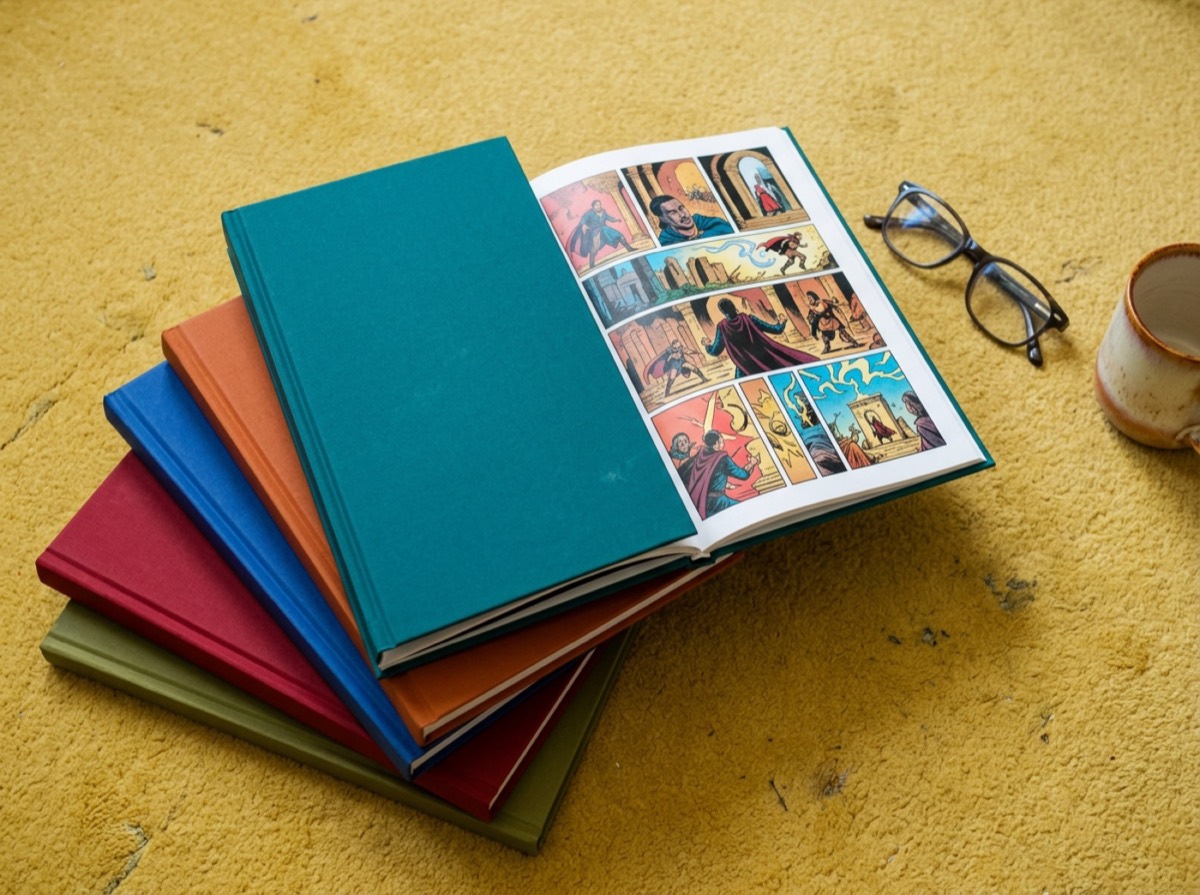 AI generated
The best graphic novels of all time show that comics can do anything prose or film can, from memoir and history to superhero deconstruction and epic science fiction. Words and images working together let these books handle trauma, politics and fantasy in ways no other form quite matches. The ten below are the ones critics, librarians and readers return to again and again.
We compared long-running lists of the best graphic novels from critics, libraries and comics publications, and weighed major honours such as the Eisner Awards and the Pulitzer special citation for Maus. We looked for books that changed the medium, still read well today and are easy to find in collected editions. We also aimed for variety: graphic memoirs, superhero classics, manga and all-ages fantasy.
At a glance
#1 · Best for Readers who want the essential classic
Watchmen
The graphic novel that changed everything
In an alternate 1985 where costumed heroes exist and the Cold War is close to boiling over, the murder of a former vigilante leads to a conspiracy. Alan Moore and Dave Gibbons use a strict nine-panel grid, parallel stories and documents to build a layered, political mystery. It showed that superhero comics could be serious literature.
- Alternate-history superhero story
- Dense, carefully structured layouts
- On Time's 2005 list of 100 best novels
- Collected from 12 issues
- Author
- Alan Moore, Dave Gibbons
- First published
- 1986–1987 (DC Comics)
- Genre
- Superhero, mystery
#2 · Best for Serious readers of history
Maus
A Holocaust memoir like no other
Art Spiegelman interviews his father, Vladek, about surviving Auschwitz, drawing Jews as mice, Germans as cats and Poles as pigs. The present-day scenes, full of tension between father and son, are as powerful as the wartime story. It received a Pulitzer Prize special citation in 1992.
- Holocaust survivor's story
- Animal allegory
- Pulitzer Prize special citation
- Father-son memoir framing
- Author
- Art Spiegelman
- First published
- Serialised 1980–1991
- Genre
- Memoir, history
#3 · Best for New readers of comics
Persepolis
The best graphic memoir to start with
Marjane Satrapi recounts growing up in Tehran during the Islamic Revolution and the Iran-Iraq War, then moving to Europe as a teenager. Her bold black-and-white drawings make complex history clear and personal, with plenty of humour. Satrapi co-directed an animated film version released in 2007.
- Coming-of-age memoir
- Simple, striking black-and-white art
- Clear introduction to modern Iranian history
- Adapted into an animated film
- Author
- Marjane Satrapi
- First published
- 2000–2003 (French), 2003–2004 (English)
- Genre
- Memoir
#4 · Best for Fans of literary fiction and memoir
Fun Home
Literary memoir in comic form
Alison Bechdel explores her relationship with her father, a closeted gay man who ran a funeral home, and her own coming out. The book is full of references to literature, and its careful drawings reward slow reading. It was adapted into a Tony Award-winning Broadway musical.
- Family memoir
- Rich literary references
- Detailed, precise artwork
- Adapted into a Broadway musical
- Author
- Alison Bechdel
- First published
- 2006
- Genre
- Memoir
#5 · Best for Fantasy and myth lovers
The Sandman
Myth, horror and storytelling itself
Dream, one of the seven Endless, escapes decades of imprisonment and sets about rebuilding his realm. Neil Gaiman's series moves between horror, fantasy, history and mythology, with stories that range from single issues to long arcs. Collected in ten main volumes, it became a landmark of adult comics and was adapted for Netflix.
- Dark fantasy and mythology
- Many artists across the run
- 75-issue main series
- Adapted as a Netflix series
- Author
- Neil Gaiman and various artists
- First published
- 1989–1996 (DC Comics, later Vertigo)
- Genre
- Fantasy, horror
#6 · Best for A first manga for sci-fi fans
Akira
The manga epic that went global
In Neo-Tokyo, rebuilt after a devastating explosion, biker gang member Kaneda tries to stop his friend Tetsuo, who has developed terrifying psychic powers. Katsuhiro Otomo's detailed artwork of a collapsing city is still breathtaking. Otomo also directed the 1988 anime film, which helped bring manga and anime to Western audiences.
- Cyberpunk science fiction
- Hugely detailed city artwork
- Six large volumes
- Basis of the 1988 anime film
- Author
- Katsuhiro Otomo
- First published
- 1982–1990 (Young Magazine)
- Genre
- Manga, science fiction
#7 · Best for Superhero fans
The Dark Knight Returns
The Batman story that defined a generation
A retired, middle-aged Bruce Wayne puts the cape back on to face a violent gang and a changed Gotham. Frank Miller's four-part story, with inks by Klaus Janson and colours by Lynn Varley, uses TV news panels to comment on media and politics. It shaped decades of darker superhero stories on the page and on screen.
- Older, grittier Batman
- TV-news framing device
- Four-issue story
- Major influence on superhero films
- Author
- Frank Miller
- First published
- 1986 (DC Comics)
- Genre
- Superhero
#8 · Best for Readers who like artful, slow books
Jimmy Corrigan, the Smartest Kid on Earth
A quiet, devastating masterpiece
A lonely middle-aged man meets the father who abandoned him, and the story also reaches back to his grandfather's childhood at the 1893 Chicago World's Fair. Chris Ware's intricate, diagram-like pages are unlike anything else in comics. It won the Guardian First Book Award in 2001, a first for a graphic novel.
- Multi-generational family story
- Innovative page design
- Guardian First Book Award 2001
- Melancholy, reflective tone
- Author
- Chris Ware
- First published
- 2000 (collected edition)
- Genre
- Literary fiction
#9 · Best for Fans of epic, emotional stories
Saga
Space opera with real heart
Two soldiers from opposite sides of an endless interplanetary war fall in love and go on the run with their newborn daughter, who narrates the story. Brian K. Vaughan and Fiona Staples mix romance, humour and brutal action, and the series has won multiple Eisner Awards. It is published in trade paperbacks and larger compendium editions.
- Science fantasy family saga
- Narrated by the couple's daughter
- Multiple Eisner Awards
- Ongoing collected volumes
- Author
- Brian K. Vaughan, Fiona Staples
- First published
- 2012 (Image Comics)
- Genre
- Science fiction, fantasy
#10 · Best for Families and younger readers
Bone
The best all-ages epic
Three cartoon cousins, run out of Boneville, get lost in a valley full of dragons, rat creatures and a hidden royal past. Jeff Smith blends slapstick in the style of classic newspaper strips with a serious fantasy quest. He self-published it over more than a decade, and it is now available in a single large volume and in colour editions for younger readers.
- Funny and epic fantasy
- Suitable for children and adults
- Self-published over 55 issues
- One-volume and colour editions
- Author
- Jeff Smith
- First published
- 1991–2004 (Cartoon Books)
- Genre
- Fantasy, humour
How to choose
If you are new to comics, start with a self-contained book. Persepolis and Fun Home are graphic memoirs that read like literary non-fiction, and they are among the best graphic novels for beginners who usually read prose. Maus is essential but emotionally heavy, so pick it when you are ready for a serious read.
If you want graphic novels for adults with genre thrills, Watchmen and The Dark Knight Returns are the classic graphic novels that reshaped superhero stories, and The Sandman mixes myth and horror. Akira is a good entry point if you are looking for the best manga for beginners with a big science fiction story. Bone is the pick for families and younger readers, and Saga suits fans of long, emotional space adventures.
Frequently asked questions
What is the best graphic novel of all time?
+
Watchmen by Alan Moore and Dave Gibbons is the most common answer. It was the only graphic novel on Time magazine's 2005 list of the 100 best English-language novels since 1923. Maus by Art Spiegelman is the other title most often named.
What is the difference between a graphic novel and a comic book?
+
A comic book is usually a thin periodical issue, while a graphic novel is a longer, book-length story, either written as one work or collected from a run of issues. The storytelling form is the same: sequential art with words and pictures. Many books on this list, such as Watchmen, first appeared as monthly issues.
What is a good graphic novel for someone who doesn't read comics?
+
Persepolis by Marjane Satrapi and Fun Home by Alison Bechdel are good first choices. Both are memoirs with clear, readable art and strong literary writing, so they feel familiar to readers of prose non-fiction.
What graphic novels are like Watchmen?
+
The Dark Knight Returns by Frank Miller came out the same year and takes a similarly dark look at superheroes. Alan Moore's V for Vendetta and From Hell, and Neil Gaiman's The Sandman, are also frequent recommendations for Watchmen fans.
What are the best graphic novels for kids?
+
Bone by Jeff Smith is a classic all-ages fantasy that works for children around nine and up and for adults. Most other books on this list, including Watchmen, Maus and Akira, are intended for teens and adults.
Why did Maus win a Pulitzer?
+
Maus received a Pulitzer Prize special citation in 1992. Art Spiegelman tells his father's experience of the Holocaust with Jews drawn as mice and Nazis as cats, and frames it with his own difficult relationship with his father. The approach showed how comics could handle history with great seriousness.
Where should I start with manga?
+
Akira by Katsuhiro Otomo is a classic starting point for readers who like science fiction and action. It runs to six large volumes and inspired the famous 1988 anime film. Many readers also start with more recent series, depending on genre.
Watchmen is the best single starting point for most readers, and Maus is the book that proved comics could be serious literature. From there, choose by mood: memoir with Persepolis or Fun Home, epic adventure with Akira or Bone, dark fantasy with The Sandman. Any of these award-winning graphic novels is a strong choice for your 2026 reading list.
How we research: We compare each product on the same criteria, using makers’ documentation, independent reviews and owner feedback, and re-check the list when products change.
Written by
Bitezine Editorial Team
Rankings, reviews & guides
Our editors research every piece from makers’ documentation, independent tests and owner reports, and update it when products change.