Ranked · Food & Drink
Best German gin brands in 2026
Ten of the best German gin brands, from Black Forest icon Monkey 47 to Siegfried, Ferdinand's, Windspiel, The Duke and other craft gins worth tasting.
 Bitezine Editorial TeamRankings, reviews & guides 9 min read
 AI generated
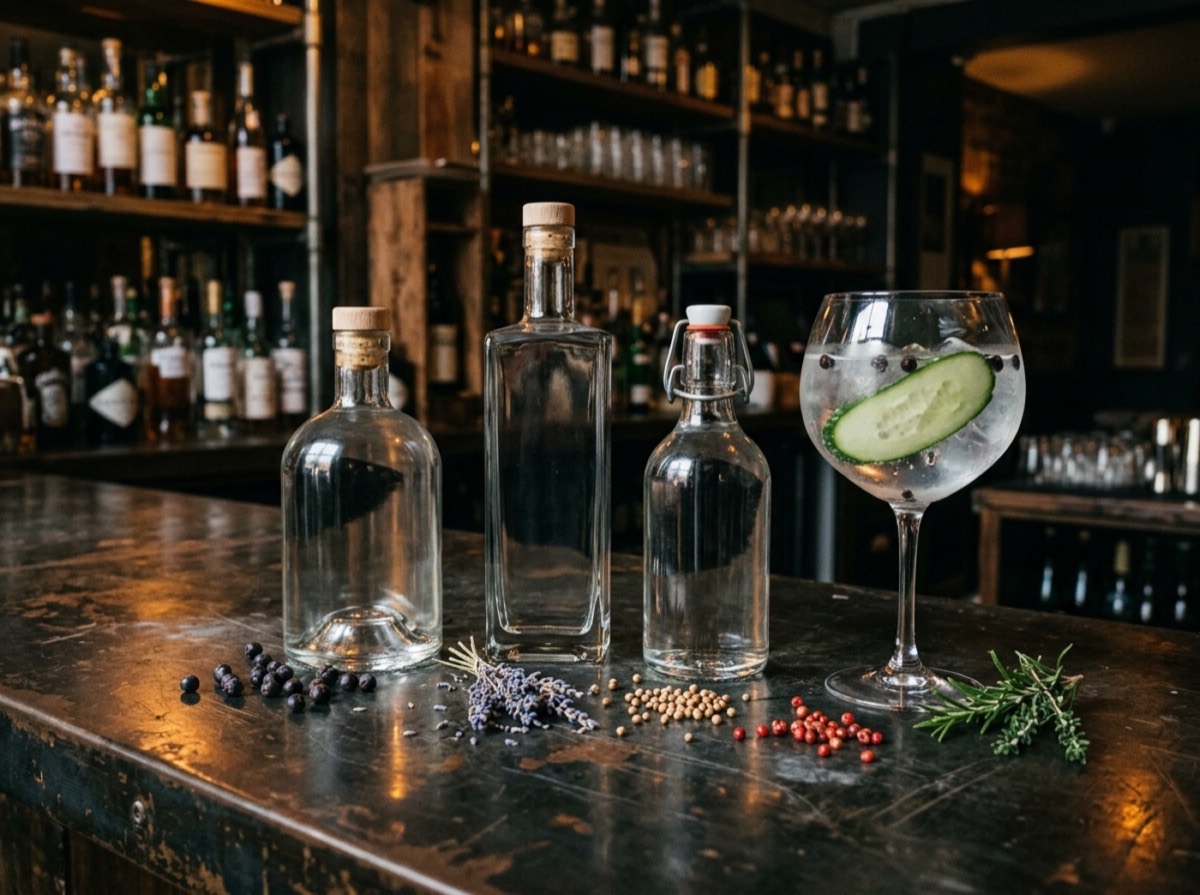
The best German gin brands helped turn Germany into one of Europe's liveliest gin scenes, with distillers using local botanicals such as Black Forest herbs, Riesling grapes, linden blossom and Bavarian hops. Since Monkey 47 arrived from the Black Forest around 2010, hundreds of German craft gins have launched, from Hamburg and Berlin to the Eifel, the Saar and Bavaria.
For this list we chose established German gin brands that are widely available and have a clear identity, and checked botanicals, origins and alcohol strength on the brands' own websites where they are published. We looked at flavour profile, quality of production, distinctiveness, awards and how well each gin works neat and in a gin and tonic.
At a glance
#1 · Best for A complex sipping gin
Monkey 47 Schwarzwald Dry Gin
Germany's most famous gin
Monkey 47 put German gin on the world map. It is made in the Black Forest with 47 botanicals, many of them local, and bottled at 47% ABV in its distinctive brown apothecary-style bottle. The result is complex, herbal and fruity, and it works well in a gin and tonic, a martini or a negroni.
- 47 botanicals
- 47% ABV
- Many Black Forest botanicals
- Distiller's Cut and Sloe editions
- Region
- Black Forest
- Style
- Schwarzwald Dry Gin
- Price range
- Premium
#2 · Best for Smooth gin and tonics
Siegfried Rheinland Dry Gin
Floral gin with linden blossom
Siegfried has been made by Rheinland Distillers in Bonn since 2014 and uses linden blossom as its signature botanical, a nod to the Siegfried legend. Juniper and citrus lead, with a soft, round floral finish. It has collected many international awards, and the company also makes the alcohol-free alternative Wonderleaf.
- Linden blossom as main botanical
- Juniper and orange notes
- Vegan
- Many international awards
- Region
- Bonn, Rhineland
- Since
- 2014
- Price range
- Mid-range
#3 · Best for Wine lovers and martinis
Ferdinand's Saar Dry Gin
Best Riesling-infused gin
Ferdinand's is made in Wincheringen in the Saar region with more than 30 botanicals and infused with Riesling from the Saarburger Rausch vineyard. The project, which began in 2013, brings together winemaker Dorothee Zilliken and master distiller Andreas Vallendar. The brand also makes a Saar Quince gin and a Riesling-based vermouth.
- Infused with Saar Riesling
- More than 30 botanicals
- Named after forester Ferdinand Geltz
- Matching Riesling vermouth
- Region
- Saar
- Since
- 2013
- Price range
- Premium
#4 · Best for Classic G&Ts and martinis
Windspiel Premium Dry Gin
Classic juniper gin from the Eifel
Windspiel is made in the Vulkaneifel with a base spirit distilled three times from local potatoes, which gives it a mild, clean character. The gin is classic and juniper-led with citrus notes and is bottled at 47% ABV. The name nods to Frederick the Great, whose potato decree shaped the region and who kept Windspiel greyhounds.
- Eifel potato base spirit
- Triple distilled base
- 47% ABV
- Juniper-forward with citrus
- Region
- Vulkaneifel
- Style
- Premium dry gin
- Price range
- Mid-range
#5 · Best for Organic, herbal gin
The Duke Munich Dry Gin
Best organic German gin
The Duke has been made near Munich since 2008 and calls itself Bavaria's gin pioneer. Its Munich Dry Gin is EU organic-certified and uses 13 organic botanicals, including hop flowers, malt and Bavarian lavender, bottled at 45% ABV. The distillery also makes a stronger-flavoured Rough Gin.
- 13 organic botanicals
- Hops, malt and Bavarian lavender
- 45% ABV
- EU organic certified
- Region
- Aschheim, Bavaria
- Since
- 2008
- Price range
- Mid-range
#6 · Best for Summery gin and tonics
Gin Sul
Hamburg gin with Portuguese soul
Gin Sul is distilled in small batches by the Altonaer Spirituosen Manufaktur in Hamburg and inspired by the Costa Vicentina in south-west Portugal. It is known for its stoneware bottle and a fresh, southern European character. The range includes Laranjal and Lima Limão editions.
- Small-batch copper still distillation
- Portuguese-inspired, fresh style
- Stoneware bottle
- Laranjal and Lima Limão editions
- Region
- Hamburg-Altona
- Style
- Dry gin
- Price range
- Mid-range
#7 · Best for Gifts with a purpose
Elephant Gin
German gin with a conservation mission
Elephant Gin is made in small batches in Germany with 14 botanicals, combining rare African ingredients with fresh apples from orchards around its distillery. It gives 15 per cent of bottle profits, or 2 per cent of revenue if higher, to elephant conservation projects, and each label names an elephant its partners protect. The range includes London Dry, Sloe and Strength gins.
- 14 botanicals incl. African ingredients
- Donates to elephant conservation
- Bottles from 65% recycled glass
- London Dry, Sloe and Strength
- Origin
- Germany
- Style
- London Dry Gin
- Price range
- Premium

#8 · Best for Sipping neat
Granit Bavarian Gin
Organic gin from the Bavarian Forest
Granit is the Bavarian gin of the Penninger family distillery and is certified organic. It has won several awards and is designed to work both in cocktails and neat as a sipping gin. A Wildberry version adds a fruitier option.
- Certified organic
- Award-winning
- Works neat or mixed
- Wildberry variant
- Region
- Bavaria
- Distillery
- Penninger
- Price range
- Mid-range
#9 · Best for Fresh, minty serves
Skin Gin
Fresh, minty gin from near Hamburg
Skin Gin comes from Buxtehude near Hamburg and uses seven botanicals, including Moroccan mint, Spanish and Italian citrus and juniper from the Lüneburg Heath. Each botanical is distilled separately in an old copper still before blending, giving a fresh, mild gin. Its hand-wrapped, hot-stamped bottles come in several designs.
- Moroccan mint and citrus
- Seven botanicals distilled separately
- Hand-wrapped bottle designs
- Mild enough to sip neat
- Region
- Buxtehude, near Hamburg
- Style
- Dry gin
- Price range
- Mid-range
#10 · Best for Alcohol-free G&Ts
Siegfried Wonderleaf (alcohol-free)
Best German alcohol-free gin alternative
Rheinland Distillers in Bonn, the makers of Siegfried gin, also produce Wonderleaf, an alcohol-free alternative for people who want the ritual of a long drink without the alcohol. The company says it believes a drink's quality should not be judged by its alcohol content. It is a good option for designated drivers and alcohol-free evenings.
- Alcohol-free
- From the Siegfried team in Bonn
- For alcohol-free long drinks
- Region
- Bonn
- Type
- Alcohol-free spirit alternative
- Price range
- Mid-range
How to choose
Think about flavour first. If you like complex, herbal gins, Monkey 47 and The Duke are good starting points; for a softer, floral style try Siegfried with its linden blossom; for fruity and aromatic gins, Ferdinand's Saar Dry Gin brings a Riesling twist and Gin Sul adds Mediterranean notes. Classic juniper-forward gins such as Windspiel suit a traditional gin and tonic.
Then consider strength and serve. Higher-strength gins like Monkey 47 and Windspiel stand up well in cocktails such as a martini or negroni, while milder gins shine with a neutral tonic and a simple garnish. If sustainability matters, look for organic certification, as with The Duke and Granit, or brands that support causes, like Elephant Gin's conservation donations.
Frequently asked questions
What is the best German gin?
+
Monkey 47 is the most famous German gin and a favourite for its complex, herbal flavour. Other highly regarded German gin brands include Siegfried Rheinland Dry Gin, Ferdinand's Saar Dry Gin, Windspiel Premium Dry Gin and The Duke Munich Dry Gin.
Why is it called Monkey 47?
+
The name refers to the gin's 47 botanicals and its bottling strength of 47% ABV. The monkey links to the story of a British officer who settled in the Black Forest and whose recipe inspired the gin.
What botanicals do German gins use?
+
Many German gins feature local ingredients: Black Forest botanicals in Monkey 47, linden blossom in Siegfried, Riesling grapes in Ferdinand's, and hops, malt and Bavarian lavender in The Duke. Juniper remains the main botanical in all of them.
Which German gin is organic?
+
The Duke Munich Dry Gin is EU organic-certified and made with 13 organic botanicals, and Granit Bavarian Gin from the Penninger distillery is also certified organic.
What tonic goes with German gin?
+
A neutral or light Indian tonic lets complex gins like Monkey 47 show their botanicals. Floral gins such as Siegfried pair well with a mild tonic and a slice of orange, while Ferdinand's works nicely with a dry tonic and a few grapes or a lemon twist.
Is German gin good for a martini?
+
Yes. Higher-strength, juniper-forward gins such as Windspiel at 47% ABV and Monkey 47 make excellent dry martinis, and Ferdinand's also sells a Riesling-based vermouth designed to match its gin.
Where is Monkey 47 made?
+
Monkey 47 is a Schwarzwald Dry Gin made in the Black Forest region of south-west Germany.
Monkey 47 remains the best-known German gin and a great introduction to the style, but Siegfried, Ferdinand's, Windspiel and The Duke show how varied German gin has become. For a gin and tonic with regional character, try Ferdinand's with its Riesling infusion or Siegfried with linden blossom, and for an organic German gin, The Duke's Munich Dry Gin is a strong choice.
How we research: We compare each product on the same criteria, using makers’ documentation, independent reviews and owner feedback, and re-check the list when products change.
Written by
Bitezine Editorial Team
Rankings, reviews & guides
Our editors research every piece from makers’ documentation, independent tests and owner reports, and update it when products change.