Ranked · Tech
Best camera drones in 2026
The ten best camera drones of 2026, from the sub-250g DJI Mini 5 Pro to the triple-camera Mavic 4 Pro, selfie drones, FPV and 360 models, ranked after tests.
 Bitezine Editorial TeamRankings, reviews & guides 11 min read
 AI generated
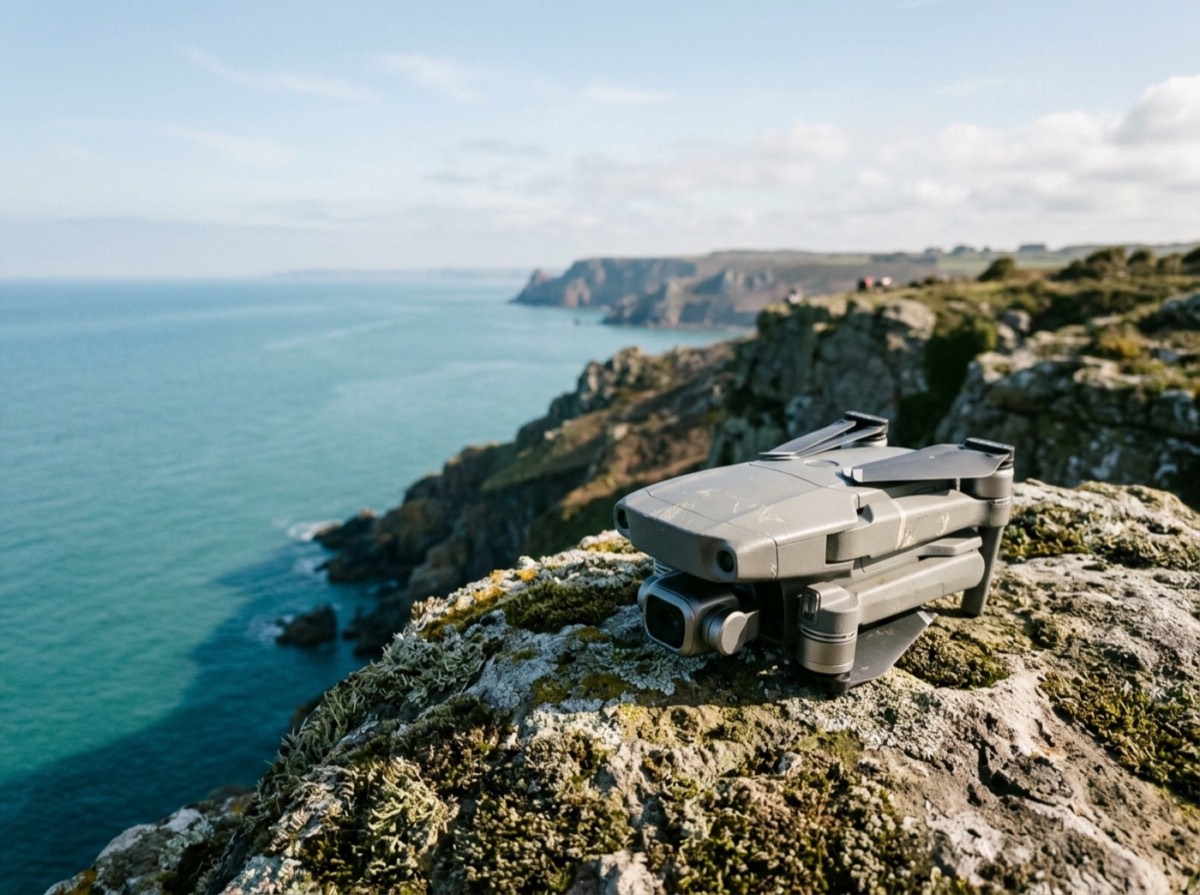
The best camera drones in 2026 shoot sharp 4K or 6K video from a stabilised gimbal, avoid obstacles on their own and fold small enough for a jacket pocket or daypack. DJI still dominates, with the sub-250g Mini 5 Pro, the dual-camera Air 3S and the triple-camera Mavic 4 Pro setting the standard, but HoverAir and Potensic now offer strong alternatives for selfies and budget flying. New DJI models are sold normally in Europe, while availability in the US has become limited.
To build this ranking we compared tested buying guides and reviews from TechRadar and Tom's Guide and checked specifications on each manufacturer's website. We scored image and video quality, sensor size, gimbal stabilisation, obstacle sensing, flight time, transmission range, ease of use for beginners, weight class and value. The list covers mini drones, a professional camera drone, a beginner pick, selfie drones, an FPV drone, a 360 drone and a non-DJI option. Always check local rules before flying.
At a glance

#1 · Best for Travel and all-round flying
DJI Mini 5 Pro
The best camera drone for most people
The Mini 5 Pro is the first mini drone with a 1-inch sensor, giving cleaner low-light footage and more dynamic range. It shoots 50MP stills and 4K video up to 120fps with D-Log M, on a three-axis gimbal that rotates for true vertical shots. Omnidirectional obstacle avoidance and advanced return-to-home make it safe for beginners. Flight time is about 36 minutes, and it stays in the sub-250g class with the standard battery.
- 1-inch sensor, 50MP stills
- 4K up to 120fps, D-Log M
- Rotating three-axis gimbal
- Omnidirectional obstacle sensing
- Sub-250g with standard battery
- Weight class
- Under 250g
- Flight time
- About 36 min
- Camera
- 1-inch, single
- Price range
- Upper mid-range

#2 · Best for Enthusiast photographers
DJI Air 3S
Best dual-camera drone for enthusiasts
The Air 3S pairs a 50MP 1-inch wide camera with a 48MP medium telephoto camera, so you can change framing without moving the drone. It records 4K at up to 120fps in 10-bit D-Log M, has 42GB of internal storage and flies for up to 45 minutes. It handles wind well and has smart obstacle avoidance. At over 700g it falls into a stricter weight class.
- 1-inch wide plus medium tele camera
- 4K up to 120fps, 10-bit
- Up to 45 min flight time
- 42GB internal storage
- Strong wind resistance
- Weight class
- About 724g
- Flight time
- Up to 45 min
- Camera
- Dual
- Price range
- Premium

#3 · Best for Professional aerial imaging
DJI Mavic 4 Pro
The ultimate camera drone
The Mavic 4 Pro carries three cameras: a 100MP 4/3 Hasselblad main camera plus 70mm and 168mm telephotos. The main camera records 6K at 60fps in 10-bit, and the gimbal rotates for vertical shooting. Flight time reaches 51 minutes, and the Creator Combo adds 512GB of storage and a bright controller. It is large, expensive and heavier than 1kg.
- 100MP 4/3 Hasselblad camera
- Three lenses: 28mm, 70mm, 168mm
- 6K 60fps 10-bit video
- Up to 51 min flight time
- Omnidirectional obstacle sensing
- Weight class
- About 1,063g
- Flight time
- Up to 51 min
- Camera
- Triple
- Price range
- Premium

#4 · Best for First camera drone
DJI Lito X1
Beginner drone with grown-up features
The Lito X1 is part of DJI's new beginner range. It weighs under 249g, has a 48MP 1/1.3-inch sensor with an f/1.7 lens, records 4K at up to 60fps and flies for up to 36 minutes. Omnidirectional obstacle sensing with a forward LiDAR, ActiveTrack and 42GB of internal storage are unusual at this level. TechRadar gave it five stars. It is not officially sold in the US.
- 1/1.3-inch 48MP sensor
- 4K up to 60fps
- Omnidirectional sensing with LiDAR
- Up to 36 min flight time
- 42GB internal storage
- Weight class
- Under 249g
- Flight time
- Up to 36 min
- Range
- Up to 15 km transmission
- Price range
- Mid-range

#5 · Best for Nervous beginners
DJI Flip
The easiest drone to fly
The Flip's propellers sit inside full-coverage guards that fold with the arms, so bumps are less scary and it packs neatly. It shoots 48MP stills and 4K at 60fps, and Tom's Guide found its video close to the more expensive Mini 4 Pro. It flies for about 31 minutes and weighs under 250g. Obstacle sensing only covers the front.
- Full propeller guards
- 48MP stills, 4K 60fps
- About 31 min flight time
- Foldable design
- Works indoors and outdoors
- Weight class
- Under 250g
- Flight time
- About 31 min
- Camera
- 1/1.3-inch
- Price range
- Mid-range

#6 · Best for Vloggers and selfies
DJI Neo 2
Best budget selfie drone
The Neo 2 is a palm-sized drone that takes off from your hand and follows you without a controller or phone. It records stabilised 4K at 60fps on a two-axis gimbal, supports gesture control and adds LiDAR-assisted omnidirectional obstacle avoidance. It has 49GB of internal storage but no microSD slot, and flights last under 20 minutes.
- Palm take-off and gesture control
- 4K 60fps, two-axis gimbal
- Omnidirectional obstacle avoidance
- 49GB internal storage
- Works with DJI FPV goggles
- Weight class
- Around 150g
- Flight time
- About 19 min
- Controller
- Optional
- Price range
- Budget

#7 · Best for Action selfies
HoverAir X1 Pro
Pocket-sized flying camera
The HoverAir X1 Pro folds to pocket size and flies hands-free using preset modes and AI subject tracking that kept testers in frame around obstacles. It records 4K at 60fps, takes 12MP photos and has 32GB of storage. Optional Beacon and JoyStick accessories extend control and range. The X1 ProMax adds 8K video.
- Hands-free flight modes
- 4K 60fps video
- AI subject tracking
- 32GB internal storage
- Optional Beacon controller
- Weight class
- About 192g
- Controller
- Not required
- Camera
- 4K 60fps
- Price range
- Mid-range

#8 · Best for DJI alternative
Potensic Atom 3
The best non-DJI drone
Potensic's Atom 3 is a compact, foldable drone with a 4K camera at 60fps on a three-axis brushless gimbal. It ships with a new controller that has a built-in screen, so you do not need your phone. Flight time is up to 40 minutes on the standard battery or 50 minutes on the larger one. Its safety features and app are less polished than DJI's.
- 4K 60fps video
- Three-axis gimbal
- Controller with built-in screen
- Up to 40 or 50 min flight time
- Foldable, under 250g
- Weight class
- Under 250g
- Flight time
- 40 to 50 min
- Controller
- Screen controller
- Price range
- Budget to mid-range

#9 · Best for FPV flying
DJI Avata 2
The best FPV drone
The Avata 2 is a ducted FPV drone designed to be flown with DJI goggles and the RC Motion controller, which makes immersive flying accessible to newcomers. Its 1/1.3-inch camera delivers better dynamic range than the original Avata, and built-in safety features help beginners. Experienced freestyle pilots may find it limiting.
- Immersive FPV with goggles
- 1/1.3-inch camera
- Ducted propellers
- Motion controller support
- Beginner safety features
- Weight class
- About 377g
- Controller
- Goggles and motion controller
- Camera
- 1/1.3-inch
- Price range
- Upper mid-range

#10 · Best for Reframable aerial video
DJI Avata 360
The best 360-degree drone
The Avata 360 records 360-degree video at up to 8K and 60fps and 120MP stills, so you can reframe every flight afterwards. It supports 10-bit D-Log M, works with DJI's controllers and FPV goggles and flies for around 23 minutes. At about 469g it needs registration and a certificate, and the full kit with goggles gets expensive.
- 8K 60fps 360-degree video
- 120MP 360 stills
- 10-bit D-Log M
- FPV goggle support
- About 23 min flight time
- Weight class
- About 469g
- Flight time
- About 23 min
- Camera
- 360-degree
- Price range
- Premium
How to choose
Weight matters as much as the camera. Drones under 250g, such as the DJI Mini 5 Pro, DJI Flip and DJI Lito X1, face the lightest rules in the EU: you still need to register as an operator if the drone has a camera, and in Germany you need drone liability insurance, but no competency certificate is required. Heavier drones like the Air 3S or Mavic 4 Pro require the EU online A1/A3 certificate and have more restrictions on where you can fly. They do, however, handle wind better and carry larger sensors and extra lenses.
Next, match the drone to how you will use it. For travel photos and video, a mini drone with a 1-inch or 1/1.3-inch sensor, 4K at 60fps, omnidirectional obstacle sensing and at least 30 minutes of flight time is the sweet spot. Beginners benefit from prop guards and simple modes, as on the DJI Flip. Selfie drones like the DJI Neo 2 and HoverAir X1 Pro launch from your palm and follow you without a controller. FPV drones such as the DJI Avata 2 need goggles and practice, and a 360 drone like the DJI Avata 360 lets you reframe shots afterwards. Buying a Fly More bundle with extra batteries is usually worth it.
Frequently asked questions
What is the best camera drone in 2026?
+
The DJI Mini 5 Pro is the best drone for most people. It weighs under 250g, has a 1-inch sensor, records 4K video at up to 120fps with D-Log M and has omnidirectional obstacle avoidance. If you want two cameras and better wind resistance, the DJI Air 3S is the best step up.
What is the best drone for beginners?
+
The DJI Flip and DJI Lito X1 are excellent first drones. The Flip has full propeller guards, 4K at 60fps and a 31-minute flight time, while the Lito X1 has a 1/1.3-inch sensor, omnidirectional obstacle sensing with forward LiDAR and weighs under 249g. Both are simple to fly with DJI's app and controller.
Do I need a licence to fly a drone in Germany?
+
For drones under 250g, you do not need a competency certificate, but you must register as an operator with the Luftfahrt-Bundesamt if the drone has a camera, carry drone liability insurance and display your operator ID. Drones of 250g or more require at least the EU A1/A3 online certificate. Always check no-fly zones, for example with the DFS or DIPUL map.
What is the best drone under 250 grams?
+
The DJI Mini 5 Pro is the best sub-250g drone, thanks to its 1-inch sensor and advanced safety features. The DJI Lito X1 and DJI Flip are cheaper alternatives in the same weight class, and the Potensic Atom 3 is a non-DJI option.
What is the best DJI alternative?
+
The Potensic Atom 3 is the best non-DJI camera drone, with 4K video at 60fps, a three-axis gimbal, a controller with a built-in screen and up to 40 minutes of flight on the standard battery. For selfie-style flying, the HoverAir X1 Pro is the best alternative.
How long can a camera drone fly?
+
Most consumer camera drones fly for around 30 to 45 minutes per battery. The DJI Mavic 4 Pro manages up to 51 minutes, the Air 3S up to 45 minutes and the Mini 5 Pro around 36 minutes. Small selfie drones like the DJI Neo 2 fly for under 20 minutes, so extra batteries help.
What is the best selfie drone?
+
The HoverAir X1 Pro and the DJI Neo 2 are the best selfie drones. Both launch from your hand and follow you automatically without a controller. The X1 Pro records 4K at 60fps and folds to pocket size, while the Neo 2 adds gesture control and LiDAR-assisted obstacle avoidance.
The DJI Mini 5 Pro is the best camera drone for most people in 2026: it weighs under 250g yet has a 1-inch sensor, 4K at 120fps, a rotating gimbal and omnidirectional obstacle avoidance. The DJI Air 3S adds a second camera and better wind resistance, and the Mavic 4 Pro is the ultimate choice for serious aerial photographers. Beginners should look at the DJI Lito X1 or DJI Flip, while the DJI Neo 2 and HoverAir X1 Pro are the best selfie drones. The Potensic Atom 3 is the best DJI alternative, and the DJI Avata 2 and Avata 360 open up FPV and 360 filming.
How we research: We compare each product on the same criteria, using makers’ documentation, independent reviews and owner feedback, and re-check the list when products change.
Written by
Bitezine Editorial Team
Rankings, reviews & guides
Our editors research every piece from makers’ documentation, independent tests and owner reports, and update it when products change.