Living
How to work from home productively without burning out
How to work from home productively: set up a proper workspace, keep a routine, manage distractions, take real breaks and switch off at the end of the day.
 Bitezine Editorial TeamRankings, reviews & guides 5 min read
 AI generated
Figuring out how to work from home productively is mostly about building structure that an office would normally give you. Without a commute, a set lunch hour or colleagues nearby, days can blur, distractions creep in and work spills into the evening.
The tips below cover your workspace, routine, focus, communication and wellbeing. They apply whether you work remotely full-time, split your week between home and office, or run your own business from the kitchen table.
Set up a dedicated home workspace
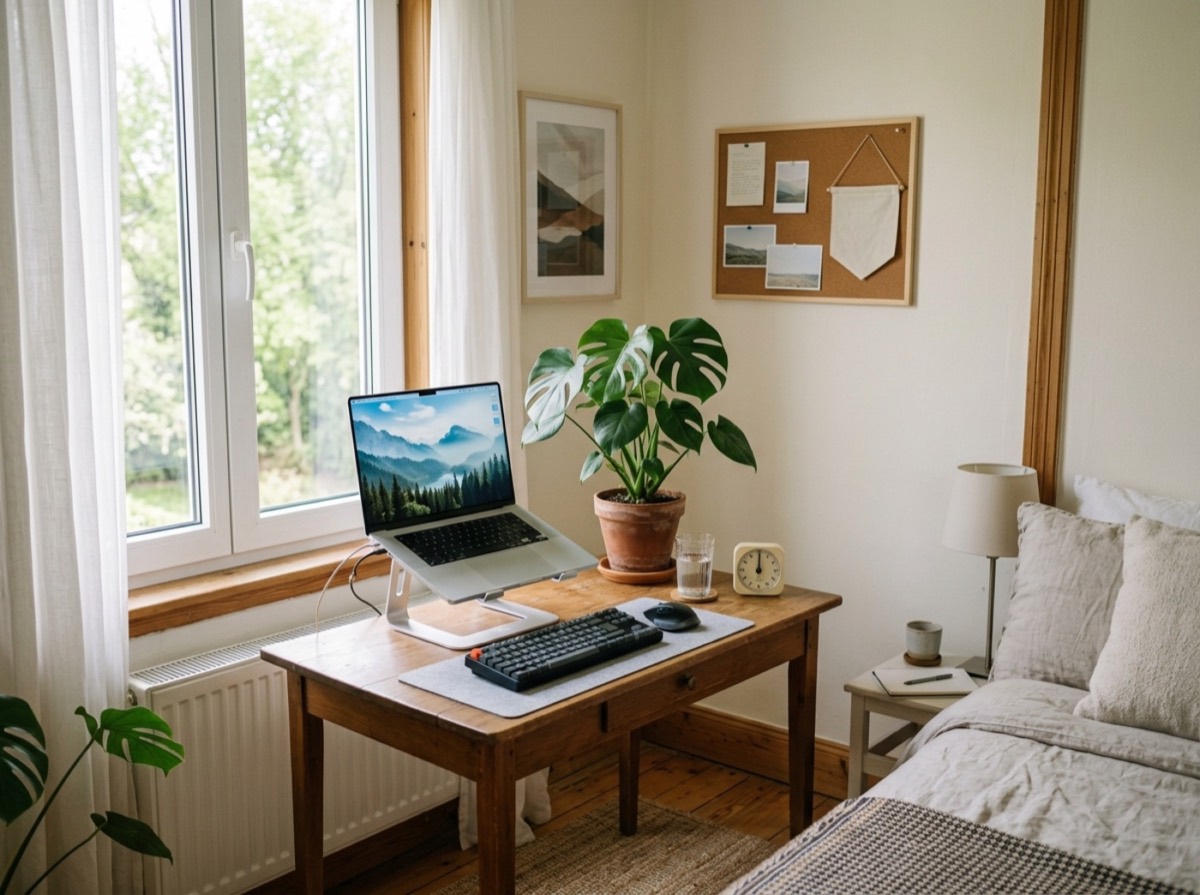
A consistent place to work tells your brain it is time to focus. Ideally this is a separate room with a door, but a corner of a living room or bedroom can work if it is used only for work during the day. Face away from distractions like the TV or a pile of laundry where you can.
Good natural light helps with mood and alertness. Position your desk beside a window rather than directly facing or backing onto it, to reduce glare and shadows on your screen. At the end of the day, putting your laptop away or covering the desk helps mark the boundary between work and home.
Home office ergonomics: avoid aches and strain
Working from a sofa or bed might feel comfortable for an hour, but over weeks it causes back, neck and wrist pain. A few adjustments make a big difference.
- Set the top of your screen at or slightly below eye level, about an arm's length away.
- Use a separate keyboard and mouse with a laptop, and raise the laptop on a stand or books.
- Sit with feet flat on the floor or a footrest, knees roughly level with hips.
- Support your lower back with the chair or a cushion.
- Keep elbows close to your body at about a right angle while typing.
- Change position often, and stand or walk for part of the day if you can.
The goal is not to work more hours, but to do your best work and still have a life when the laptop closes.
Keep a working from home routine
Start and finish at consistent times. Get up, wash and dress as if you were leaving the house; it sounds trivial, but it helps you shift into work mode. Some people create a short "fake commute", such as a walk around the block, to open and close the working day.
Plan your day before you start. Write down the two or three most important things you need to finish and schedule them for the hours when your concentration is best. Many people focus best in the morning, but notice your own pattern and plan around it.
How to stay focused when working from home
Distractions at home are different from those in an office, but just as real. Turn off non-essential notifications, close tabs you do not need, and put your phone in another room during deep work. Noise-cancelling headphones or quiet background sound can help block out household noise.
Time-blocking techniques are useful. The Pomodoro Technique, for example, uses 25 minutes of focused work followed by a five-minute break, with a longer break after four rounds. Batching similar tasks, such as replying to messages at set times rather than constantly, protects longer stretches for concentrated work.
Set boundaries with the people you live with
Family members or housemates may not realise that you are working just because you are at home. Agree on your working hours and a simple signal that you are busy, like a closed door or headphones on. Schedule household chores for breaks or after work, not in the middle of focused time.
If you have children at home, plan demanding work around their routines where possible, and be open with your employer about any constraints. Flexibility on both sides usually works better than trying to pretend the situation is the same as an office.
Take real breaks
Remote workers often take fewer breaks than office workers, and productivity suffers for it. Step away from your screen regularly. A common eye-care habit is the 20-20-20 rule: every 20 minutes, look at something about 20 feet (six metres) away for 20 seconds.
Take a proper lunch break away from your desk. Go outside for daylight and fresh air, stretch, or do something unrelated to work. Short movement breaks help your body and your concentration.
Stay connected with your team
Working from home can feel isolating. Keep in regular contact with colleagues, not only for work but for the informal chat that used to happen by the kettle. Use video calls when a conversation is complex or sensitive, since tone is easy to misread in writing.
Be clear about your availability and progress. Share updates proactively, agree on response times with your team, and ask for help early rather than struggling alone. If loneliness is affecting you, consider working from a café, library or shared workspace now and then.
How to switch off and avoid burnout
When your office is also your home, it is easy to keep working late. Set a clear finishing time and end the day with a small ritual: review what you did, note tomorrow's priorities, then close the laptop and leave the workspace. Turn off work notifications on personal devices outside hours if you can.
Watch for signs of burnout, such as exhaustion, cynicism about work and difficulty concentrating. Protect your evenings and weekends, take your annual leave, and talk to your manager if your workload is not sustainable.
Frequently asked questions
How do I stay productive working from home?
+
Use a dedicated workspace, keep regular hours and plan your top priorities each morning. Minimise notifications during focused work and take regular breaks to keep your energy up.
How do I set up a home office in a small space?
+
Choose a quiet corner near natural light, use a compact desk and a supportive chair, and raise your screen to eye level. Keep work items in one box or drawer so you can tidy them away at the end of the day.
How do I stop getting distracted at home?
+
Silence non-essential notifications, keep your phone out of reach, and agree on working hours with the people you live with. Working in timed blocks with short breaks makes it easier to stay on task.
How can I separate work and home life when working remotely?
+
Keep set start and finish times, work in one place and end each day with a routine such as a walk. Put work equipment away and switch off work notifications in the evening.
Is working from home more productive?
+
It can be for many people, thanks to fewer interruptions and no commute, but it depends on the job, the home setup and the person. Structure and good communication are what make the difference.
How do I deal with loneliness when working from home?
+
Schedule regular calls with colleagues, including informal chats, and spend time with friends outside work. Working from a café, library or shared workspace some days can also help.
Learning how to work from home productively takes some trial and error. Start with a proper workspace, a consistent routine and clear boundaries, then fine-tune how you focus and take breaks. The goal is not to work more hours, but to do your best work and still have a life when the laptop closes.
How we research: Guides are written from established sources and checked for accuracy. They are general information, not professional advice.
Written by
Bitezine Editorial Team
Rankings, reviews & guides
Our editors research every piece from makers’ documentation, independent tests and owner reports, and update it when products change.